






























Asclepias curassavica Red Butterfly seeds - Milkweed

Asclepias curassavica Red Butterfly seeds - Milkweed
Asclepias curassavica Red Butterfly seeds - Milkweed
Asclepias curassavica Red Butterfly
Bloodflower, Scarlet Milkweed, Tropical Milkweed
Special offer!
Receive a €20 voucher for any order over €90 (excluding delivery costs, credit notes, and plastic-free options)!
1- Add your favorite plants to your cart.
2- Once you have reached €90, confirm your order (you can even choose the delivery date!).
3- As soon as your order is shipped, you will receive an email containing your voucher code, valid for 3 months (90 days).
Your voucher is unique and can only be used once, for any order with a minimum value of €20, excluding delivery costs.
Can be combined with other current offers, non-divisible and non-refundable.
Home or relay delivery (depending on size and destination)
Schedule delivery date,
and select date in basket
This plant carries a 6 months recovery warranty
More information
We guarantee the quality of our plants for a full growing cycle, and will replace at our expense any plant that fails to recover under normal climatic and planting conditions.
Would this plant suit my garden?
Set up your Plantfit profile →
Description
Asclepias 'Red Butterfly', also known as Scarlet Milkweed or Curaçao Milkweed 'Red Butterfly', is a perennial plant in warm climates, often grown as an annual elsewhere. It stands out with its upright stems adorned with scarlet red umbel flowers with yellow centres, which bloom throughout summer until the first frosts. With a bushy and slender habit, featuring narrow, elongated, bright green foliage, it thrives in full sun, in light, well-draining soil, and tolerates heat and drought well. It is charming in borders, beds, or containers, both for its brilliance and its ability to attract butterflies and other pollinators, provided it is protected from cold or replanted each year. Sow the seeds under cover from February to April.
Asclepias curassavica 'Red Butterfly' or Asclepias nivea var. curassavica 'Red Butterfly' is a herbaceous perennial plant belonging to the Apocynaceae family. Native to tropical regions of Central America, South America, and the Caribbean, the species Asclepias curassavica has become naturalised in many tropical and subtropical zones worldwide. The 'Red Butterfly' cultivar is distinguished by its umbel inflorescences composed of scarlet red flowers with yellow centres. This plant has an upright, bushy habit, typically reaching a height of 60 to 90 cm in the ground, with a spread of 30 to 60 cm. Its growth is rapid, and it flowers in the first year of cultivation. The slender stems bear opposite, lanceolate, dark green leaves measuring up to 15 cm long. The foliage is deciduous in temperate zones but can persist in tropical climates. The flowers, lacking notable fragrance, measure about 1 to 2 cm in diameter and are grouped in terminal cymes. Pollination is mainly carried out by insects, particularly butterflies. The root system is taprooted, with a deep main root, making transplanting tricky once the plant is well established.
In a sun-drenched garden, Asclepias curassavica 'Red Butterfly' displays its red and gold umbels with an intensity reminiscent of tropical landscapes. To create a vibrant scene welcoming to pollinators, it can be paired with Gaillardia 'Arizona Sun', whose bicoloured red and yellow flowers echo the hues of the milkweed. Salvia 'Hot Lips', with its red and white flowers, adds a touch of freshness, while Verbena bonariensis, with its tall mauve inflorescences, adds height and an airy lightness to the composition. These combinations form a brilliant summer display, ideal for sunny borders or large containers on a terrace. By removing spent flowers, one can prolong the flowering period and prevent excessive spread of the milkweed.
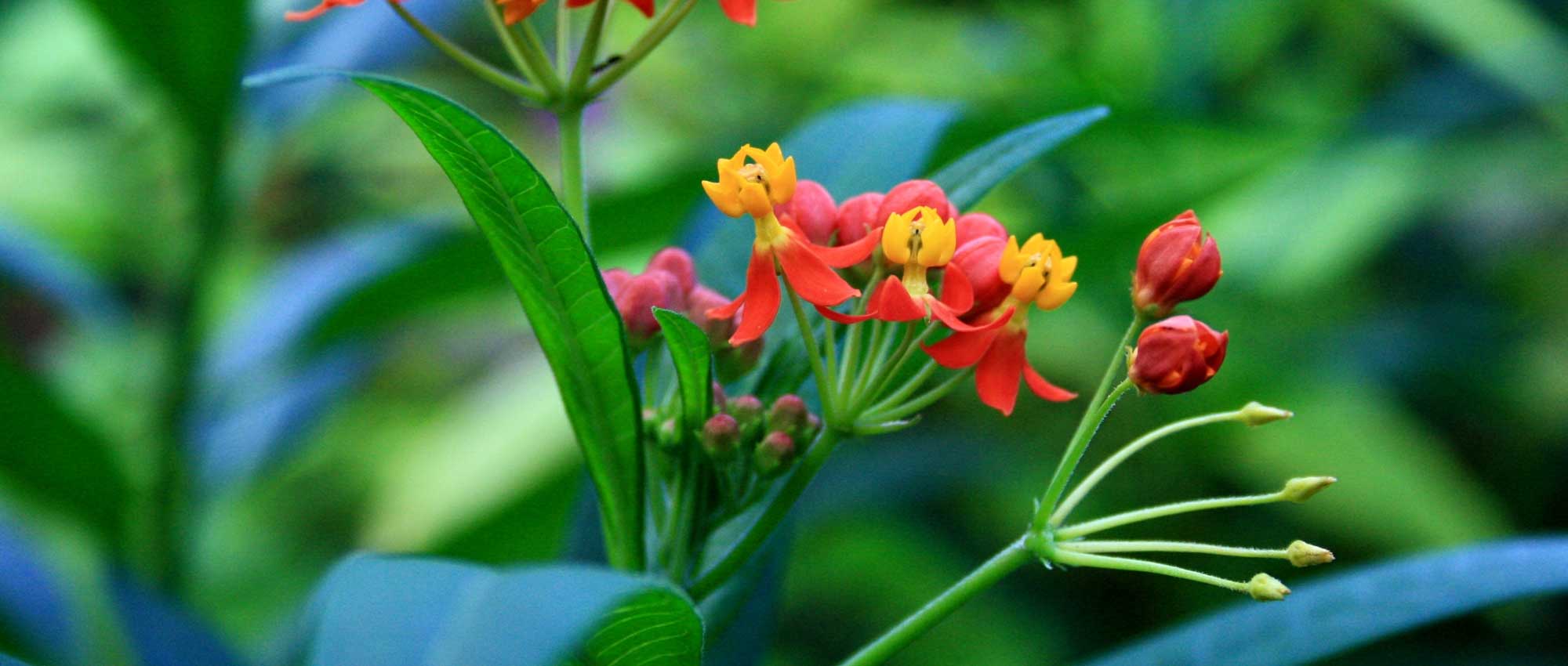
Asclepias curassavica Red Butterfly seeds - Milkweed in pictures

Flowering
Foliage
Plant habit
Safety measures
Botanical data
Asclepias
curassavica
Red Butterfly
Apocynaceae
Bloodflower, Scarlet Milkweed, Tropical Milkweed
Asclepias nivea var. curassavica Red Butterfly
Cultivar or hybrid
atteintescutaneomuqueuses
Cette plante peut provoquer l'apparition de réactions cutanées indésirables, une atteinte des yeux, ou des difficultés respiratoires si elle est ingérée.
Ne la plantez pas là où de jeunes enfants peuvent évoluer. Evitez tout contact avec la peau: privilégiez l'emploi de gants pour la manipuler. En cas de contact, lavez-vous soigneusement les mains et rincez abondamment à l'eau la zone concernée. Lavez les vêtements entrés en contact. En cas de réaction cutanée, contactez votre médecin ou le centre antipoison le plus proche de chez vous. En cas d'atteinte étendue ou de difficultés respiratoires, appelez immédiatement le 15 ou le 112.Pensez à conserver l'étiquette de la plante, à la photographier ou à noter son nom, afin de faciliter le travail des professionnels de santé.
Davantage d'informations sur https://plantes-risque.info
Planting and care
To successfully sow Asclepias curassavica 'Red Butterfly', sow indoors 8 to 10 weeks before the last frosts, to encourage flowering from summer onwards. The seeds can be soaked for 24 hours in lukewarm water to improve germination. Sow them at approximately 6 mm depth in a light, well-drained growing medium, kept moist but never waterlogged. The ideal germination temperature is between 21 and 29°C, with bright exposure essential. Germination generally takes 2 to 3 weeks. Once the young plants are well developed, they can be gradually acclimatised outdoors and planted in open ground after the last frosts.
Cultivation: We advise using gloves when handling this plant, as its stems contain a latex that can be irritating.
This milkweed enjoys sun and requires a well-drained, light soil, not too dry to damp, and tolerates dry soils once established. It tolerates limestone well, as well as slightly acidic compost. Cut back faded flower spikes if you wish to avoid self-seeding.




Sowing period
Intended location
Planting & care advice
-

-
-
-
-
-
-
-
This item has not been reviewed yet - be the first to leave a review about it.
Haven't found what you were looking for?
Hardiness is the lowest winter temperature a plant can endure without suffering serious damage or even dying. However, hardiness is affected by location (a sheltered area, such as a patio), protection (winter cover) and soil type (hardiness is improved by well-drained soil).
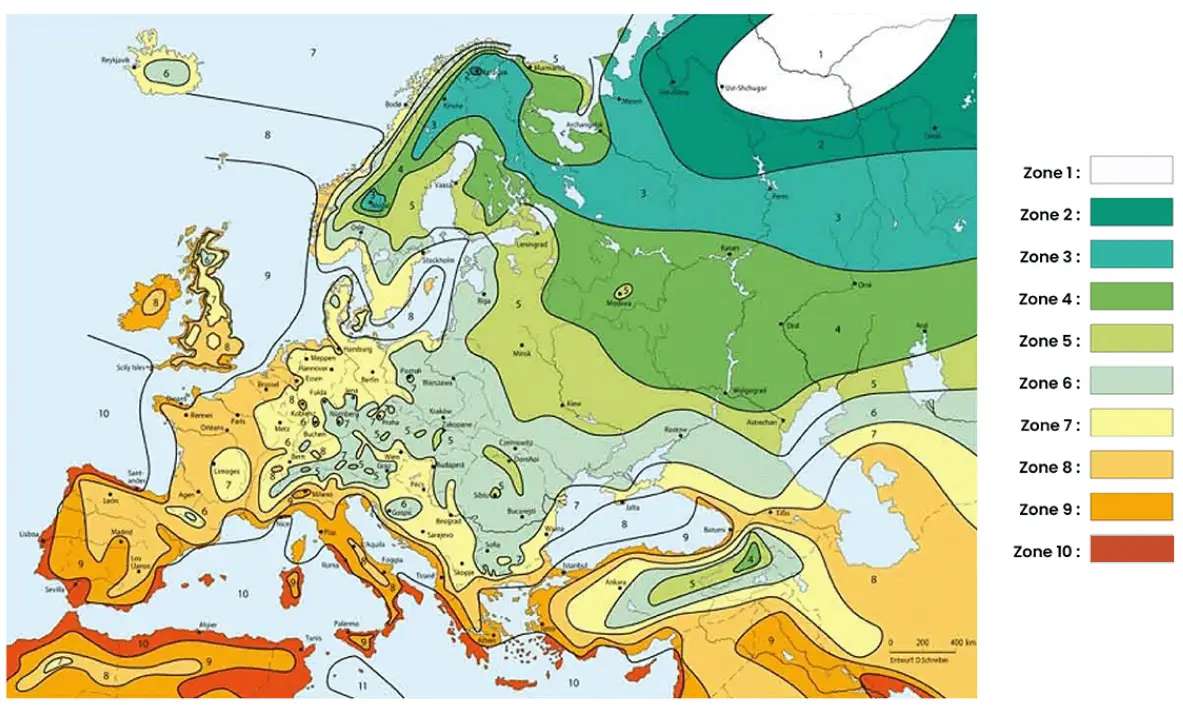
Photo Sharing Terms & Conditions
In order to encourage gardeners to interact and share their experiences, Promesse de fleurs offers various media enabling content to be uploaded onto its Site - in particular via the ‘Photo sharing’ module.
The User agrees to refrain from:
- Posting any content that is illegal, prejudicial, insulting, racist, inciteful to hatred, revisionist, contrary to public decency, that infringes on privacy or on the privacy rights of third parties, in particular the publicity rights of persons and goods, intellectual property rights, or the right to privacy.
- Submitting content on behalf of a third party;
- Impersonate the identity of a third party and/or publish any personal information about a third party;
In general, the User undertakes to refrain from any unethical behaviour.
All Content (in particular text, comments, files, images, photos, videos, creative works, etc.), which may be subject to property or intellectual property rights, image or other private rights, shall remain the property of the User, subject to the limited rights granted by the terms of the licence granted by Promesse de fleurs as stated below. Users are at liberty to publish or not to publish such Content on the Site, notably via the ‘Photo Sharing’ facility, and accept that this Content shall be made public and freely accessible, notably on the Internet.
Users further acknowledge, undertake to have ,and guarantee that they hold all necessary rights and permissions to publish such material on the Site, in particular with regard to the legislation in force pertaining to any privacy, property, intellectual property, image, or contractual rights, or rights of any other nature. By publishing such Content on the Site, Users acknowledge accepting full liability as publishers of the Content within the meaning of the law, and grant Promesse de fleurs, free of charge, an inclusive, worldwide licence for the said Content for the entire duration of its publication, including all reproduction, representation, up/downloading, displaying, performing, transmission, and storage rights.
Users also grant permission for their name to be linked to the Content and accept that this link may not always be made available.
By engaging in posting material, Users consent to their Content becoming automatically accessible on the Internet, in particular on other sites and/or blogs and/or web pages of the Promesse de fleurs site, including in particular social pages and the Promesse de fleurs catalogue.
Users may secure the removal of entrusted content free of charge by issuing a simple request via our contact form.
The flowering period indicated on our website applies to countries and regions located in USDA zone 8 (France, the United Kingdom, Ireland, the Netherlands, etc.)
It will vary according to where you live:
- In zones 9 to 10 (Italy, Spain, Greece, etc.), flowering will occur about 2 to 4 weeks earlier.
- In zones 6 to 7 (Germany, Poland, Slovenia, and lower mountainous regions), flowering will be delayed by 2 to 3 weeks.
- In zone 5 (Central Europe, Scandinavia), blooming will be delayed by 3 to 5 weeks.
In temperate climates, pruning of spring-flowering shrubs (forsythia, spireas, etc.) should be done just after flowering.
Pruning of summer-flowering shrubs (Indian Lilac, Perovskia, etc.) can be done in winter or spring.
In cold regions as well as with frost-sensitive plants, avoid pruning too early when severe frosts may still occur.
The planting period indicated on our website applies to countries and regions located in USDA zone 8 (France, United Kingdom, Ireland, Netherlands).
It will vary according to where you live:
- In Mediterranean zones (Marseille, Madrid, Milan, etc.), autumn and winter are the best planting periods.
- In continental zones (Strasbourg, Munich, Vienna, etc.), delay planting by 2 to 3 weeks in spring and bring it forward by 2 to 4 weeks in autumn.
- In mountainous regions (the Alps, Pyrenees, Carpathians, etc.), it is best to plant in late spring (May-June) or late summer (August-September).
The harvesting period indicated on our website applies to countries and regions in USDA zone 8 (France, England, Ireland, the Netherlands).
In colder areas (Scandinavia, Poland, Austria...) fruit and vegetable harvests are likely to be delayed by 3-4 weeks.
In warmer areas (Italy, Spain, Greece, etc.), harvesting will probably take place earlier, depending on weather conditions.
The sowing periods indicated on our website apply to countries and regions within USDA Zone 8 (France, UK, Ireland, Netherlands).
In colder areas (Scandinavia, Poland, Austria...), delay any outdoor sowing by 3-4 weeks, or sow under glass.
In warmer climes (Italy, Spain, Greece, etc.), bring outdoor sowing forward by a few weeks.