





























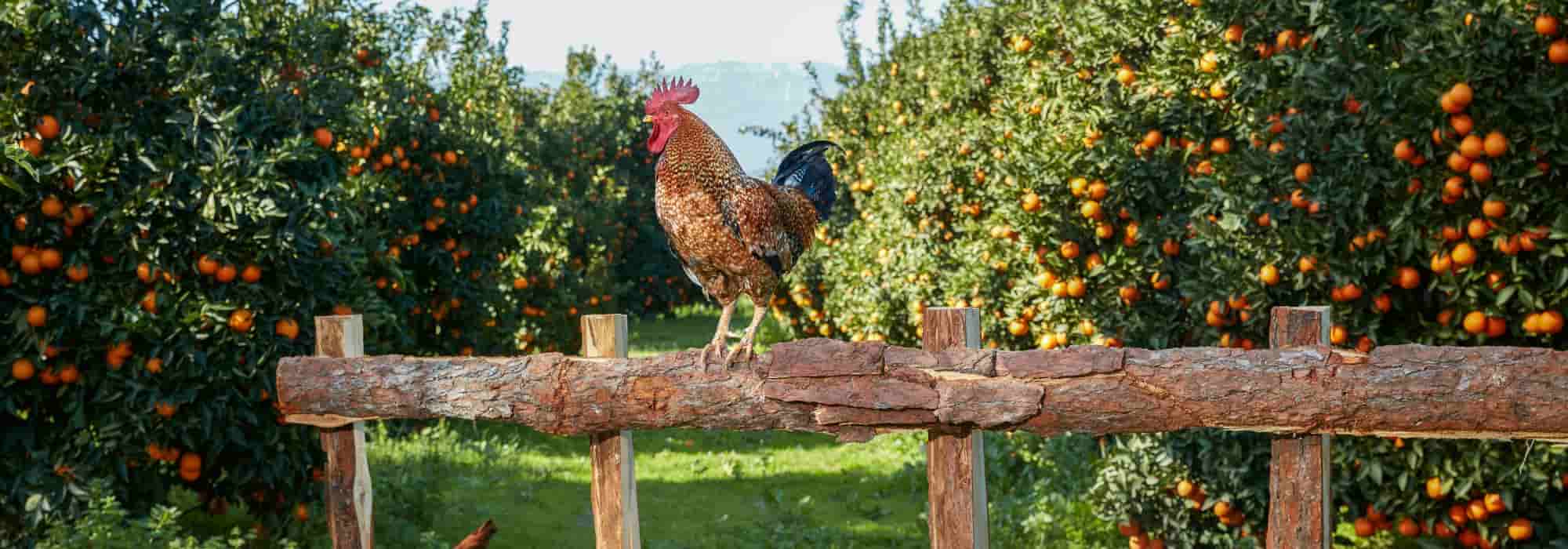
Which citrus fruit to plant according to your region?
Should you plant your citrus in the ground or in a pot?
Contents
Originating from Southeast Asia, citrus trees have become widely popular over the centuries. They are extensively cultivated throughout the Mediterranean basin. It must be said that these bushes have many advantages: fruits that are highly aromatic, with juicy, acidic or tangy flesh, rich in vitamins, delightfully fragrant spring flowering, and evergreen foliage, often glossy green… Coming from three different genera, Citrus (orange trees, lemon trees, clementine trees, mandarins, bergamot, pomelo…), Fortunella (kumquat), and Poncirus (thorny lemon), citrus trees have a lower hardiness that limits their cultivation in open ground to certain regions of France. However, some citrus trees can withstand negative temperatures without flinching…
Let’s take a look at the regions where citrus trees can be grown in open ground or only in pots to withstand the winter chill. Some are less frost-sensitive and could even be planted in your garden without any issues, no matter where you live!
To learn everything about citrus trees, feel free to check our growing guide: lemon trees, orange trees, and other citrus: how to plant and grow them in pots or in the garden

You live on the French Riviera and in Corsica.
The French Riviera is the eastern part of the Mediterranean coast, located approximately between the Italian border and Cassis. This area, which can also include the Corsican coastline, benefits from exceptionally mild climatic conditions, corresponding to USDA hardiness zone 10.
This region is characterised by significant sunshine, hot to very hot and dry summers, and particularly mild winters with an average of 5 °C. Frost is very rare. However, during the transitional seasons, it can rain heavily. Within this area, one can further distinguish the zone between Menton and Nice, which is even more favourable than that between Nice and Cannes.
If you live between Menton and Nice and the Corsican coastline, known as the “orange zone”, you belong to the fortunate category of individuals who can grow the majority of Citrus trees, including lime trees, orange trees, grapefruit trees… Particularly the more sensitive varieties such as the lime tree, the citron tree, and the highly sought-after finger lime (Microcitrus).
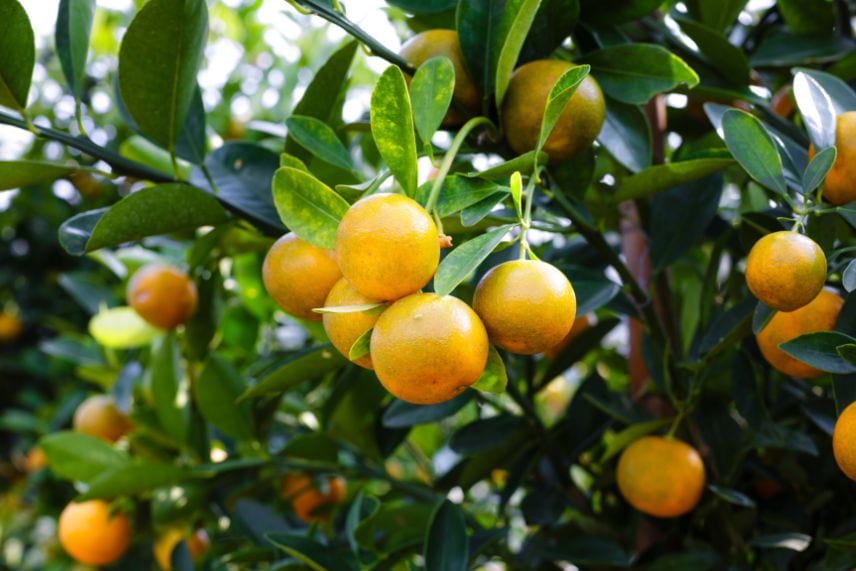
In the French Riviera and along the coastline, all Citrus can be grown
The lime tree (Citrus aurantifolia) has specific climatic requirements: it needs warmth and humidity throughout the year. Frost below -3°C will be fatal to it.
The citron tree (Citrus medica), which produces fruits resembling large lemons, with very aromatic bark, is consumed only in marmalade or as candied peel, and has more or less the same requirements. It suffers below 3 °C and prefers a winter temperature around 12 °C.
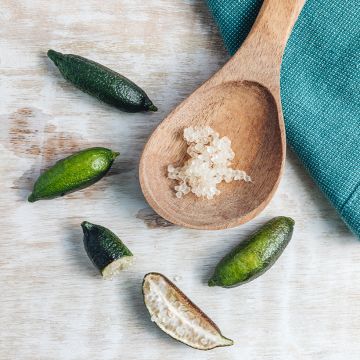
As for the finger lime (Microcitrus), it is, like the citron tree, very sensitive to temperatures below 3 °C.
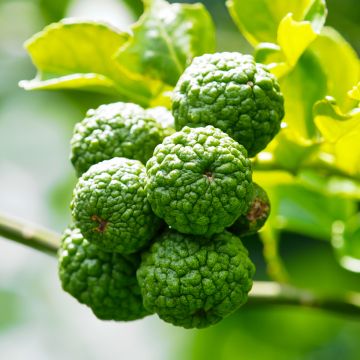
On the French Riviera, you can also indulge in growing a Kaffir lime (Citrus hystrix), a bush that produces limes with bumpy green skin.
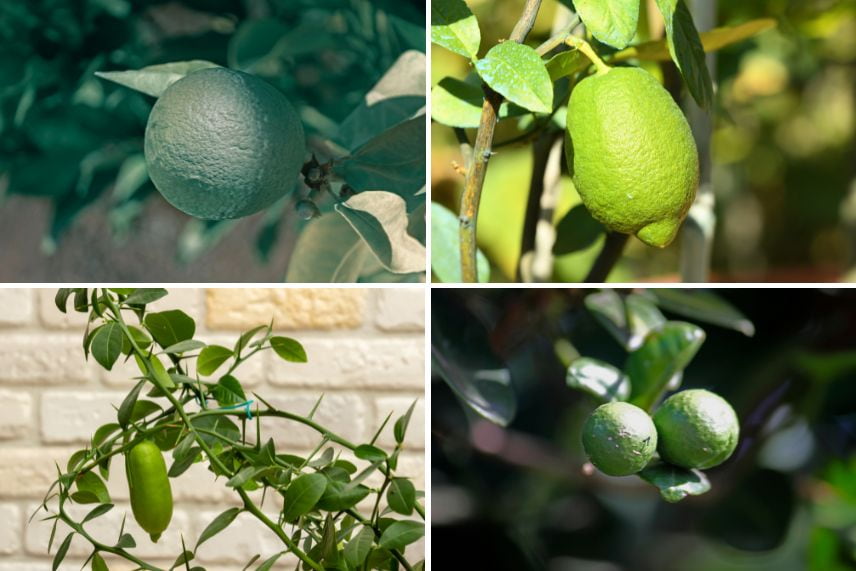
The lime tree, the citron tree, the finger lime, and the Kaffir lime
In contrast, those living from Nice to Cannes can plant an orange tree, a mandarin tree, or a lemon tree. However, growing the citron tree, lime tree, Kaffir lime, and finger lime proves to be a bit more challenging.
You live in a large Mediterranean region.
The wider Mediterranean perimeter extending from Toulon to Perpignan, to which the Biarritz region can be added, roughly corresponds to the area of the bitter orange (Citrus aurantium). This bush, easy to grow, also known as Seville orange, produces bitter oranges. These are small, sour fruits, too tart to be eaten raw, but delicious in marmalade.
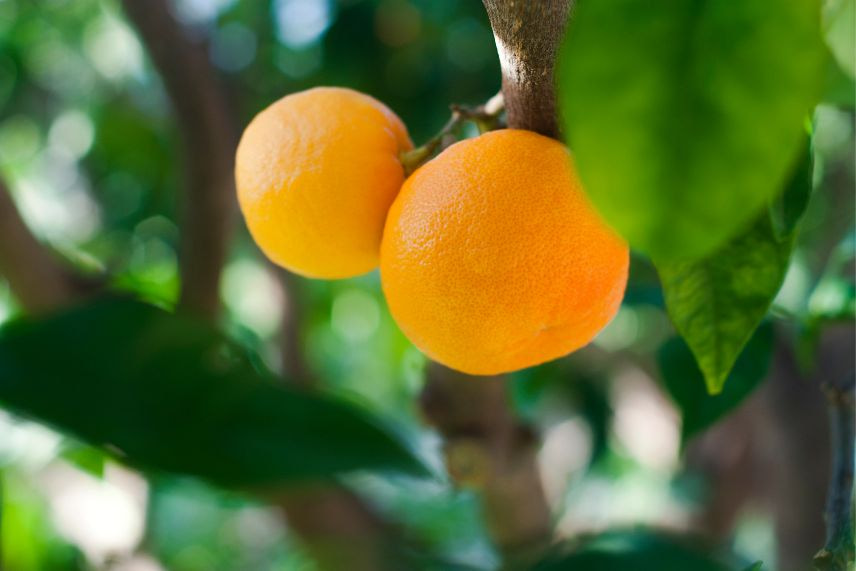
The bitter orange or bigaradier
You can also grow sweet orange (Citrus cinensis) in these areas, although it should be planted sheltered from prevailing winds, namely the mistral and the tramontane. As for the ‘Corrugata’ orange, a variety resulting from the cross-breeding of a bitter orange and a sweet orange, it is a beautiful tree that produces original fruits with undulating and cracked bark. Particularly vigorous, this orange tree can withstand temperatures dropping occasionally to -7 °C.
All varieties of lemon tree (Citrus limon) can also be grown in this area, provided the tree is sheltered from the winds.
Discover other Citrus trees
View all →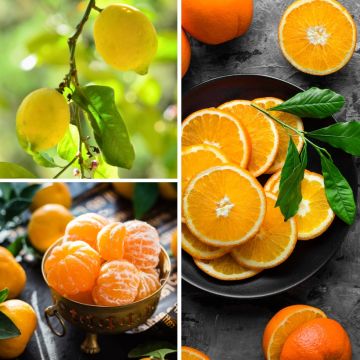
Available in 0 sizes
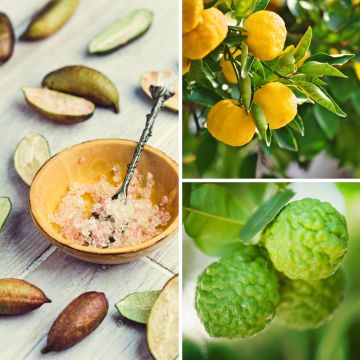
Available in 0 sizes
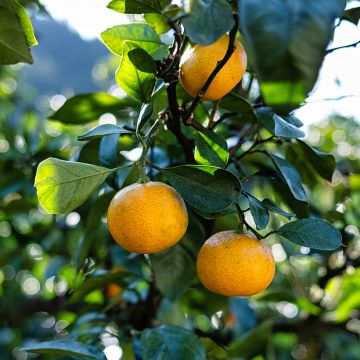
Available in 1 sizes
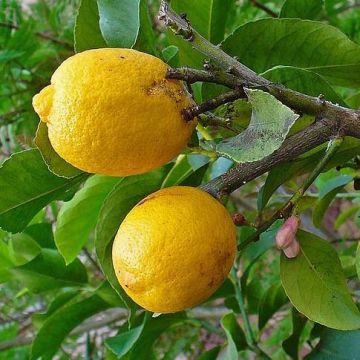
Available in 2 sizes
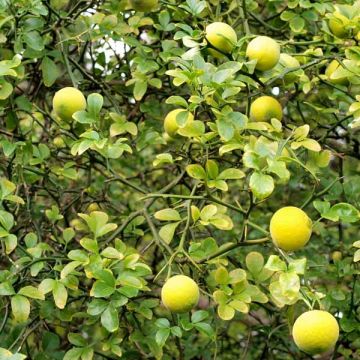
Available in 2 sizes
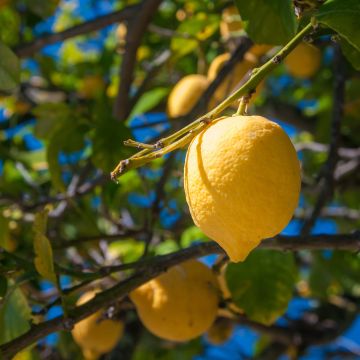
Available in 1 sizes
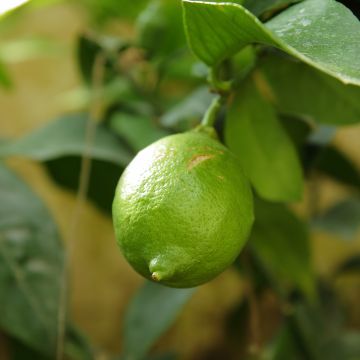
Available in 1 sizes
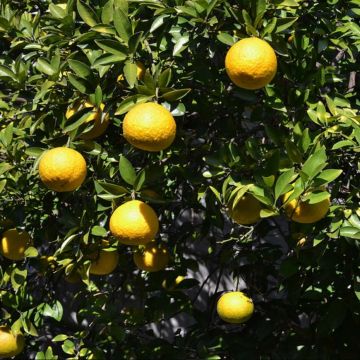
Available in 2 sizes
Available in 3 sizes
Available in 3 sizes
You live on the Atlantic fringe... up to Morbihan.
If you live on the Atlantic coast (up to Morbihan), as well as part of the Garonne basin, in areas classified as USDA 9a and 9b, it may still be possible to cultivate orange trees, bitter orange trees, and especially mandarin trees and clementine trees (Citrus deliciosa and Citrus reticulata). However, the yield can remain quite unpredictable from year to year. It is better to plant them in a very sheltered location from prevailing winds and facing south.
As these regions are not immune to a cold snap, which can feel more intense due to the wind, it may be wise to cover your trees with a winter fleece. This can provide an additional 3 degrees of warmth while allowing air and water to pass through. Avoid tightening the fleece too much by installing stakes around the tree so that it does not touch the leaves. Similarly, do not hesitate to open the fleece as soon as the sun shines.
Among mandarin trees, the Satsuma is the hardiest as it can withstand -7 °C. Only summer temperatures might limit its fruiting, but with the ongoing climate change, who knows…
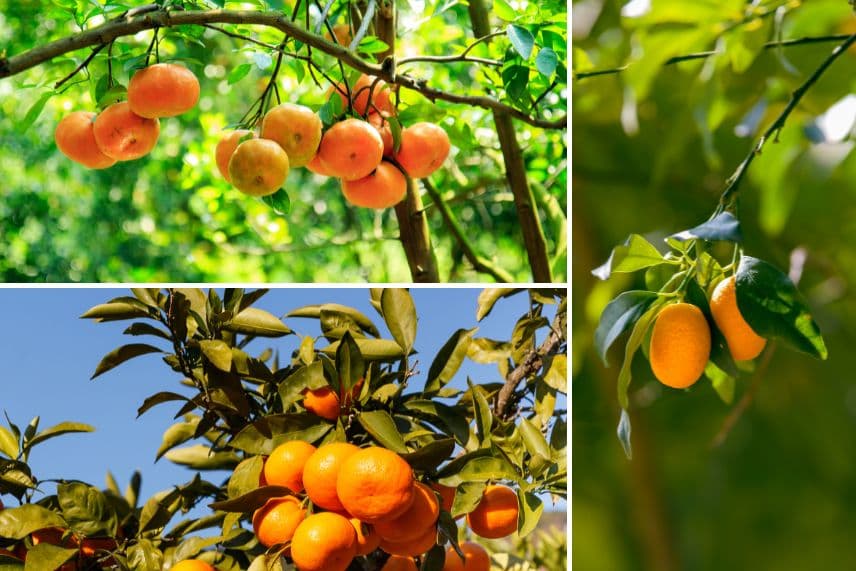
Clementine tree, Satsuma mandarin tree and kumquat
This is also a region where it is feasible to plant the kumquat (Fortunella japonica), a bush that does not belong to the Citrus genus, but to the Fortunella genus. This bush has the unique characteristic of producing small fruits, quite similar in colour to oranges, that can be eaten whole. Again, to maximise your chances, plant your kumquat in a location well exposed to southern sunlight and sheltered from winds. The tree has a hardiness of -8 °C, but the fruits freeze at -5 °C. So, winter fleece is essential!
If the Fortunella margarita is the most commercially available and appreciated in France (perhaps for its highly nectariferous flowering with a sweet fragrance), you can also discover the Fukushu or Jiangsu kumquat, for its better cold resistance.
Read also
Citrus trees: planting and maintenanceIf you live in a maritime or semi-continental climate (excluding mountainous regions)
If you are determined to grow a citrus tree outdoors, while living in an oceanic or semi-continental climate (excluding mountainous regions), a tree is perfect for you: the Poncirus trifolata or thorny lemon tree. It withstands temperatures down to -15 °C, and exceptionally even to -25 °C, and has all the charming qualities to attract citrus enthusiasts: it is a bush with an upright habit that reaches 3 to 4 metres and produces very fragrant white flowers in spring. The fruits, inedible raw but delicious when cooked, are intermediate in size between kumquats and mandarins. Plant it in full sun, in cool, well-drained, non-calcareous soil.
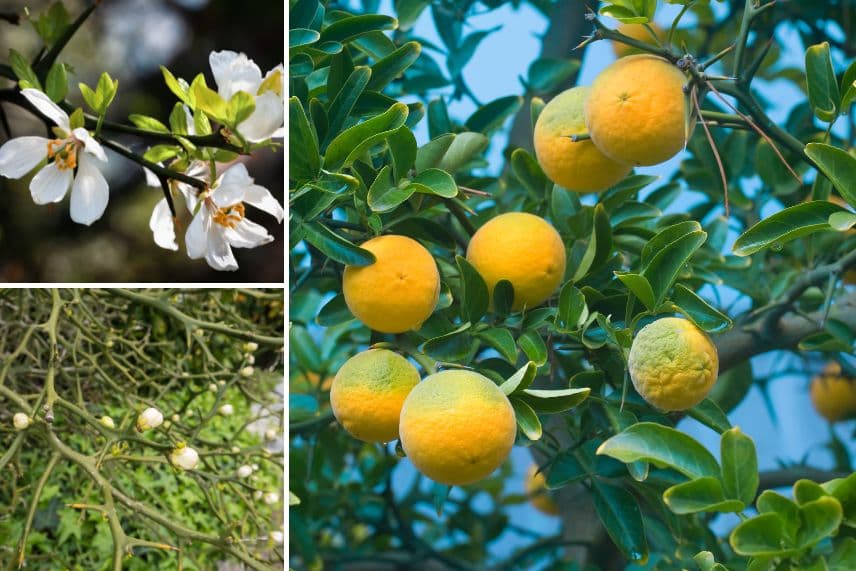
To learn more about this amazing citrus tree:
- Poncirus: planting, caring for, and harvesting the fruits
- Poncirus trifolata, an ornamental citrus tree that has plenty of spines
You live everywhere else!
If you live in a region other than those blessed by the sun god, don’t despair! Indeed, you are fortunate to experience varied climates, with regular frost episodes, even snow, the biting cold accentuated by a persistent north wind, and spring and autumn rains…
There’s no point in hoping to grow orange trees (“An orange tree on Irish soil, we will never see it,” sang Bourvil in his time!), mandarin trees, lemon trees, or any other citrus trees in the ground. It’s impossible. 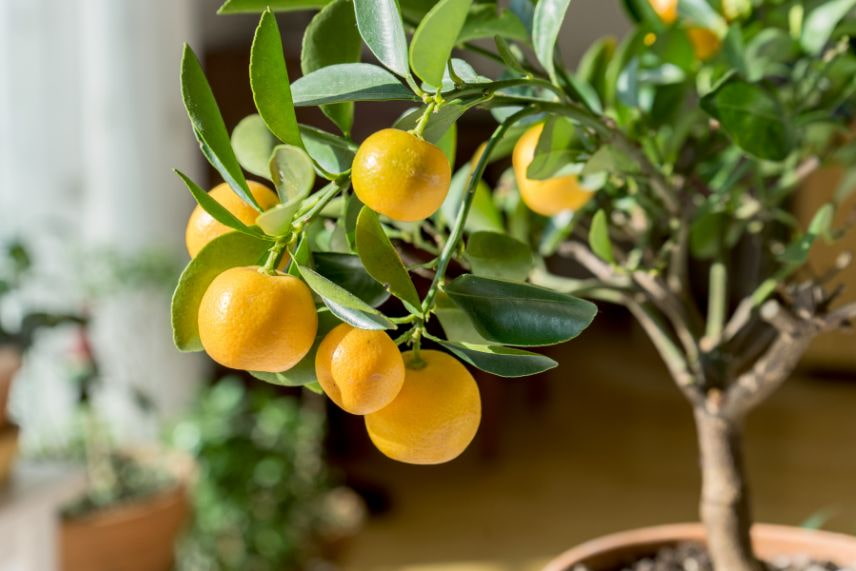
However, if you have a conservatory, a cold greenhouse, or any frost-free shelter, you can grow all citrus trees in pots or containers. In winter, they can find refuge there to spend their dormancy period. Ideally, in winter, citrus trees should be placed in a bright room with a temperature between 8 and 10 °C. If there is a risk of lower temperatures, insulate your pots from the ground or elevate them, then surround them with a frost protection fleece or bubble wrap. The tree will be protected by a frost protection fleece. The main thing is that your tree has enough light. However, wintering in a garage or cellar is not suitable due to lack of light, just as in a home where the air is too hot and too dry.
In less cold regions like Brittany, or areas with an oceanic climate, from the west of the country to the centre, away from highlands, citrus trees can remain outside, protected by a frost protection fleece, and lined along a south-facing wall.
In spring, citrus trees can go back outside as soon as night frosts are no longer a concern.
- To learn everything about wintering citrus trees: Wintering orange trees, lemon trees, and other citrus trees, our tips to protect them from the cold.
- Which citrus trees to grow in pots on a terrace?
- Subscribe!
- Contents
Comments