





























When renting, who is responsible for the garden maintenance?
What are a tenant's responsibilities regarding garden maintenance?
Contents
When you rent a house, you often wonder who will be responsible for maintaining the garden… the tenant, or the landlord? It’s a question worth asking at the outset, as it can quickly become problematic, the garden reverting to a wild state if nothing is done.
You’ve just moved in as a tenant and have a small plot or a large garden at your disposal, or are you hesitating to rent a property with outdoor space because of the extra costs it would add to your tenancy?
Read this before you decide!

Not tending the garden as a tenant: impossible!

What does the law say?
In this regard, the 6 July 1989 Act No. 89-462 and a 1987 French decree have ruled on the question of maintenance of a garden under tenancy with exclusive use. It is the tenant’s responsibility to bear the costs and works involved in maintaining the garden, regardless of its size. The garden is, in fact, regarded as an integral part of the dwelling.
In all cases, you should rely on the tenancy agreement or lease, which clearly stipulates the terms. If the terms of the lease are not sufficiently clear (you may be dealing with a dwelling without explicitly stating that the garden is included), the best is to have it clarified to you in person, but usually in writing, by the landlord or the letting agency.
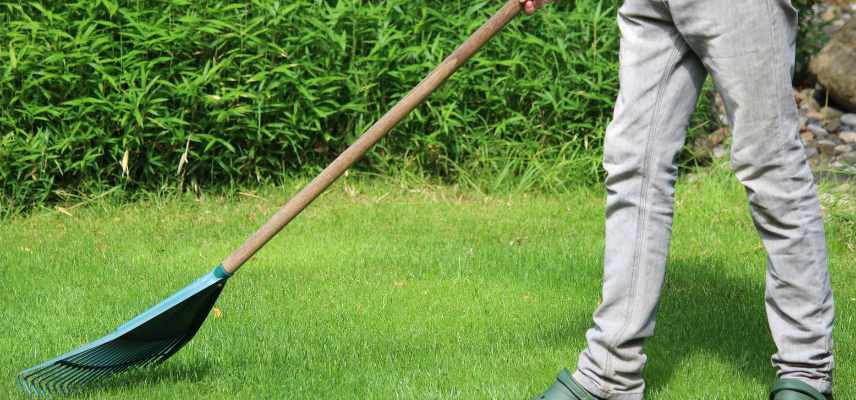
It is the tenant’s responsibility to maintain the garden
Read also
Gardening in condominiumWhat needs maintaining?
What exactly constitutes routine maintenance of a rental garden? Here are the obligations of a garden tenant: :
- Lawn: when there is a lawn, mowing must be carried out regularly for a neat appearance. Dead leaves are also part of the tenant’s duties;
- Hedge pruning: they must be kept in their shape and size, but also replaced if any shrubs comprising them die;
- Tree pruning: as a tenant, you must ensure that trees do not touch overhead power cables, nor encroach on the neighbour’s property. You must undertake pruning yourself, or via a professional arborist;
- Caterpillar nest removal, i.e. removal of caterpillar nests from trees;
- Shrub pruning: within the garden, shrubs must be pruned to maintain dimensions equal to those observed at the start of the tenancy;
- Weeding on paths and the terrace: the paving slabs or paths must be moss-free and weeded;
- Beds: existing planting beds must be maintained, i.e. watered to sustain the vegetation in place, and weeded; the tenant will be responsible for replacing any plants that perish if neglect is found to have caused their decline;
- Movable irrigation equipment must be repaired and replaced as needed;
- Pool or pond: these are also part of routine garden maintenance;
- Fixed outdoor fittings (grilles, wicket gate, driveway gate) will also be included in the garden’s general maintenance: repair of small parts as needed, lubrication of bolts and hinges, etc. If movable furniture is present, the tenant must carry out minor repairs (painting).
- Finally, if garden maintenance equipment is provided by the landlord (lawn mower, pruning shears, etc.), the tenant is also required to maintain it with care, and repair as needed.
Special case: if the garden is a communal area or even a private garden, in a block of flats with a management company, check the lease/management company rules that detail the rules applicable to outdoor spaces.
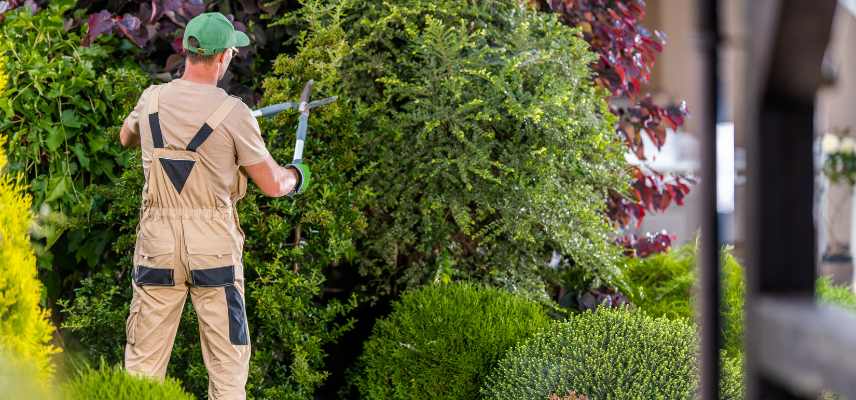
Keeping shrubs at their existing dimensions is part of the duties you will be responsible for as a tenant
The limits of obligations: do not confuse maintenance with restoration
The garden must be returned to the landlord in a condition similar to what it was when you moved in. Tenants are not expected to restore a garden that was left untended on arrival. Landlords will never be able to ask you to pay for an untrimmed hedge if it wasn’t maintained when you moved in.

At the end of the tenancy, when you leave the premises, the garden should resemble the one you knew on arrival…
The tenant's responsibilities in the event of failure to maintain
In fact, the garden should be treated strictly in the same way as the living area, and it is the condition report that will be authoritative if there is a dispute. It is therefore essential, when moving into a dwelling with exclusive use of a garden, to take photos, or even videos, that attest to the garden’s condition, so you can easily compare them with the garden you are leaving, and to notify in writing the various characteristics of the garden (for example, hedge height).
If the garden does not conform to its original state, the landlord will be within their rights to demand compensation for the cost of the works or maintenance to be carried out. Note that if no condition report has been carried out, the garden is deemed to have been in good overall condition.
Finally, an important point: a tenant is not entitled to modify the garden’s overall appearance or to make specific alterations, unless authorised by the landlord: for example, you cannot fell a tree or fill in a small pond for personal convenience, because you thought there was too much shade or you wished to have more space. Nor may you plant a tree or bush without the landlord’s consent.
But what about smaller alterations? In theory, you can create a small vegetable patch or plant flowers without issue, provided this does not alter the garden’s overall appearance. But be sure to read the tenancy agreement carefully: the landlord may have included specific restrictions.
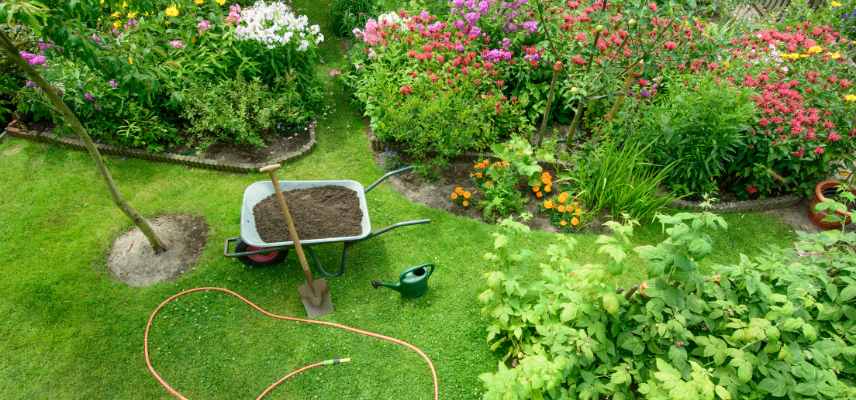
Be careful not to alter the garden!
The owner's obligations and remedies
The landlord, for his part, is responsible for what is described as substantial or exceptional works, namely, in gardening terms, tree felling and stump removal (usually for safety reasons if the tree is deemed dangerous), and major works such as replacing defective technical installations (irrigation).
If a landlord detects a breach or a flagrant maintenance defect, he must send the tenant a letter contesting the proper performance of the tenancy terms. Without an amicable agreement, if the tenant refuses to carry out or pay for the maintenance, the landlord may take the matter to court, initially via a bailiff, to obtain a judicial termination of the tenancy.
Our tips for a harmonious approach to garden management between landlord and tenant
Having access to a garden as a tenant is a privilege that many people envy. But don’t embark on this venture if you don’t have the heart for gardening or if you’re not really keen on it. A garden indeed requires ongoing and lasting maintenance, you must bear this in mind when you sign a lease that commits you for several years. It also entails trips to the recycling centre to drop off green waste, if the local council does not offer a service in this regard (which is most common in very large cities).
On signing the lease, both landlord and tenant should clearly agree on what is required for garden maintenance, this generally helps avoid misunderstandings and potential problems, even legal issues, when leaving the property. Be vigilant on both sides about the condition report.
Finally, for anything relating to equipment such as the lawn mower, make sure to check their working condition at the time of the move-in condition report to ensure they are functioning properly.
Learn more
You can find full texts of the French decrees and laws that interest us here:
- Decree No. 87-712 of 26 August 1987 which sets out the list of repairs that constitute tenants’ repairs.
- Law No. 89-462 of 6 July 1989 which specifies improvements to landlord-tenant relations.
- Subscribe!
- Contents
Comments