





























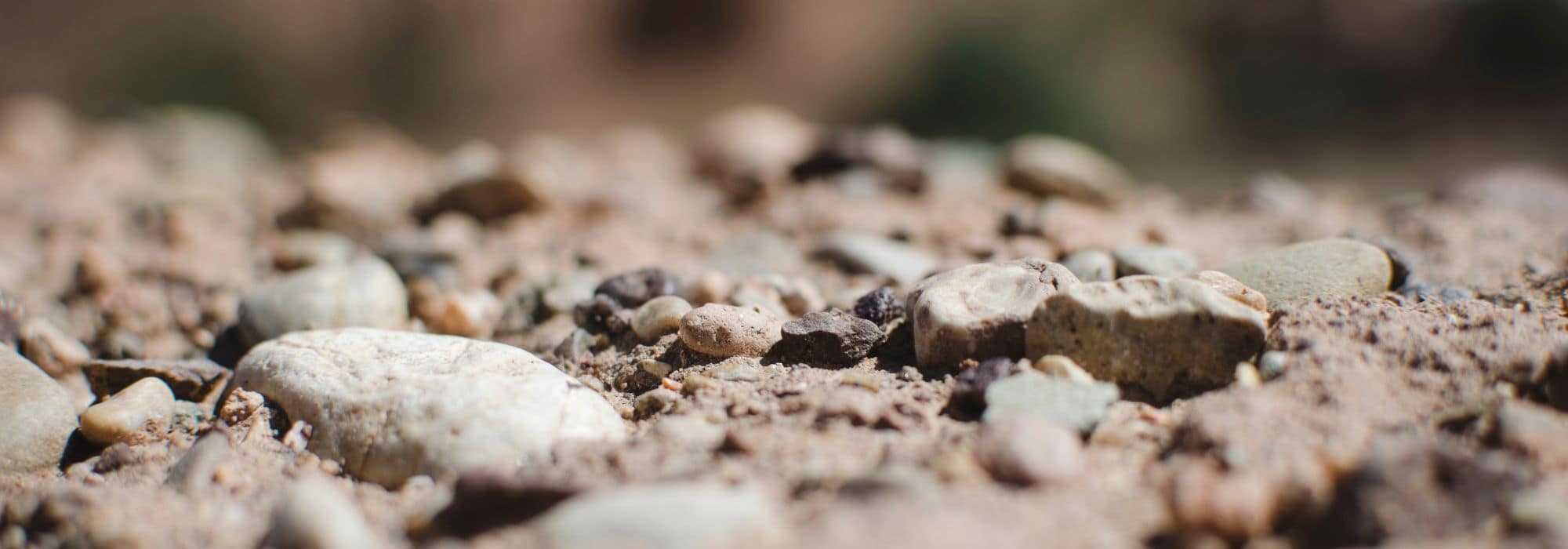
5 schrubs for rocky soil
Selection of bushes to plant in stony soils.
Contents
If you’ve inherited rocky soil, it’s not the soil you dreamed of. No need to wallow in the gardener’s blues… Once again, gardening in rocky soil is not a curse! It is true that rocky soil contains a very large number of stones and rocks of different sizes that make all gardening tasks a real chore. That is, soil often calcareous, which simply doesn’t retain water, as the stones have no porosity. Finally, rocky soils are dry and hot, especially in summer, as the stones, present in abundance, absorb heat and release it at night. However, if you choose bushes that naturally grow in these rocky and stony soils, you will benefit from stunning borders.
Alongside classic Buddleja or Oleander (Nerium), discover our selection of five bushes perfectly suited to rocky soils, typically dry and arid.

The shrubby or woody bupleurum (Bupleurum fructicosum)
Sometimes called woody bupleurum, this shrub belongs to the Apiaceae family, also known as the Umbelliferae, making it a cousin of the carrot. This woody bupleurum (Bupleurum fructicosum) grows naturally in the Mediterranean garrigue, and more generally in arid and rocky areas of the northern hemisphere and Africa. That said, calcareous, stony and dry soil hardly fazes it! It even tolerates sea spray, making it an ideal bush for coastal positions.
In terms of aesthetics, woody bupleurum is an interesting bush for more than one reason. Fast-growing, it forms a shrub 2 to 2.5 m tall and about 1 to 1.5 m wide, with a habit that is both upright and spreading, and a rounded crown. With erect shoots, it often presents a dense, lush silhouette. Its semi-evergreen to evergreen foliage is leathery, elongated, with parallel longitudinal veins. With a waxy appearance, it bears a bluish-green colour that is quite attractive. When crushed, it releases a pungent aroma.
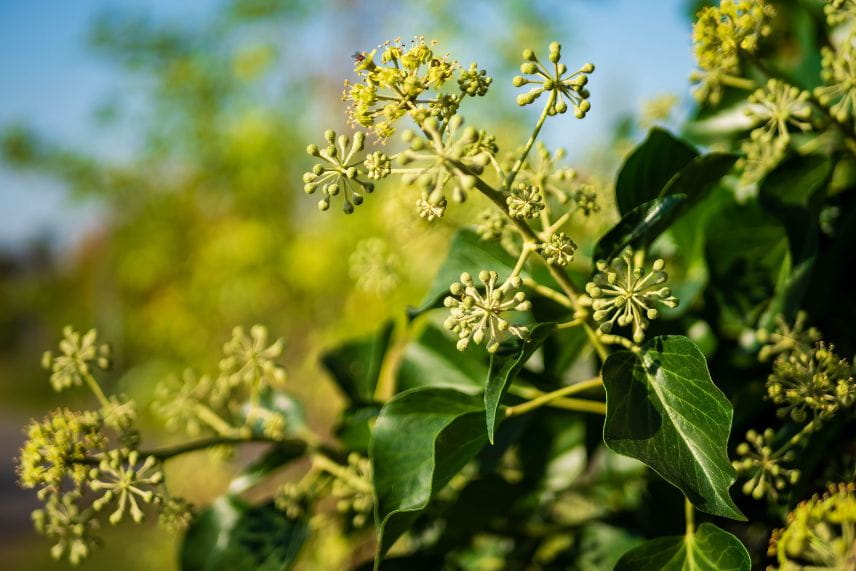
Flowers of the woody bupleurum (woody bupleurum) (Bupleurum arborescens)
The woody bupleurum is particularly noteworthy for its long, abundant flowering in midsummer, even during drought. From June to the end of August, this shrub is covered with star-shaped terminal umbels, consisting of tiny chartreuse-green flowers, which recall fennel flowers. Slightly fragrant, these flowers are very melliferous and nectariferous and attract swarms of bees, butterflies and also wasps. They bear brown to black achenes, whose seeds readily reseed themselves.
It is hardy to -15°C, which allows planting beyond the Mediterranean region.
Very easy to grow, woody bupleurum adapts to the driest, stoniest soils that are perfectly drained and light. It thrives in full sun, but can tolerate partial shade. If it needs watering the first summer, thereafter it will cope on its own. It forms a successful association with perovskias, lavenders, rockroses and rosemary.
The bladder senna (Colutea arborescens)
What a curious plant this little shrub is! Even by its name, which evokes the simple pleasure of ‘baguenauder’ in nature, with the nose in the air watching butterflies flutter… But back to baguenaudier (Colutea arborescens), a shrub, also known as bladder senna, in the Fabaceae family. A shrub that is at once vigorous, hardy, easy to grow and adaptable, including to the most unforgiving soils such as those of fallow land or spoil heaps.
Height 2 to 3 m, baguenaudier is a shrub with a very ramified, bushy and erect habit, of rapid growth. If grown in rich soil, it can reach 4 m. Over time, it also forms a trunk. Its deciduous foliage, finely divided into 7 to 12 leaflets, oval or elliptic, veined, carries a pretty blue-green colour. In spring, from May to August, this shrub is covered with Fabaceae-type flowers, yellow with brown stripes. Then come the pods which change from green to pink to reddish-brown. When ripe, these translucent pods burst noisily under the fingers. Baguenaudier self-seeds very readily.
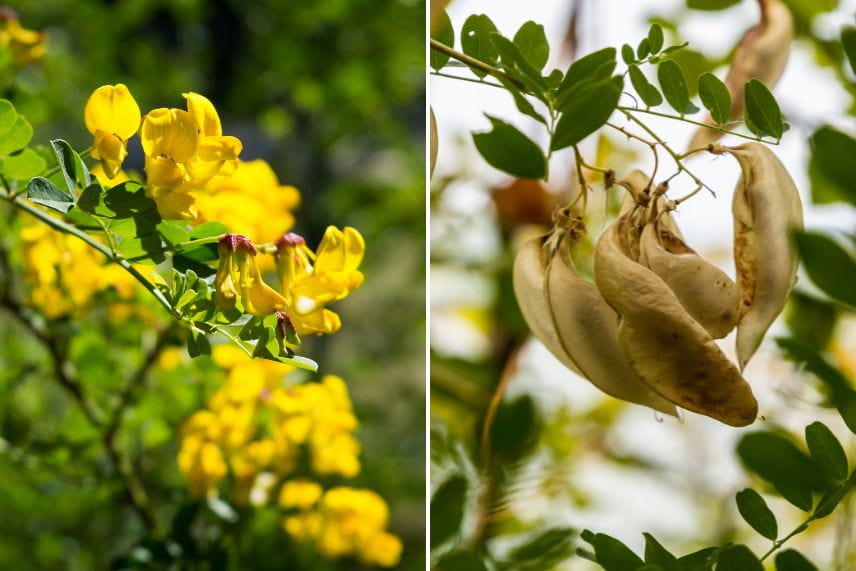
Flowers and fruits of baguenaudier (Colutea arborescens)
The hybrid variety Colutea (x) media ‘Copper Beauty’ offers very abundant flowering in a magnificent coppery-orange, clearly more ornamental than the typical baguenaudier.
Hardy to at least -20 °C, this shrub adapts to all soils, enriching them. Indeed, like all Fabaceae, its roots have the ability to capture and fix atmospheric nitrogen. It thrives in the company of rock roses (Cistus) or Helianthemums.
Osage orange (Maclura pomifera)
At maturity, the Osage orange (Macula pomifera) can reach 12 m in height and 8 m in spread. Its growth is rapid. This bush takes its name from a Native American tribe, the Osages, who used its hard wood to make their bows. Hence its other vernacular, “bow wood.” Beyond its adaptability to rocky soils, the Osage orange is a bush with multiple trunks, bearing fissured and twisted bark, and with a spreading habit and a broad crown. Its twigs are thorny.
Its deciduous foliage, oval and pointed, lanceolate and acuminate, is a beautiful bright green. In autumn, it dresses in a magnificent yellow colour. But what mainly defines this bush are its flowering and its fruit. However, the Osage orange is a dioecious species, meaning there are male and female bushes. Fruiting on the female plant will therefore occur only in the presence of a male plant and only after 10 to 15 years of cultivation. But patience is rewarded. The flowering, at the leaf axils, takes place in June in the form of yellow pom-poms, pedunculated in pendulous clusters on the male plants. In September the globular fruits appear, measuring between the size of an orange and a grapefruit, with a knobbly appearance and a green then yellow colour. Not edible, they persist on the tree after the leaves have fallen.
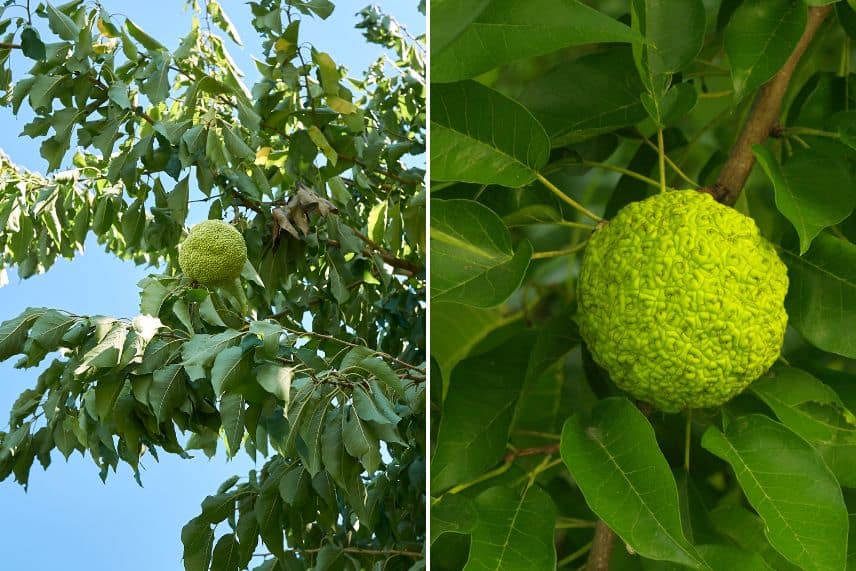
Osage orange (Macula pomifera)
Hardy to -20 °C, the Osage orange is planted in full sun in deep, well-drained soil, which can be dry, calcareous and stony. It requires no special care and resists drought, urban air pollution…
The narrow-leaved mock privet (Phillyrea augustifolia)
Yet another bush of Mediterranean origin, highly drought- and sea-spray-tolerant, which can grow easily in rocky soil! It should be noted that the narrow-leaved Phillyrea (Phillyrea angustifolia) belongs to the Oleaceae family, hence it is a cousin of the olive. Naturally, it grows in garrigue. Like the olive, it has a short trunk, narrow leaves and a fruiting that evokes olives, though not edible.
With slow growth, this bush offers a single trunk and a spreading, compact and bushy habit. At maturity, it does not exceed 2–3 m in height, with a spread of roughly the same. Its long, slender shoots bear small leaves, linear and lanceolate, glossy on the upper surface, in a fairly dark green. Young leaves emerge bronze. In spring, between March and May, very discreet flowers bloom, colour white-cream to greenish. This flowering is especially interesting for the delicate fragrance it emits and its melliferous properties. Then globose drupes appear, bluish-black when ripe, delighting birds in autumn.

Slightly hardier than the olive, the narrow-leaved Phillyrea can withstand -15 °C once it has reached 4–5 years. By contrast, young plants are considerably more sensitive to cold. It thrives in all soil types, but rocky soils suit it perfectly. In terms of exposure, sun is recommended, though partial shade does not bother it. It can be planted alongside myrtles, strawberry trees (Arbutus), and a pistachio (Pistacia lentiscus) (Pistacia lentiscus)…
Mastic tree (Pistacia lentiscus)
Also known as the mastic tree, the pistachio tree (Pistacia lentiscus) is exceptionally hardy in heat and drought.
As a member of the Anacardiaceae family, it grows spontaneously in the Mediterranean garrigue and in scrub vegetation in stony, dry soils.
A cousin of the pistachio tree (Pistacia vera), which bears pistachios, this bush reaches 3 m in height with a 2 m spread.
Depending on where it’s planted, it can take several forms, sometimes upright, sometimes more compact, but always fairly bushy.
Its evergreen and leathery foliage, divided into oval leaflets, displays a dark green colour. By contrast, leaf colour changes with the seasons. Young leaves are pale green, winter foliage rather purplish or bronze. Flowering occurs between March and May, very discreetly. It is followed by fruiting in clusters of small fruits that turn from red to black.
As Pistacia lentiscus is a dioecious species, a male plant must be grown near a female plant for pollination to occur.
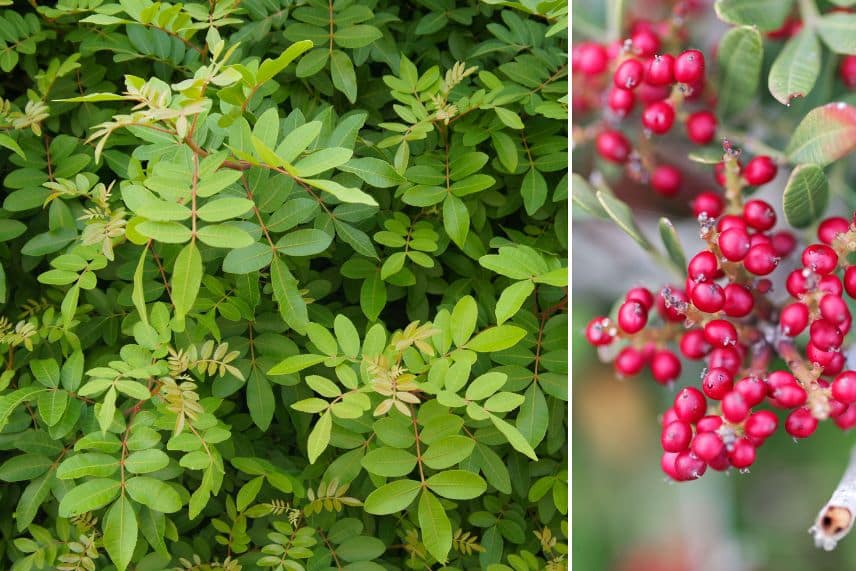
The mastic tree (Pistacia lentiscus)
This bush truly adapts to all situations: it grows in dry and rocky soils, it easily tolerates sea spray, and can be grown in full sun as well as in shade. However, it should be grown in regions with a mild climate, as it is only hardy down to -12°C.
- Subscribe!
- Contents
Comments