





























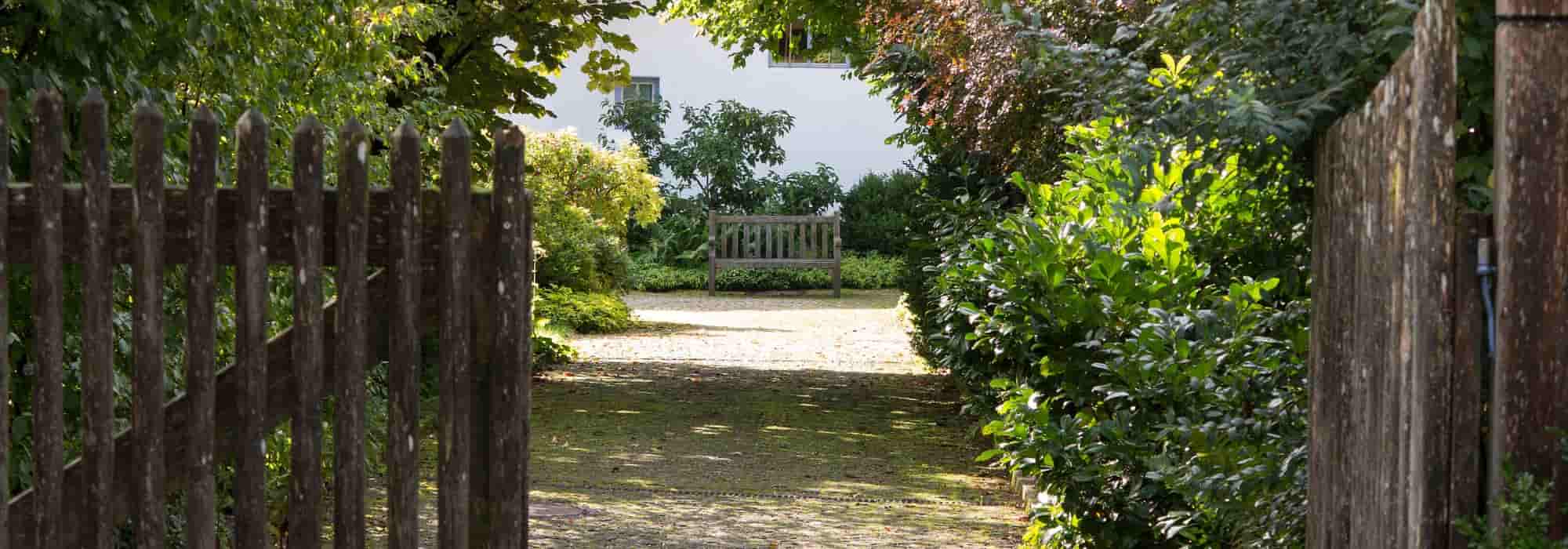
5 hedge bushes for stony soil
Selection of bushes suited to a rocky, dry and calcareous soil
Contents
Obviously, every gardener’s ultimate wish is to have a rich, humus-bearing soil that is perfectly drained, deep and on the cool side. Unfortunately, there’s often a gap between dream and reality. And the soil you’ve inherited is dry, stony, not very fertile, chalky; it doesn’t retain water… in short, not very easy to work. That said, it’s no reason to give up and permanently stow your tools in the garden shed. Stony soil can be enriched with compost or plant-based mulches, it can be worked, and it’s entirely possible to create an ornamental garden there. You simply need to choose suitable plants that will create planting beds, rock gardens, or even hedges.
Discover our selection of 5 bushes for low or tall hedges suited to stony soil.

Sea purslane or sea orache (Atriplex halimus)
You may know the orache (Atriplex hortensis), that herbaceous vegetable plant eaten as a leafy vegetable much like spinach? Admittedly, the plant in question is indeed a cousin of that spinach substitute, but the Atriplex halimus forms a small bush reaching scarcely more than 1.5 to 2 m in height and spread. With a fine silvery evergreen foliage, this small bush also has grey branches. Widespread on coastal embankments, it can help limit soil erosion. It also adapts very easily to stony, sandy, dry, salty soils… as well as to sea spray. This makes it an ideal bush for windbreak hedges, not least in a seaside garden. All the more so as it benefits from rapid growth, forming a broad, compact, entirely grey sphere. It is also very drought-resistant and hardy down to -12 °C.
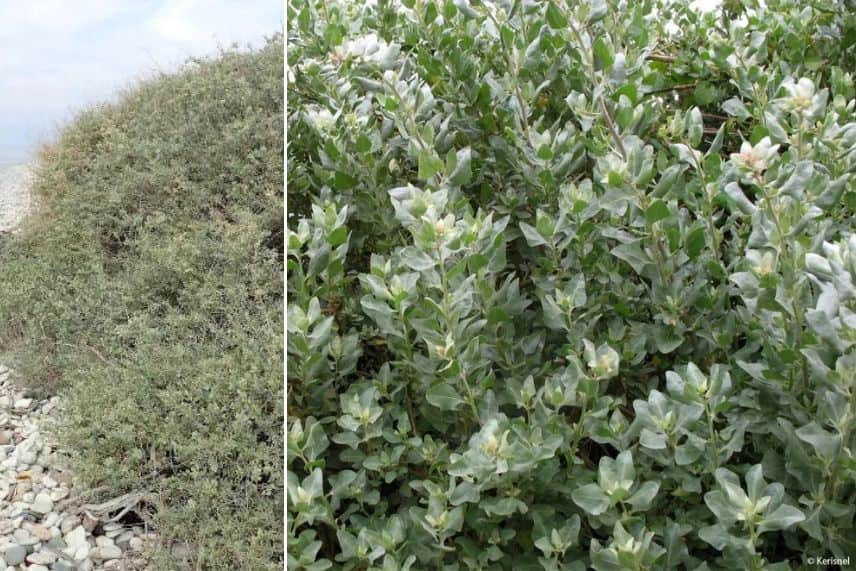
The Atriplex halimus
Its only drawback lies in its summer flowering, between July and August, which is of little interest. Indeed, the small flowers open grey and go completely unnoticed. However, this bush tolerates pruning well, another reason to include it in a hedge! Especially as it tends to become scruffy and unruly.
One final point in favour of this bush: its leaves are edible and have a slightly salty flavour, perfect in a salad.
Read also
5 trees for rocky soilThe common dogwood (Cornus sanguinea)
The common dogwood (Cornus sanguinea) is an interesting bush in more ways than one! This native species, very easy to care for, grows in all soil types, including stony and poor soils. About 2 m tall and wide, it can easily be included in an informal hedge, or even a flowerbed, surrounded by perennials, especially as it forms a clump that is at once spreading and upright.
Of course, this bush is notable for its vivid red bark, which is at its best in winter, when the shoots are bare of leaves. But its foliage is also attractive: elliptical to ovate, with a pointed tip, the leaves change from glossy green to orange‑red tones in autumn. As for flowering, it occurs in May–June in flat corymbs made up of small white flowers. After the flowers, small berries appear that progress from green through red to purple. These berries attract birds, which feed on them.
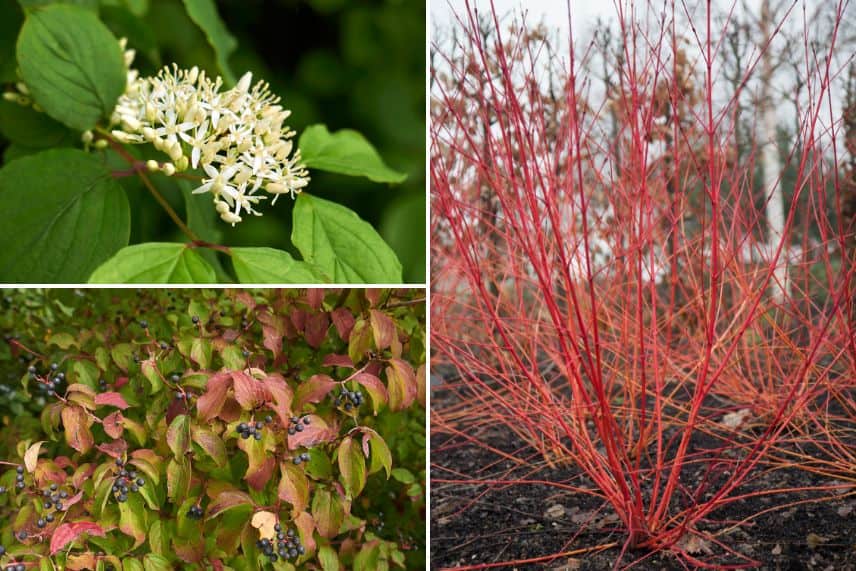
The Cornus sanguinea
If the common dogwood is undemanding about soil, it is equally undemanding about exposure. It tolerates both sun and partial shade.
Further reading : Flowering dogwoods: planting, pruning and maintenance
The Japanese privet (Ligustrum japonica)
The privet… Admittedly, this bush may seem common in a hedge. However, don’t be fooled by appearances! The Japanese privet (Ligustrum japonica) truly stands out from its relatives, even though, like them, it is easy to care for, suited to stony, poor soils and to urban pollution. Indeed, this variety of privet, which reaches 2 to 3 m in height with a width of 2.50 m, offers a more substantial evergreen foliage than the typical species, dark green, slightly pointed and glossy. It somewhat recalls that of the camellia. Among its charming attributes, you can add its young shoots that emerge red amid the green foliage. In July, this privet bursts into pretty white flowering. The very fragrant panicles of flowers are also a good size and give way to black berries.
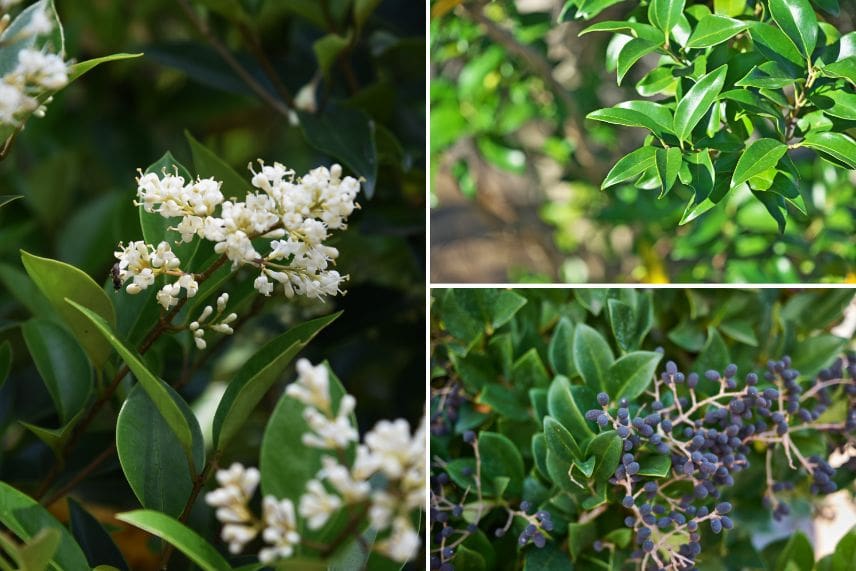
For regions with the harshest winters, opt for the Ligustrum japonica ‘Greeen Century’, which proves hardier than the typical species, down to −15 to −17 °C.
This Japanese privet fits perfectly into an informal hedge, is easy to prune and enjoys both full sun and partial shade. At maturity, it forms a handsome bush with a compact, dense and erect habit where garden birds often nest.
Further reading: Privet, ligustrum: planting, pruning and maintaining
The milky cotoneaster (Cotoneaster lacteus)
Once again, you think you know everything about the cotoneaster. However, the milky cotoneaster may still hold a few surprises. The milky cotoneaster (Cotoneaster lacteus) is indeed a bush particularly well suited to stony soils thanks to its robustness and its tolerance of all soil types. Particularly vigorous and fast-growing, it soon becomes dense to form a bushy, rather rounded shrub. Its reddish-brown, flexible shoots tend to arch. In 5 to 6 years it will reach a height and width of 3 m.
Its evergreen foliage is fairly dark green above and greyish beneath, thick and leathery, rather ovate with a pointed tip. In this setting, between May and July, panicles of milky-white flowers, highlighted by a heart of pink stamens, open, producing bright vermilion-red berries borne in clusters. These fruits are a treat for birds in winter.
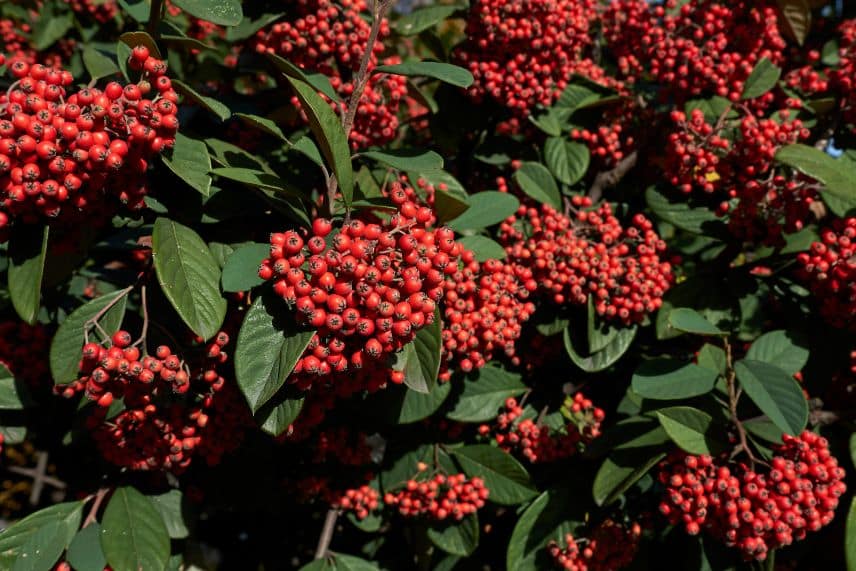
This bush is hardy down to – 20 °C and resistant to drought. It adapts to full sun, but also to shade or partial shade, especially in regions with hot summers. However, its flowering will be less dense in partial shade or shade.
Further reading: Cotoneaster: planting, pruning, care
The chaste tree (Vitex agnus-castus)
This very handsome bush has the ability to grow in all types of soil, including stony and poor ones. And as it can reach a height of 1.10 m to almost 3 m, it can be perfectly integrated into an informal hedge. Also called the pepper tree, the chaste tree (Vitex agnus-castus) is exceptionally tough. But what essentially gives it its charm is its late flowering in varying shades of mauve-blue depending on the varieties. From July to September, the chaste tree is indeed covered in flower spikes, reminiscent of those of the buddleia, narrow and upright, and very melliferous. Its deciduous leaves, palmate and divided into 5 to 7 leaflets, give off a peppery scent when crushed. They take on beautiful yellow tones in autumn. The black fruits that follow the flowers, similar to peppercorns, are also aromatic.
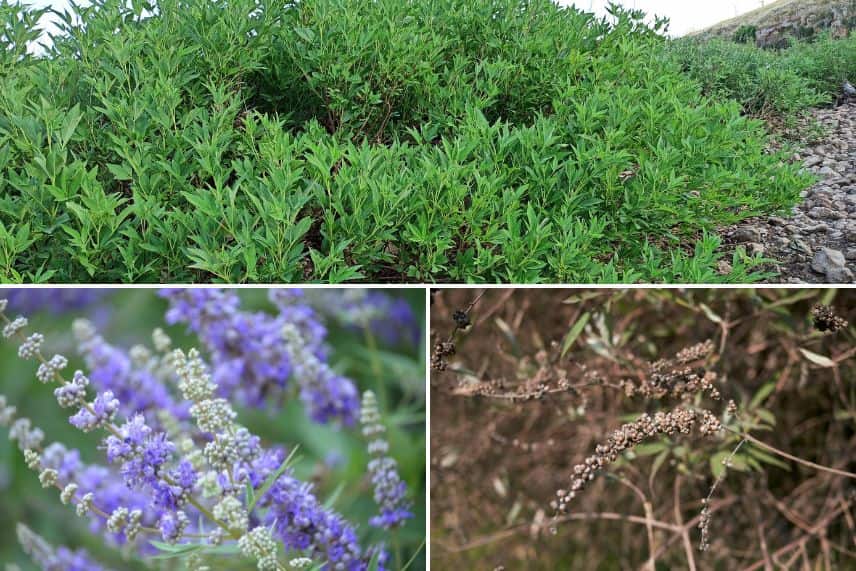
Very tolerant of sea spray, but also of drought, this bush can be planted anywhere thanks to its hardiness down to -20 °C.
further reading : Vitex agnus-castus, gattilier : to plant, to grow, to prune.
- Subscribe!
- Contents
Comments