





























6 hardiest trees: the most resilient for a worry-free, low-maintenance garden.
Our selection of very hardy trees
Contents
Harsh climatic conditions are becoming increasingly common. Choosing trees that can withstand drought, diseases and cold is essential for any gardener looking to create a durable green space. Our selection of six hardy trees is designed to showcase specimens of ornamental value and exceptional resilience. These trees have been selected for their ability to thrive in challenging conditions, thereby reducing maintenance requirements. Whether you live in a drought-prone region, your garden is exposed to diseases, or you face harsh winters, these trees offer a dependable and aesthetically pleasing solution.

Virginia sumac or Rhus typhina
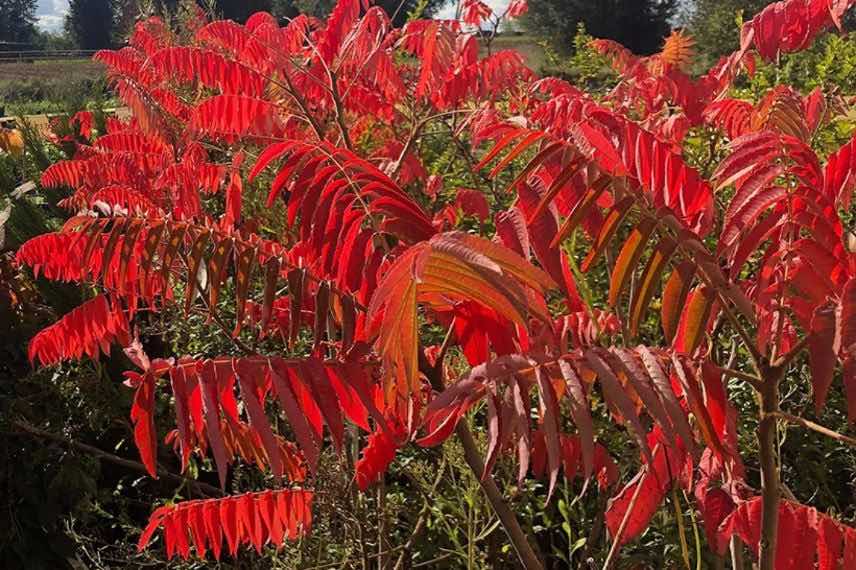
The Virginia sumac or Rhus typhina is a suckering shrub or small tree native to the eastern North American region and introduced to Europe in the early 17th century. Its hardiness allows it to live for 50 to 100 years. It bears yellow-green panicles of flowers from June and throughout the summer. This shrub bears male and female flowers on separate plants, the latter giving rise to hairy red fruits forming clusters that persist into winter, even after the deciduous leaves have fallen.
Its foliage, borne on red villous shoots, draws the eye with its green hue that turns to orange-red in autumn. The leaves, which can measure between 20 and 60 cm in length, consist of 11 to 31 oblong, dentate and deeply divided leaflets.
With a height of up to 8 metres at maturity, Rhus typhina is adaptable; it can be planted as a specimen, in groups, in an informal hedge or even in a pot.
It thrives in a variety of habitats such as dry, rocky slopes, meadows, scrub and forest edges, where it helps prevent soil erosion. Valued for its melliferous qualities, it attracts pollinating insects and butterflies, contributing to the garden’s biodiversity. Suckering, it can be very invasive.
It is important to note that the sap of Rhus typhina can be toxic, causing severe skin reactions in some people.
Read also
10 easy-to-sow treesAcer pseudoplatanus or sycamore maple
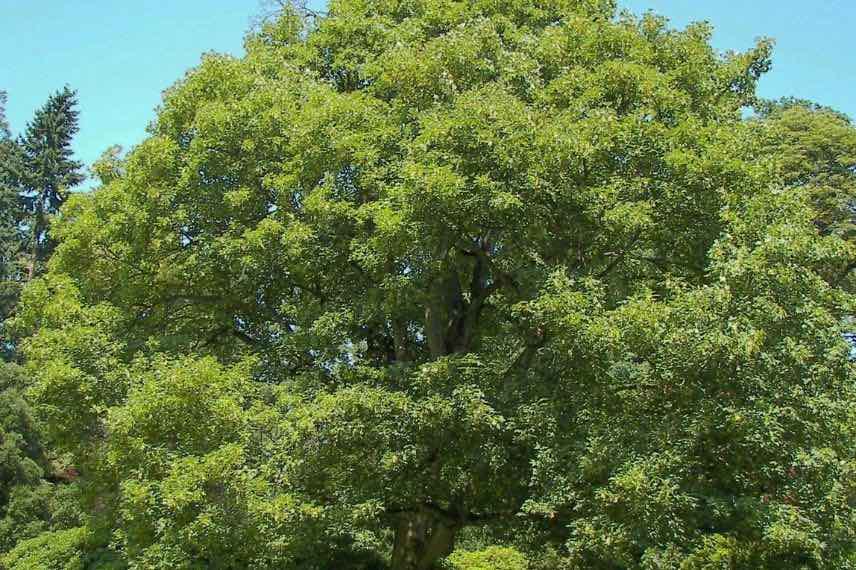
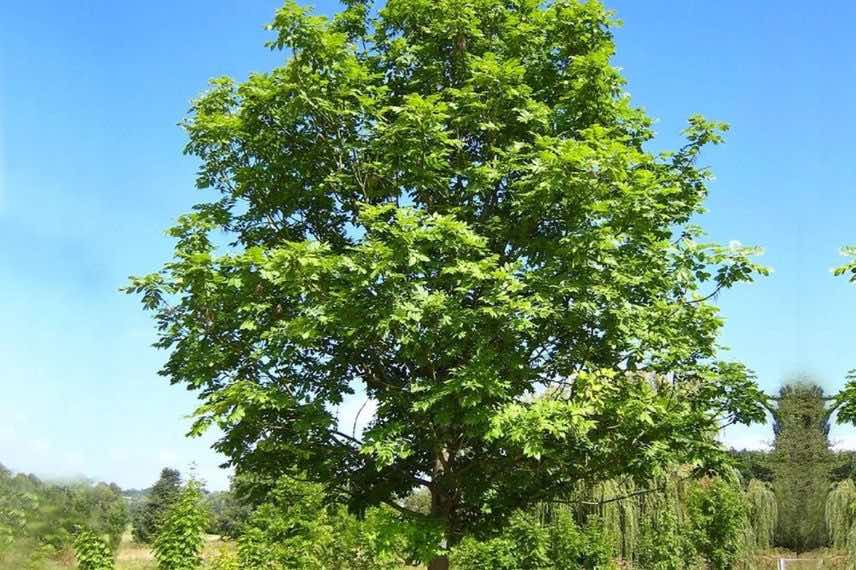
Acer pseudoplatanus or sycamore maple is a species of maple frequently encountered in France, appreciated for its dark green, palmately lobed leaves that turn golden yellow in autumn. Cet arbre de grande taille au port arrondi et dense trouve sa place aussi bien en isolé que dans des alignements ou comme brise-vent, grâce à sa croissance rapide et sa robustesse. Peu exigeant en termes de sol, il nécessite un espace suffisamment vaste pour son développement.
Robinia pseudoacacia or black locust
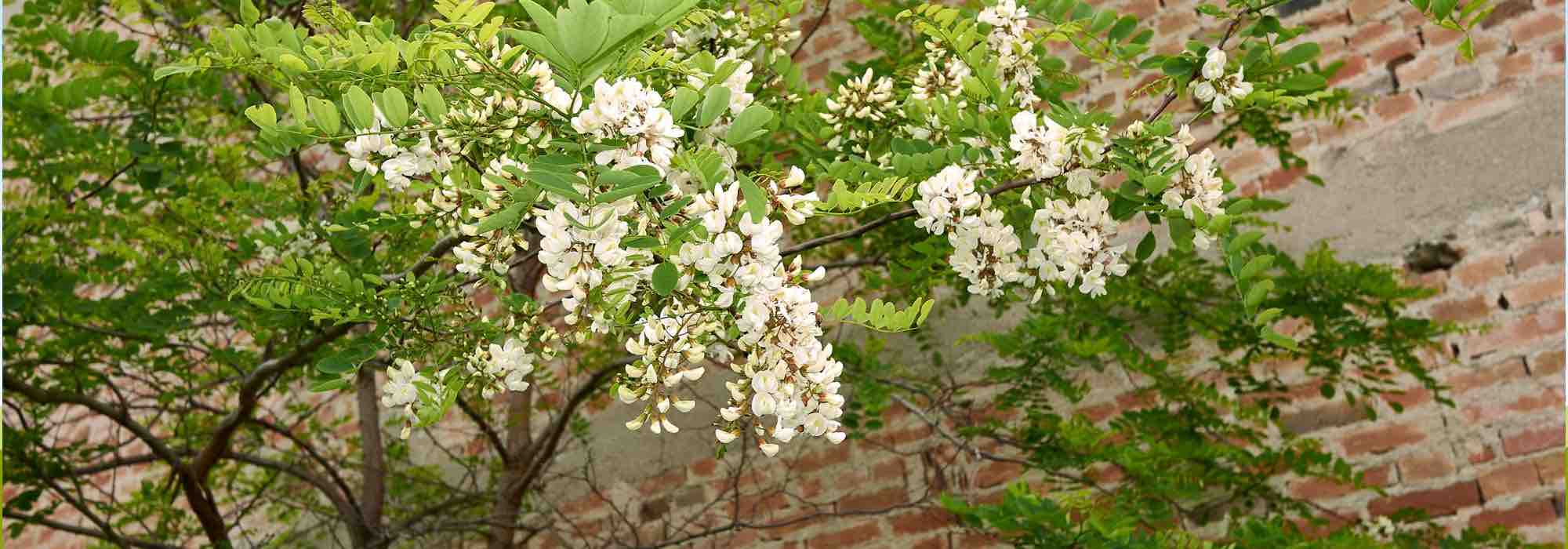
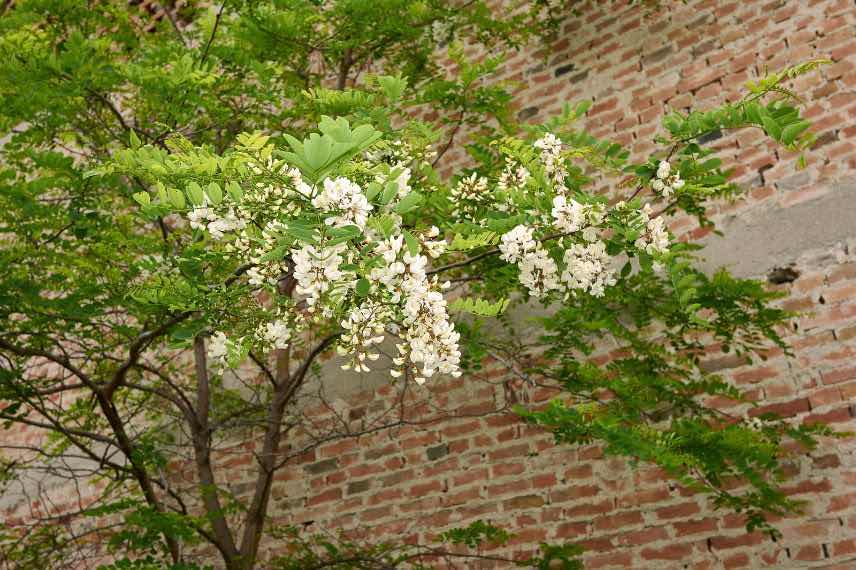
Robinia pseudoacacia or Black locust is a small tree with a broad habit and delicate foliage, providing light shade under which bushes and perennials can thrive. It bears spectacular flowering from May to July, with pendant clusters of white flowers, 10–20 cm long, with a sweet orange blossom fragrance. The flowers, besides being edible and enjoyed in fritters, attract bees, helping to produce exquisite honey. Its rapid growth and ease of cultivation make it a preferred choice for gardens of all sizes, although it requires a sheltered position away from strong winds due to its brittle wood.
Native to the eastern United States, a member of the Fabaceae family, the Black locust naturally enriches soils through its ability to fix atmospheric nitrogen at the roots. This characteristic, together with its resistance to cold and drought, makes it a valuable ally for regenerating degraded soils. With a habit initially columnar that rounds with age, the tree can reach a height of 15 metres and a spread of 8 metres. Its fissured bark and strong, but brittle, branches, bearing thorns in youth, add to its visual interest.
The foliage, ranging from bright green to golden yellow in autumn, and the white, fragrant inflorescences, make the Black locust a remarkable natural display. The pods that follow flowering, though toxic, are also decorative. This suckering tree requires careful management to prevent it from becoming invasive. Adaptable, the Black locust blends harmoniously into a variety of landscape displays, whether as a standalone specimen, in an informal hedge, or in a row along avenues.
Read also
10 trees for heavy, wet soilPersian ironwood (Parrotia persica)
The Persian ironwood or Parrotia persica, also known as Persian Parrotia or Persian beech, is a garden jewel that stands out for its incredible autumn colour palette. In autumn, its foliage transforms into a dazzling display of green, yellow, orange, crimson and purple, making it an essential specimen for lovers of vivid colours. Its summer foliage, green and undulating, resembles that of a beech. In spring, it delights with flowering clusters of red stamens emerging directly from the branches, even before the leaves appear. In winter, exfoliated bark with subtle shades of grey, red-brown and greenish-grey reveals itself, adding aesthetic interest throughout the year.
Native to the north of Iran and eastern Caucasus, the Parrotia persica is a small tree, with slow growth, typically not exceeding 8 metres in height and 10 metres in width. Its spreading habit and horizontal branches give it a majestic silhouette, often wider than tall. Branches of mature specimens can bend down to the ground.
Adaptable to all soil types, including calcareous, dry or cool, provided it is well-drained, the Parrotia persica shows a preference for slightly acidic soils and sunny exposures to maximise the intensity of its autumn colours. It is ideal as a specimen or to shade a bed, and can be paired with other shrubs and trees to create landscape displays from September to November.
Introduced to Europe in 1841, the ironwood earns its nickname from the exceptional hardness of its wood, historically used in the manufacture of tools. Its drought tolerance and hardiness make it a versatile choice for many gardens.
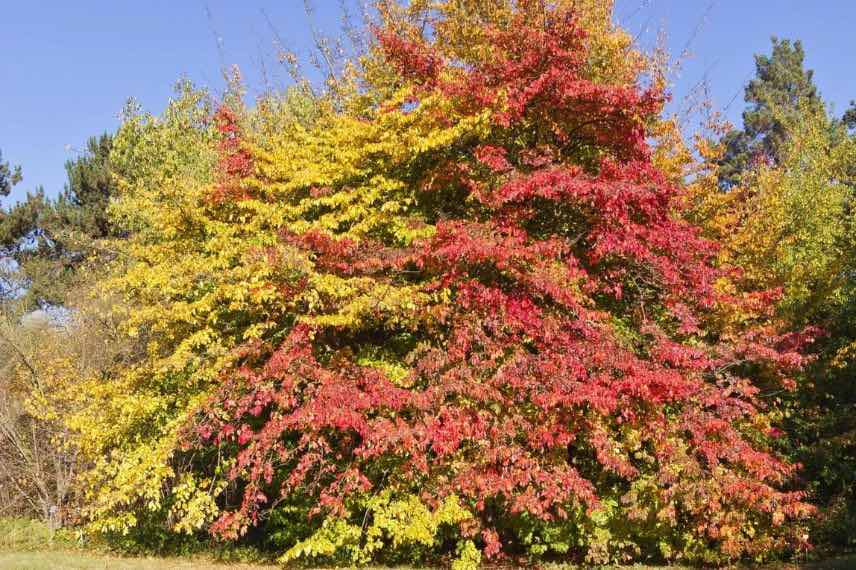
common ash or Fraxinus excelsior
Common ash or Fraxinus excelsior is an iconic feature of French forest landscapes, prized for its imposing stature and delicate foliage.
Ses bourgeons floraux noirs veloutés et ses feuilles lancéolées vert foncé, virant au jaune en automne, en font un spectacle naturel remarquable. Its velvety black floral buds and dark green lanceolate leaves, turning yellow in autumn, make for a remarkable natural display.
Avec une croissance rapide, le frêne développe au fil des années un port distingué, caractérisé par un tronc vertical robuste surmonté d’un houppier léger et allongé, offrant une ombre bienvenue durant les mois d’été. With rapid growth, the ash develops a distinctive habit over the years, characterised by a sturdy vertical trunk topped by a light, elongated crown, providing welcome shade during the summer months.
Appartenant à la famille des oléacées, qui inclut également l’olivier et le lilas, le frêne commun est originaire d’Europe, de Scandinavie et de Russie. Belonging to the Oleaceae family, which also includes the olive and lilac, common ash is native to Europe, Scandinavia and Russia.
Il prospère le long des rives et des berges des cours d’eau ainsi que dans les forêts, où son port érigé et sa couronne arrondie à allongée captent l’attention. It thrives along the banks and river margins as well as in forests, where its upright habit and crown, ranging from rounded to elongated, catch the eye.
À maturité, son houppier s’ouvre pour révéler une structure aérée et une écorce grise, profondément fissurée et écailleuse, ajoutant à son charme rustique. At maturity, its canopy opens to reveal an airy structure and a grey, deeply fissured and scaly bark, adding to its rustic charm.
Le frêne atteint généralement une hauteur de 30 à 40 mètres pour une envergure de 20 mètres, avec un feuillage composé de 9 à 13 folioles étroites et lancéolées. Common ash typically reaches a height of 30 to 40 metres with a spread of 20 metres, with foliage comprising 9 to 13 narrow, lanceolate leaflets.
La floraison printanière, sous forme de panicules jaune-crème, précède l’apparition du feuillage et est suivie par la formation de samares caractéristiques. Spring flowering, in the form of pale yellow panicles, precedes the appearance of the foliage and is followed by the formation of characteristic samaras.
Rustique et peu exigeant, le frêne commun s’adapte à diverses conditions, préférant les sols fertiles, profonds et frais pour une croissance optimale. Il supporte bien la taille et peut se ressemer aisément si les conditions lui sont favorables. Hardy and undemanding, common ash adapts to a range of conditions, preferring fertile, deep and moist soils for optimal growth. It tolerates pruning well and can reseed easily if conditions are favourable.
Son allure libre et élégante en fait un choix ornemental de premier plan pour les grands jardins, où il crée un espace d’ombre agréable et contribue à la biodiversité locale. Its free and elegant habit makes it a premier ornamental choice for large gardens, where it provides welcome shade and contributes to local biodiversity.
Leyland cypress or Cupressocyparis leylandii
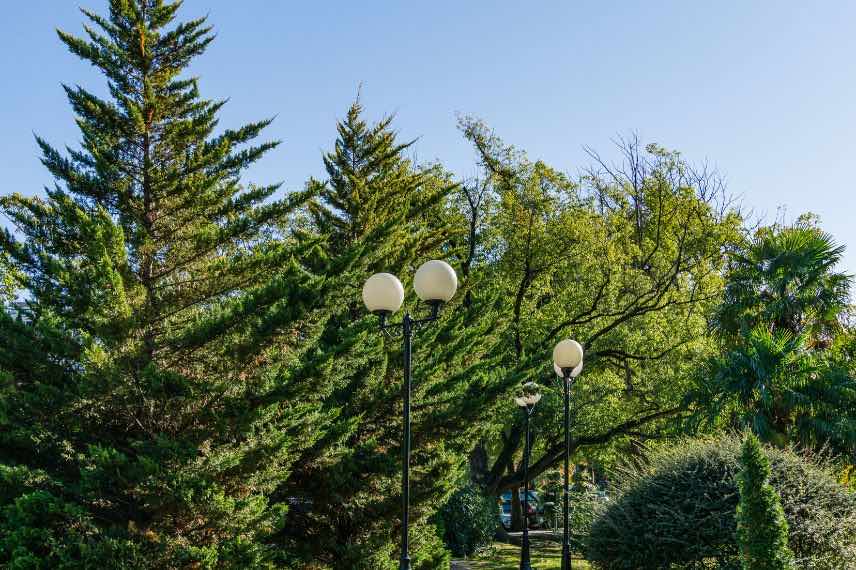
Cupressocyparis leylandii, commonly known as Leyland Cypress, is a large, majestic evergreen conifer, relatively undemanding, robust and fast-growing, up to 9 m in 10 years. As such, it is often used for evergreen hedges. Adapted to most climates, including coastal areas, it nevertheless requires particular care in soils that are too rocky or in very dry Mediterranean climates.
The Leyland Cypress tolerates poor, calcareous or clay soils, as well as pollution and saline conditions such as sea spray. With an annual growth of 80 cm to 1 m, it can reach 20 m in height if not regularly pruned. Its pyramidal and dense habit, its deep green foliage and pivoting root system render it wind-resistant and able to withstand harsh conditions.
Ideal for a large private hedge, the Leyland Cypress provides a protective screen and an effective windbreak, while requiring little maintenance if left to grow naturally. When grown as a specimen, it becomes a magnificent feature, blending harmoniously into various garden styles. However, be mindful of its pollen which can be allergenic in early spring.
- Subscribe!
- Contents
Comments