





























The best bamboos for shade
Varieties best suited to shaded conditions
Contents
Shaded gardens have a particular charm; they offer a haven of coolness and greenery where the sun’s light is more subdued. However, finding the right plants for these spaces can sometimes prove challenging.
Some bamboos thrive beautifully in shade, bringing structure, height and a touch of the exotic to these tranquil corners. Let’s discover seven varieties of bamboo that thrive in shaded areas.
Whether you have a small corner of partial shade or a garden largely shaded by the canopies of trees, these bamboos offer an elegant, low-maintenance planting solution.
Note that non-running bamboos of the Fargesia type generally perform well in shade or partial shade.

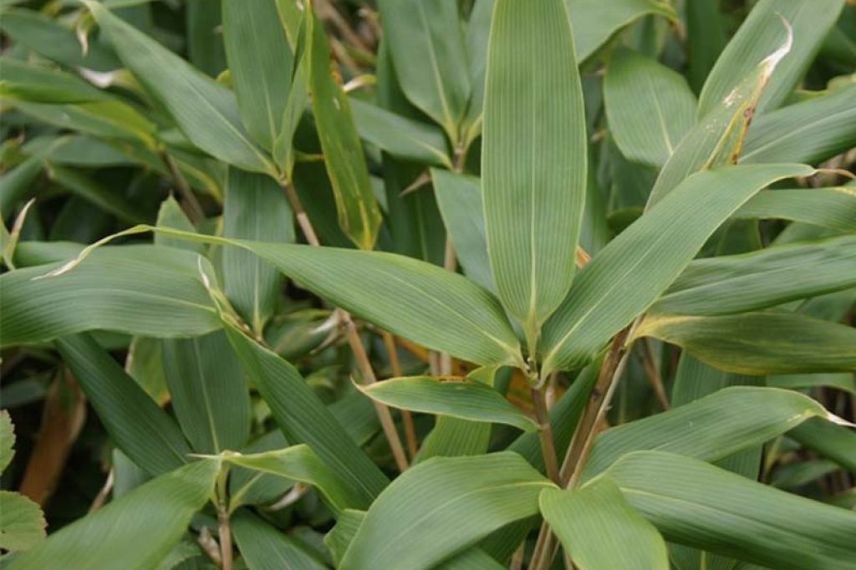
Sasa kurilensis
Native to Japan, the Sasa kurilensis is a small bamboo, hardy and suited to cold climates. It is distinguished by its bushy, open habit, with culms reaching up to 2.50 m in height. Its evergreen leaves, long and broad, in a dark glossy green, contribute to its decorative appearance. This running bamboo grows rapidly thanks to its shallow rootstocks, forming dense curtains of greenery. Although it tolerates sun, it prefers shaded and cool areas.
It is ideal for Zen, exotic or contemporary gardens, offering an evergreen hedge, whether in full sun or shade. Its young shoots are edible. Its invasive nature requires the use of anti-rootstock barriers to control its spread. Its exceptional hardiness allows it to withstand temperatures down to -24°C, making it suitable for a range of environments. Pair it with ferns as well as with the Astilboides tabularis for a tropical, lush atmosphere and a contrast of texture between the bamboo’s fine foliage and the broad leaves of the other plants.
Read also
Fargesia: the most beautiful varietiesPseudosasa japonica 'Tsutsumiana'
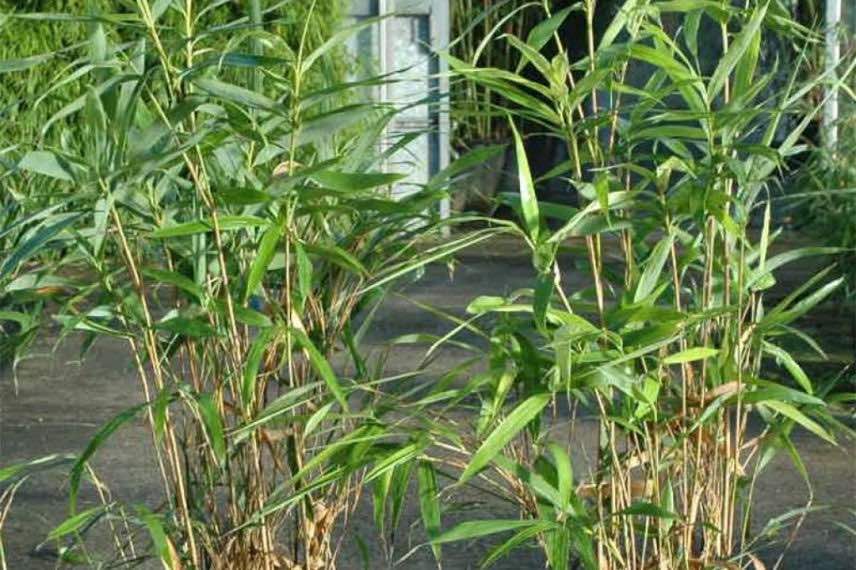
Pseudosasa japonica ‘Tsutsumiana’, a medium-sized bamboo native to Japan, is distinguished by its robustness and ease of cultivation in a variety of soils and climates. Its olive-green culms with bulbous internodes and its dense dark-green foliage make it a highly decorative choice for gardens. Although it grows slowly, this non-invasive bamboo is perfect for hedges, isolated tufts or container plantings on terraces and balconies, preferring semi-shaded to shaded areas.
This bamboo tolerates frosts down to -25°C. With an upright habit and a bushy crown, it reaches 3 to 4 m in height at maturity. Its culms thicken over time, offering a unique appearance. Evergreen foliage, renewed twice a year, adds to its appeal. Ideal for various garden styles, including Asian, contemporary or exotic, Pseudosasa japonica ‘Tsutsumiana’ forms dense hedges, isolated green tufts or can be grown in a pot on the terrace. Its strong presence and architectural form add character to any space, while serving as a natural and elegant privacy screen. For a varied effect, pair it with other bamboos of similar vigor with coloured culms.
Fargesia nitida 'Red Dragon'
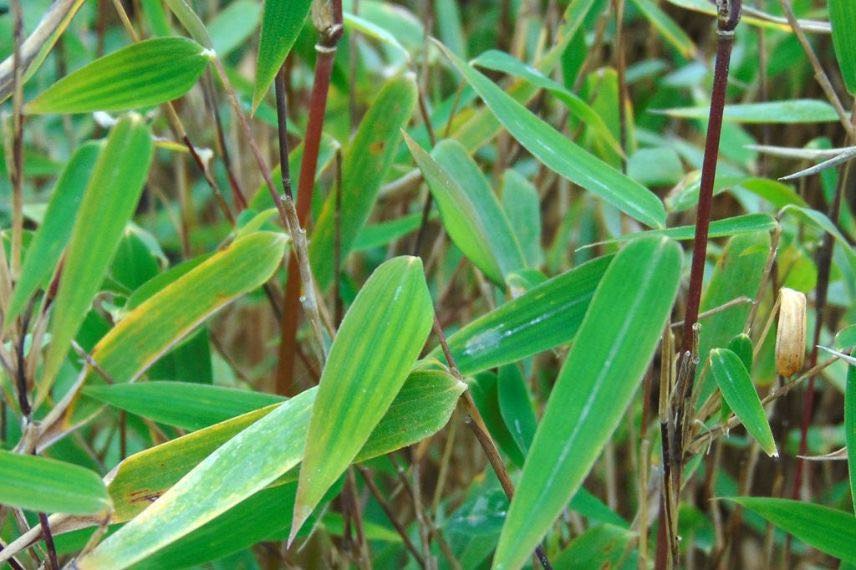
Fargesia nitida ‘Red Dragon’, also known as Jiuzhaigou Genf Red, is a compact, non-running bamboo variety, remarkable for its culms that transition from pruinose green to burgundy-red over time. Native to China, it is perfectly suited to small spaces thanks to its erect habit and rapid growth, reaching 2.3–3.5 metres in height.
This hardy bamboo, tolerant down to -20°C, thrives in acidic or neutral, light, cool and well-drained soil. It prefers a position in shade or partial shade, sheltered from direct sun and strong winds. As it is non-running, installation of a rhizome barrier is optional. Ideal for Asian-inspired gardens, it adapts to various styles, from modern to traditional. It creates striking vertical accents in gardens and on terraces and is effective for creating plant screens in tight spaces. It can also be grown in a pot to form living screens on terraces. In a border, it pairs well with Heucheras or purple-leaved maples, highlighting the colour of its culms.
Read also
Bamboo: a successful planting in 4 stepsChimonobambusa quadrangularis
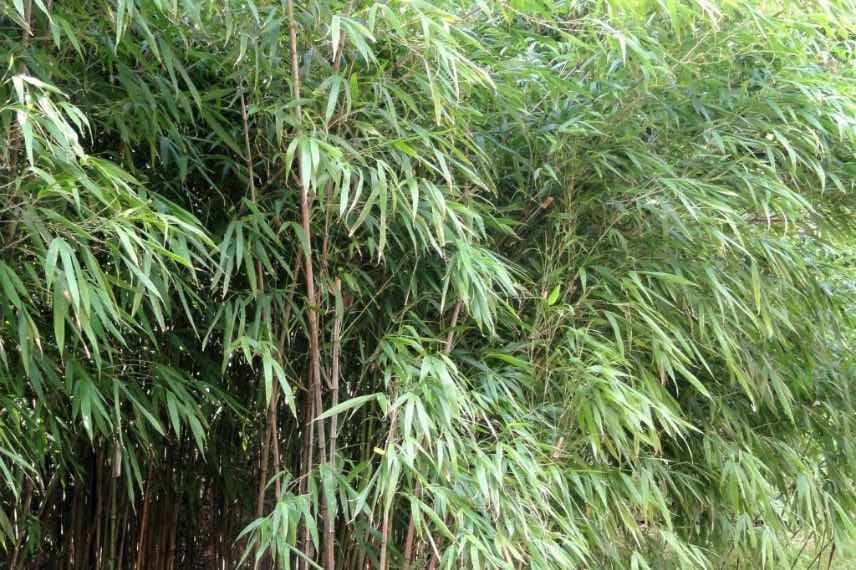
Fargesia denudata 'Lancaster 1'
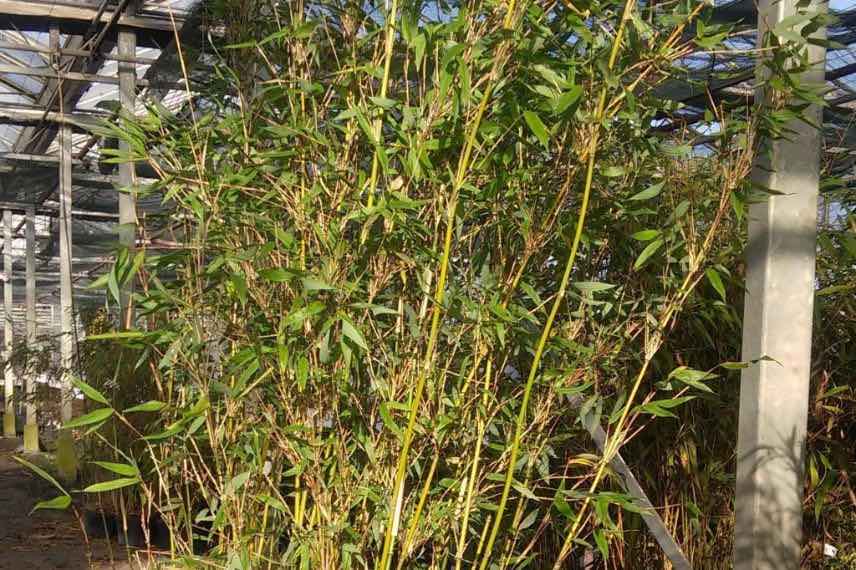
Sasa tsuboiana
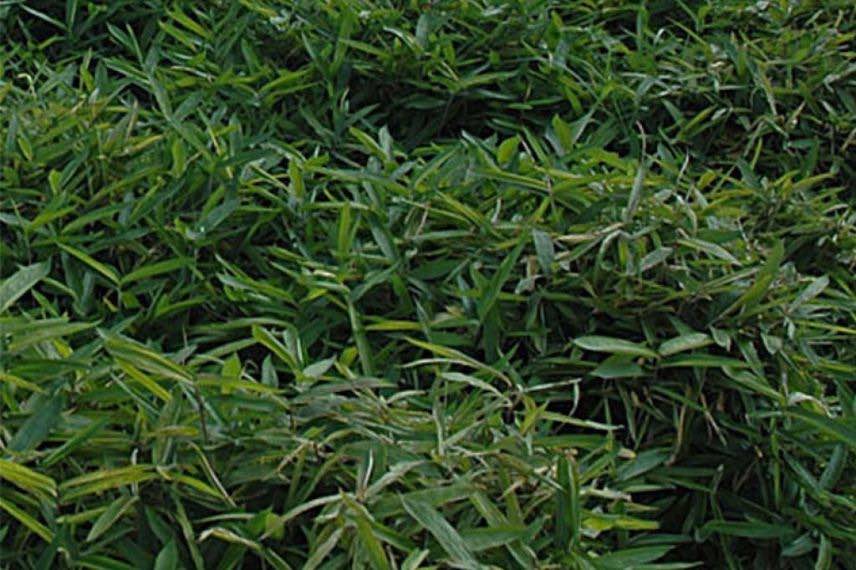
Fargesia sp 'Jiuzhaigou Deep Purple'
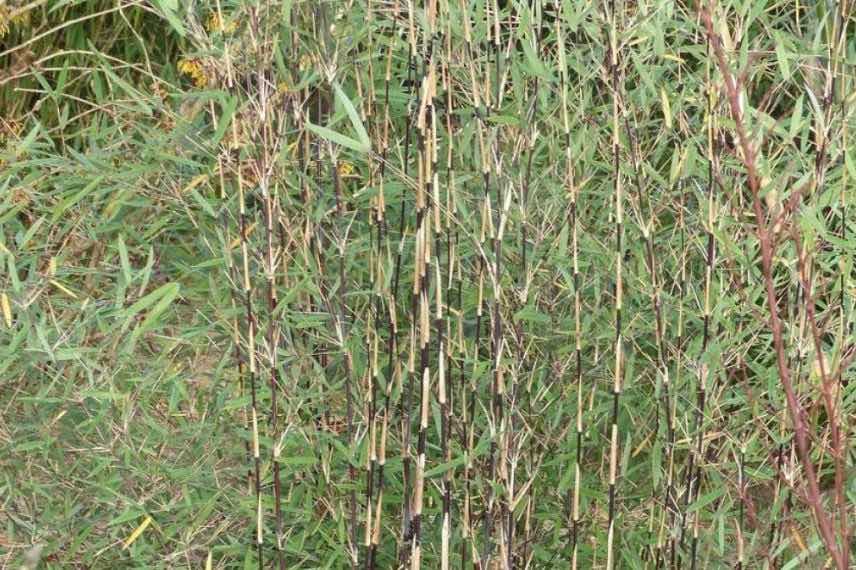
- Subscribe!
- Contents
Comments