





























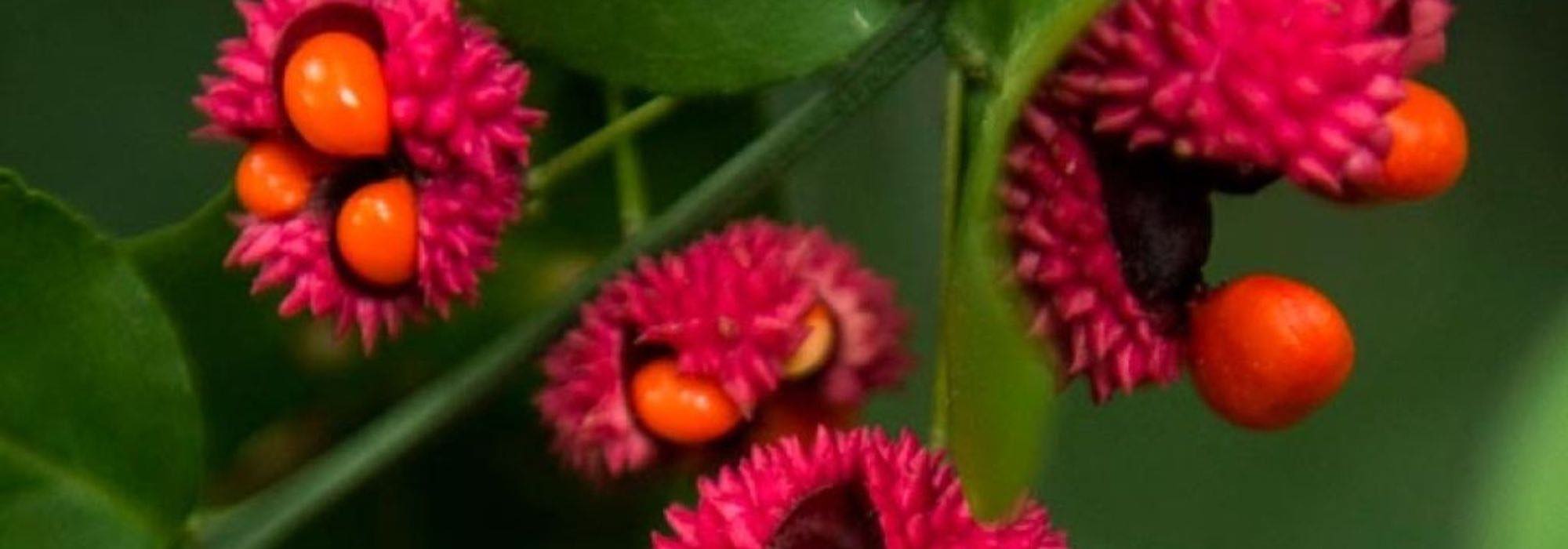
7 decorative-fruited Euonymus
for dramatic autumn plantings
Contents
Spindle trees or Euonymus are shrubs or groundcover plants that help create colourful scenes in the garden. They are distinguished by the colour palette of their foliage, from cream- or yellow-variegated to pink, with vibrant autumn tones. They also display different growth habits, and some species bear decorative fruits that are notable, not edible for humans, but enjoyed by birds. Hardy and low-maintenance, spindle trees are easy to grow in well-drained soil, in sun or shade. Discover our selection of spindle trees with decorative fruits to imagine an original display in your garden and attract our feathered friends.

Euonymus planipes – spindle tree, fruits blending pink and bright orange
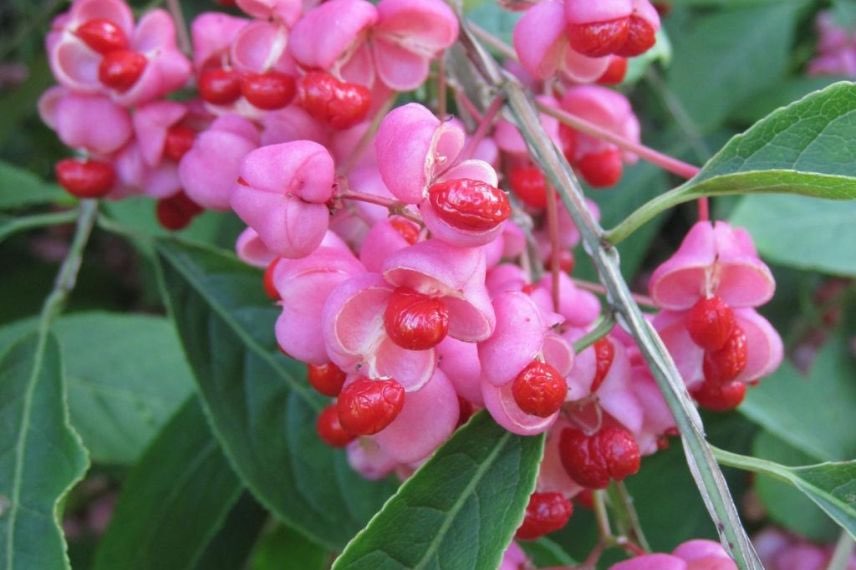
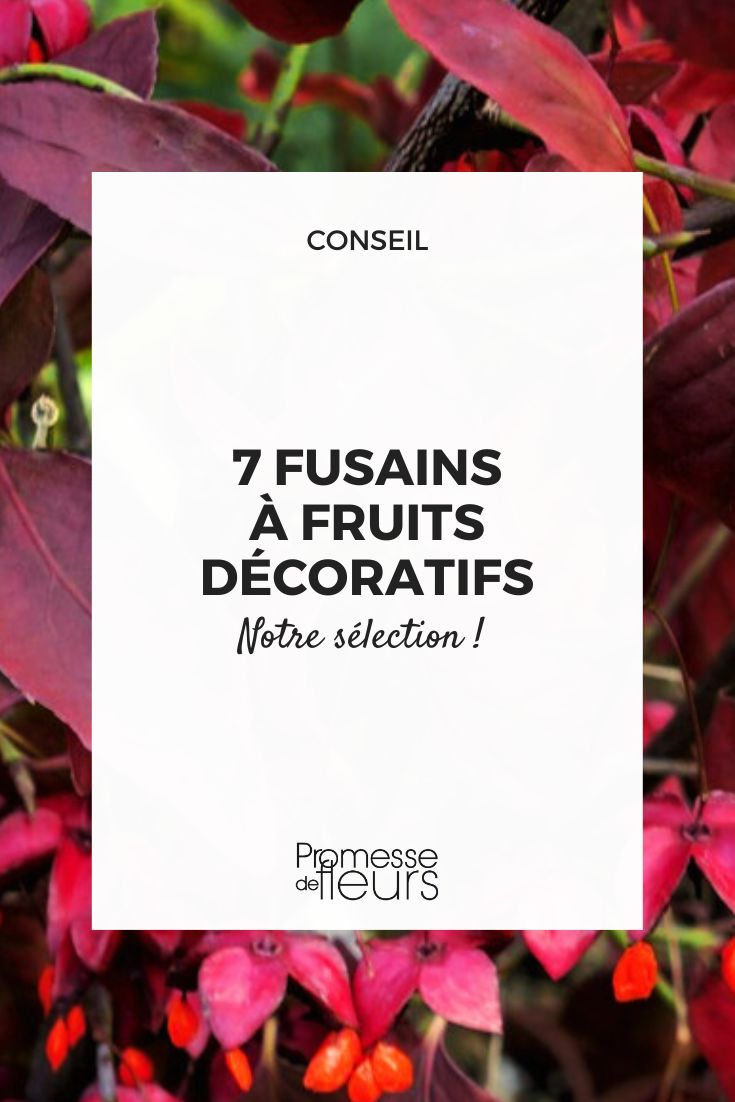
Euonymus planipes is a shrubby spindle tree that offers a striking autumn display. Its apple-green foliage turns yellow-orange, then orange-purple in late summer, and is accompanied by rose-pink fruits that split open into four valves, revealing seeds in vivid orange. This deciduous spindle tree is hardy and can be grown in ordinary soil, even calcareous soil. Of medium size, it reaches a height of 2.5 metres at maturity and makes a striking feature in a border or an informal hedge.
In your garden, pair it with other decorative shrubs such as Cornus or Berberis for a colourful effect that will catch the eye.
Read also
Spindle: which variety to choose?Euonymus europaeus – European spindle, vibrant colours in autumn
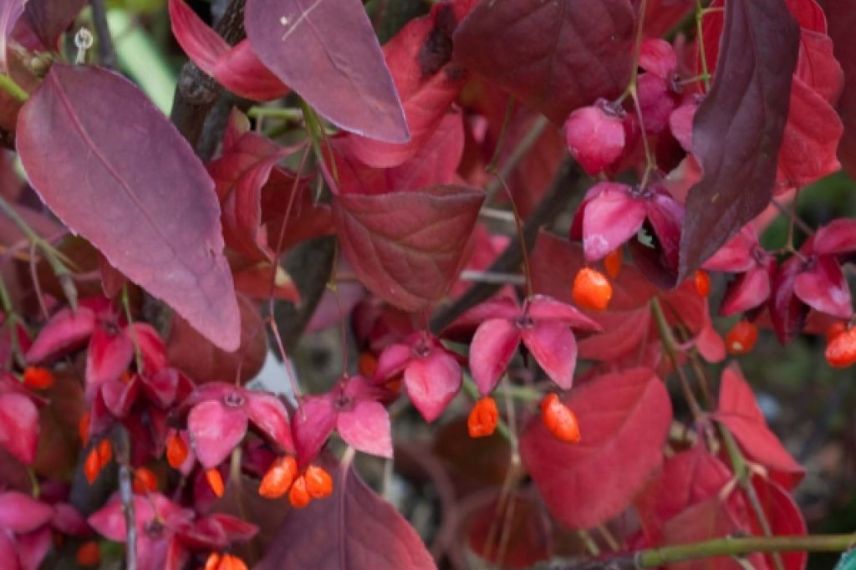
The Euonymus europaeus – European spindle offers a display of flamboyant colours in autumn. As the first frosts arrive, its green leaves take on red and Indian pink tones, shaded with purple. The foliage seems to be ablaze. Small decorative berries appear, prolonging the shrub’s beauty as the foliage falls. They consist of pink capsules, close to the colour of fuchsia, enclosing bright orange berries. Visually appealing, these small fruits, leaves and twigs are nevertheless poisonous. The shrub is of medium size and reaches 2.5 metres tall at maturity. Hardy, it establishes in any soil type but prefers moist soils and is sensitive to periods of drought. It can be planted in full sun or in partial shade and tolerates light pruning well.
The shrub blends easily into an informal hedge alongside other decorative-fruited spindles, for example, and is accompanied by asters or sedums to form a palette of autumn colours.
Euonymus phellomanus – Chinese spindle, with striking pink fruits
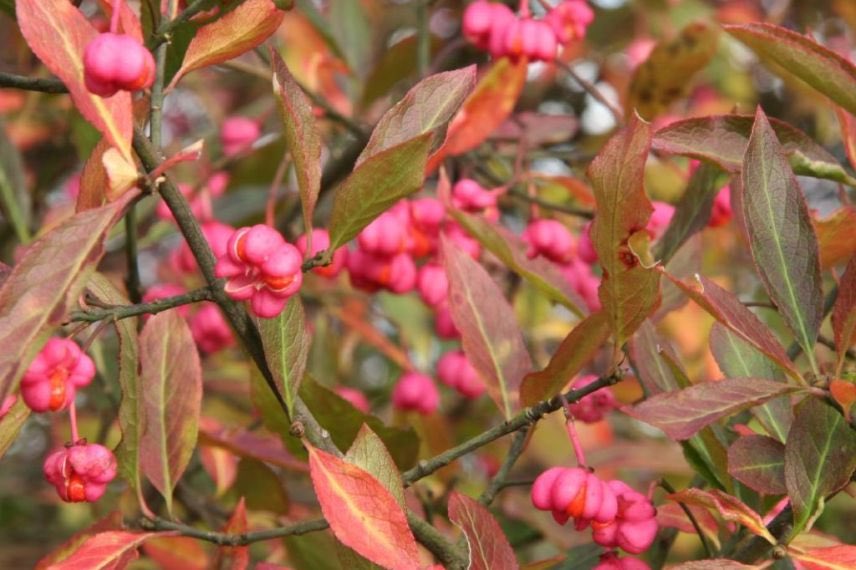
Euonymus phellomanus – Chinese euonymus is also a deciduous shrub, very attractive, especially in autumn. It offers striking pink fruit, revealing bright orange seeds when they open. It bears a curious bark consisting of four wings and a bushy, rounded habit. Its oval leaves are dark green and take on reddish hues towards the end of summer. At maturity, it can climb up to 4 metres. With all these assets, it is delightful as a specimen plant, in a border planting or a hedge. It prefers ordinary, humus-bearing soil, not too dry but cool, and grows in sun or partial shade.
In a border planting, pair it, for example, with Choisya – Mexican orange blossom, which will also bring fragrant white flowers, or with viburnums.
Read also
5 essential evergreensEuonymus grandiflorus 'Red Wine' – spindle, orange fruits encased in Indian pink
Less well known than European spindle, Euonymus grandiflorus ‘Red Wine’ is adorned with deciduous foliage in sumptuous colours from August to November. From green, it becomes orange, intense red, finishing in a purplish-crimson. It bears large fruits for a spindle tree. These fruits appear cream-coloured, turn pink, then open to reveal vivid orange berries. From May to July, the shrub displays a discreet, cream-white, fragrant flowering. It reaches a height of 2 metres at maturity. Vigorous and hardy, it thrives in any soil and adapts to all climates. It is a reliable choice that resists insect pests.
It looks wonderful in a free-form hedge, paired with autumn-flowering plants such as Japanese anemones and airy grasses, such as Miscanthus, which will bring a touch of lightness.
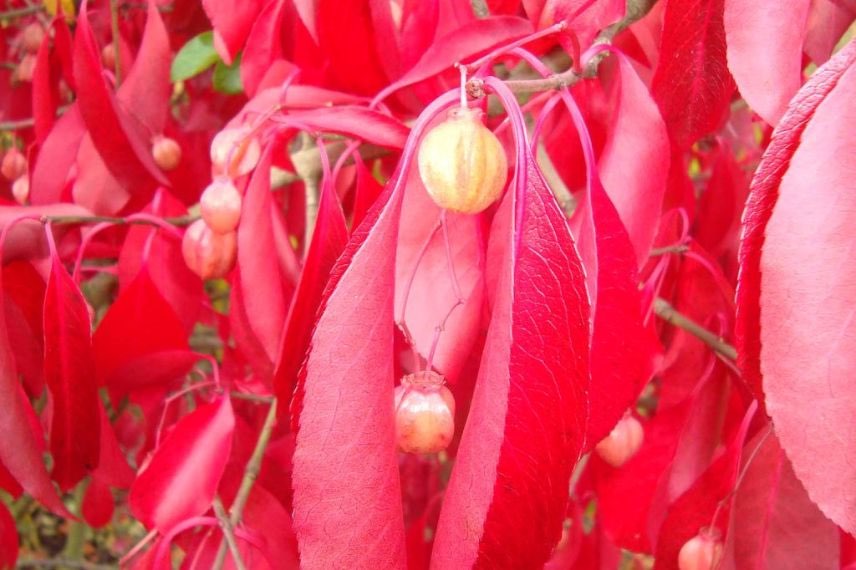
Euonymus japonicus 'Ovatus Aureus (Marieke)' - Japanese spindle, bi-coloured fruits on variegated foliage
Euonymus japonicus ‘Ovatus Aureus (Marieke)’ – Japanese spindle has an erect habit and a bright, variegated foliage of yellow and green. It bears evergreen foliage, visible all year round and formed of ovate, finely dentate, glossy leaves, with a green centre and yellow margins. Clusters of small pale greenish-white flowers appear from May to July. Followed by, small green fruits hanging beneath the branches, which become pink and orange in autumn. It can reach up to 2 metres in height when mature. Its cultivation is best suited to regions with winters not too cold and summers not too hot and dry. It tolerates full sun or partial shade, in ordinary soil that may be chalky, but remains cool and moist.
It blends harmoniously into a hedge, a shrub border or a container on a terrace. In a shrub border, plant it beside bronze fennel and Berberis to create striking colour contrasts.
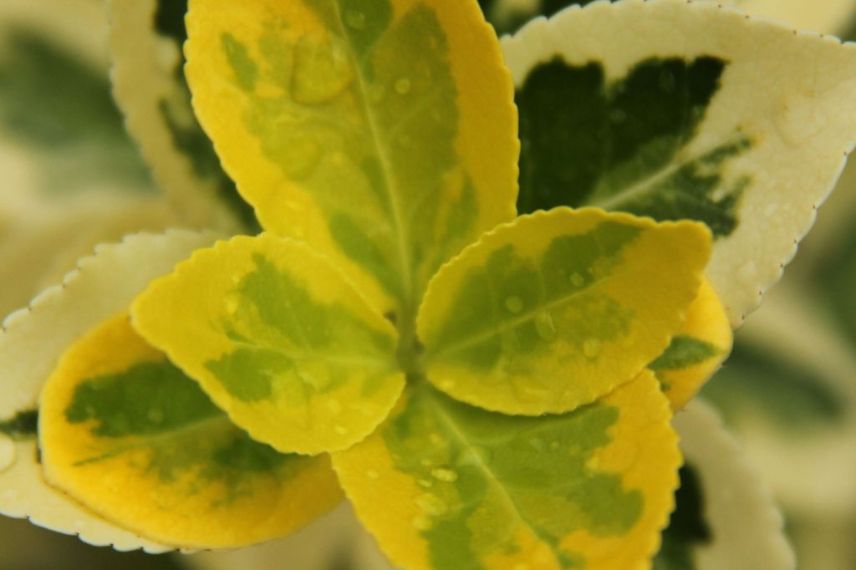
Euonymus americanus — American spindle, with curious thorny and colourful fruits
Cousin of the European spindle, the American spindle, or Euonymus americanus stands out for its looser, broader habit and tougher, finer leaves, like those of willows. Its deciduous foliage changes in autumn from green to wine-red, then to yellow-orange and purplish in October. It bears highly decorative fruits resembling pink-red spiny capsules that open to orange berries. The shape of the fruits is similar to Arbutus berries. The berries are poisonous to humans but are a favourite with birds. This shrub, reaching 1.8 metres at maturity, is very frost-hardy and can be grown in sun or partial shade in ordinary garden soil. However, sun will allow it to display more vivid autumn colours. In a border or a free-standing hedge, pair it with variegated hollies, Cotinus or Chinese azaleas.
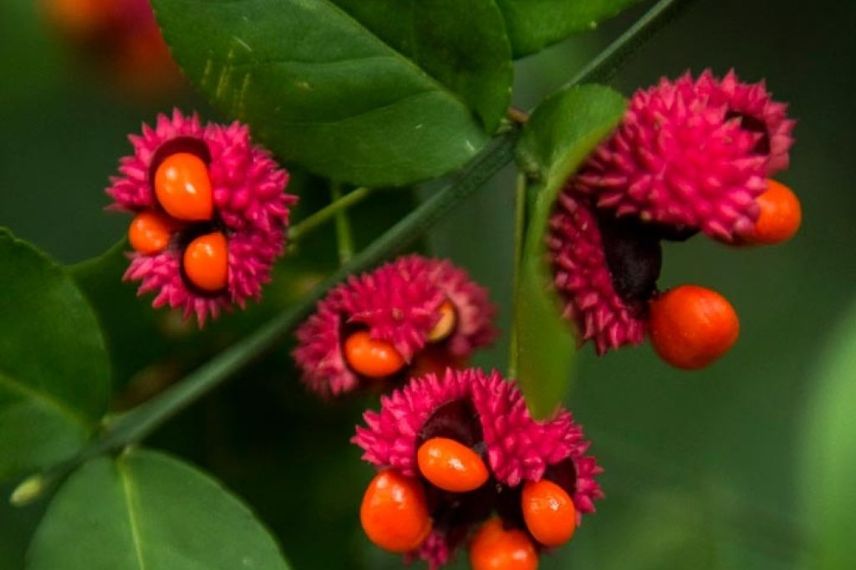
Euonymus tonkinensis - Tonkin spindle, a rare Asian bush
Euonymus tonkinensis – Tonkin spindle is an Asian bush rarely cultivated, which will appeal to enthusiasts of unusual plants. Its evergreen foliage is adorned at the end of summer with ivory-white fruits, housing orange-red seeds. The ovate leaves are leathery and glossy. From April to June, an inconspicuous yellow-green flowering appears. Reaching a height of 2 metres at maturity, it can provide a verdant backdrop for other bushes with winter flowering. It prefers cool soil and shelter from winds, in partial shade or in sun that is not scorching. It is best not to plant it in regions with a climate too cold, where temperatures fall below -10°C.
In a border, it will highlight shrubs that flower in winter such as edgeworthia chrysantha – Paperbush or Chimonanthus praecox – Wintersweet. You can also add hellebores at its feet to create beautiful winter scenes.
Further reading
Browse our full range of boxwoods, and the care and planting guide for boxwoods.
- Subscribe!
- Contents
Comments