


7 essential perennials for a successful rock garden
Plants suited to the garden's most unforgiving zones
Contents
Rockeries are areas of the garden with particular growing conditions. The soil there is stony, very well-drained, often poor and dry. The sun can also beat down for a large part of the day. To plant this type of space, it is essential to choose plants that can withstand these constraints. Among the rockery perennials, we have selected seven dependable species. Discover them!

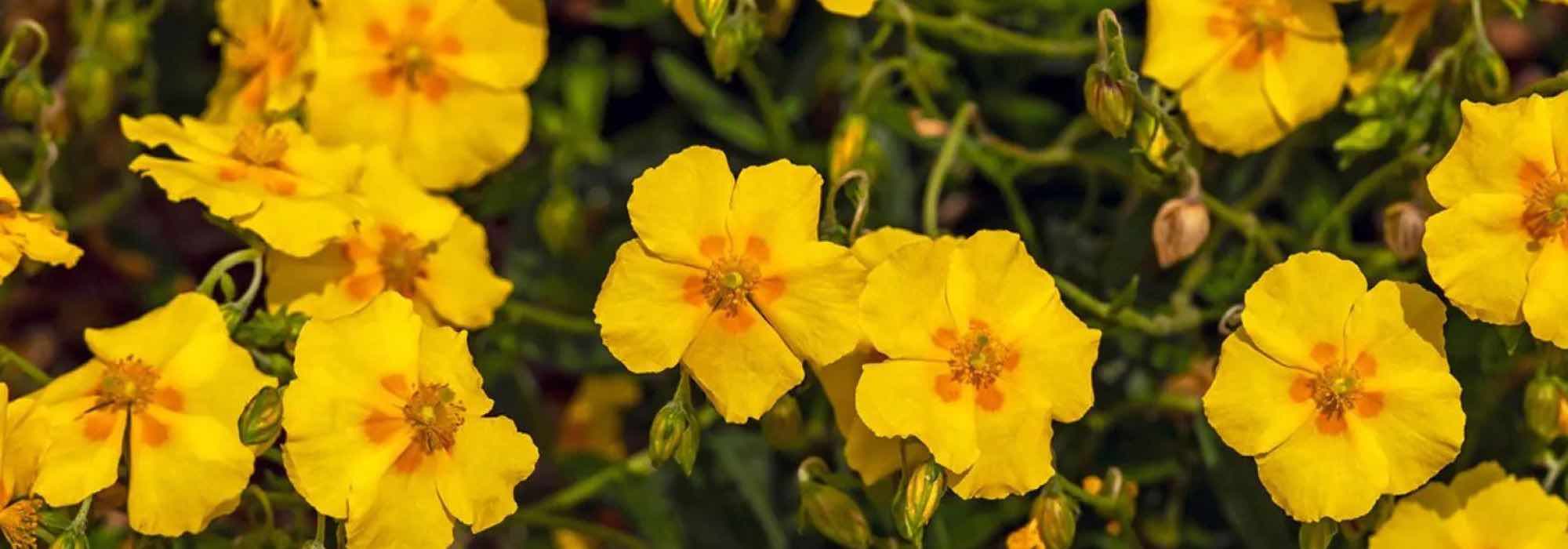
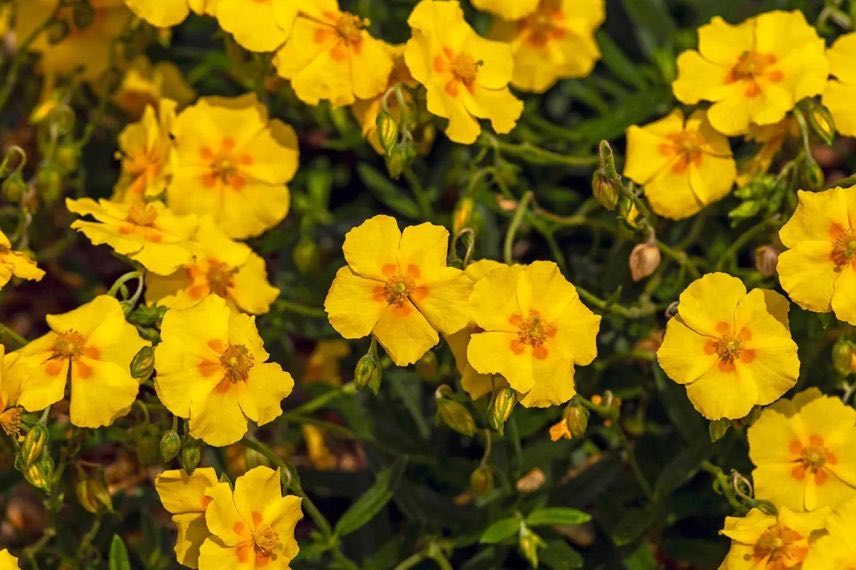
Helianthemum apenninum x mummularium 'Ben Fhada' - bright yellow Helianthemum with orange centre
This Helianthemum ‘Ben Fhada’ is a real little sun! Generous and colourful, it flowers for many months, from late spring to the end of summer, small flowers measuring 3 cm. They display a bright yellow, still warmed by an orange centre. They are simple, cup-shaped, with prominent stamens. Melliferous, this vibrant flowering brings joy to pollinating insects.
The foliage of this small perennial plant is evergreen, staying in place all year round. It consists of small light-green leaves.
In terms of habit, Helianthemum forms an undershrub that is wider than it is tall, reaching 40 cm across and 20 cm high. It forms a real little floriferous carpet, perfect for brightening a sunny rock garden. It indeed requires well-drained soil, and will readily tolerate poor, stony substrates. Of course, it’s also a drought-tolerant perennial, as well as frost-hardy (hardiness down to -18°C).
To successfully grow your helianthemums, see our comprehensive guide: Helianthemum: planting, growing tips
Read also
15 plants for a sunny rockeryCampanula portenschlagiana (muralis) - Wall Campanula
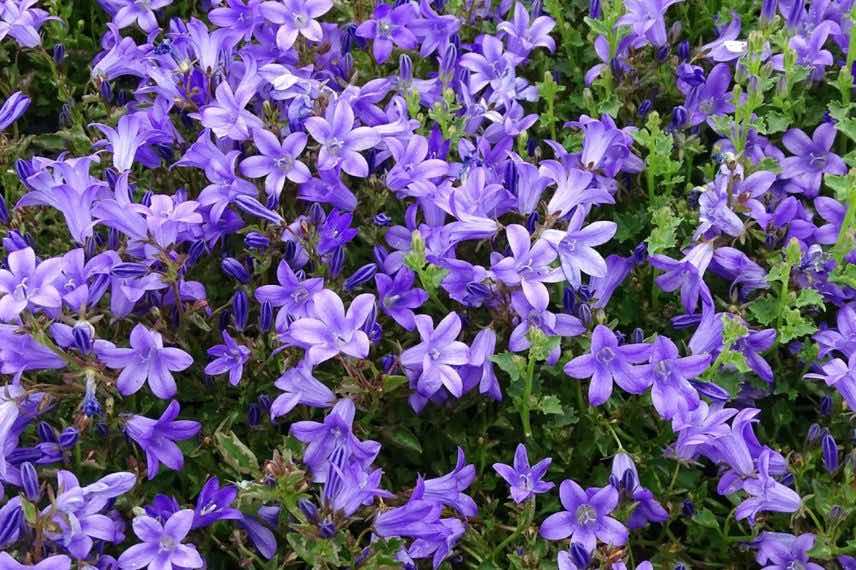
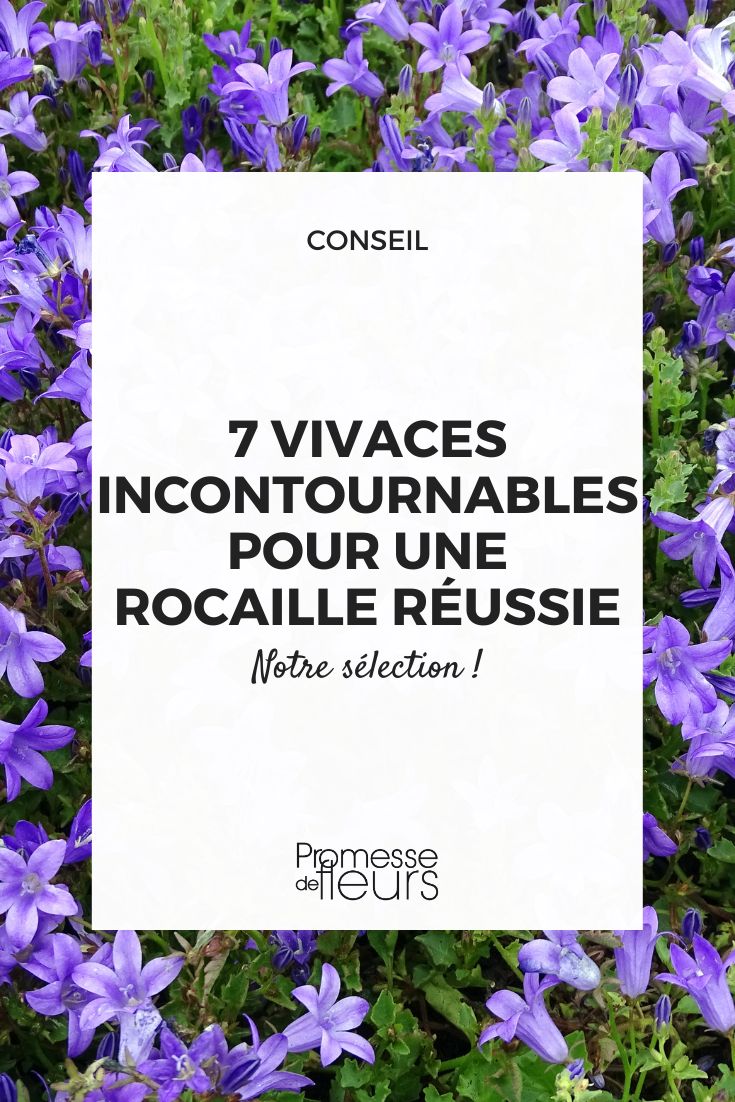
Campanula portenschlagiana is also known as wall bellflower, which gives an idea of its cultivation preferences. It is indeed a perennial plant with well-drained soil, tolerating sunny exposures (or lightly shaded): ideal for rockeries!
From late spring to early summer, it produces small star-shaped flowers in a bright blue-violet, which contrast well with mineral surroundings. This flowering is sometimes repeat-flowering in autumn.
Its foliage forms a pretty ground-cover cushion of about 60 cm wide by 20 cm high. The small villous leaves are green, with silvery undersides. They are semi-persistent, meaning they will endure through winter if frost is not too severe and frequent.
This plant also self-spreads via stems that root when they touch the soil, allowing it to cover surfaces even substantial over time.
Vigorous, sturdy and easy to grow, it also proves tolerant of cold down to -25°C. In its natural habitat (the Balkan mountains), it thrives in rock crevices and scree of high mountains. This perennial will prefer rockeries that aren’t too dry, not being the hardiest in arid conditions.
To succeed in growing Campanulas, consult our comprehensive guide: Campanulas: planting, growing and care
Stachys byzantina – Lamb's Ear
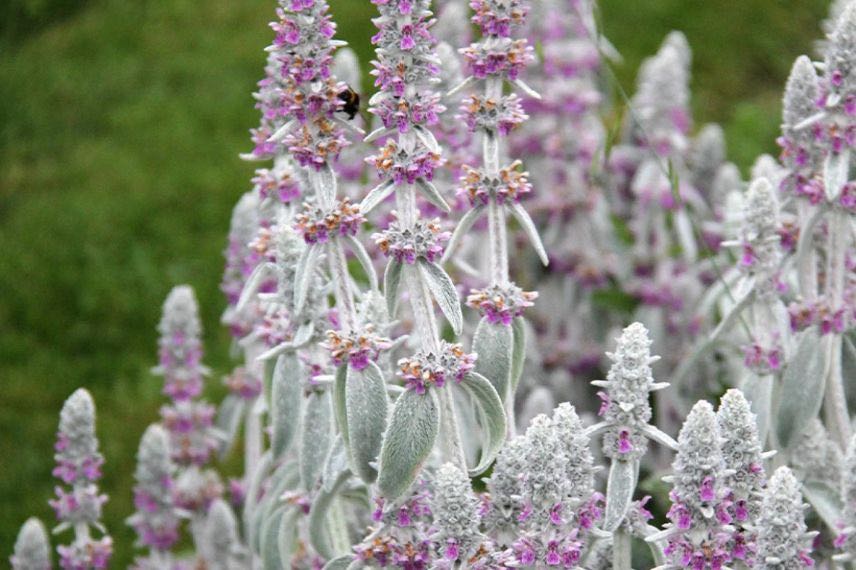
Stachys byzantina is a perennial of Mediterranean origin. It owes its nicknames to “lamb’s ear” or “bunny ears” due to the texture of its foliage. It has a woolly, soft, cottony appearance, with silvery-grey foliage that brightens the garden. The drier the conditions, the whiter it will appear. Conversely, moisture and rain will reveal greener hues. The leaves are oval, about ten centimetres long, are generally evergreen (except in very harsh winters).
In summer, the plant comes alive, revealing woolly inflorescences bearing flowers arranged in spikes, displaying a pretty rose-violet colour.
Stachys byzantina forms a groundcover of about fifty centimetres across, dense and mat-forming. It grows as a rosette and via a spreading rootstock.
This perennial will thrive in well-drained, ordinary soil, in a sunny position. It will look splendid in rock gardens and in dry gardens, even in poor soils. Hardy down to -20°C and easy to grow, it is a low-maintenance plant that will delight beginner gardeners.
To succeed in growing your Stachys, see our comprehensive guide: Lamb’s ear, Stachys: planting, growing and care
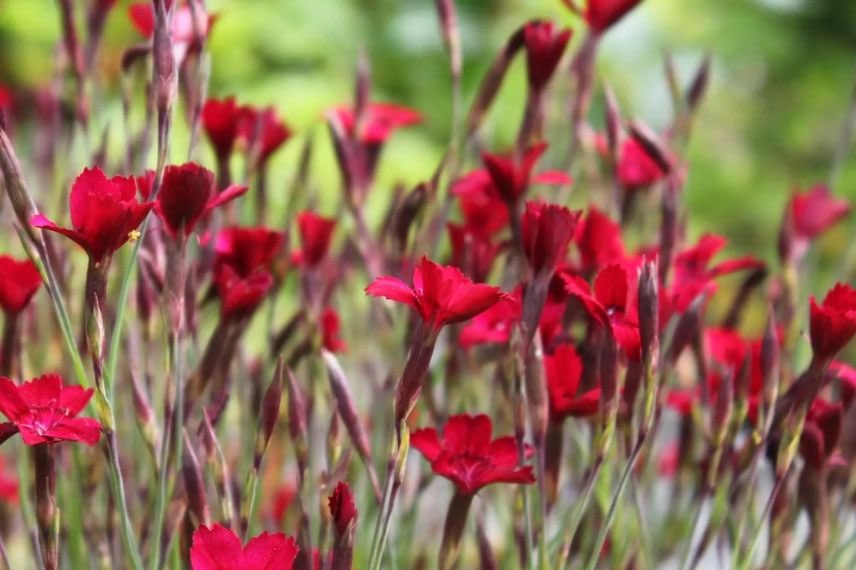
Dianthus deltoides ‘Flashing Light’ – Heathland pink
This compact perennial is particularly prolific during its late-spring flowering. Themaiden pink reveals small flowers in scarlet red, with a dark eye. They consist of delicately frilled petals, typical of carnations. This flowering is fragrant, releasing delicate clove notes. Melliferous, it attracts many pollinators.
Its habit will reach only 15 cm high by 30 cm wide, forming a small carpet of semi-evergreen leaves.
Robust, tolerant and undemanding, this small perennial tolerates drought and sun well. It requires well-drained soil, even rocky and calcareous. Integrate it into rockeries with no risk to bring colour and interest. It will also be a perfect choice to dress the top of a dry-stone wall. The carnation may self-seed if the gardener chooses to let some flowers become seed heads without pruning.
To succeed with growing your carnations, consult our full guide: Carnation: planting, care, sowing tips
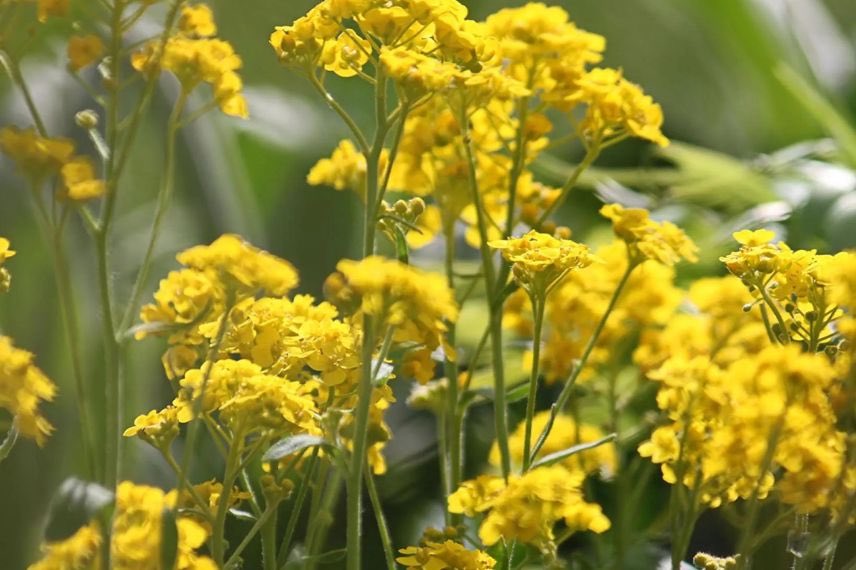
Alyssum saxatile 'Goldkugel' – Basket of Gold with yellow flowers
The basket of gold ‘Goldkugel’ is another perennial that brings sunshine thanks to its bright flowering. It is a cousin of cabbage and mustard. It forms a compact clump of about 30 cm across, with small, downy leaves bearing a silvery-green colour. They are evergreen, therefore ornamental even outside the peak seasons.
In spring, between April and May, this perennial is cloaked in a cloud of bright, vivid yellow flowers. They are small in size, but grouped into generous, dense clusters. This flowering lasts about one month. To enjoy it longer, you can remove spent flowers as they appear. This will stimulate a second flowering in autumn.
Hardy beyond -25°C, it’s also a plant able to tolerate drought and hot exposures. Grow it in a rock garden or for planting up a low wall: these conditions will provide the well-drained soil it requires, usually stony and sandy. Naturally, the Aurinia saxatilis grows in the mountainous and rocky regions of Central Europe and South-East Europe.
To succeed in growing your Alyssums, consult our complete guide: Alyssum, basket of gold: sowing, planting and care
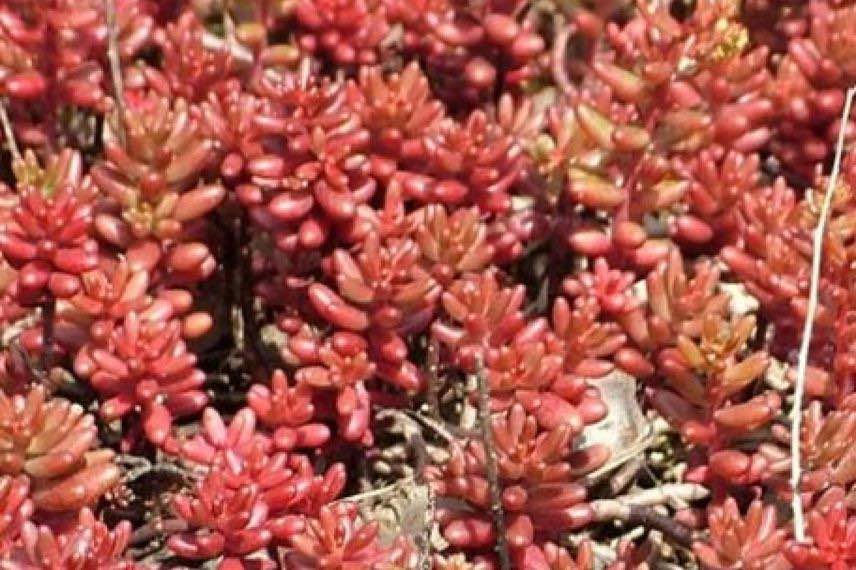
Sedum album 'Murale' – white stonecrop
Sedums are among those reliable garden staples that seem to withstand everything: heat, drought, severe frosts (beyond -25°C for ‘Murale’), poor soils, and a lack of maintenance, fertilising or watering.
This white stonecrop is native to the Mediterranean basin, where it grows on walls, in rock faces or in the middle of dry lawns. It requires a sunny position and a perfectly drained substrate, conditions typically found in a rock garden.
‘Murale’ is one of the most colourful varieties of the species. It has small fleshy leaves rich in juice, typical of succulent plants able to withstand drought. They have the characteristic of changing colour over time, for a display that is continually renewed. Initially pale green, they then turn coral red, before taking on vibrant red, purples and purplish hues as the cold sets in. This changing foliage adds a splash of colour to what is often the dreariest season in the garden.
The flowering occurs in summer, between June and August, depending on the climate. Our stonecrop then reveals small star-shaped flowers in a very delicate pale pink-tinged white, gathered in clusters.
This compact groundcover stays under 5 cm in height, but can spread to more than 40 cm by colonising space thanks to its stems that readily root themselves in the tiniest crevices.
Grow this stonecrop with ease in the garden, even in the most inhospitable, poor, arid and scorching areas.
To succeed in growing your stonecrops, consult our full guide: Sedum or Stonecrop: how to plant, grow and propagate them
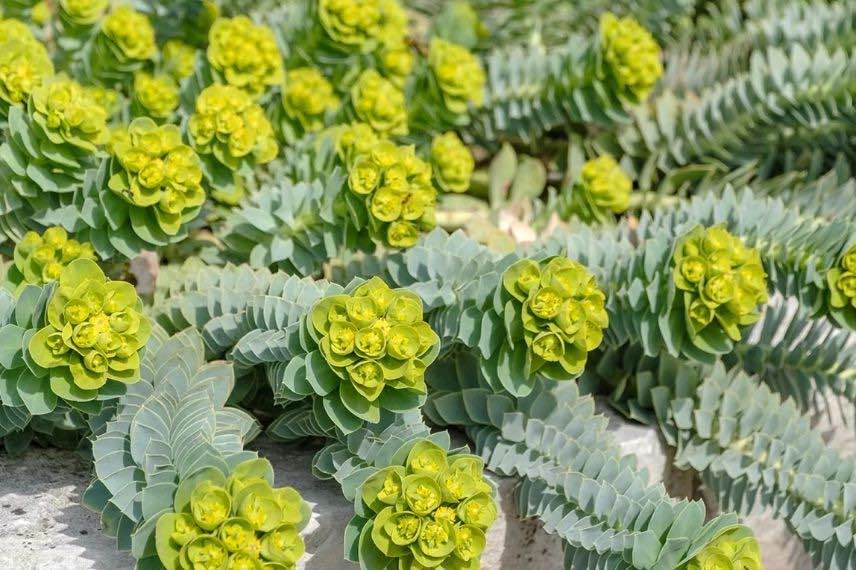
Euphorbia myrsinites - Corsican spurge
Another Mediterranean-origin perennial: Euphorbia myrsinites. This plant that prefers well-drained soils will thrive in rockeries, which it will enhance with its compact silhouette. It grows to about 30 cm across and 10 cm high.
This euphorbia forms an evergreen groundcover, with succulent leaves, tough and pointed. They display a pretty blue-green colour. In spring, this foliage contrasts beautifully with the flowering, in a palette ranging from chartreuse green to gold, through bright yellow.
Originating from Corsica, this plant naturally favours dry soils. It is therefore an easy-to-grow option for a rockery, rocky and very exposed.
To succeed with Euphorbias, consult our comprehensive guide: Euphorbias: planting, growing and care.
- Subscribe!
- Contents
Comments