





























7 pairing ideas with Escallonia
Our best garden and container plant pairings
Contents
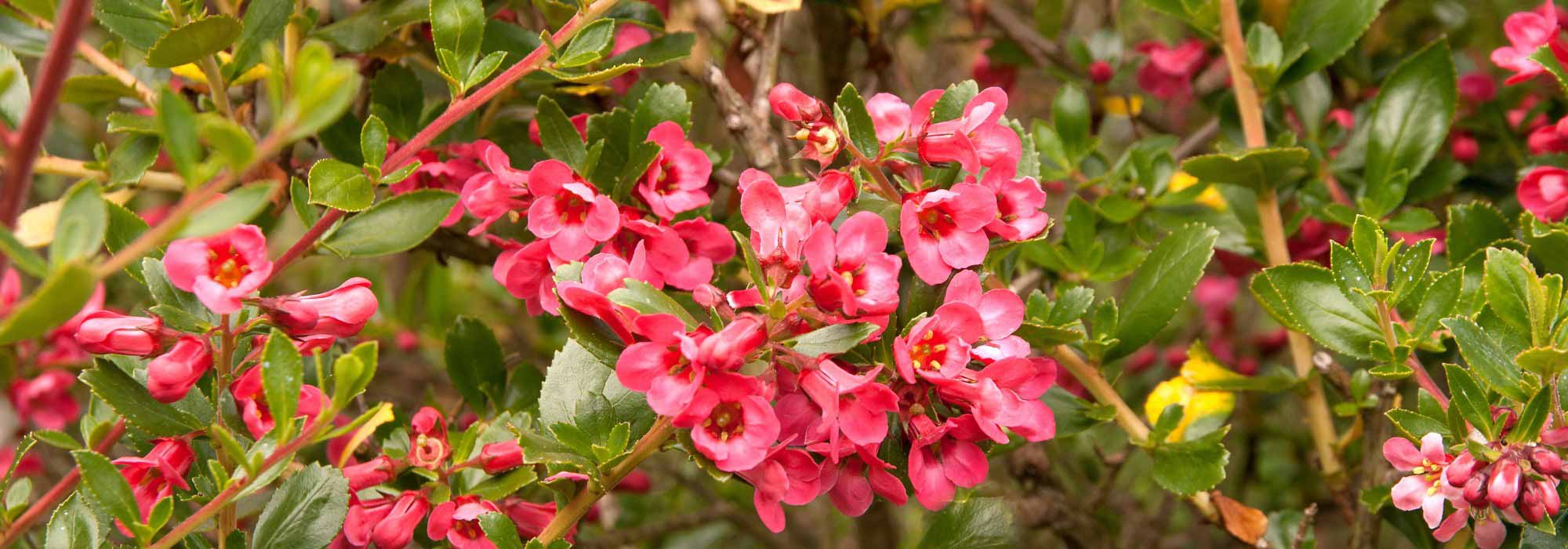
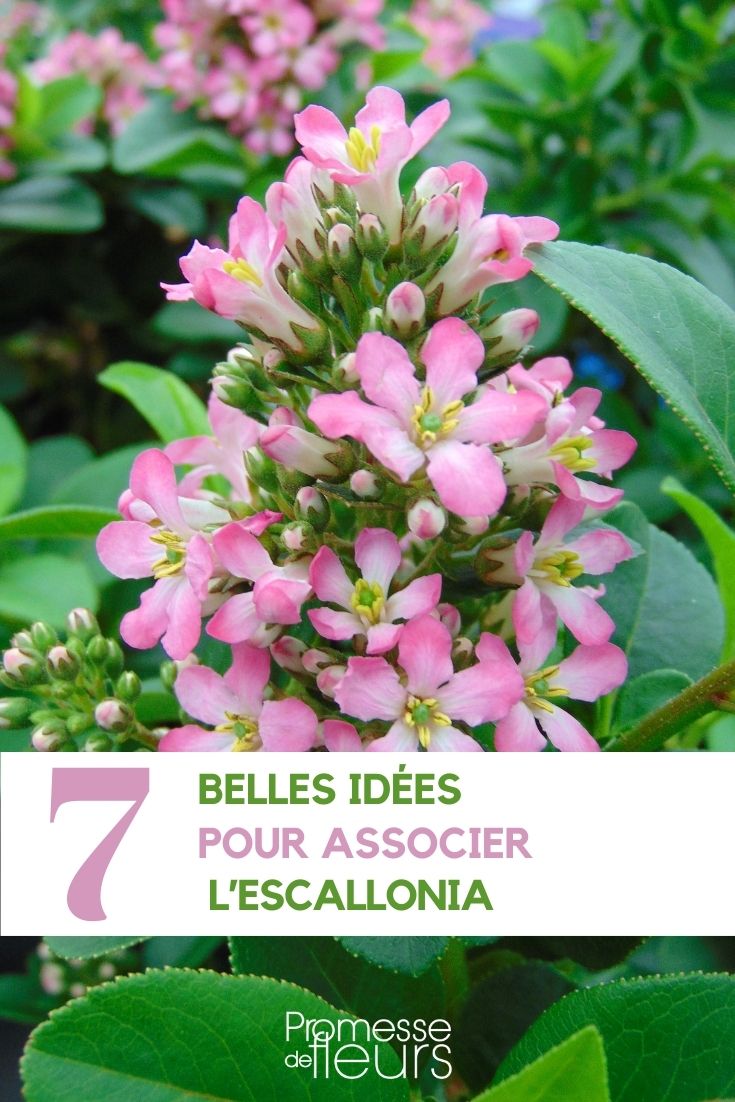
Escallonia is a beautiful shrub that seduces with its abundant summer flowering pink or white, its rapid growth and its glossy evergreen foliage. A bit frost-tender (about -10°C), it’s a staple in gardens in mild coastal climates—Brittany, Ireland or the British Isles. Gardeners in more continental climates will grow it with ease in a large pot on the terrace, to be brought indoors for winter. Whether it’s to structure a border, brighten a flowering hedge, a rock garden, or to add an elegant touch to a terrace, Escallonia lends itself to every planting scheme, remaining decorative all year round. Discover which plants to pair Escallonia with in the garden!

In a flowering hedge
Escallonia is valuable for creating a permanent display in a mild climate thanks to its pretty glossy evergreen leaves, as well as its summer flowering which sometimes lasts until the first frosts. It is resistant to diseases and can advantageously replace conifers. In a flowering hedge, Escallonia pairs perfectly with a wide variety of shrubs. It will accompany the deutzias, with their beautiful white or pink bell-shaped flowers that appear in spring, and precede those of Escallonia. Reaching up to 1.5 m in height, or more, the Escallonia rubra ‘Crimson Spire’ is an excellent choice for its generous red flowering which brings colour to the garden from midsummer to autumn. Its glossy evergreen foliage makes it a staple for structuring the hedge, while adding a lively note to the whole. The Pittosporum is another small shrub that lends itself well to creating an informal hedge. Don’t hesitate to vary the colours by pairing the bright, glossy foliage with the variegated leaves of the Pittosporum tenuifolium ‘Variegatum‘.
The Eucalyptus gunnii ‘France Bleu Rengun’, with its bluish-green evergreen foliage, will lend the whole a touch of modernity and lightness. Its round, silvery leaves contrast beautifully with the dark green of the other shrubs. Moreover, this eucalyptus is well suited to mild climates and tolerates pruning very well, making it an excellent candidate for a hedge that looks good all year round. The Ceanothus impressus ‘Victoria‘ is perfect for this evergreen association, with its small dark green leaves and its spectacular deep blue flowering in spring.
In windbreak hedges, Escallonia will be planted together with coastal Griselinia and Olearia, or tree daisy (for example the Olearia macrodonta ‘Major’), evergreen shrubs. By mixing these various combinations, the hedge becomes colourful, dense and vibrant all year round.
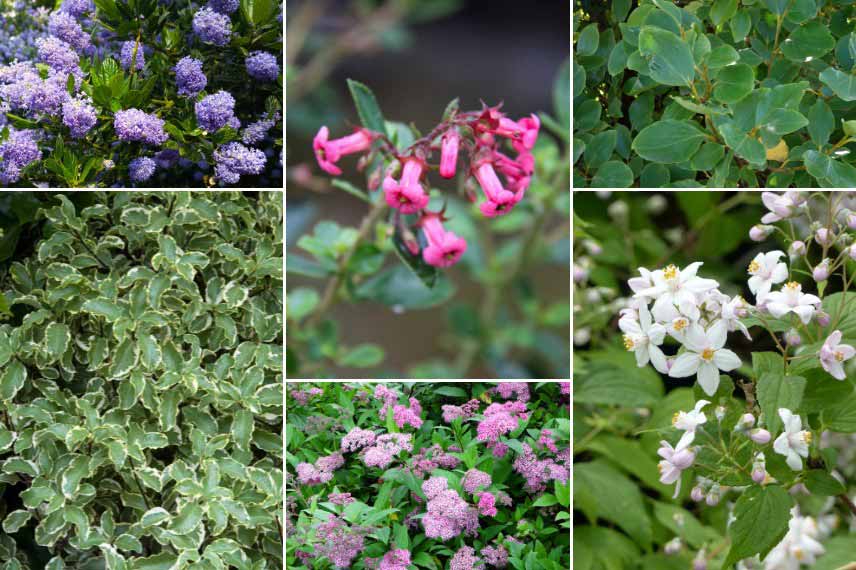 Ceanothus impressus ‘Victoria’ (photo: Wendy Cutler), Escallonia rubra var. macrantha, Griselinia littoralis, Pittosporum tenuifolium ‘Variegatum’, Spiraea japonica, Deutzia purpurascens ‘Kalmiiflora’
In a seaside garden
Because it enjoys mild climates and isn’t deterred by sea spray, Escallonia can be used along the coast without reservation. In a coastal garden, it pairs ideally with hardy plants that withstand the often harsh conditions of the shoreline, such as saline winds and sandy soils. You will create a beautiful coastal planting combination along the coast, by pairing for example Escallonia ‘Red Elf’, a variety with a compact habit and a bright red summer flowering, of a Olearia solandri ‘Aurea’, with the look of a tall, airy heather. This shrub is distinguished by its very fine, green-yellow foliage, and its small white flowers that appear from August to September and release a honey fragrance. It can be paired with other small evergreen shrubs such as Leptospermum, and Atriplex halimus, whose silvery-grey foliage adds a soft texture that softens the borders while creating an elegant backdrop for Escallonia’s flowering. To strengthen this harmony, complete the scene with a Polygala myrtifolia, a bushy evergreen plant, indispensable in a mild climate, which bears white and pink-violet pea-flowers from May to the first frosts.
For more ideas and tips on plant choice, do not hesitate to consult our guide Designing a coastal garden
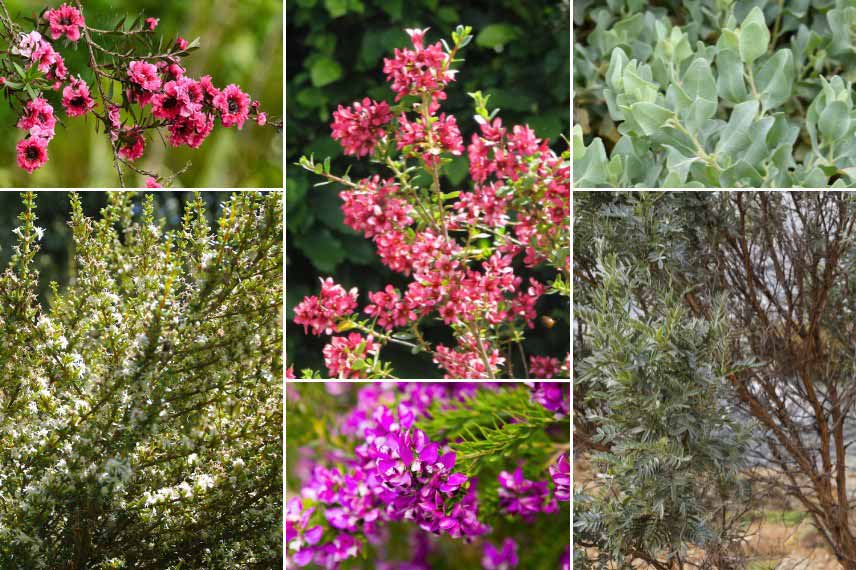
Leptospermum scoparium ‘Red Damask’ (photo : Sid Mosdell), Escallonia ‘Red Elf’, Atriplex halimus (photo : Ryan Hodnett), Olearia solandri ‘Aurea’, Polygala myrtifolia et Anthyllis barba-jovis
In a floriferous bed
The modest-sized Escallonias, with a compact habit, are well suited for use in borders, where they provide structure and plenty of light. The Escallonia laevis ‘Pink Elle’ is an adorable compact form that slips easily into a lush border in well-drained soil. It will thrive wonderfully alongside floriferous perennials such as lavender, Achillea, hardy geraniums, wild teasels (Dipsacus sylvestris), Nepeta, Allium, or Phlox, bringing density and colour. A few clumps of ornamental grasses such as Stipa and a tuft of Calamagrostis x acutiflora ‘Karl Foerster’ bring movement and a natural touch.
In the heart of a shrub border, Escallonia pairs with shrubs that flower in summer or spring, such as Kolkwitzia amabilis, broom ‘Zeelandia’, evergreen ceanothus, buddleias and Leptospermum, with long flowering. They will create superb, low-maintenance flowering displays beside it. A variegated Euonymus, with evergreen leaves edged in yellow or cream, adds a bright touch and lights up the border all year round. These combinations allow you to play with textures, heights and colours for a border that’s easy to maintain.
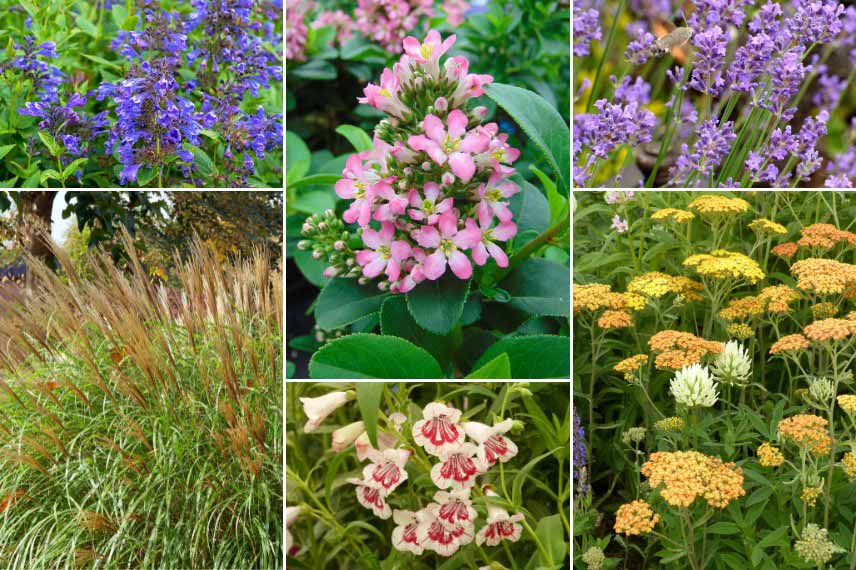
Nepeta ‘Blue Dragon’, Escallonia laevis ‘Pink Elle’, Lavandula angustifolia (photo : Niepokój Zbigniew), Calamagrostis acutiflora ‘Karl Foerster’, Penstemon ‘Strawberries and Cream’, Achillea ‘Terracotta’ et Trifolium ochroleucon
Read also
Growing an Escallonia in a potTo structure a planting bed
Escallonia is an ideal shrub for structuring a scene composed of plants with more spontaneous forms or to provide a dense and elegant backdrop. Some compact-growing varieties can replace boxwood, as they allow softer shapes. Thanks to their moderate growth and rounded habit, they readily lend themselves to ball pruning or forming small hedges with a neat, structured style. In favourable climates, choose an Escallonia hybrid ‘Red Dream’, for example, which naturally forms a very dense, rounded dome, clad in evergreen, glossy green foliage, attractive all year round. Its bushy silhouette will harmonise with the rounded forms of Hebe shrubs, such as Hebe ‘Pink Paradise’ which forms fluffy, flowering carpets. Clumps of Ophiopogon planiscapus ‘Nigrescens’ will add contrast and visual interest, while ground-cover roses ‘Emera®’ will be perfect for dressing their base very naturally. Punctuate the scene with Allium ‘Lavender Bubbles’ for the graphic look of their large star-shaped inflorescences, and with a pruned Laurus nobilis to frame the whole with character.
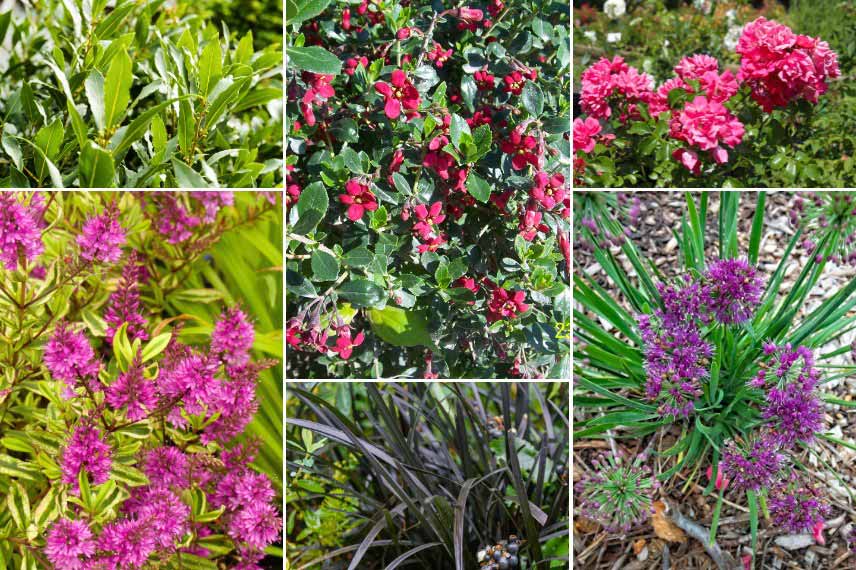
Laurus nobilis, Escallonia ‘Red Dream’ (photo : L. Enking), Rose ‘Emera’, Hebe ‘Celebration’, Ophiopogon planiscapus ‘Nigrescens’ and Allium ‘Lavender Bubbles’
In a rockery
Escallonia is perfect for brightening a large scree garden in a mild climate, not too dry nor too calcareous. Choose Escallonia laevis ‘Gold Ellen’, featuring superb evergreen foliage, golden-yellow maculate with green. It suits the feel of a scree garden very well. Surround it with a Phormium tenax ’Purpureum’, a purple-leaved form, whose long linear and stiff leaves, very vertical, create a striking graphic effect. The golden-green of Escallonia softens the bold verticality of Phormium. A very handsome companion as well, Pittosporum tenuifolium ‘Tom Thumb’, a lovely compact variety bearing dark, bronze-purple foliage. With their purplish foliage, both will offer a very attractive contrast with Escallonia’s golden leaves. Pair them with a Cistus x loretii, with white flowers enhanced by handsome brown-purple macules, and Sedum ‘Matrona’, perfect for edging a scree garden.
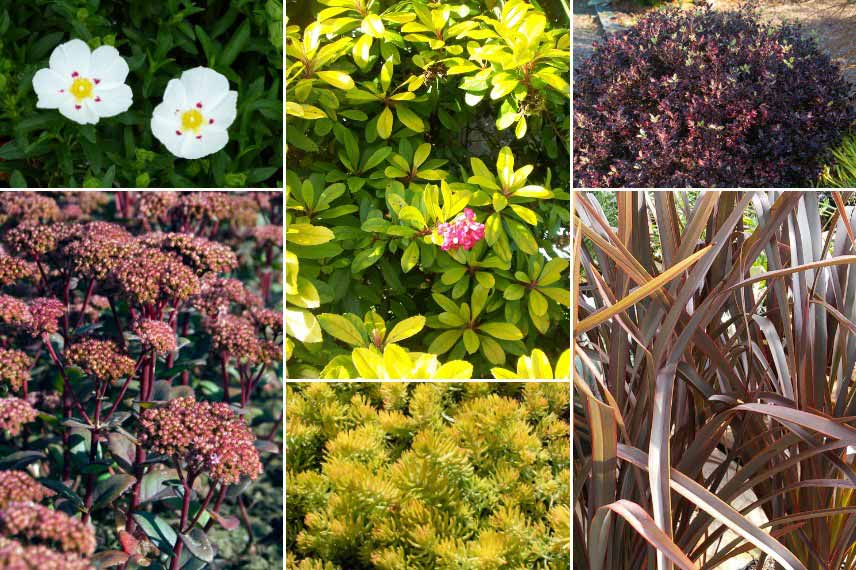 Cistus x loretii, Escallonia laevis ‘Gold Ellen’ (photo: Wallygrom), Pittosporum tenuifolium ‘Tom Thumb’, Sedum ‘Matrona’, Sedum reflexum ‘Angelina’, Phormium tenax ‘Purpureum’
In a Mediterranean garden
If you’re looking for a plant that can become a real focal point in your Mediterranean garden, go for Escallonia without hesitation. It tolerates dry summers once established, and can bloom even in scorching conditions. Take advantage of its Mediterranean charm by pairing it with hardy geraniums, with lavenders, with rosemaries, and with Grevilleas. Interplant a few Cashmere Phlomis, a sturdy perennial with pale lilac-pink flowers. Plant Euphorbia characias, with a bushy habit, decorative all year round. On the shrub front, also consider oleanders, rockrose, and ceanothus.
For a lush and very exotic display, plant a Trachycarpus fortunei, the Chinese windmill palm, which easily blends into a Mediterranean-style garden. It can also be paired with Agaves, as well as Callistemon and Leptospermum, these floriferous and low-maintenance shrubs prized in gardens in mild climates.
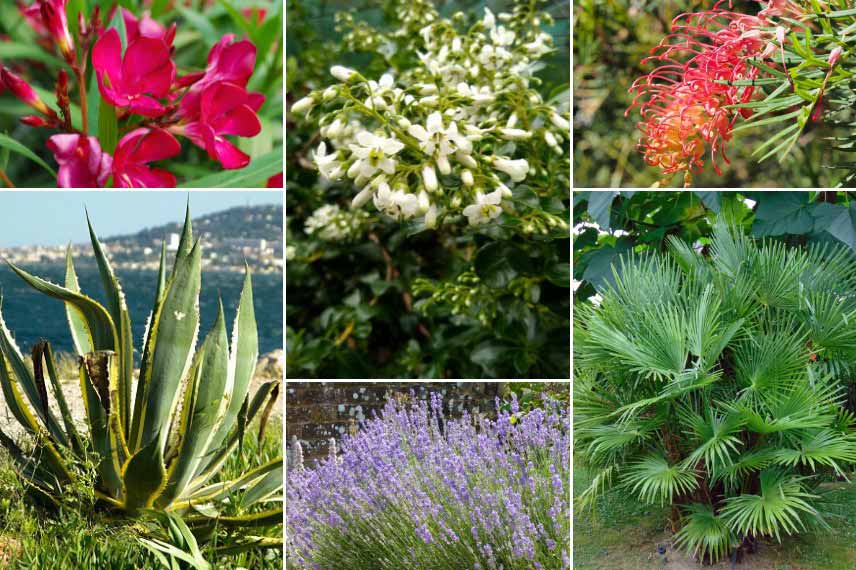
Oleander, Escallonia ‘Iveyi’, Grevillea ‘Joe Mason’, Agave americana ‘Variegata’, Lavandula angustifolia ‘Munstead’, Trachycarpus fortunei
In a pretty plant pot on the terrace
Escallonia adapts well to container cultivation, which can be placed on a terrace or balcony. This method of cultivation allows gardeners in cold regions to shelter it from heavy frosts in an unheated greenhouse or conservatory in winter. The Escallonia hybrid ‘Golden Carpet’ naturally forms a bright groundcover not exceeding 50 cm in height at maturity with a 1 m spread. This dwarf variety will bring a touch of evergreen greenery to your terrace or balcony. It is in summer adorned with flowers in a deep pink-red on golden foliage, turning chartreuse green in winter. To accompany it, you will plant at its base a Coleus ‘Limewire’ with leaves brown-purple, margined with lime green, a Saint-Daboecia Heather ‘Vanessa’ (Daboecia cantabrica), or a Vinca minor.
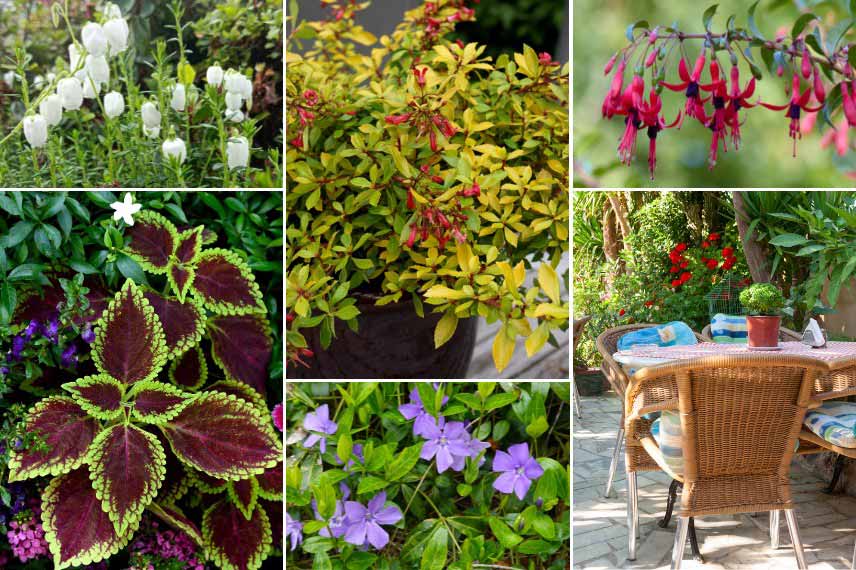
Daboecia cantabrica ‘Alba’, Escallonia ‘Golden Carpet’ (photo © Plantipp), Fuchsia regia ‘Reitzii’, Coleus, Vinca minor
- Subscribe!
- Contents
Comments