





























7 inexpensive climbing plants to spruce up your garden on a budget
Affordable lianas to adorn walls and pergolas with flowers
Contents
Adding climbing plants to your garden or terrace instantly gives it a romantic, delightfully old‑fashioned air. How wonderful to see them twine around their trellises or arbours! To avoid spending too much on climbing plants and to dress walls, gazebos, pergolas or fences elegantly, we recommend choosing plants known to be inexpensive to buy, but also plants grown from sowing, or some lesser‑known yet equally ornamental varieties such as hops. So which climbing plants are inexpensive and ideal when you’re starting a garden or have a small budget? We’ll tell you everything and give you the best tips for fitting out your garden on a tight budget!

Some buying tips
In the same way as for perennial plants, bushes or trees, the least expensive climbing plants are often best chosen from deciduous plants. There are a great many of them, which fortunately leaves plenty of choice.
Also choose true species, not the result of hybridization; they always prove more economical, and naturally beautiful!
Purchased in a small pot, climbing plants will not be prolific in their first spring or summer, but this type of container allows for significant savings compared with plants bought in pots, if you are a little patient. You can cut the bill by at least half, with prices ranging from €5 to €10.
There are also climbing plants that are inexpensive by nature, popular and common, either because they are easy to grow in a nursery or because they have rapid growth. Below we give you a selection of these lianas at affordable prices…
♥ Shop smart! : At Promesse de fleurs, spot the low prices on all our climbing plants by adjusting the filter “price” to the maximum amount you do not want to exceed. You can also refine your search with the filter “supplied in” to display only the bare roots! Also use the “our selection” filter to highlight all the plants at low prices.
Annuals
If you had to name the cheapest climbing plants, you could immediately mention the annual plants, produced by sowing seed such as Ipomoeas, Cobaea, nasturtiums and climbing sweet peas. Not only can you grow several plants when sowing is done properly, but above all you save a lot in terms of cost since a packet of seeds contains about 40 seeds, usable for 2 or 3 years. Of course, these plants are frost-tender and will not withstand winter cold spells, but in very mild climates, and in the southern regions of France, they can sometimes be kept. You will carry out this type of sowing in seed trays or in a heated mini-greenhouse, during March, or directly into the ground from May. Finally, it is very rewarding to grow your own climbing plants, from seed to summer flowering, especially as they are very generous!
Also try other lesser-known but very ornamental climbers such as the Canary nasturtium (Tropaeolum peregrinum), or the Mina lobata.
♥Their little extra: a wide choice of seeds and varieties available to renew the display each year, an extraordinary twining habit, and superb blue and mauve blooms!
→ Read also 7 climbing plants for rapid growth, Sweet peas: the most beautiful varieties, Cobaea, Cobaea scandens: sowing, planting, and Companion planting nasturtiums.
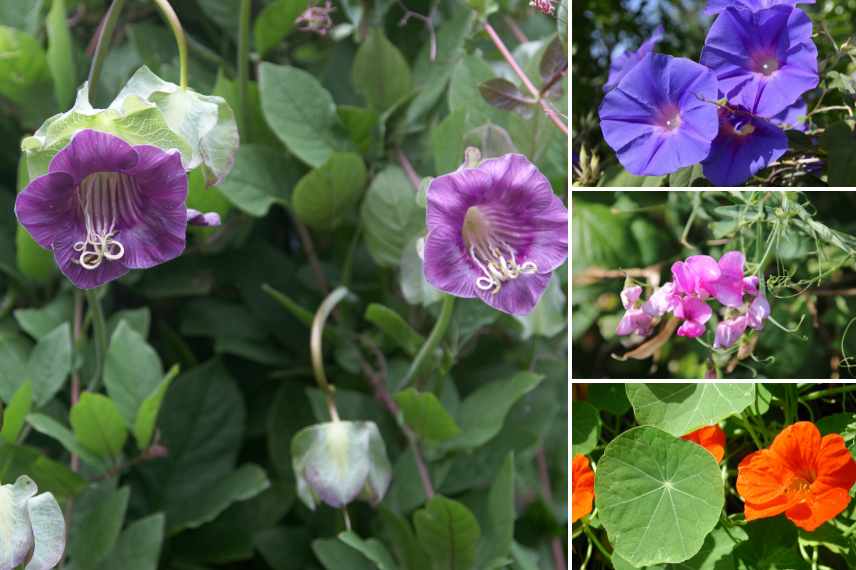
Cobaea scandens, Ipomaea, Lathyrus odoratus and Tropaeolum majus
Roses with bare roots
Roses have been garden stars since time immemorial… With one of the richest colour ranges, they are timeless, hardy climbing plants, often fragrant, with small or large flowers, flowering for many long months up to the frosts when chosen as repeat-flowering.
Climbing roses (for arches and pergolas) also include rambling roses, a category of roses reaching up to 10 m in length, very vigorous and generally not repeat-flowering.
The great advantage of roses is that they have long been sold as bare roots, which considerably reduces the cost when buying in quantity. It is one of the most suitable packaging types for roses, because when planted correctly it allows very good establishment, rooting and flowering performance from the first year. The only drawback is that bare-root roses (or sold bare-root or with a root ball) are bought over a short period, during their dormancy, between November and March. For less than €10, you can treat yourself to an exceptional rose that will adorn a pergola or a trellis for years (expect to pay a few euros more for a rose sold bare-root or with a root ball).
♥ Their added bonus: the queen of flowers, a long flowering period, an astonishing choice… And so easy to grow!
Read also: roses: bare-root or potted? and our video How to plant a bare-root rose?
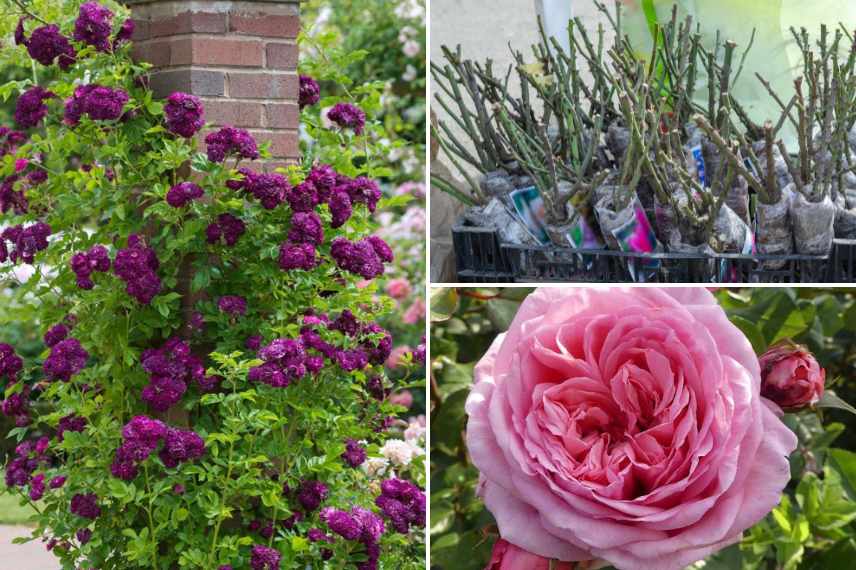
On the left, climbing rose ‘Bleu Magenta’ and bottom right climbing rose ‘Long Island Oralinco’
Virginia creepers
With outstanding autumn foliage, Virginia creepers are often available at competitive prices. They are, in fact, fairly common plants, reaching heights of 7 m to 15 m (sometimes 20 m!).
There are several species, but the ones mainly used are Parthenocissus quinquefolia with 5-lobed compound leaves that quickly turn red in autumn, and Parthenocissus triscupidata, with trilobed leaves, which are also spectacular in October.
You will have to pay between 10 and 15 euros to acquire a young plant in a 2–3 L container, much less if you buy them in pots.
For a few euros more, Parthenocissus henryana, with very attractive veins, can even thrive in shade.
♥ Their little extra: a lush, very dense covering habit and stunning red‑orange autumn colours.
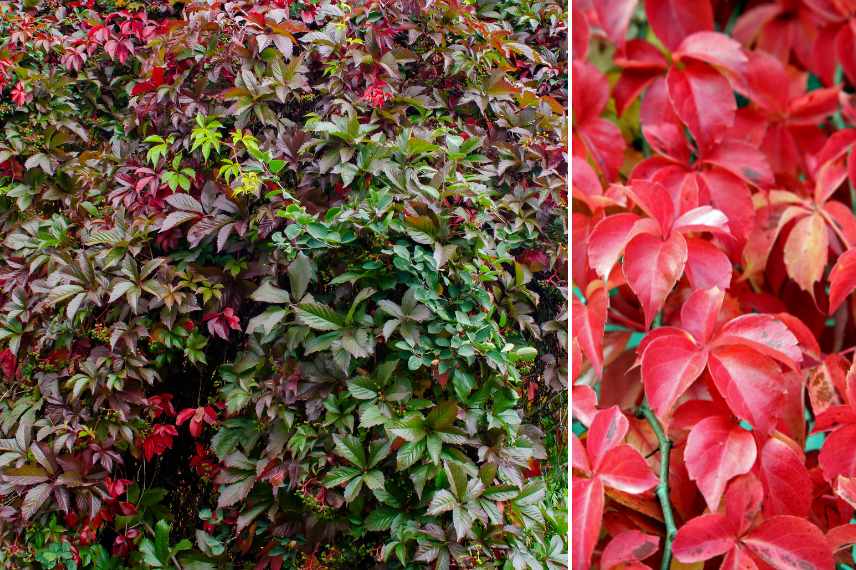
Parthenocissus quiquefolia
Honeysuckles
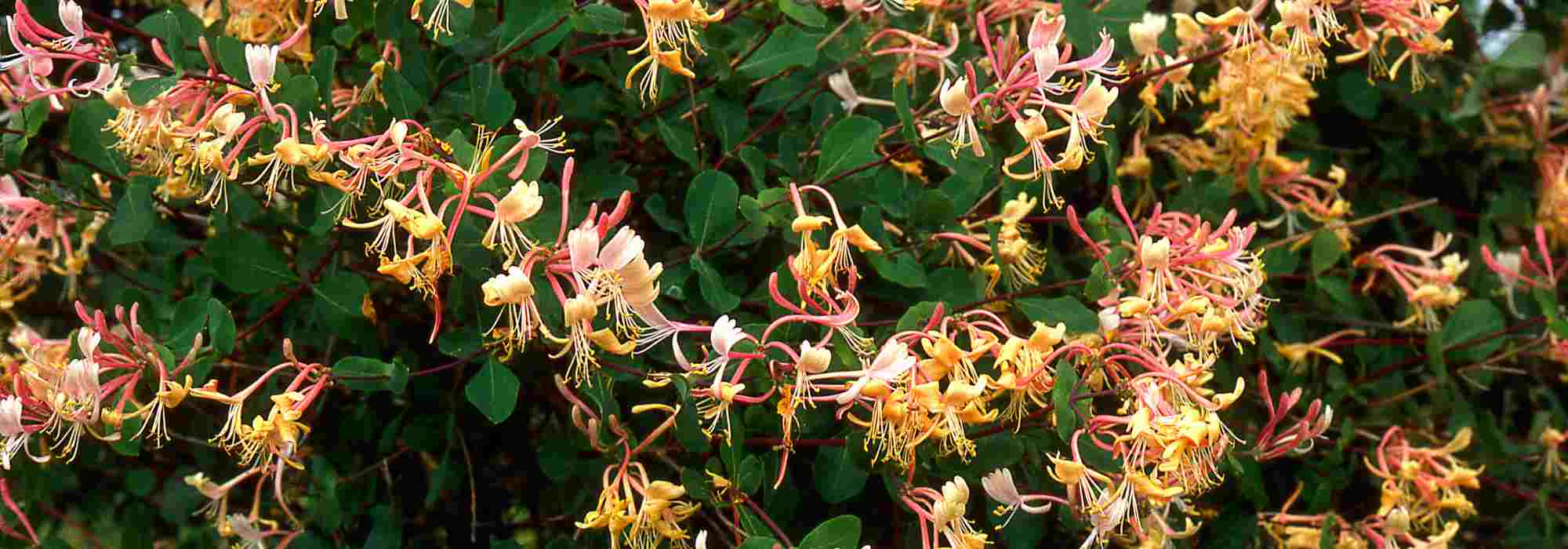
Honeysuckles are certainly the best-known climbing plants of all, recognisable by their astonishing trumpet-shaped flowers, which are planted notably for their fragrance, incredibly fragrant at the end of the day. Robust, floriferous, hardy, able to grow in sun or ideally in partial shade, these are climbers with irresistible charm, for country gardens, but also urban gardens. The most affordable of all is probably the wood honeysuckle (Lonicera peryclimenum) and its varieties, flowering in summer, which can be found for under €15, but if you buy the plants in pots, this price will be halved! The Lonicera caprifolium, which blooms in spring, is another very affordable species, as is Lonicera delavayii, with yellow and white flowers. In any case, have a look at the honeysuckles if you want to cover a large area, hide an unappealing hedge cheaply, because they are voluble as can be!
♥ Their little extra: a scent to die for, a delightfully wild elegance!
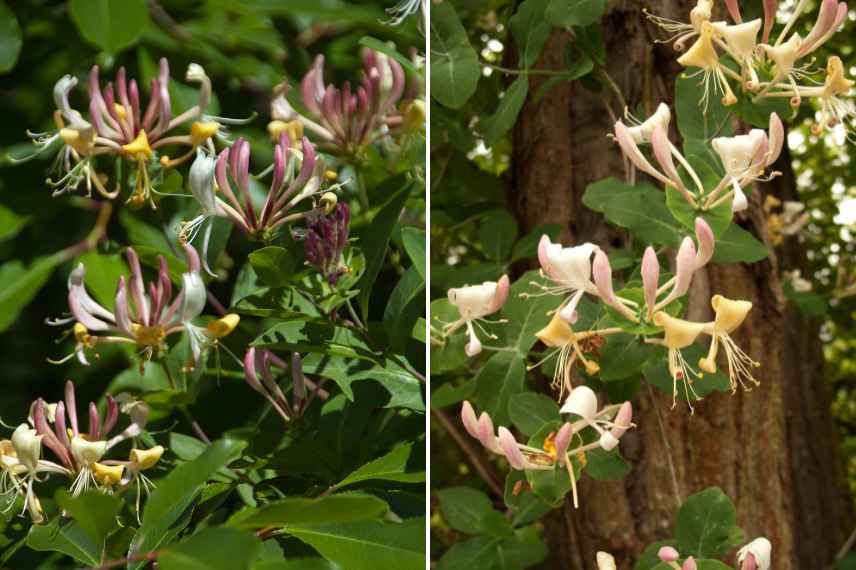
Lonicera peryclimenum and Lonicera caprifolium
Clematis
Clematis are among the most beautiful flowering displays among climbing plants. Most commonly between 2 and 3 m in height, there are smaller ones that can be grown in a container, and others much larger, up to 8 m. Their colours are also very varied, from pure white, through shades of pink, mauve, purple, yellow, to red and crimson. They are vigorous and can remain in place for years.
Clematis with small flowers are sometimes cheaper than the large-flowered hybrids. You can easily find these clematis in 2–3 L pots for under €10.
Clematis that have become firm classics, long established on the market, are also worth looking out for for their attractive price, rarely exceeding €12 (for example, the large-flowered purple clematis ‘The President’, the pink clematis ‘Nelly Moser’, the white-flowered Clematis ‘Madame Lecoultre’, the clematis ‘Jackmanii’, etc).
♥ Their little extra: spring and summer flowering, providing a floral display for many months, rapid growth, great longevity!
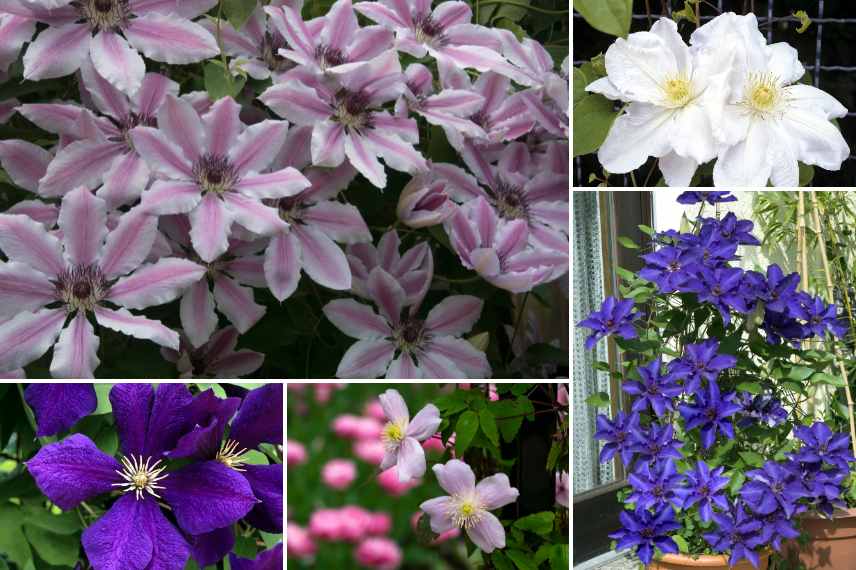
Clematis ‘Nelly Moser’, Clematis ‘Madame Lecoultre’, Clematis ‘Jackmanii’, Clematis montana ‘Baylen’ and Clematis ‘Président’
Hops
Here is another fairly affordable climber, which you can buy in a pot for around ten euros, or even less. Very notable for its particularly rapid growth, the hop (Humulus lupulus) rewards us with a lovely pale green foliage with dentate margins, and a globular flowering that is its main attraction in May or June, or in summer depending on the region: these are the hop cones, a beautiful yellow-green, essential for brewing beer (these are present on the female plants). It goes into dormancy in autumn and reappears in spring.
The hop prefers partial shade, but it tolerates sun. Growing between 5 and 10 m tall, it is useful for pairing with a rambling rose, for covering a large arbour with its vigour, or for climbing into a dead tree (you will need to help it with ties to the support). Fully hardy, the hop can establish itself almost anywhere, provided the soil remains sufficiently cool, even moist.
♥ Its little extra: its voluble nature, its country charm and its rapid growth.
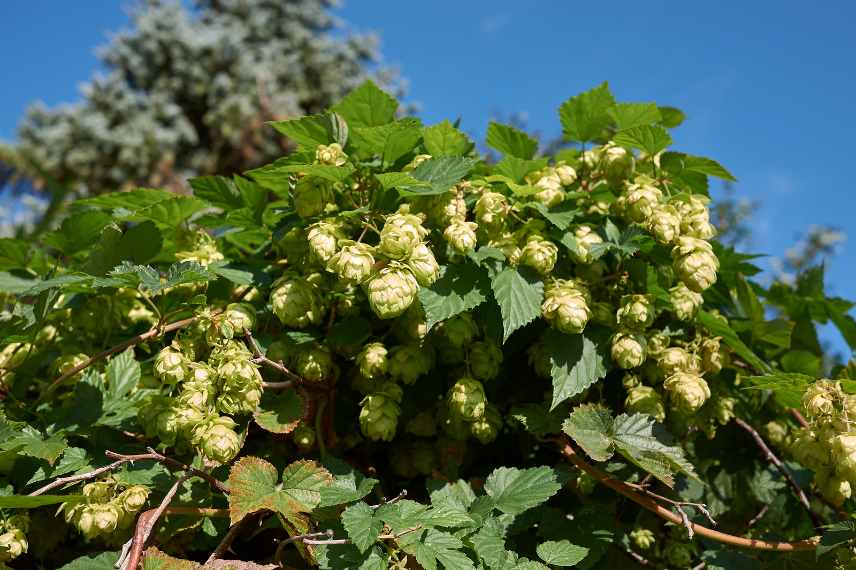
Humulus lupulus in flower
Ivies
Often used as climbing plants, but also as groundcover plants, ivies, evergreen, stand out in our selection. They are much more affordable than most climbing plants, genuinely accessible to every budget. Sometimes criticised for being invasive, they are nonetheless useful climbers for hiding an unsightly wall (their aerial roots do not parasitise their support).
Treat yourself to beautiful, highly ornamental varieties, purchased in small pots or pots for under 5€ (Hedera helix ‘Shamrock’ for example, very bright, or ‘Ivalace’ with very slender lobes).
♥ Their little extra: a winter flowering, a boon for pollinators’ larder; fine specimens are available for planting in containers.
→ See also: Choosing an ivy, 5 good reasons to plant ivies, and Potted ivy: pairing ideas.
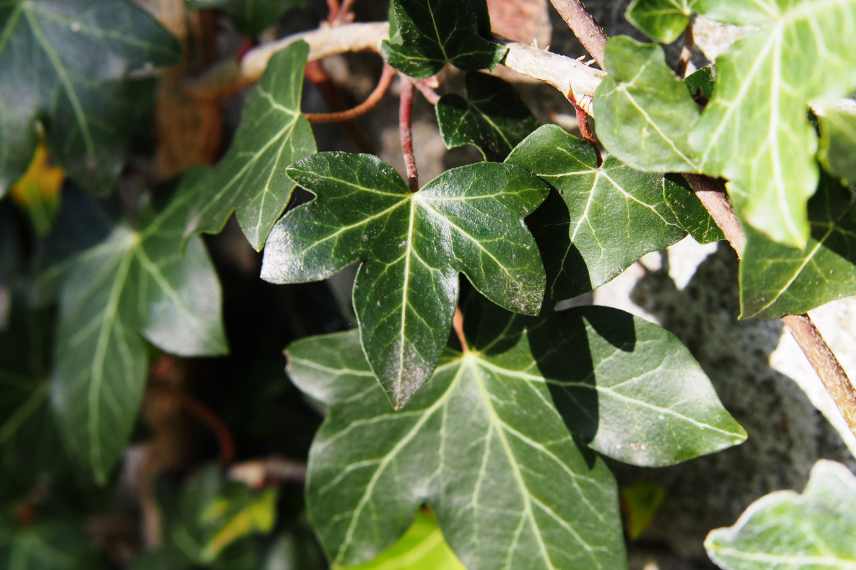
And also...
The passionflower caerulea, the plumbago, the Chinese wisteria (Wisteria sinensis), the trumpet vine…
- Subscribe!
- Contents

Comments