





























7 tips for growing beautiful hellebores
How do you care for oriental hellebores?
Contents
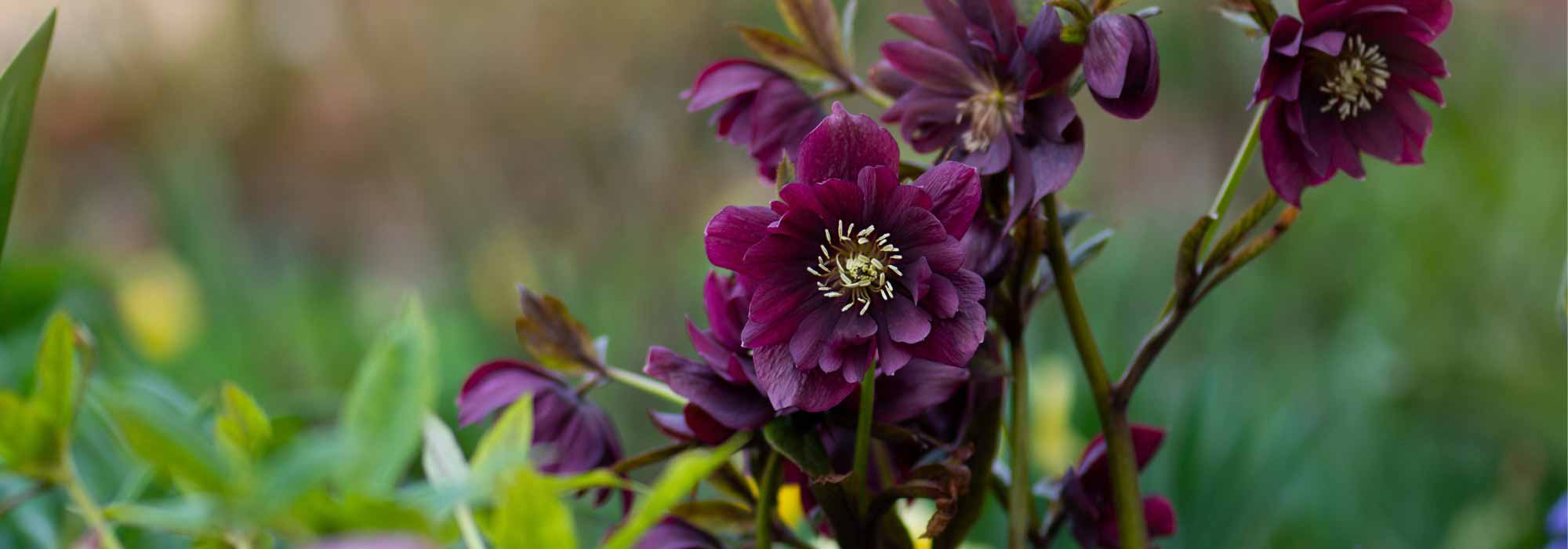
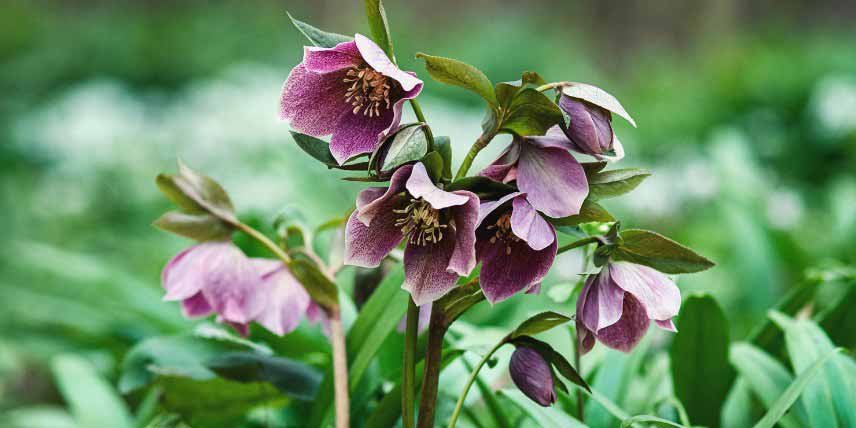
Hellebores, also known as “Christmas roses,” are among the rare perennials that bloom in winter. They are valuable for dispelling the gloom and winter drabness. We appreciate their elegant, single or double flowers, in original colours, ranging from pure white to deep purple, almost black, including pink and green, often highlighted by a centre of yellow stamens. Many varieties also offer variegated, bi-colour flowers. Yet, despite their robust appearance, hellebores require some care to bring out their best. Here are seven essential tips to help them thrive in your garden!
For full details on their cultivation, consult our comprehensive guide “Hellebores: planting and growing”, as well as our video “5 things to know about the oriental hellebore”.

Choosing the right location
Oriental hellebores prefer shade or partial shade, in a spot where they can receive soft light and be protected from the scorching sun in summer. The ideal is to plant them at the base of trees or deciduous shrubs. In winter, these shed their leaves, allowing Oriental hellebores to receive sufficient light to flower, while in summer, their foliage protects the hellebores from excessive direct light.
Oriental hellebores prefer slightly acidic soil that remains cool, but must be well-drained to avoid root rot. They dislike waterlogging and can quickly wither if the soil is too wet. Therefore avoid flood-prone areas or soils that are too clayey, which retain water. To ensure good protection from cold winds, choose a sheltered position, which will also help protect the flowers from the elements.
Read also
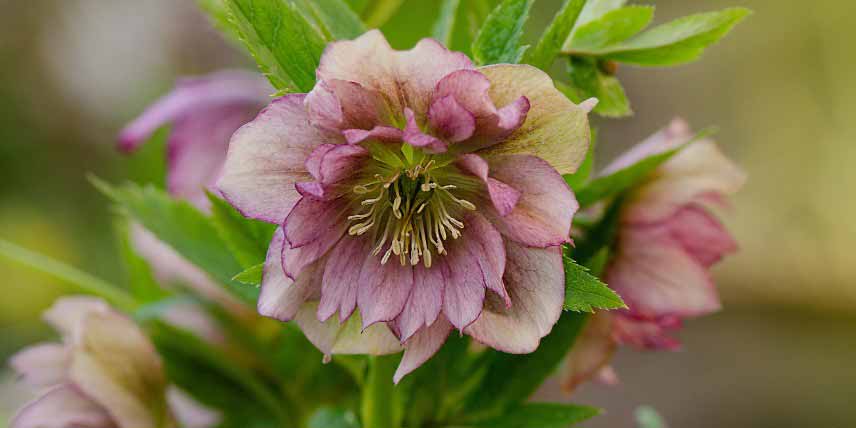
10 single-flowered helleboresCaring for the plantation
A good planting is key to healthy, long-lasting growth of Oriental hellebores. Plant them preferably in autumn, to allow them to establish well before winter, or in early spring, when the soil is still cool but the risk of severe frost has passed.
For a more striking effect, we recommend planting hellebores in groups of 3 to 5 young plants, spaced about 50 to 60 cm apart.
- Once you have chosen their position, dig a hole about twice the size of the root ball and mix the soil with well-rotted compost to enrich the soil with organic matter.
- To improve drainage, especially if you have heavy soil, incorporate some coarse sand or gravel at the bottom of the hole. You can also plant them on a small mound to prevent water from pooling.
- Plant the hellebores at the same depth as they were in their pot, as burying them too deeply can slow their growth.
- Lightly firm the soil, then water.
Preserve soil freshness
The Oriental hellebore needs the soil to stay moist: don’t hesitate to water regularly if it doesn’t rain (but not excessively; the soil must not be waterlogged). We recommend installing a good layer of organic mulch around your hellebores. You can use, for example, fallen leaves, RCW (ramial chipped wood) or straw, or a blend. In addition, mulching will help limit weed growth and gradually provide nutrients to the soil as it decomposes. Renew the mulch at the start of autumn so that the plants have a protective cover during the winter.
Read also
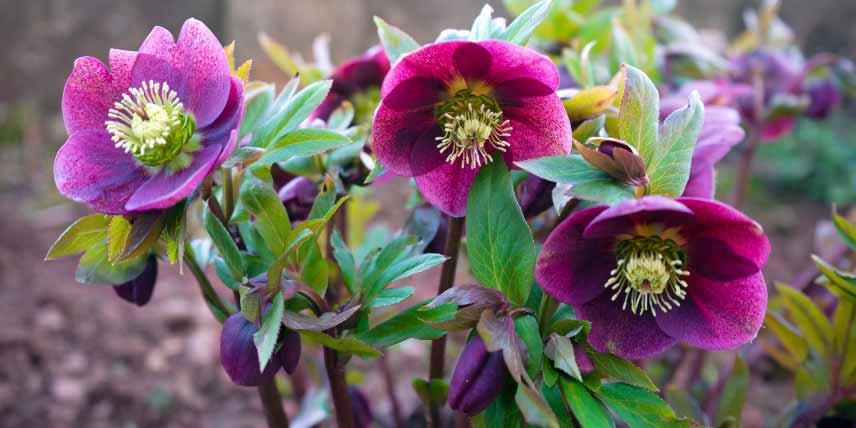
Oriental Hellebores: the darkest onesCut damaged leaves
Between December and February, cut any withered or damaged leaves. This will help to showcase the flower buds that appear at this time. Use a pruning shear to cut the leaves at the base (avoid pulling on them to tear them off, as you risk damaging the plant’s stump). By removing the damaged leaves, you also reduce the risk of spreading fungi. Don’t worry if your plant has no leaves at that time; it will regrow its foliage in spring, allowing it to start a new cycle.
Monitor and treat diseases and parasites
Hellebores can be susceptible to certain pests or diseases. They are sometimes attacked by aphids, particularly if winter is mild. They can hide in the flowers: be sure to inspect them carefully, and they can be carriers of diseases, such as black spot disease. To control them, use black soap diluted in water, to spray on the infested parts. You can also encourage aphid predators by installing ladybird shelters in your garden, or by releasing them directly. Regular monitoring and prompt intervention help prevent infestations. Slugs and snails can also attack hellebores, devouring their young shoots or their flower buds. To protect your plants, you can use iron phosphate-based slug pellets (Ferramol) or follow our guidance: Slugs: 7 natural and effective ways to fight them
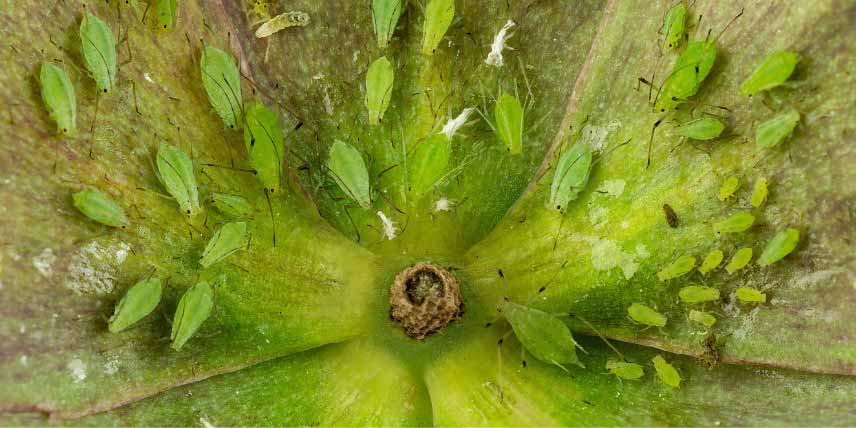
Aphids in a hellebore flower
Hellebores can also be affected by diseases, such as black spot disease, which is caused by a fungus (Coniothyrium hellebori). As its name suggests, it is recognised by the presence of black or brown circular spots on the foliage. They first appear on the edges of the leaves, before spreading. If nothing is done and the disease spreads, all above-ground parts of the hellebore may wither and the plant will eventually die. As soon as you notice your hellebore is affected, prune the damaged parts and treat with a fungicidal product. As a precaution, it is also important to maintain good air circulation around the plants, keeping planting distances, growing them in well-drained soil, and avoiding wetting the foliage when watering. You can also use nettle manure or a horsetail decoction to strengthen the hellebores’ defences.
For more information, see our care sheet on hellebores’ diseases and pests.
Cut off spent flowers.
We recommend deadheading the flowers as soon as they have faded. This helps conserve the plant’s energy and prevents it from expending energy on producing seeds. If you leave them, these seeds may self-seed in the garden, which can make the hellebore somewhat invasive. What’s more, the new plants from sowing are rarely true to the original varieties: the flowers may exhibit colour variations. You can remove the flowers once flowering has finished, in June, by cutting the withered stems close to the base with razor-sharp garden secateurs. This will improve the plant’s appearance and promote more vigorous growth for the following season.
Let the plant rest in summer.
Oriental hellebores enter partial dormancy during the summer months, when their growth slows naturally. Between July and September, they require little care, beyond keeping soil moist and protection from excessive heat. Limit interventions and avoid fertilisers during this period to avoid stimulating them unnecessarily. By allowing your hellebores to rest in summer, you enable them to replenish their reserves and prepare for the next flowering season.
If summer is particularly dry, you can water lightly to prevent the soil from becoming completely dry, but take care not to water too frequently to avoid disturbing their natural dormancy. Avoid wetting foliage: direct the spray to the soil at the base of the plant.
In September, the plant restarts and begins producing new roots. You can then take the opportunity to divide your hellebore if you wish.
A few extra tips
- Hellebores prefer rich soil. In late summer, you can apply compost to the base of your hellebores, well-rotted manure or crushed horn to the soil and, if desired, incorporate it with a light raking. This will supply nutrients to the plants while enriching the soil with organic matter. If you grow hellebores in pots, you can feed them with a little fertiliser.
- Avoid moving or repotting your hellebores too often, as they don’t like being transplanted.
- To show off hellebores, don’t hesitate to combine different varieties. They are also perfect companions for pairing with heucheras, carex and ferns. If you grow them in pots, choose a decorative and colourful pot, whose colour harmonises with the hellebore’s flowering.
- Subscribe!
- Contents
Comments