





























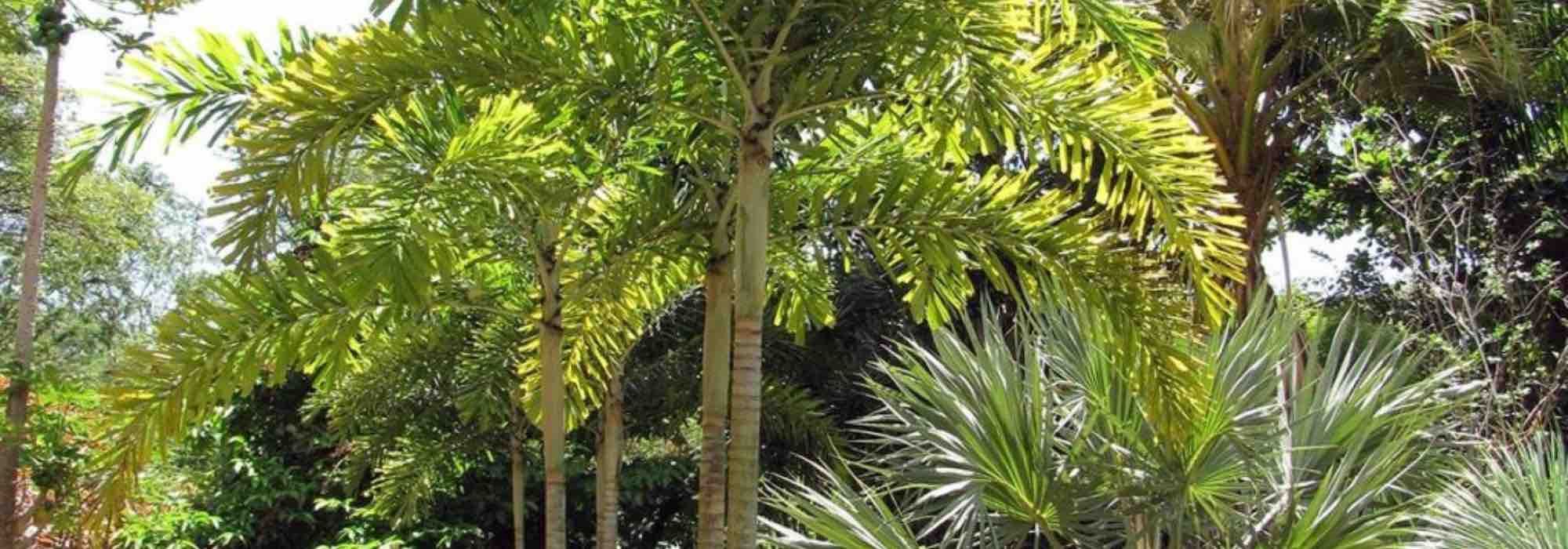
7 XXL palm trees for large gardens
Imposing, voluminous varieties to fill large spaces
Contents
Palms have no equal for bringing a touch of the exotic to the garden. If you have space, you can opt for the largest species, which easily exceed 6 metres in height. Their majestic silhouette will add a great deal of structure and provide welcome shade in summer.
Some palms prove to be quite hardy for growing in the ground outside our milder regions.
Discover our selection of large palms that are easy to grow, perfect for large gardens.
For more cultivation tips: Palms: planting, growing and care.

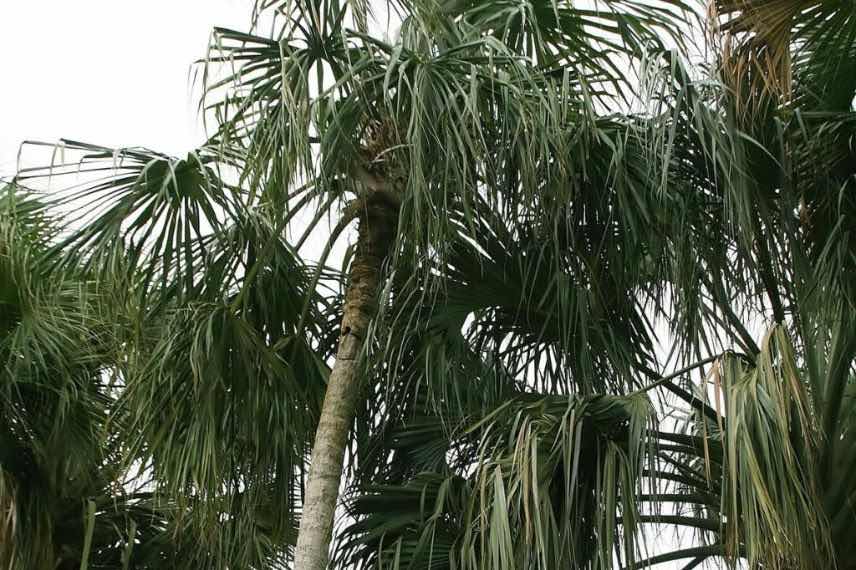
Sabal mauritiiformis: a large, spectacular palm, but frost-tender
The Sabal mauritiiformis or fan palm is among the giants of the genus: you can reach up to 20 metres in height at maturity, with a spread of around ten metres.
As its name suggests, this palm produces large fan-shaped leaves, divided into pendulous segments. They have a somewhat glaucous green and are quite impressive, as they can reach 1.5 metres in width. The silhouette of this palm is initially bushy in its early years of growth. Then it will develop a slender false trunk (stipe), at the top of which rises this broad crown of luxuriant foliage. This XXL palm will undoubtedly add exotic charm to the largest spaces.
This species native to Central America is rather frost-tender : it will not tolerate temperatures below -3°C, which will limit it to the milder regions of our country. This giant palm will thus be perfect in a garden along the Côte d’Azur or on parts of the Aquitaine coast.
The Sabal mauritiiformis can be grown in a large container during its early years and sheltered indoors in winter. But it is when planted as a solitary specimen in a large garden that its imposing and spectacular silhouette will be best showcased. It will thrive in partial shade, in soil fairly rich in organic matter, rather cool (which never dries out completely), but must be well-drained. Water must be able to drain away to avoid risking root rot.
Further reading : Sabal: planting, growing and care.
Read also
Palms by climateTrachycarpus fortunei: one of the hardiest palms.
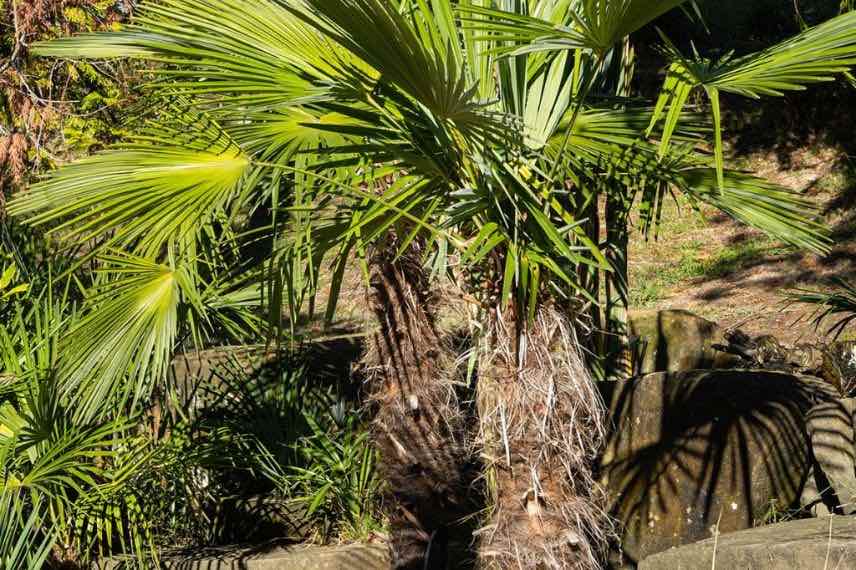
Le Trachycarpus fortunei, or Chinese windmill palm has a notable advantage: it is capable of withstanding frosts down to -16 to -18 °C under suitable growing conditions. This excellent hardiness allows it to be grown in most of our regions, even in northern France. This cold resistance, coupled with attractive ornamental qualities, makes it one of the most widely cultivated species.
If it is also nicknamed the hemp palm, this refers to the thick fibre that covers its false trunk and that allows it to withstand the cold. In terms of foliage, it produces large leaves up to 80 cm in length, borne on long spineless petioles. They are divided into leaflets and have a rather rounded shape, giving them the typical fan-shaped form.
This tall palm will gradually reach a height of around 8 metres with a 1.5 metre spread at maturity.
Easy to grow and low maintenance, it should be planted in full sun or partial shade, in soil that remains rich and moist.
For more information: Trachycarpus, hemp palm: how to plant, grow and care for it
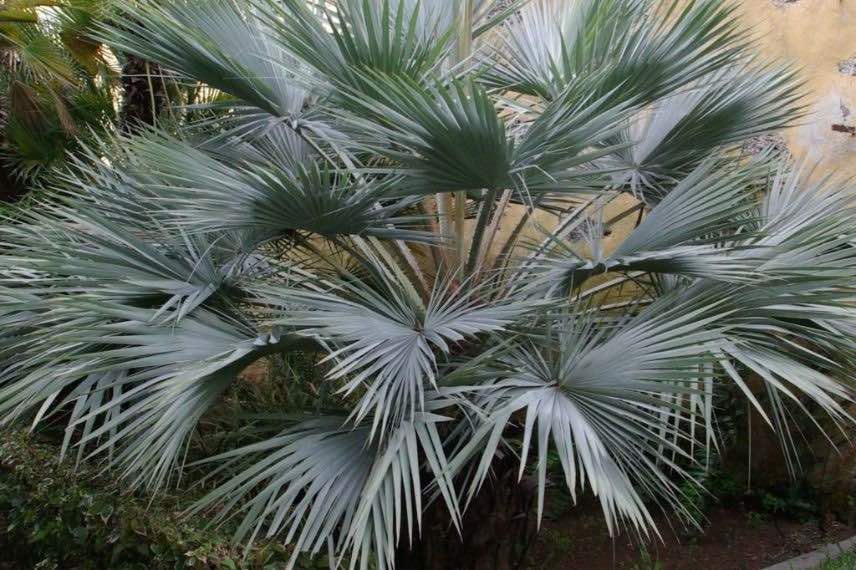
Brahea armata: beautiful blue-grey foliage
The Brahea armata stands out for its foliage that is particularly ornamental. It displays a blue-grey, almost silver colour, lending it unusual metallic nuances. This colour comes from the waxy coating that covers the leaves, enabling them to withstand the sun’s hottest rays.
But that’s not its only asset: it boasts a very respectable hardiness for a palm, occasionally tolerating temperatures down to -10 to -12 °C in dry soil. Its tolerance to salt spray makes it a natural choice for coastal gardens, but it can also adapt to other regions. It’s a large palm, perfect for creating a tropical display!
In terms of silhouette, it forms a single, thick pseudo-trunk bearing a fan-shaped crown of foliage. The petioles bear small yellow spiny hooks.
The flowering is impressive, but will require patience from the gardener: expect around thirty years before you can behold the long inflorescences, which can reach up to 6 metres in length.
This Mexican palm will grow very slowly to a height of 12 metres with a 3-metre spread. It can be grown in a large container, in which its silhouette will remain more modest.
From its origins, it has retained a preference for poor and dry soils, even sandy and stony ones. It will need warmth and sun to thrive.
For more information: Brahea: Planting, Growing and Maintaining
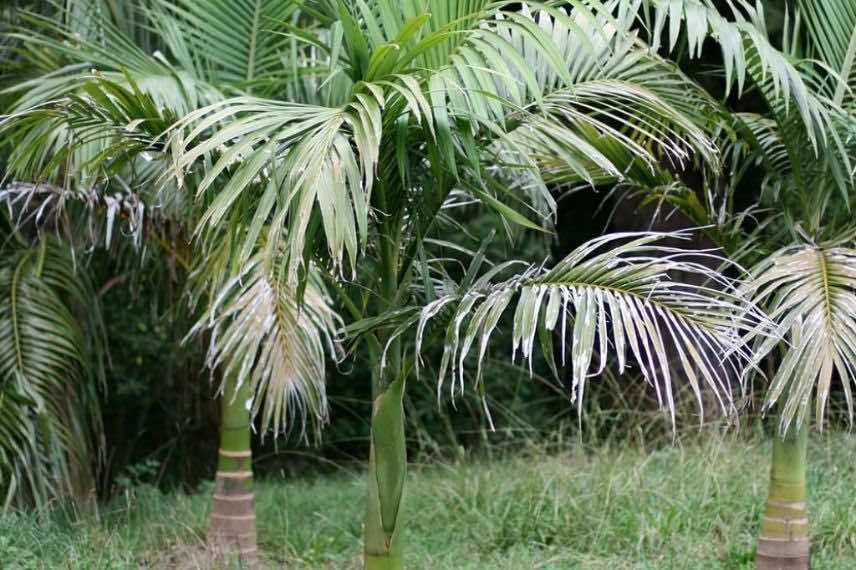
Archontophoenix maxima: a giant palm.
Archontophoenix maxima lives up to its name: it is a royal palm that will bring volume and elegance to the garden. This species native to Australia is the largest in the genus, at 30 metres tall with a 7 metre spread.
This palm develops a thick, smooth stipe, composed of clearly visible rings. At the top of this false trunk, a handsome bouquet of arching fronds is revealed. They display a pale green colour with greyish reflections on the underside.
The flowering is just as majestic, with its large clusters of purple flowers. They will then yield red fruit, which is also very ornamental.
Rather tender, this palm native to Australia will not tolerate temperatures below -4°C. It will need warmth and sun to thrive, so growing it in the ground is best limited to coastal regions. But pot culture is entirely feasible for this giant palm, which can thus be protected from frost in winter, placed in a cold greenhouse or conservatory.
Plant it in deep soil, rich in organic matter and fairly cool (not drying out too much in summer).
For more information: Archontophoenix: planting, growing and care
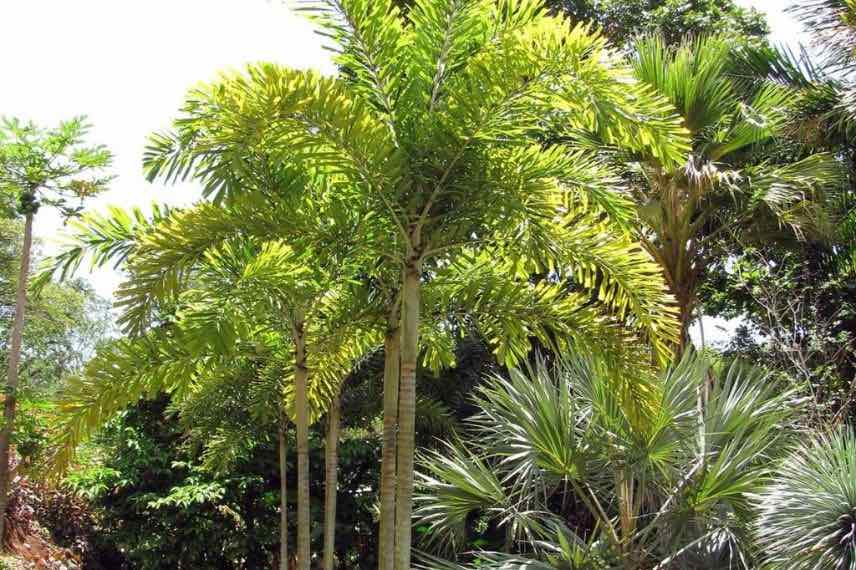
Wodyetia bifurcata: a striking silhouette
If the Wodyetia bifurcata is also known by the name ‘foxtail palm’, this is in reference to the shape of its foliage. Each leaf is divided into leaflets that end in a double fork. They have a feathery appearance and form a dense crown, carried by a ringed trunk. In colour, they are dark green, lighter on the reverse. This feature gives it a nicely tousled look, which will add volume to a large garden.
This remarkable palm originates from Australia. At maturity, it will reach 15 metres in height with a span of around 5 metres.
Note that it is not particularly hardy, since its cold tolerance is limited to -4°C. It will be planted in open ground in our milder regions, where frosts are light and occasional. Elsewhere, pot culture will be possible.
The Wodyetia bifurcata will appreciate full sun, in soil that may be poor, but well-drained. An exotic plant ideal for mild coastal gardens, and loved by collectors!
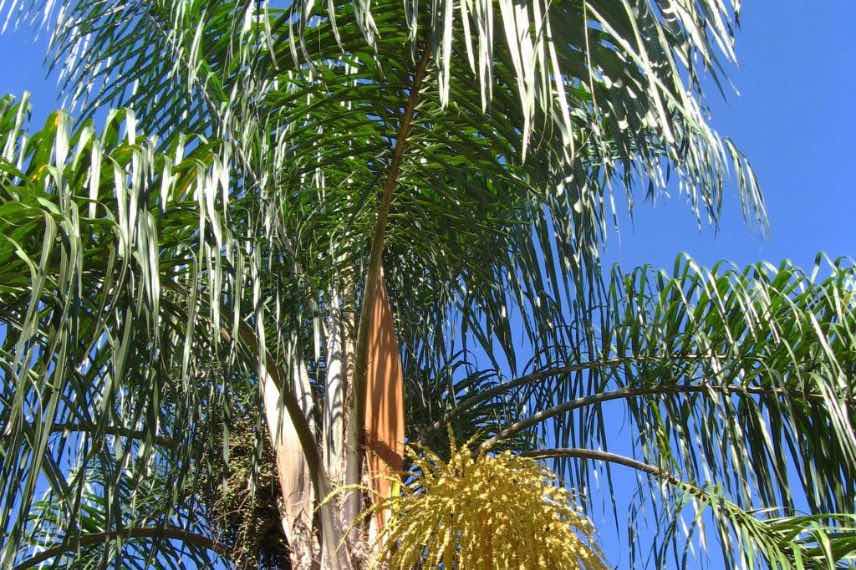
Syagrus romanzoffiana: a coconut-palm look-alike
After the royal palm, discover the queen palm! The Syagrus romanzoffiana is a palm with a very slender growth habit, which will reach 12 metres in height and a 6 metre spread. It offers rapid growth and its silhouette recalls that of coconut palms: a palm perfectly suited to bring a warm and exotic atmosphere to the garden!
This palm features a sturdy trunk with ringed markings. It bears a crown of palmate leaves, with an airy and feathery appearance. Its colour is a pretty bright green.
This South American species will, however, be restricted to mild regions for in-ground cultivation. Its cold tolerance does not exceed -4°C to -7°C. It enjoys warmth and sun, but will prefer cool soils. In frost-prone regions, opt for container cultivation, and store it away during the winter.
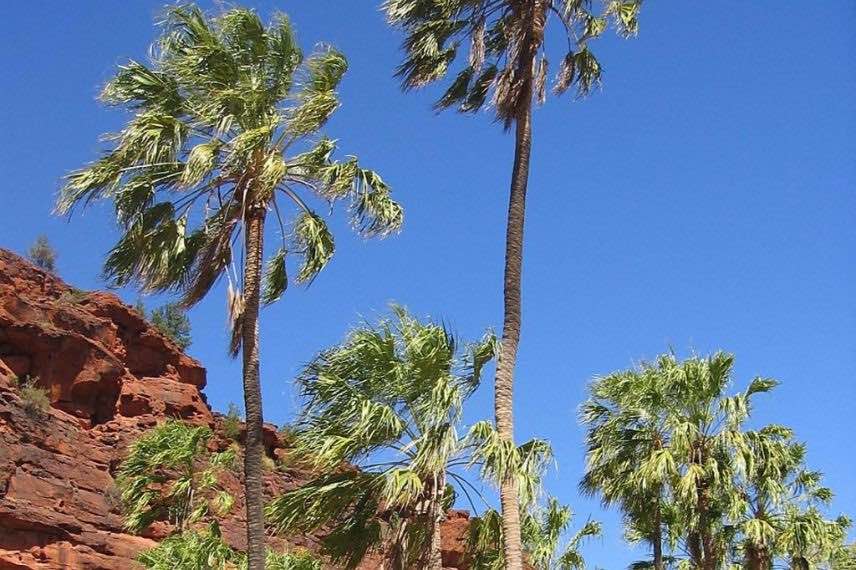
Livistona mariae: coppery-red hues
Livistona mariae, also known as the Australian fan palm, is distinguished by the colour of its foliage. The young plants indeed bear fronds coloured red and bronze, unusual nuances for a palm, which give it a great deal of charm! As it grows, they will become blue-green.
As an adult, this palm will develop a false trunk bearing a crown of fan-shaped leaves, with a gracefully trailing habit.
At maturity, expect a height of 20 metres and a 9-metre spread.
Fairly frost-sensitive, this palm will not tolerate hard, regular frosts below -6°C. It will require well-drained soil, even when dry, in a sunny position. But it has the advantage of tolerating pot culture, even indoors. In that case, its dimensions will be much more modest (a maximum height of 2 metres).
Easy to grow and low-maintenance, this distinctive palm will bring a real touch of the exotic to your garden, terrace or living room!
For more information: The Livistona: planting, cultivation and care
- Subscribe!
- Contents
Comments