


9 essential wild perennials for a natural garden
Native plants with numerous qualities
Contents
Previously regarded as weeds, wild plants now have a better reputation and are increasingly making a comeback in our gardens. This rewilding trend puts the spotlight on our plant biodiversity, including, among others, the perennials. And that is a good thing, because these spontaneous plants, which can be easily encountered in nature, have many benefits.
- They are well adapted to our climate and soil conditions.
- They grow very easily and require little maintenance.
- They support local biodiversity by feeding, among other things, the valuable pollinating insects.
- They reward us with their presence, year after year and naturalise quickly.
Growing native plants can also contribute to the conservation of endangered species. The choice of these wild plants forms part of a more ecological approach, favouring plants that do not come from the far corners of the world.
For a natural, cottage-style garden, here are our nine favourite perennials to grow at home!

Purple foxglove
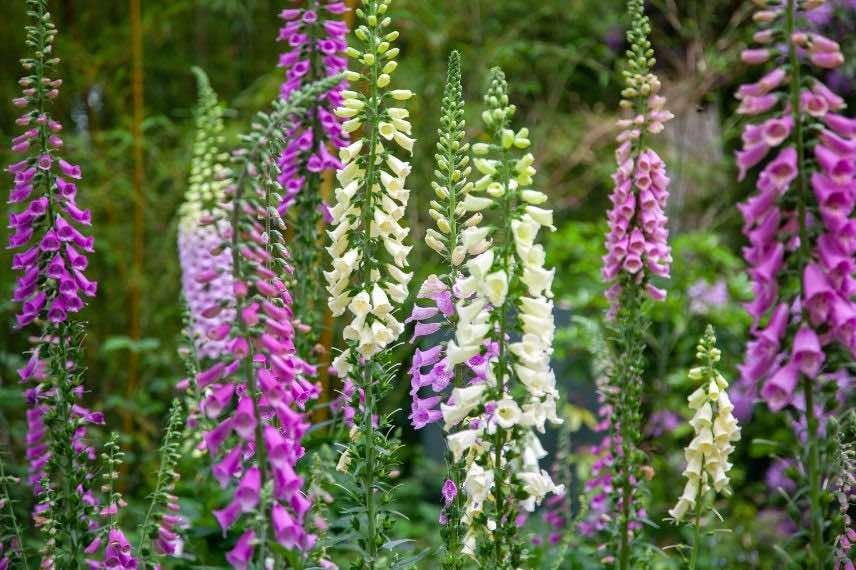
The purple foxglove (Digitalis purpurea) is one of the best-known foxgloves. It is an essential feature in traditional gardens. It grows wild across much of France, except in the Mediterranean region.
In summer, purple foxglove rewards us with a handsome flowering on long, erect flowering spikes. They consist of tubular flowers in pinkish-purple, with speckled throats. Particularly melliferous, these flowers attract a real ballet of visiting insects, but are also perfect for creating beautiful bouquets with a wild look.
This plant loves woodland margins, path edges, clearings and fallow patches. It will thrive in the garden in borders, where it will bring verticality and structure, thanks to its height of 1.5 metres. But growing it in a large pot will be just as striking and interesting.
Hardy and not particularly demanding, this plant will simply require a moist but not waterlogged soil and a site sheltered from the sun’s scorching rays. Remember to prune the flowers before seed formation so that the plant stays perennial. Otherwise, it will self-seed anyway.
For more information: Foxgloves: sowing, planting and maintenance
Common yarrow (Achillea millefolium)
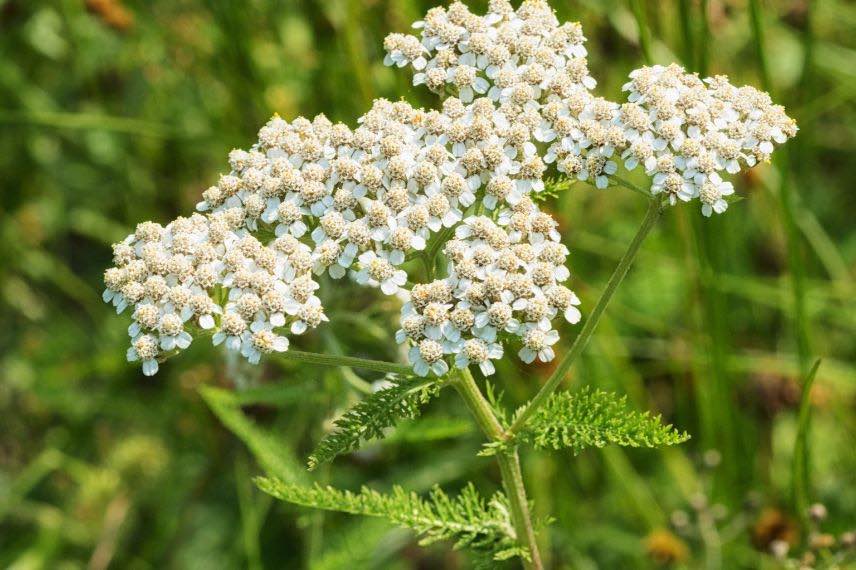
There are many different species of yarrow, but the common yarrow (Achillea millefolium) is undoubtedly the most popular. This perennial is one of the perfect plants for a natural garden, for example in a wild meadow or rock garden.
It lights up the entire summer with its flowering in corymbs, which renews tirelessly. The typical species produces white flowers, but there is now a wide range of colours to suit all tastes, from the palest to the brightest. Melliferous, the flowers delight insects, but are also prized for their medicinal or dyestuff properties. The foliage is, for its part, finely cut and aromatic.
Undemanding and hardy, the common yarrow will thrive in even the most inhospitable, dry and stony areas, where others refuse to grow. It can be grown in all regions, but requires dry soil and a sunny, even hot aspect.
For more information: Yarrow, Achillea: planting, growing and care.
Mountain cornflower
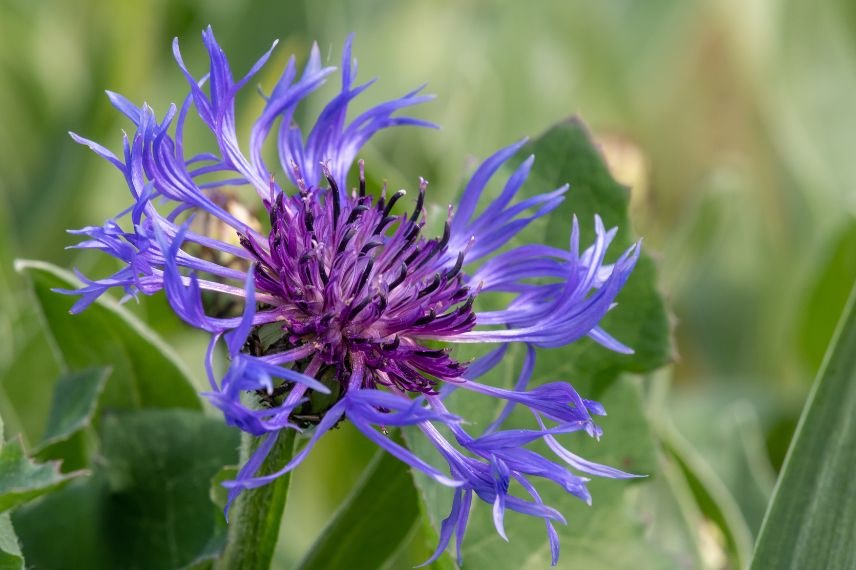
You’ve certainly already come across the mountain cornflower (Centaurea montana) in the wild, with its delightful, lacy blooms in a beautiful blue-violet. This meadow-flowering display lasts from late spring to mid-summer and promotes pollination by attracting insects.
It comes in a range of colours, from white to black, including pale yellow, pink and mauve. The lanceolate, slightly downy foliage displays a silvery-green colour.
Robust, hardy and low-maintenance, Centaurea tolerates calcareous soils, but can also be dry from time to time. Our perennial will thrive in full sun, in a wild border or a mixed-border.
For more details: Centaurea: sowing, planting and care.
Read also
Self-seeding plantsTansy
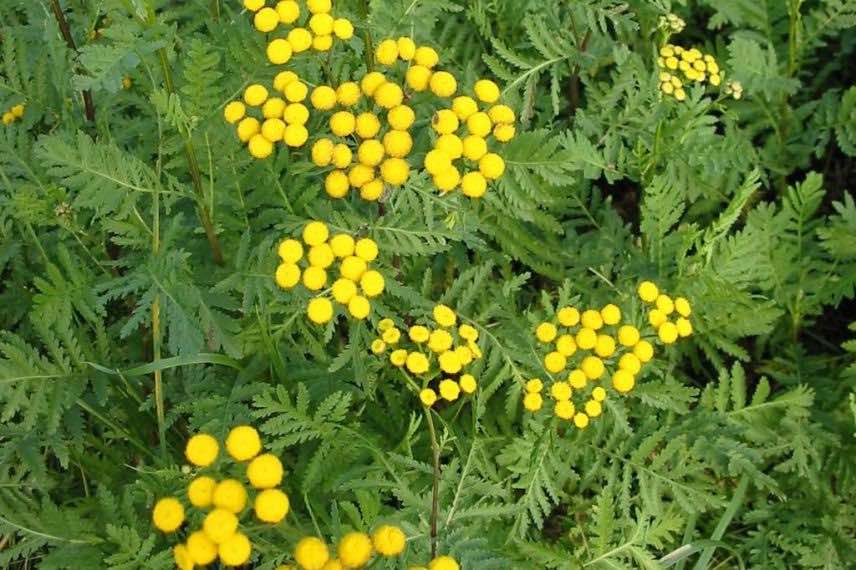
The Tansy (Tanacetum vulgare) is a perennial that grows naturally along country lanes or in meadows in France. It is absent only from certain Mediterranean regions, in which its cousin, the annual tansy, tolerates drought conditions better.
This aromatic plant is prized for its many benefits. It is notably used as a repellent against garden pests. But its particularly ornamental flowering makes it a prime candidate for natural-style gardens. Throughout the summer, it displays a multitude of tiny yellow blooms. Its flowers resemble buds arranged in flat cymes. The foliage, delicately cut, is equally decorative and recalls yarrow.
Easy to grow and hardy, tansy will brighten borders and flower beds. But growing it in pots is also possible and will help limit its spread due to its running rhizomes.
Pour en savoir plus : Tansy: sowing, planting and growing.
Periwinkles
The periwinkle (Vinca) is known in our area as the small periwinkle or wild periwinkle, but also as the large periwinkle. They differ in height and in the size of their flowers, but both feature a star-shaped flowering in bluish-violet tones in spring. The large periwinkle is also considerably more invasive.
These perennials with rapid growth grow in woods, banks or rockeries that are rather shaded. They make perfect wild groundcovers in shade or semi-shade, in even dry and poor soils. Install periwinkles in a natural garden to create a carpet that will outcompete other unwanted plants and spare you the bother of weeding. Their bright evergreen foliage stays decorative all year round.
Fairly hardy and easy to live with, these periwinkles won’t require any maintenance, unless you wish to control their spread.
For more information: Periwinkle: planting, growing and care.
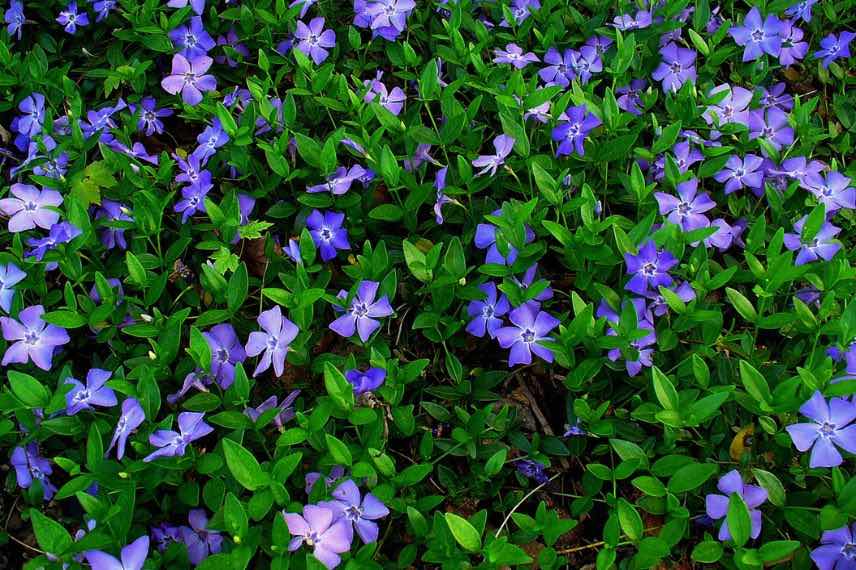
The small periwinkle or Vinca minor
Asters
There are more than 200 species of asters, some of which are native perennials in France. This is the case for Aster amellus, but also for Alpine asters (Aster alpinus) or Pyrenees (Aster pyrenaeus), which naturally grow in the mountains.
Asters delight us all with a generous flowering and a rustic charm, reminiscent of daisies with their bright yellow centres. The flowers appear in spring, summer or autumn depending on the species. The colours are varied, ranging from white to blue, including pink or purple. They will look marvellous in borders or in pots, bringing a wild and light touch.
All of these perennials have very good hardiness (to at least -20°C) and require only a sunny position, as well as light, moist soil to thrive.
For more information: Asters: plant, grow and maintain
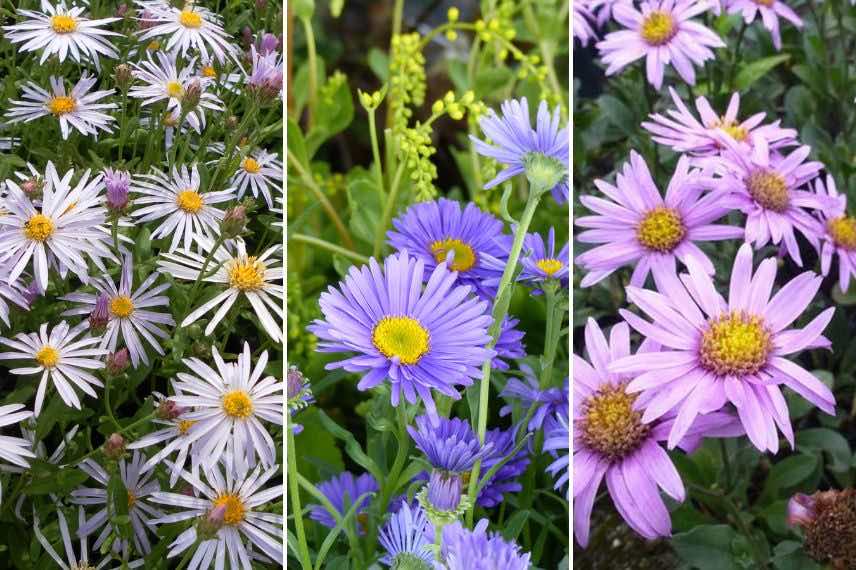
Aster pyrenaeus ‘Lutetia’, Aster alpinus ‘Dunkle Schöne’, Aster amellus ‘Rosa Erfüllung’
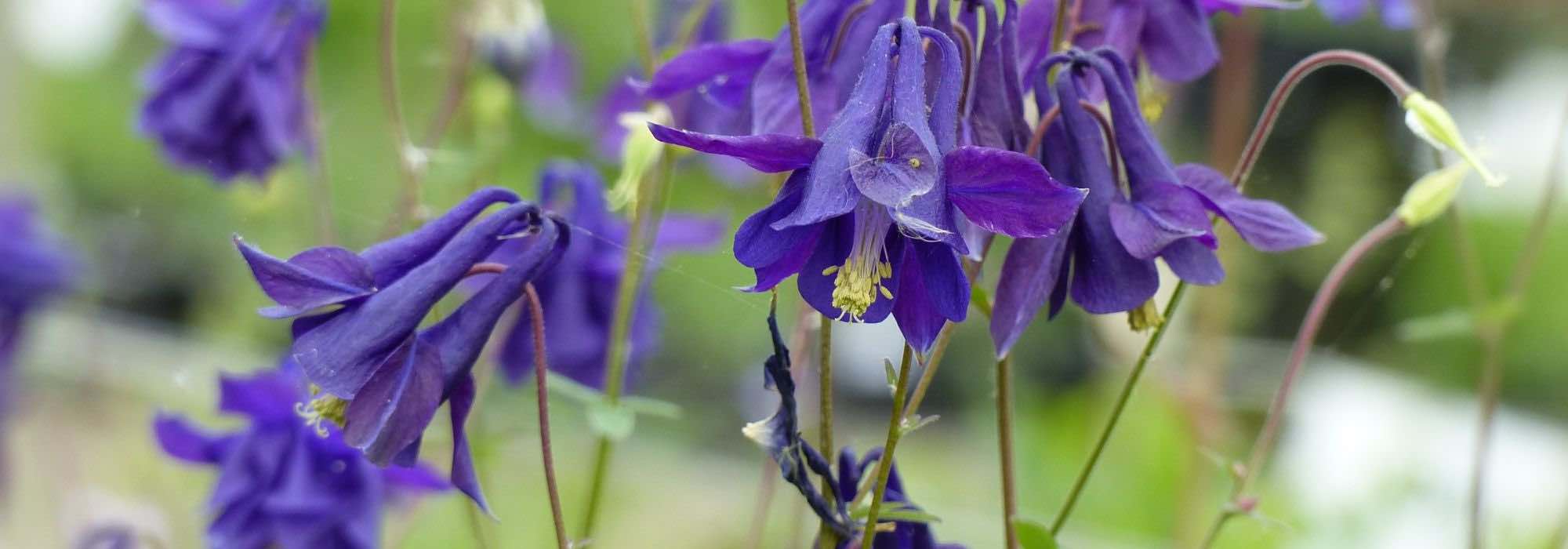
Columbines
Columbines are long-flowering perennials that bloom in late spring. They are among the essentials in a wild garden, both for their beauty and for their ease of cultivation. These perennials are indeed among the fail-safe plants, which self-seed and tolerate all sorts of conditions. They can be grown in soils even if poor and occasionally dry, although they will prefer moist soil.
In France, these are the garden columbines or Aquilegia vulgaris and mountain columbines, such as the Aquilegia alpina, which are found in the wild. They grow in light woodland, on the edges or in meadows.
The flowers are available in a wide palette of colours, but blue-violet is the most iconic. Columbines add a delicate touch with their trailing habit, which blends perfectly in a naturalistic garden, especially if you favour single-flowered varieties. This nectariferous bloom also nourishes pollinating insects.
The finely dissected foliage also has ornamental value.
For more information: Columbines: Sowing, Planting and Maintenance
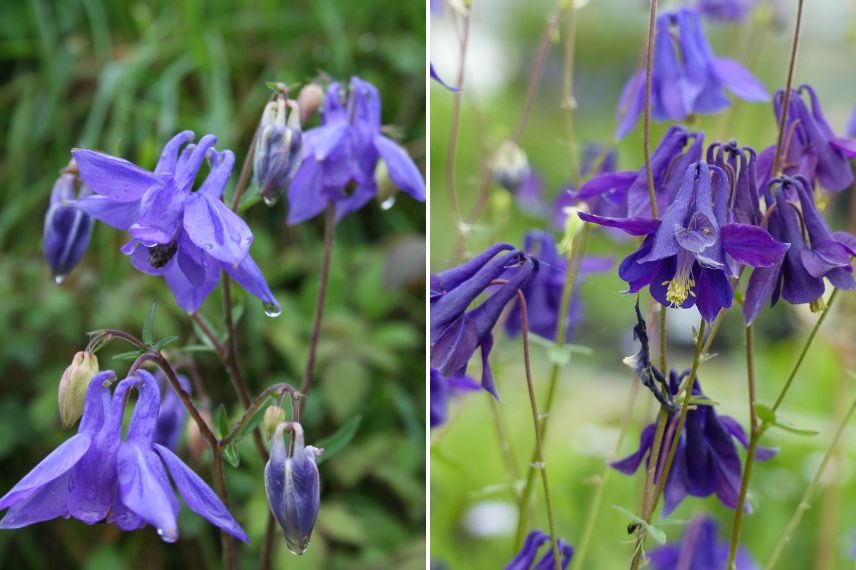
Aquilegia alpina et vulgaris
Campanulas
Campanulas enchant us with their abundant blue-purple bell-shaped blooms. But there are other colour variations too, such as white or pink. The single flowers, though they look delicate, are in fact quite hardy.
In France, campanulas can be found growing wild in the Alpine mountains, as well as around the Mediterranean coast. Hardy, they tolerate a wide range of soil types, depending on the species: poor and dry, but also heavy and damp. They are easy-care perennials, ideal for beginner gardeners or those who don’t want to devote too much time to garden maintenance.
Plant them in the garden as a meadow, in borders or in rockeries for carpet-forming species, such as the wall campanula.
For more information: Campanulas: planting, cultivation and care.
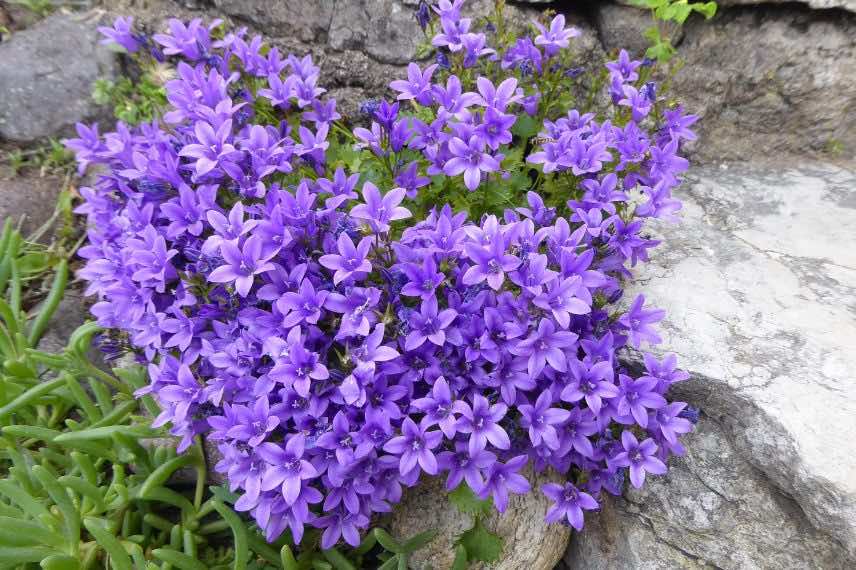
Campanula muralis
Cowslip
You are probably familiar with cowslip, the common primrose, nicknamed ‘cuckoo’. This perennial grows wild on forest margins, along borders and meadows. It produces umbels of bell-shaped, drooping flowers in bright yellow. This flowering occurs in mid-spring and is slightly scented.
Plant this charming perennial in partial shade, in a cool, well-drained soil, even chalky. Hardy and sturdy, it requires no special maintenance. It will be ideal for enlivening a lawn that is too tidy, but will also be a good candidate for containers, borders or beds.
For more information : Cowslip: planting, cultivation, maintenance and companion planting
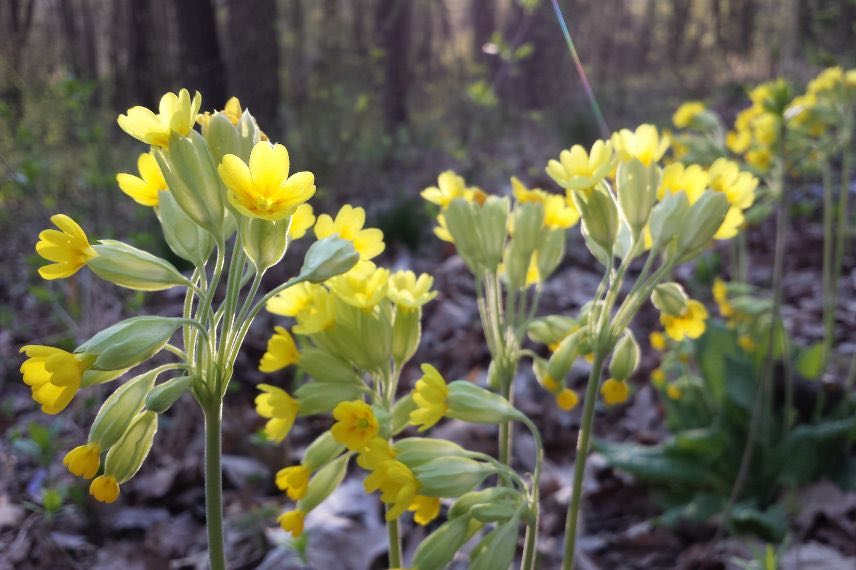
Photo Sefan Lefnaer
Other essential perennials for a natural look
This list could of course be expanded with many other perennials, such as Delphinium, the valerian, the creeping bugle, the buttercup, the Aubrietas, the hardy geraniums, the heathers, the Nepetas, the mints, the Alyssum, the Astrantia, the avens or also the scabious as well.
- Subscribe!
- Contents
Comments