


A weed-free pathway: how to achieve it?
Eco-friendly solutions
Contents
Gravel, paved or tiled paths, terraces… We like to keep all these surfaces free from “weeds” or adventive plants. But how can we effectively weed without chemicals? Is there a “product” that is both effective in limiting weed growth and safe for flora and fauna? We’ll tell you right away: the simplest, most effective, and most ecological method is clearly manual weeding. But let’s explore other possible solutions.
→ What are the ecological and effective solutions for weeding your path? We provide an overview in our advice sheet.
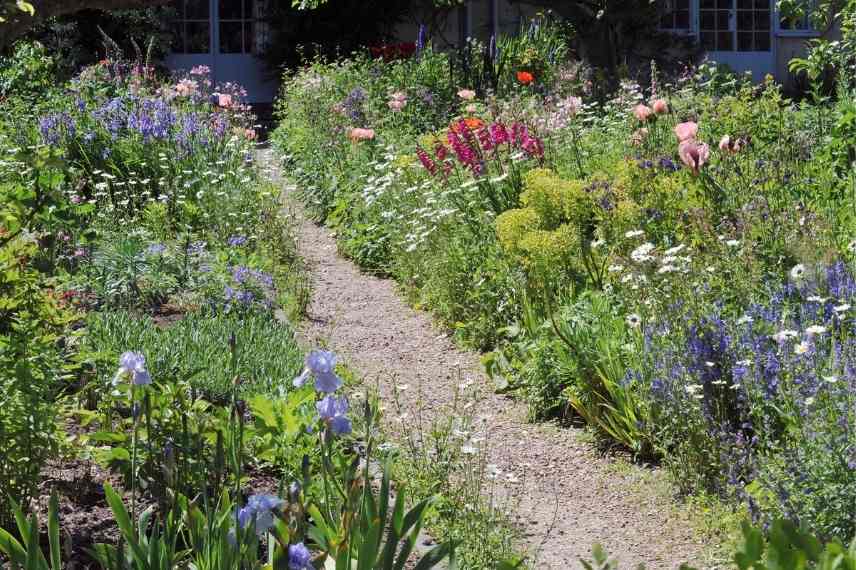 How to keep a gravel path free from weeds… naturally?
Elbow grease!
This is the best solution! Manual weeding is certainly more demanding, but it is also the most effective.
To weed “by hand”, all you need is a knife (or a weeding knife) to extract the roots of “weeds” or adventive plants: by inserting the blade well into the soil at the root level, make a quarter turn with the blade and voilà! The gardener can thus remove the entire plant, avoiding leaving any small bits of root that would allow it to regrow.
Regularly revisit to weed! Young shoots are easier to dislodge than large herbs. It’s also good to know: unlike weeding in open ground (vegetable garden, lawn, flower beds…) which is easier after rain, unwanted herbs are more easily extracted in dry conditions from gravel or mineral paths.
Weeding by hand may be long and tedious, but it is primarily the most economical and ecological solution for combating weeds.
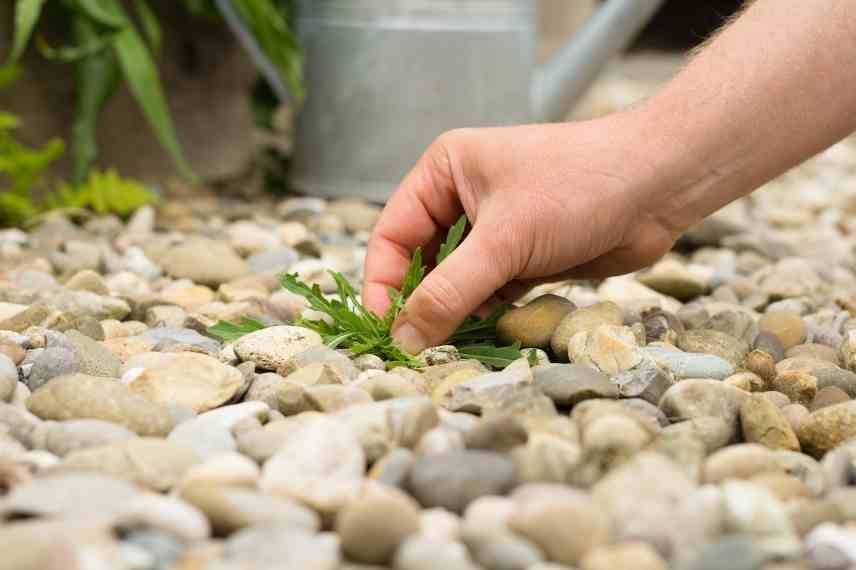 A long and repetitive task… but with impressive results</caption]
Thermal weeders
The thermal weeder or flame weeder uses heat to kill unwanted herbs. The principle is simple: the heating element is applied to the plant to be eliminated. The induced heat causes the cells to burst, and the plant dies. The duration depends on the type of weeder, but it generally takes several tens of seconds to be effective. It is important to follow the instructions carefully.
Plants killed by this thermal shock decompose in about fifteen days, but you can remove them manually beforehand. Therefore, you will need to return two days later to remove the weeds by hand.
This type of weeder has been known since the late 19th century. It was supplanted by weedkillers but made a comeback in the 1980s as part of organic farming. There are different types available: direct flame, superheated steam, infrared, and hot air pulse…
A thermal weeding method is only truly effective on small areas (narrow paths, small patios…) and on young “weeds”.
Boiling water
In the same vein as the thermal weeder, boiling or very hot water can also cause thermal shock to plants. However, the water must be at a temperature of at least 70 °C for it to be truly effective.
There are several caveats to this technique: you need to collect cooking water, such as from pasta or potatoes (it would be foolish to waste energy heating water solely for weeding), gardeners have to carry a pot of boiling water around (hello, burn risks!), and… you can only pour the water on a few plants at a time. In short, it’s not the idea of the century, although it can be occasionally effective against a few weeds.
 Feel free to collect cooking water (unsalted) for occasional weeding in the garden
Read also
10 good reasons to let weeds growBaking soda
Baking soda is deadly for plants. It is a remarkably effective natural weed killer. Therefore, it should not be used indiscriminately.
Sprinkle a maximum of 20 g per m² of baking soda on the surface to be cleaned. Do this once or twice a year (in spring and/or autumn), and just before a light rain. The rainwater will dissolve the baking soda and carry it down to the roots of the plants. Excessive rain after applying the powder will leach the baking soda, rendering it ineffective.
You can also prepare a small mixture by diluting the baking soda directly in water at a rate of 70 g per litre of hot water (baking soda dissolves more easily this way). Allow it to cool, then spray it on the aerial parts of the plants you wish to eliminate.
As baking soda is harmful to vegetation: never use it in the garden! Only a few specific areas may receive a little baking soda and always sparingly: terrace, wall, paving stones, gravel paths…
Note: do not confuse baking soda with caustic soda, which is a corrosive product. Read the labels carefully!
 Also worth trying on adventive plants: baking soda</caption]
Vinegar
White vinegar, diluted or not, is a contact weedkiller, meaning it burns the aerial parts of plants without penetrating the tissues.
White vinegar (which is simply diluted acetic acid) must, to be effective, be applied early in the morning and only on young adventive plants. Indeed, older plants recover a few weeks after contact with vinegar.
Dilute one volume of vinegar with the same volume of water (50% dilution). You can add a little black soap to help the vinegar adhere better to the foliage and to reduce leaching by rain. Spray the mixture on the few young adventive plants growing between slabs or paving stones.
It is advisable to use vinegar on terraces, slabs, paving, gravel…, but never in the garden or in nature!
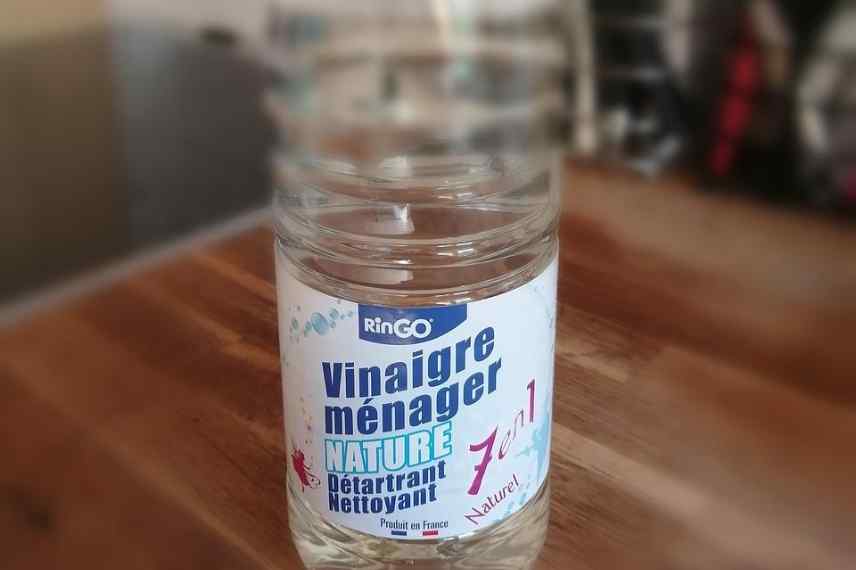 White vinegar is another ally for the gardener… on young adventive plants and only on mineral surfaces</caption]
Is it really worth persevering?
“Weeds” are often beneficial for garden wildlife. Some are even quite beautiful. Others are bio-indicators and/or help improve the soil in which they grow. Therefore, should we really be intent on exterminating them all? The answer is clearly no. In any case, we won’t win against plants that have all the necessary faculties to reproduce again and again.
In short, let’s loosen up a bit! One or two adventive plants in a path won’t change the beauty of your garden. On the contrary, it will appear more natural and less formal.
- Subscribe!
- Contents

Comments