





























Acanthus diseases and parasites
Identification, prevention and natural solutions
Contents
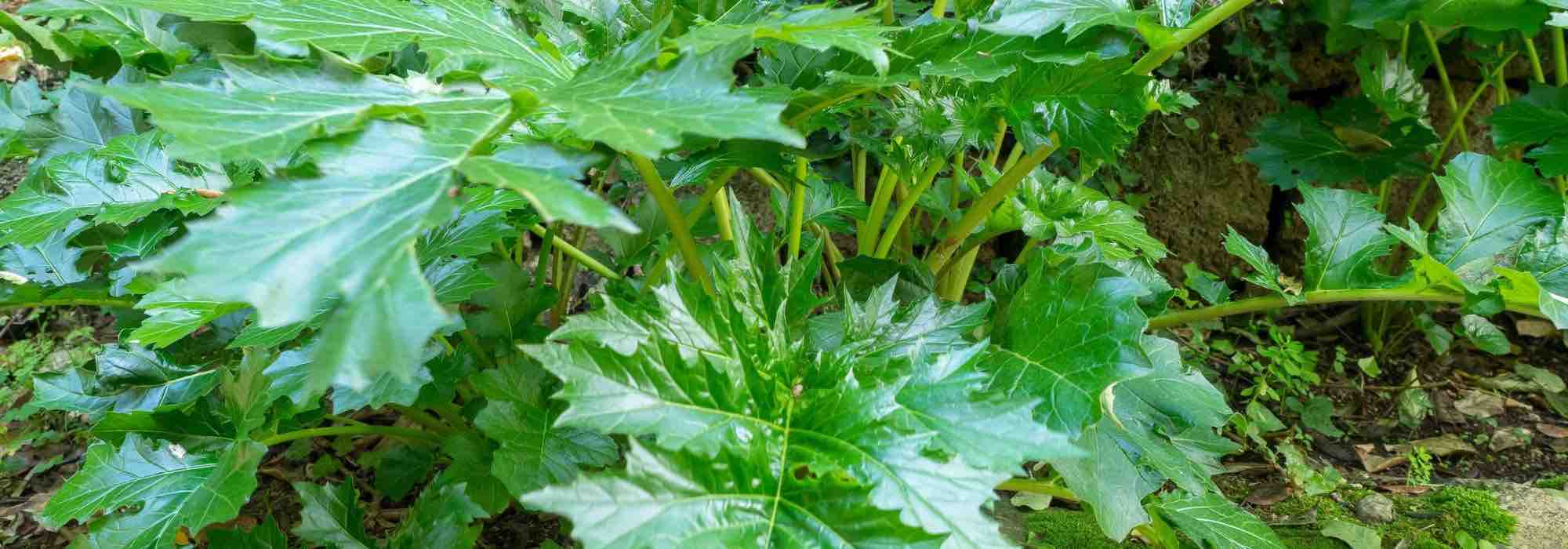
Acanthus are perennial plants appreciated for their architectural, deeply cut foliage, as well as for their upright flower spikes from June to September. They are perfect for structuring the space and for adding volume to the garden.
They are fairly easy to grow, not particularly demanding, vigorous and hardy down to -15°C. They enjoy sun or partial shade, in fertile but well-drained soil. If they prove fairly hardy, acanthus can, however, be subject to certain diseases or parasitic pests.
Let’s discover together how to identify the most common cultivation problems, prevent risks and treat naturally if necessary.
And to learn everything about growing acanthus, discover our complete guide: Acanthus: plant, grow and maintain

Powdery mildew: the most common disease affecting Acanthus.
Description and symptoms of the disease
Powdery mildew is a cryptogamic disease, which means it is caused by a fungus. This type of disease is among the most common in gardens, whether in the kitchen garden, the orchard, the ornamental garden or even when grown in pots. It is often a cocktail of heat and humidity that favours their appearance and progression, which is why they appear mainly from spring to autumn.
Powdery mildew is also known as the “white disease.” This name refers to one of its main symptoms: a white or greyish, floury-looking coating. On Acanthus, it can appear on the foliage, on the stems, but also on the flower buds. All aerial parts can be affected.
It is a contagious disease: nearby plants can easily be affected in turn. In addition, the spores of powdery mildew can remain in the soil for a very long time, sometimes for several years, which makes it difficult to rid the disease.
The damage caused is primarily cosmetic, but over time the disease can cause the drying of the aerial parts. It leads to leaf drop, deformation of flowers and new shoots.
Prevention
With regard to cryptogamic diseases, prevention remains the best course of action. Curative treatments are not always effective. To prevent powdery mildew from appearing, the following measures are worth applying:
- Tend to cultivation conditions, providing your Acanthus with a medium suited to their needs. Plant them in sun or light shade (especially in the hottest regions of southern France), sheltered from strong winds. Make sure the soil is well-drained so that water does not stagnate. If needed at planting, add gravel or clay balls. Prefer deep soils that never dry out completely. A healthy plant is more resistant to diseases and parasites. Also avoid planting Acanthus in an area previously infected by powdery mildew.
- If you are growing several Acanthus, be sure to keep good planting distances to promote natural air circulation. For the larger varieties, allow at least 1 metre between each plant. Remember that Acanthus does not like being moved: so it is important to choose the right location from the start.
- When watering, avoid wetting and splashing the foliage as much as possible.
- If you need to prune parts of the plant (damaged leaves, flowering spike…), always use a sharp cutting tool that has been disinfected with alcohol. This reduces the risk of spreading diseases between plants.
- Acanthus prefer fertile soils. However, avoid using fertilisers too rich in nitrogen, which can weaken the plant and make it more susceptible to diseases.
Some gardeners also use plant manures as a preventive measure. Their effectiveness is not scientifically proven, but these 100% natural recipes are nonetheless reputed to strengthen the plants’ immune defences. This helps increase their resistance to diseases. Against powdery mildew, nettle manures and horsetail manures will be preferred. You can buy them from garden centres or make them yourself following our recipes:
Natural treatments against powdery mildew
To prevent the spread of a disease, regular monitoring of the plants is essential. This allows you to act quickly at the first sign of a symptom. If you notice a white coating on your Acanthus, start by immediately cutting away the infected parts. Take the pruning waste to the household waste facility (do not leave it on site and do not put it in the compost, to avoid spores surviving). Disinfect your cutting tools well after use.
Bordeaux mixture can be used preventively as well as curatively. It is a powder based on copper sulphate, which must be diluted in water before spraying. It is suitable for organic farming. However, to prevent it from becoming counterproductive by upsetting soil balance, it should be used sparingly and with care. There are also sulphur-based treatments to combat powdery mildew.
Finally, nettle and horsetail manures can, again here, be used, due to their antifungal properties. They should be diluted in water (ideally rainwater) before being sprayed onto the affected parts, in the early morning or late in the day.
In addition, discover our articles « Powdery mildew or the white disease » and « All you need to know about fungal diseases ».

Powdery mildew creates a grey coating on the leaves
Snails and slugs: the main pests of Acanthus
Description and symptoms
Every gardener knows gastropods’ devastating appetite. It is the lush foliage of Acanthus that can suffer. Snails and slugs, in fact, attack young shoots from the start of spring. If they do not cause the decline of an adult plant, they can hinder the growth of younger plants.
Slug and snail prevention
There are numerous preventive solutions against gastropods. Every gardener has their technique. You might opt for:
- beer traps;
- natural barriers based on ash, diatomaceous earth or eggshells (which work in dry weather and mainly on the smaller varieties of slugs and snails);
- repellent plants (whose effectiveness seems variable);
- manual harvesting of the undesirables, especially at dusk (time-consuming, but effective).
If you wish to treat your plants against slugs and snails, you can choose to spread granular treatments from the start of spring. Based on ferrous phosphate (Ferramol), they are suitable for organic farming and are reputed non-toxic to pets and to predators of gastropods (birds, hedgehogs, etc.). By acting as an appetite suppressant, this product causes slugs and snails to isolate themselves and to stop feeding, which leads to their decline.
If you keep chickens or Indian Runner ducks, you can also take advantage of their hunting abilities against gastropods (while ensuring to protect your youngest Acanthus plants, just in case…).
Finally, think about promoting the garden’s natural predators of snails and slugs: birds, hedgehogs or toads. To do this, ban all use of chemical products in the garden, install shelters and water troughs, keep wild areas, etc.
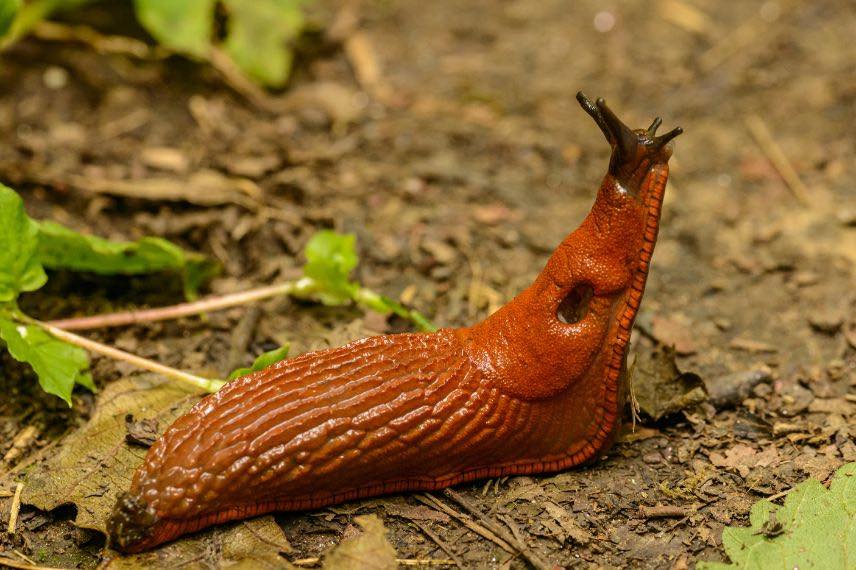
Snails and slugs love the foliage of Acanthus
Aphids: other occasional pests of bear's breeches
Description and symptoms
They are among the other common garden pests. Aphids are sap-sucking insects that feed on the sap of plants. They can cause the Acanthus leaves to curl and slow its growth. And most notably, their honeydew (the sticky substance they excrete) promotes the development of sooty mould. It is a cryptogamic disease identifiable by the black, soot-like deposit it leaves on the above-ground parts, which reduces natural photosynthesis.
Natural treatments for aphids
Here again, we advise regularly inspecting your Acanthus plants to act as soon as the first unwanted signs appear. If the infestation is light, simply manually remove the aphids.
If you need to treat your plant, favour a natural insecticide. Black soap proves fairly effective. It is used diluted in warm water, at a rate of one to two tablespoons per litre of water. Place this mixture in a spray bottle and spray onto the affected parts in the late afternoon.
Recall that it is necessary to leave aphids in the garden to sustain the presence of their natural predators, such as ladybirds or lacewings. This is what allows a garden to be naturally balanced, self-regulating with little or no human intervention. For this, you can grow plants such as nasturtium, which will naturally attract aphids and divert them from crops to protect.
Additionally, feel free to read our article: Aphid: identification and treatment

Aphids are found on the undersides of leaves
- Subscribe!
- Contents
Comments