






























Adopting a rooster: good or bad idea?
Is a rooster essential in a chicken coop?
Contents
Introducing a cockerel into a henhouse is a decision that requires careful consideration. This is because there are often many prejudices surrounding cockerels: they are aggressive, they crow and wake up the whole neighbourhood at dawn, and they can injure hens if they are too assertive… Admittedly, some cockerels are noisier than others, more dominant than others, and more “frisky” than others, but this is not a general rule. Adopting a cockerel can also be beneficial for your hens. It can especially allow you to expand your flock. So, let’s explore together all the advantages and disadvantages of introducing a cockerel into your henhouse.

A rooster is not obligatory in a chicken coop.
Chicken owners know: hens do not need a rooster to lay eggs. Every day (or almost), a hen lays her egg, which is nothing more than a mature ovum. The hen stores her ova in a sort of necklace until they reach ripeness. And since she ovulates daily, she rewards us with her egg day after day. Or at least until the end of her necklace and the reconstitution of another!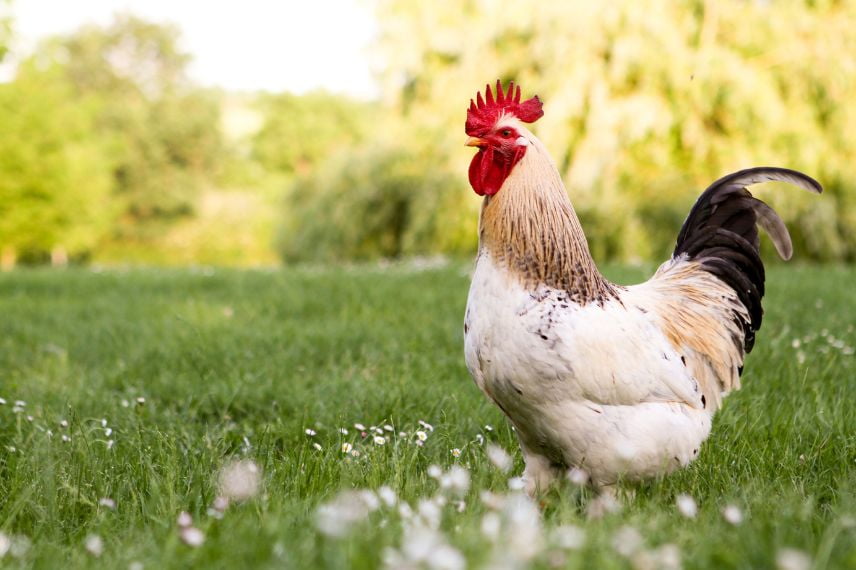
This daily ovulation is the main characteristic of hens compared to their relatives, other birds, which only lay at specific times. This daily laying is actually the result of domestication.
So, if you want to raise a few hens for their eggs and also recycle your table scraps, there’s no need to adopt a rooster. Especially if you only have a relatively small enclosure.
To learn everything about egg-laying: Chicken eggs in 10 questions/answers
What is the role of a rooster in a chicken coop?
However, introducing a male into your universe of hens is entirely legitimate. It must be said that the cockerel is a magnificent bird thanks to its colourful plumage, often more striking than that of hens, its bright red and upright comb, its equally red wattles, not to mention its pride and presence.
Beyond its aesthetic appeal, the cockerel has a genuine function within a henhouse:
- First and foremost, it is a male that will enable the fertilization of hens and thus the birth of chicks. And it must be acknowledged that the cockerel is often very (too) eager! However, even if a hen is fertilised, she must still be willing to brood. Not all hens have the same maternal instinct! Some breeds are known to be good broodies and mothers, while others are less so. Additionally, a few eggs must be left in a nest for the fertilised hen to trigger a hormonal change that encourages her to brood. Nevertheless, if a cockerel enters the yard, the family may potentially expand.
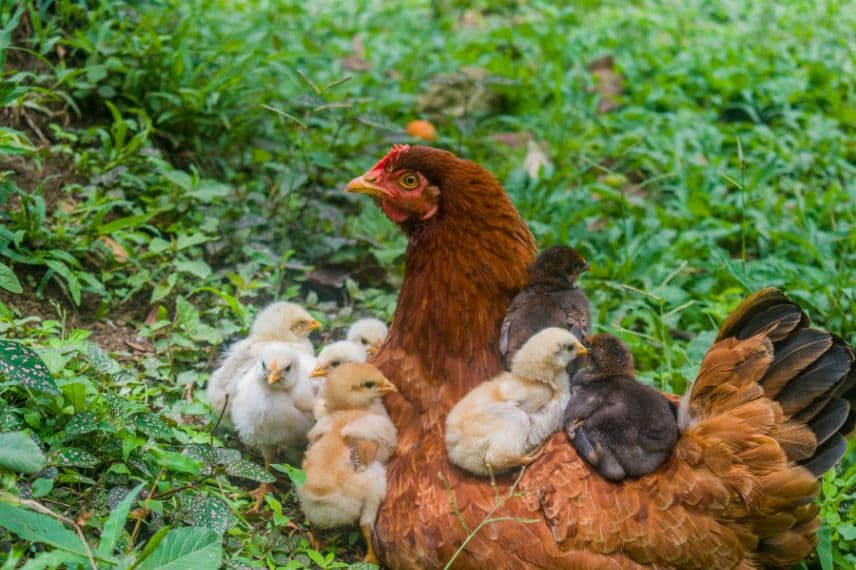 But never forget that among these chicks, there will be hens as well as cockerels!
 - The cockerel will consistently assume its role as leader. It indeed has a function as a sentinel, guard, and protector of its hens. It will watch over them and, thanks to its keen eye, alert them to potential danger, whether it comes from the ground or the sky. Thus, the hens feel reassured and can go about their hen activities without stress, which can impact their laying. However, the cockerel cannot defend its hens against a predator like a fox or a weasel. Instead, it will alert them (and you) to its presence.
- As the leader, the cockerel takes pride in gathering its flock whenever necessary. This means at mealtime or bedtime.
Constraints related to the presence of a cockerel in the poultry yard
If you’re wondering about the usefulness of a cockerel in your chicken coop, it might be wise to weigh the pros and cons carefully. The presence of a cockerel does come with some disadvantages, even constraints.
Of course, the first constraint is related to the cockerel’s crowing. A cockerel crows often and loudly. It emits a few decibels in the morning at dawn, as soon as the sun casts its first rays (around 5 a.m. in summer!), much like most birds in the sky, but also during the day. To explain its incessant crowing, two reasons come to mind: the cockerel warns its peers that it is on its territory and that it is unnecessary to wander around with their spurs, while at the same time, it seeks to attract and impress the females. 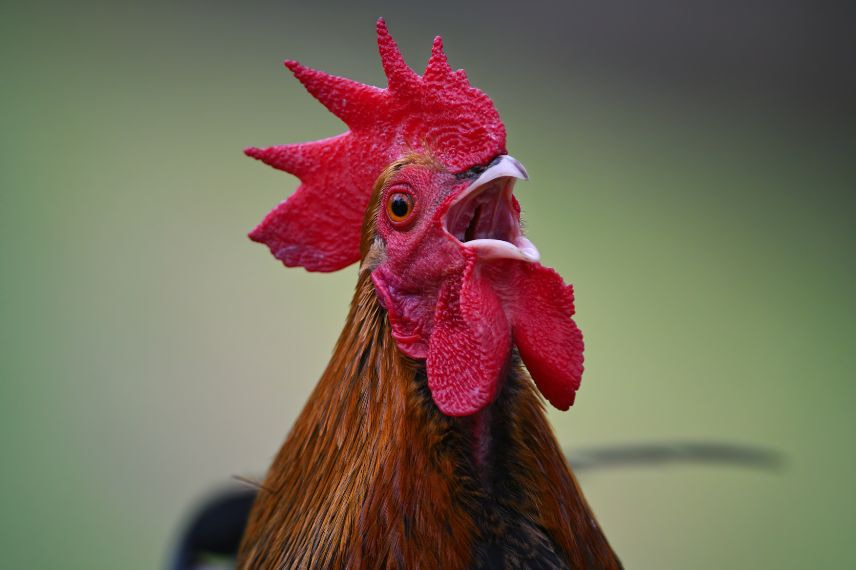 This is why cockerels often respond to each other in the morning, asserting their supremacy. In short, these morning vocalisations can be bothersome for you, but especially for your neighbours. Even though the law of 30 January 2021 now protects the cockerel’s crowing as part of the “sensory heritage of the countryside.”
The second disadvantage related to having a cockerel in the coop concerns your hens more directly. Indeed, the mating of the hen by the cockerel can sometimes be aggressive. Your hens might end up a bit featherless. The cockerel is often very persistent, which can exhaust your hens.
Finally, a cockerel often has a strong personality and may sometimes show a bit of dominance towards you. But again, it all depends on personality. Some cockerels are very docile, while others can be more stubborn.
How to integrate a cockerel into its new environment?
If you absolutely wish to adopt a cockerel, a few precautions are necessary:
- It must have sufficient space to expend energy and, importantly, allow the hens to escape its advances
- Choose a cockerel at least 8 to 10 months old. It will have reached sexual maturity and adulthood, thus acquiring its final size and, importantly, its character. You will then know if it is a calm cockerel or, on the contrary, a bit temperamental
- Count on one cockerel for at least 8 to 10 hens. This way, they will be solicited less often and will fare better
- Ideally, adopt a cockerel of the same breed as your hens to obtain purebred chicks, but this is by no means obligatory. Cross-breeding is very common and often successful
- Only keep one cockerel with your hens. Two cockerels may fight to assert their dominance over their harem, unless you have enough hens to satisfy both. In that case, the hierarchy will establish itself, albeit with a few feathers!
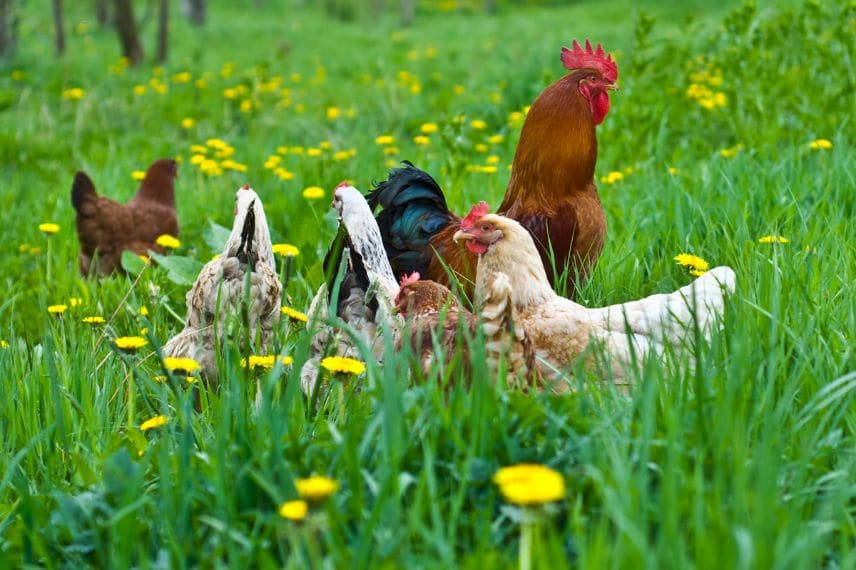
To integrate a cockerel into your flock, take the precaution of separating it for a few days while allowing them to see each other. And at night, let your cockerel sleep with your hens. In the morning, they will get acquainted, even if your hens may not immediately accept the presence of this new leader who will reign over its yard for 5 to 10 years, with life expectancy varying by breed. However, it is capable of breeding for 4 to 5 years.
Feel free to also read my article on adopting hens: the 10 mistakes to avoid
- Subscribe!
- Contents
![[plant]No[/plant], it is not necessary to have a rooster in the henhouse.](https://en.promessedefleurs.eu/blogwp/wp-content/uploads/2022/09/Adopter-un-coq-bonne-ou-mauvaise-idee-.jpg "[plant_guide title=\"Adopting a Rooster: Good or Bad Idea?\"]
If you're considering adopting a {glossary}rooster{/glossary}, you might be wondering whether it's a good idea or not. Roosters can be a great addition to your flock, but there are some factors to consider before making a decision.
One of the main benefits of having a rooster is that they can provide protection for your hens. Roosters are naturally territorial and will defend their flock against predators. They can also help to keep the peace within the flock by establishing a hierarchy.
However, roosters can also be noisy, especially at dawn. If you have close neighbours, this could be a problem. Additionally, some roosters can be aggressive, especially during mating season. It's important to consider whether you have the space and resources to properly care for a rooster.
In conclusion, adopting a rooster can be a good idea if you have the space and resources to accommodate one. They can provide protection for your hens and help maintain order within the flock. However, it's important to be aware of the potential challenges, such as noise and aggression, that come with owning a rooster.
[/plant_guide]")
Comments