





























Alternative to lawn: groundcover yarrow
A ground-covering plant that requires almost no maintenance to replace the lawn
Contents
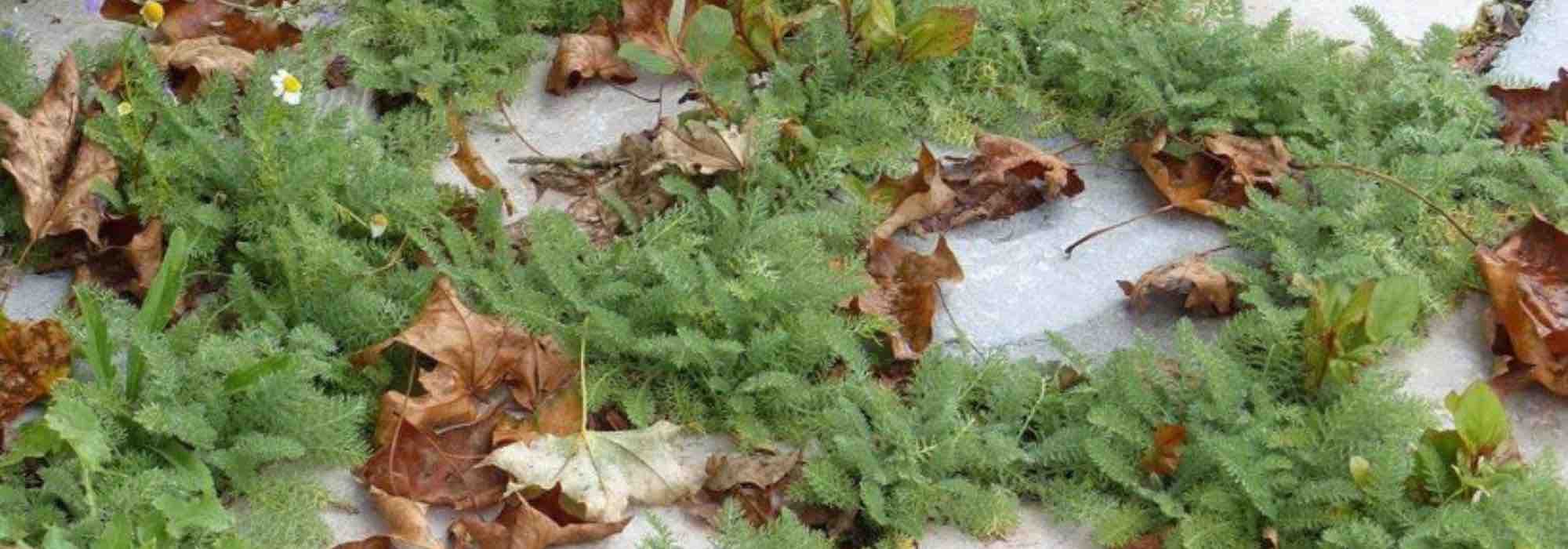
Whether due to drought, repeated trampling, lack of maintenance, or even dog urine, it is not always easy to maintain a beautiful lawn that is dense and green all year round. But did you know that many plants can perfectly replace grass in the garden? Some varieties of yarrow are among these alternatives to lawn, which require very little maintenance to quickly form a true green carpet.
Let’s explore the advantages of these groundcover yarrows and how to grow them with ease.

The benefits of using groundcover yarrow to replace lawn
Groundcover yarrow has many qualities to replace lawn, as these plants:
- remain decorative all year round thanks to their dense evergreen foliage, while adding a natural touch;
- have a spreading habit that is wider than tall, allowing them to form a true green carpet;
- exhibit rapid growth and spread spontaneously through their stolons (creeping aerial stems forming new plants);
- are drought-resistant, tolerant of heat and lack of water;
- can withstand moderate foot traffic;
- are easy to care for, requiring little maintenance (see dedicated paragraph);
- reward us with a lovely melliferous flowering that, in addition to being aesthetic, delights precious pollinating insects.
Alternatives to lawn will be chosen based on your exposure (sunny, shaded…) and your soil type (heavy and clayey, light and sandy, calcareous, poor, etc.). Also consider the level of foot traffic in the area (occasional, daily, intensive): yarrow can tolerate some foot traffic, but not wild football matches! In heavily trodden areas, we recommend adding slabs or stepping stones.
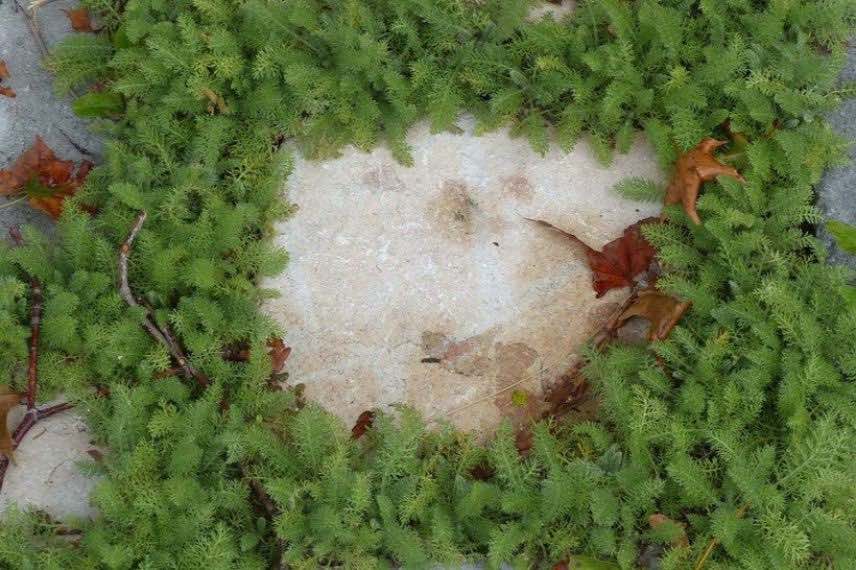
Achillea crithmifolia between slabs
Read also
Achillea : planting, growing and careWhich varieties of groundcover yarrow should you choose as a substitute?
Achillea odorata or Fragrant Yarrow
The fragrant yarrow is a vigorous groundcover that over time forms beautiful dense green carpets. This variety grows spontaneously in Mediterranean regions, which explains its good drought resistance.
Its grey-green leaves are fine, covered with a delicate down giving them a charming feathery appearance. They are aromatic when crushed, releasing notes of absinthe. From late spring to early summer, this small green carpet reveals umbel flowers that are pale yellowish-white.
This variety also has the advantage of releasing molecules that limit the seed viability of competing neighbours, which reduces the need for regular weeding.
At maturity, our yarrow can reach 50 cm in spread. In bloom, it will measure between 30 to 50 cm in height.
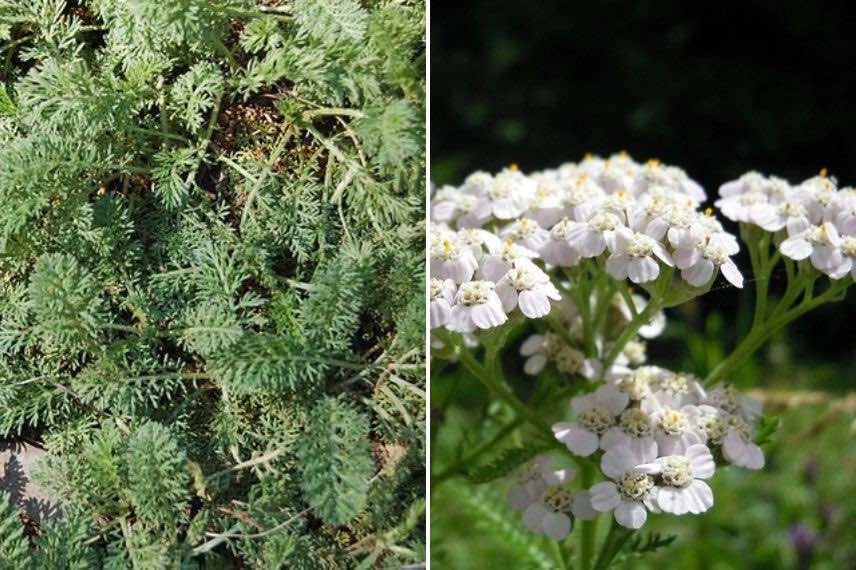
Achillea odorata
Achillea crithmifolia or Sea Crithmum-leaved Yarrow
The Achillea crithmifolia is another perennial, native to the mountainous regions of the Balkans. It quickly transforms into a green carpet, with its leaves of a lovely grey-green hue with silver highlights. They are delicately cut and fluffy to the touch. In summer, this carpet comes alive with cream-white umbels.
This groundcover reaches between 15 to 25 cm in height during flowering, with a spread of 50 cm to 1 metre. This ability to colonise can indeed make it invasive.
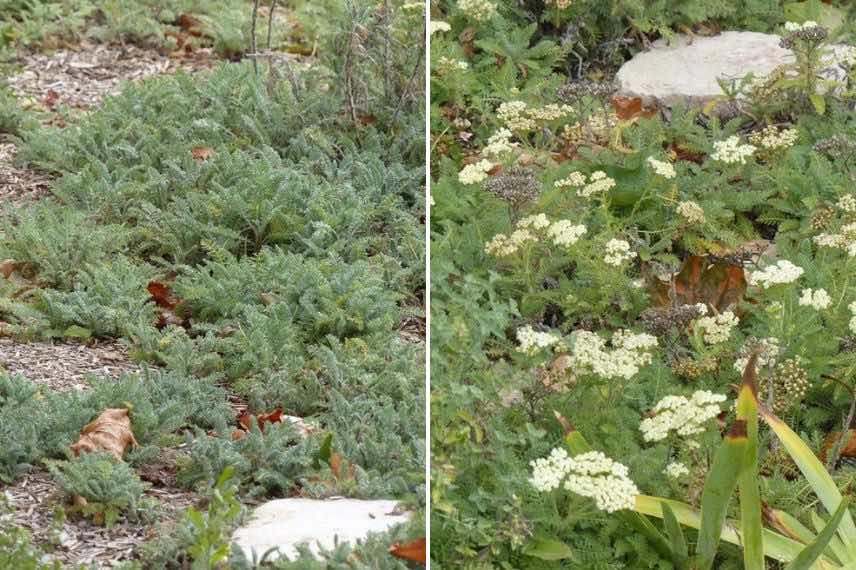
Achillea crithmifolium before and during flowering
Discover other Alternatives to lawn
View all →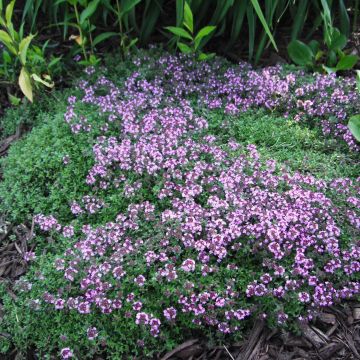
Available in 2 sizes
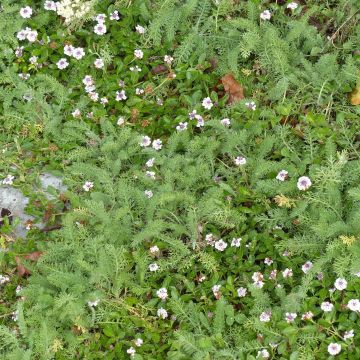
Available in 0 sizes
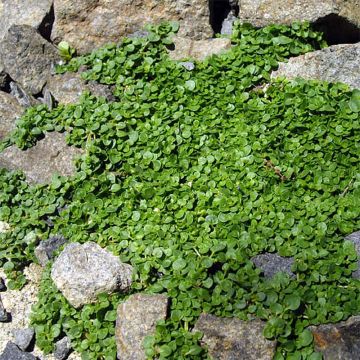
Available in 2 sizes
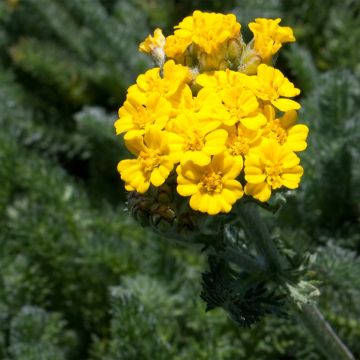
Available in 1 sizes
Available in 1 sizes
Available in 1 sizes
Available in 2 sizes
Available in 2 sizes
Available in 1 sizes
Available in 2 sizes
Where to plant groundcover yarrow?
Hardy and robust (down to about -15°C depending on growing conditions), yarrow will thrive in sunny or partially shaded situations in warm, dry climates. They are not particularly demanding regarding soil type, preferring light, well-draining soils (that do not retain water). They will even develop in poor or rocky areas and in slightly calcareous soil. Tolerant of sea spray, they will also find their place in coastal gardens. It is worth noting that flowering will be more abundant in cool (slightly moist) soil.
Achillea crithmifolia can be used to cover fairly large areas, up to 200 square metres. Fragrant yarrow covers smaller areas.
For larger spaces, consider establishing flower meadows, mixing perennials and grasses.
How to plant groundcover yarrow?
Ideal Period
Planting of yarrow occurs in spring (between March and early May) or in early autumn (between September and October).
Soil Preparation
The care taken to prepare the ground will influence the development and growth of yarrow. Prior to planting:
- using a hoe or a weeder, remove adventive plants (“weeds”) and other existing vegetation;
- loosen the soil to a depth of 30 to 40 cm with a spade, breaking up any clumps and removing large stones;
- if your soil is heavy, improve drainage by incorporating river sand or garden sand, gravel, or clay balls;
- rake with a rake to achieve a flat and even surface.
Planting Density
To achieve a fairly dense appearance without competition between the plants, allow for a spacing of about 40 to 50 cm between each plant.
Planting Steps
- About fifteen minutes before planting, soak the clumps in a basin or bucket of water to thoroughly rehydrate them and facilitate the removal from the container.
- Dig planting holes to a depth of approximately 10 to 15 cm.
- Place a layer of well-worked and loosened soil at the bottom.
- Install the clump and cover it with the remaining soil, without burying the base of the stems.
- Firm with your fingers.
- Water generously.
Maintenance after planting plants
Achilleas are a low-maintenance, drought-tolerant alternative to lawns.
Regular weeding will generally be necessary only during the first few months after planting to encourage establishment.
In the first year, ensure you water your young plants during prolonged dry spells. Once established, they will withstand drought. Occasional watering in summer (preferably in the late afternoon to limit evaporation) may refresh the foliage. Achilleas can enter dormancy during dry periods and then revive with the first rains.
Perform a pruning or trimming refresh once a year after flowering (in early autumn). Use a shear, strimmer, or mower. This will enhance the plants’ vigour by encouraging new leaf growth.
No fertiliser or organic feed is necessary. Soil that is too rich may actually promote vertical growth and make the plants more fragile.
Pairing groundcover yarrow with other lawn alternatives
Groundcover yarrow can be planted alone, or alongside other creeping plants that enjoy the same growing conditions, such as:
- Phyla nodiflora;
- sea heath Frankenia laevis;
- bastard toadflax Herniaria glabra;
- Mauritius grass Zoysia tenuifolia;
- various species of creeping thymes (Thym praecox, Thymus hirsutus, Thymus pseudolanuginosus).
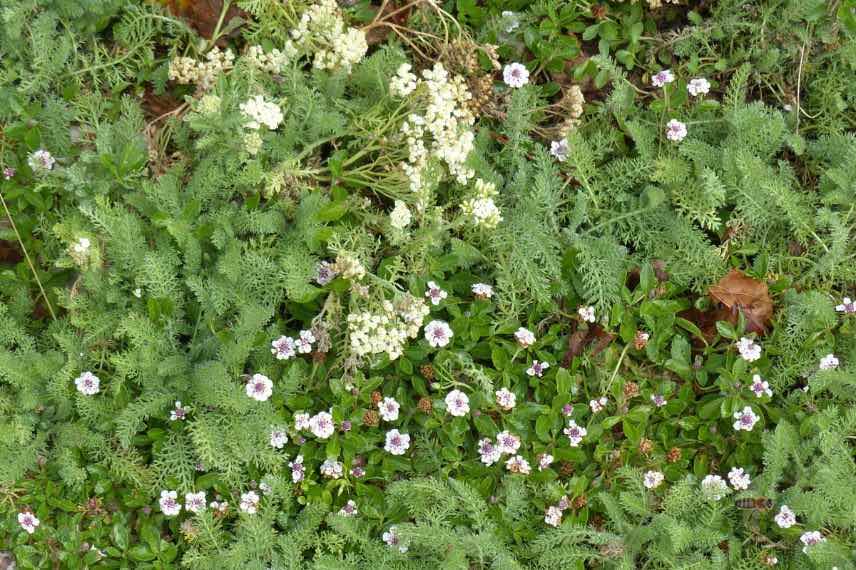
A carpet of Achillea crithmifolia mixed with Phyla nodiflora var. canescens
- Subscribe!
- Contents

Comments