





























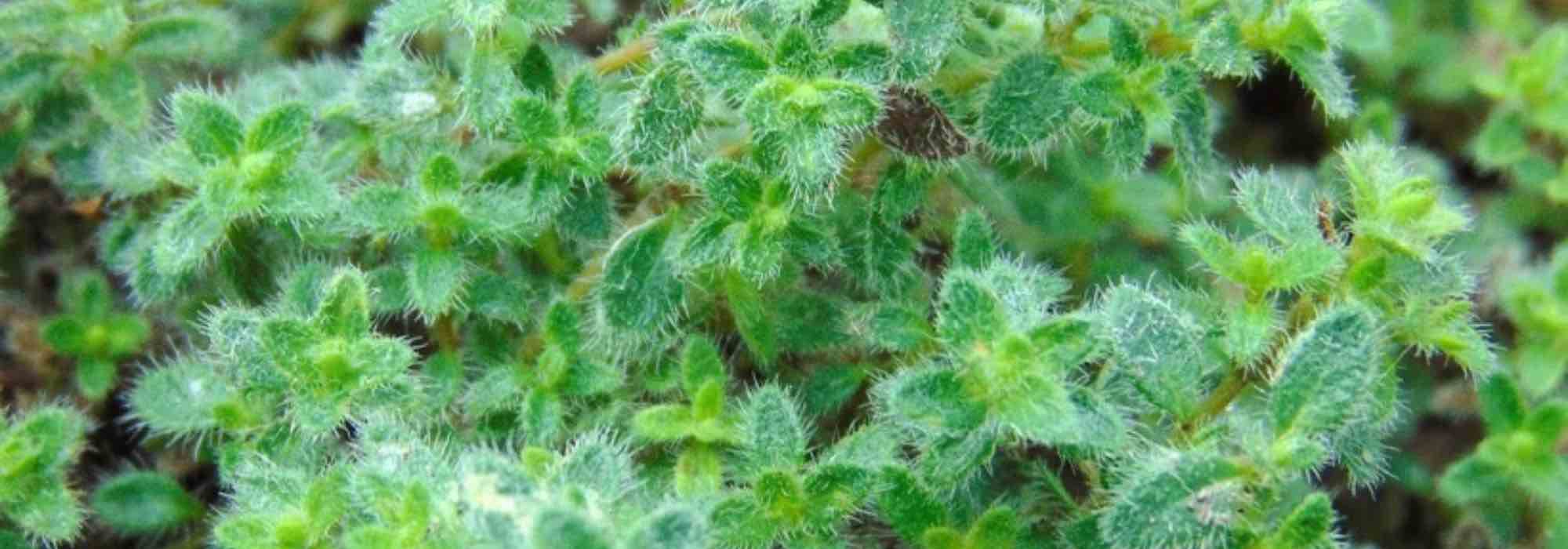
Alternative to lawn: planting creeping thyme
A low-maintenance ground cover plant as a substitute for lawn.
Contents
Thyme is one of the most popular aromatic plants in cooking. But did you know that some varieties can also serve other purposes, such as replacing the lawn? It’s not always easy to maintain a beautiful lawn throughout the seasons: watering, fertilising, weeding, and scarifying must be done regularly to hope for a lush, dense carpet.
In dry, even very dry, conditions, creeping thymes make excellent alternatives to lawn, requiring very little maintenance to become lovely green carpets with a natural style.
Here are the varieties to favour and the steps to follow to easily grow these groundcover thymes in your garden.

The benefits of creeping thyme as a lawn substitute
Creeping thymes possess various qualities that allow them to substitute for lawns. These perennial plants:
- form true carpet-like covers, thanks to their spreading silhouette that is wider than it is tall;
- thrive effortlessly in dry, very dry, and stony locations, where traditional grass would struggle to establish;
- have evergreen foliage that remains in place throughout all seasons and emits a pleasant fragrance;
- can withstand foot traffic (depending on the chosen species);
- offer beautiful, colourful, and melliferous flowerings, attracting pollinating insects to the garden;
- require virtually no maintenance and are water-efficient (see dedicated paragraph);
- are hardy down to about -15°C, allowing them to be grown in most of our regions;
- can be combined with one another to create stunning colourful carpets.
These lawn alternatives will be ideal for dressing the bases of bushes, slopes, the edges of slabs or stepping stones, or simply to green an area that is not frequently trampled. They are particularly suited to small areas.
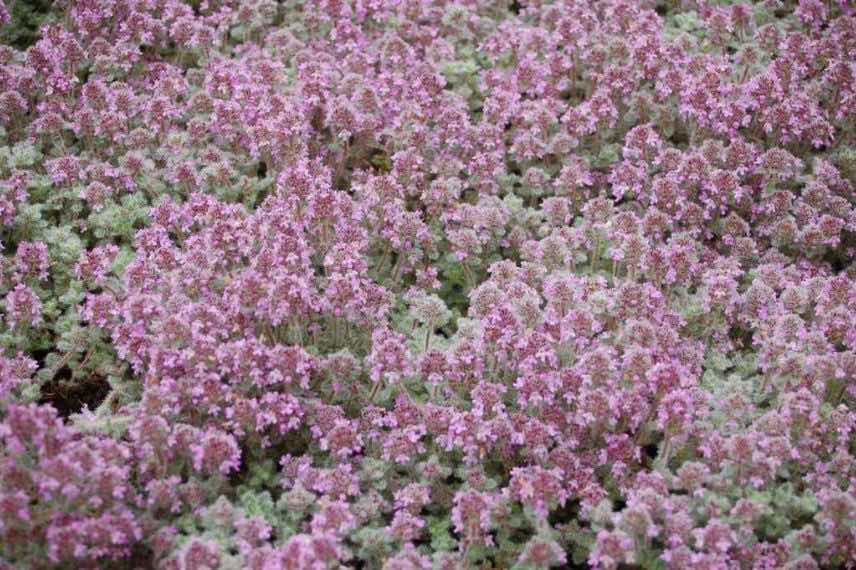
A beautiful flowering of Thymus pseudolanuginosus
Read also
Thyme: growing, planting, pruningWhich creeping thyme varieties to choose as substitutes?
Woolly Thyme
The woolly thyme (Thymus pseudolanuginosus) is a creeping variety that gradually forms a true lawn-like carpet. Its small grey-green leaves, covered in tiny white hairs, give it a very soft and original fluffy appearance.
In late spring and early summer, this foliage serves as a backdrop for a few small lavender-pink flowers.
Its homogeneous and compact silhouette perfectly dresses the soil. This thyme will quickly reach a spread of about 60 cm to 1 metre, with a height of only 5 cm.
This species has the advantage of tolerating foot traffic well.
Hairy Thyme
The hairy thyme or bristly thyme (Thymus hirsutus) will quickly transform into a compact, moss-like carpet close to the ground. It reaches about 50 cm in spread and 5 cm in height. Always green and well-kept in appearance, it is perfect for dressing areas of moderate foot traffic in the garden.
At the end of spring, it reveals an adorable flowering in shades of light pink and magenta.
Unlike other species, this thyme prefers soils that remain cool in summer (moist but not waterlogged), as its drought resistance is more limited.
Early Thyme
The Thym praecox, also known as early thyme or creeping thyme, comes in several varieties. They all form a persistent carpet close to the ground, animated all summer by adorable little colourful flowers.
- ‘Albiflorus’ has light green foliage and is covered in small white flowers in summer;
- ‘Purple Beauty’ produces very neat dark green leaves and flowers in pink-purple;
- ‘Minor’ has medium green foliage, highlighted by violet-pink flowers;
- ‘Coccineus’ features dark green foliage and bright pink flowers that are almost red.
At maturity, they reach heights of 3 to 5 cm with a spread of 35 cm. These decorative varieties should be avoided in areas subjected to heavy foot traffic.
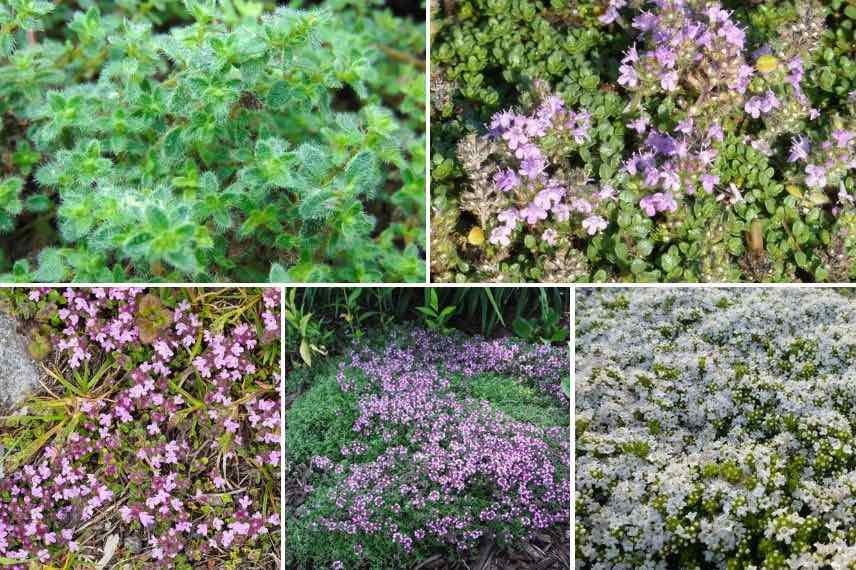
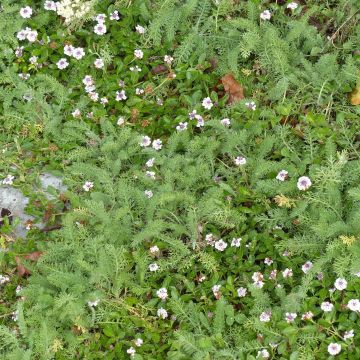
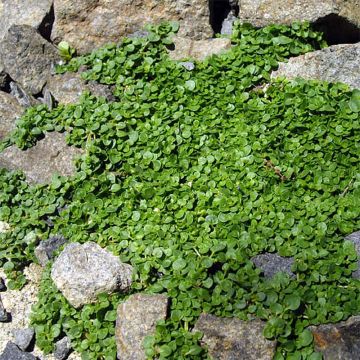
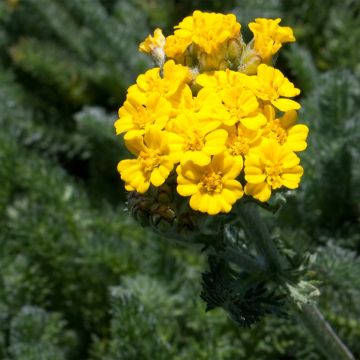
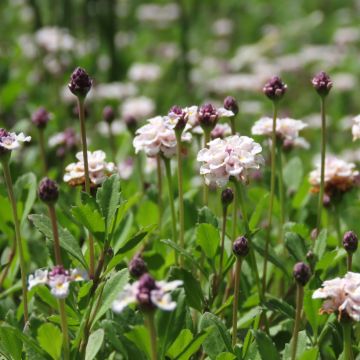
Thymus pseudolanuginosus, Thymus hirsutus, Thymus praecox: ‘Minor’, ‘Coccineus’ and ‘Albiflorus’
Discover other Alternatives to lawn
View all →
Available in 2 sizes
Available in 0 sizes
Available in 2 sizes
Available in 1 sizes
Available in 1 sizes
Available in 1 sizes

Available in 2 sizes
Available in 2 sizes
Available in 1 sizes
Available in 2 sizes
Where to plant creeping thymes?
Thyme needs sunlight to thrive properly. It should be grown in light, well-drained soil (without standing moisture). Stony, sandy, poor, dry, and ungrateful soils do not deter it. It can also tolerate slightly calcareous soils.
Note: Thyme is one of those plants that dislikes being moved. So choose your locations wisely in advance.
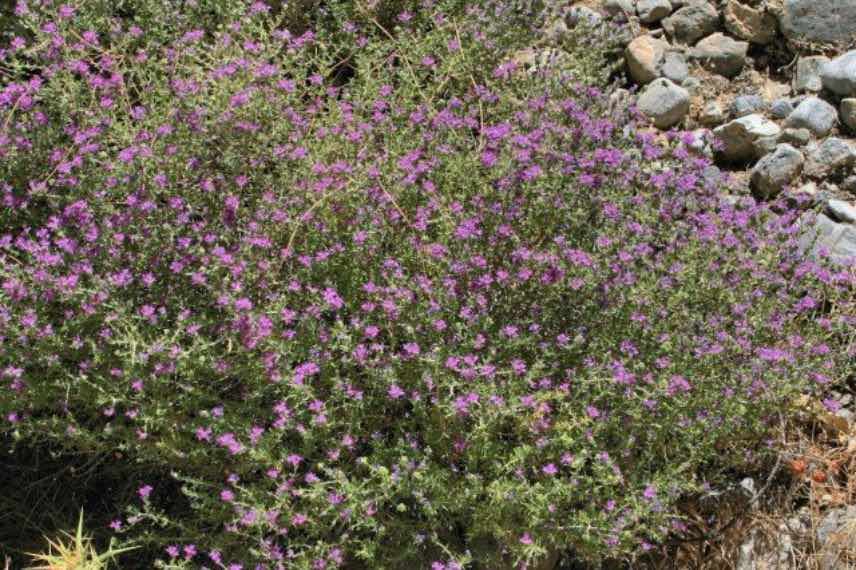
Thyme loves sunlight, very well-drained soils, and rockeries…
How to plant creeping thyme?
Ideal Planting Period
Creeping thymes should be planted in autumn (from September to November, avoiding frost) in the warm regions of southern France. This will allow the root system to establish well before the first summer heat.
North of the Loire, planting can be done in spring, between March and May, once the last frosts have passed.
Soil Preparation
Before planting, preparing the ground will allow creeping thymes to settle in properly and for the long term.
To do this:
- weed the area with a hoe or a weeder;
- loosen the soil to a depth of 30 cm using a spade;
- if your soil is heavy and clayey, lighten it by incorporating gravel, river sand, or clay balls; also ensure to break up any clumps;
- optionally use a rake to achieve a well-homogeneous surface.
Do not add potting soil or fertiliser: overly rich soil makes thymes less vigorous and less fragrant.
Planting Density
To replace the lawn, creeping thyme should be planted fairly densely, but not too tightly, so that the plants do not suffocate. Space them approximately 40 to 50 cm apart.
Planting Steps
- Dig planting holes that correspond to the size of the young plant.
- Place a layer of well-worked and loosened soil at the bottom of the hole.
- Position the root ball in the centre, then cover it with soil until the entire root system is buried.
- Firm down with your fingers.
- Water (ideally with rainwater).
Maintenance after installation
Creeping thymes are an alternative groundcover to lawns that require almost no maintenance or watering.
In the months following planting, simply ensure to:
- water them in case of prolonged drought;
- remove any potential “weeds” that compete with them.
Once established, our thymes will be self-sufficient and will require no further care. Only hairy thyme, which is less drought-resistant, will appreciate some watering during the height of summer in the absence of rain.
Creeping thymes do not require mowing: a simple pruning of the stems once flowering is finished will help maintain a dense and compact habit. Use a pruning shear or shear that has been disinfected beforehand.
Thanks to its allelopathic properties (the production of a biochemical substance that affects other plants), thyme limits the germination and growth of other plants, which spares you the chore of weeding.
No fertiliser or nutrient addition is necessary.
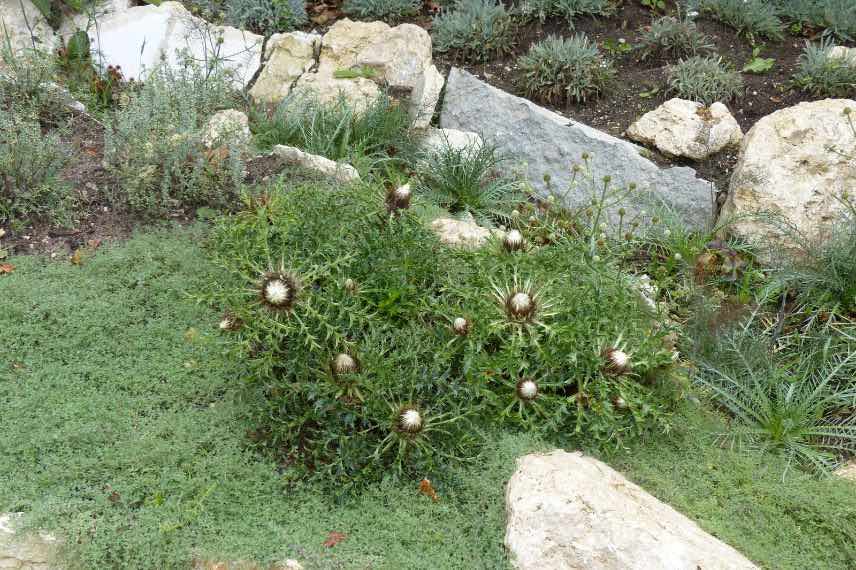
A carpet of creeping thyme at ground level surrounds a perennial
Pairing creeping thyme with other lawn alternatives
It is entirely possible to combine several varieties of creeping thymes to create a colourful carpet of vegetation, in shades of pink and mauve during the summer flowering period.
Also consider installing them alongside other plants that serve as alternatives to lawn, which thrive in the same growing conditions. For example, opt for:
- the fragrant yarrow Achillea odorata;
- the Achillea crithmifolia;
- the Lippia nodiflora;
- the sea heather Frankenia laevis;
- the baldellia Herniaria glabra;
- the Mascarene grass Zoysia tenuifolia.
You can also accompany them with succulent plants, such as houseleeks or sedums.
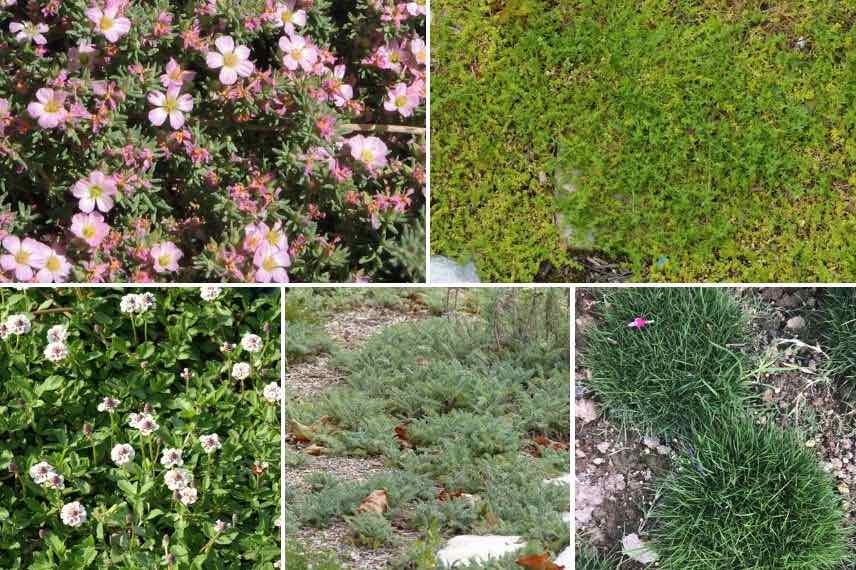
Other plants to mix with thyme as alternatives to lawn: Frankenia laevis, Hernaria glabra, Phyla nodiflora var. canescens, Achillea crithmifolia, Zoysia tenuifolia
- Subscribe!
- Contents

Comments