





























Alternative to lawn: planting Zoysia
To advantageously replace the lawn in the South of France
Contents
Ecological as it requires very little water, needing minimal mowing, watering, and maintenance, and is resistant to trampling, the Zoysia tenuifolia or Mascarene Grass is a small grass that is a great substitute for lawn. Particularly heat-resistant but moderately hardy, it is a true alternative to lawn in our regions with mild winters where summers are dry. It forms an astonishing evergreen groundcover of lush green for almost the entire year. Say goodbye to the chore of mowing and weeding! Let’s quickly discover all the qualities of this green carpet! Here’s where, how to plant and maintain this carpet plant that perfectly replaces traditional lawn.
And discover all our perennial groundcovers that are alternatives to lawn!
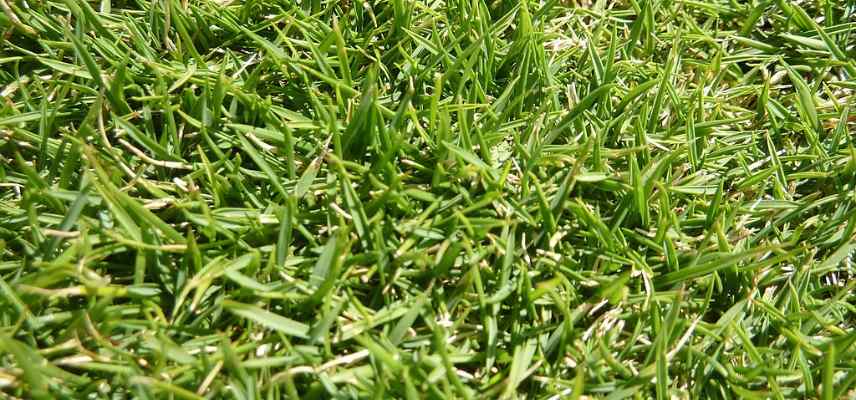
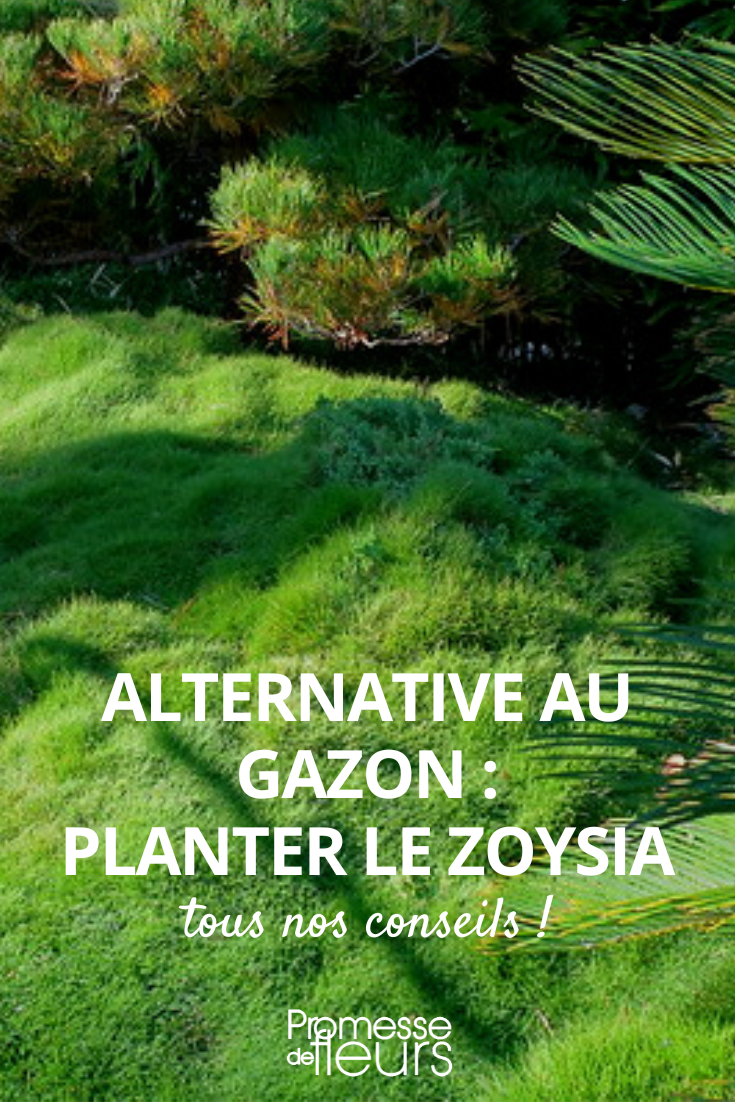
Zoysia tenuifolia © David Pierre Mangiapan Wikimedia Commons

Why choose Zoysia as an alternative to lawn?
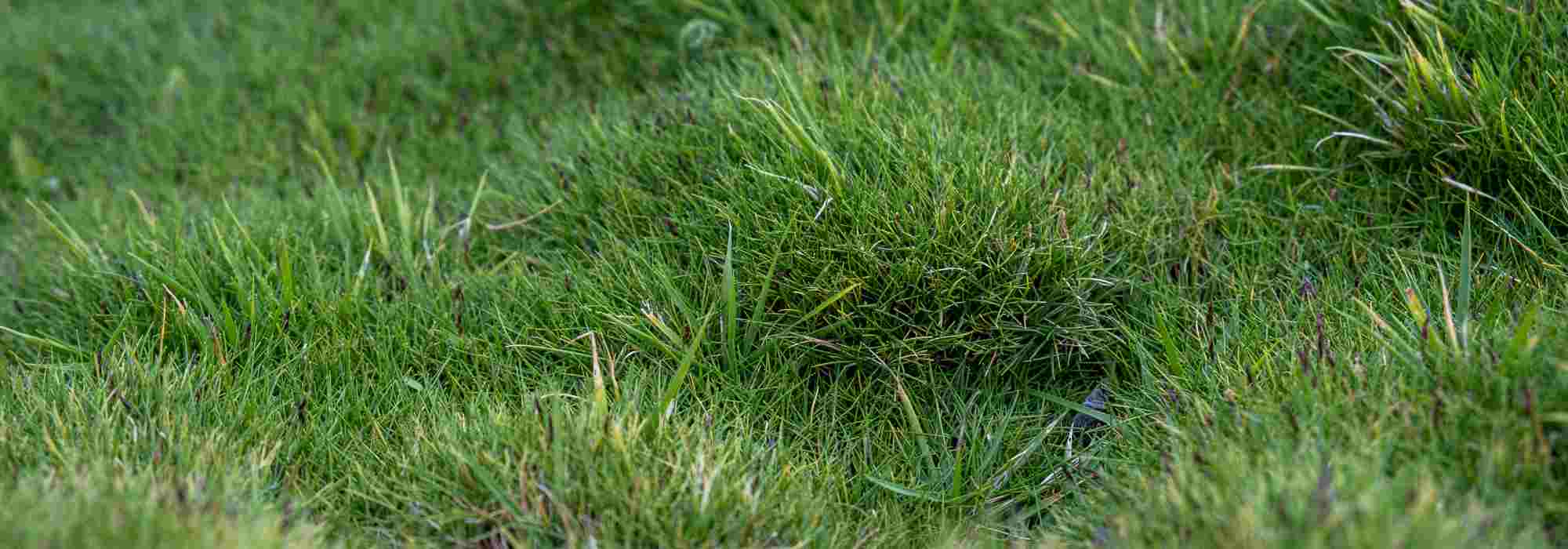
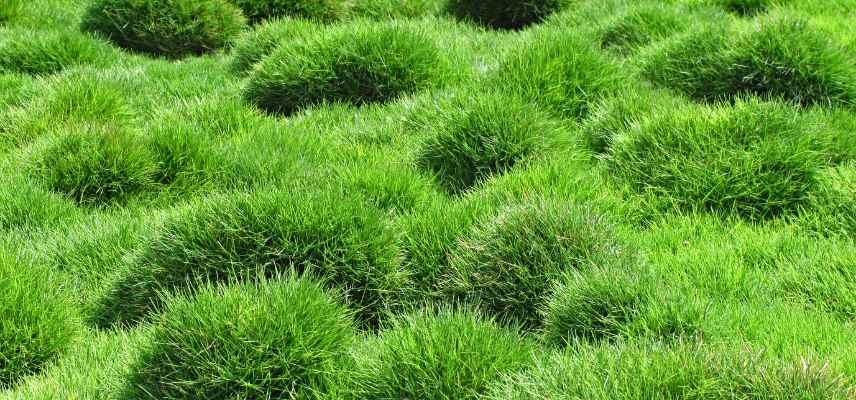
Simply because this little grass from the large family of Poaceae has so many qualities! Aesthetically first, as the Zoysia tenuifolia slowly spreads through its running rootstocks to form a beautiful green carpet, soft as velvet. Its blades are evergreen and maintain their lovely bright green hue for a large part of the year. Its height does not exceed 10-12 cm with a spread of 50 cm, creating a plush, bumpy carpet that is so dense that it discourages “weeds” from settling.
Ecological and practical next, as the Mauritius grass is characterised by great resistance to trampling, even intensive (like on sports fields) and to drought. It is increasingly used to replace lawns in public spaces as well as in our gardens, perfectly addressing the issue of water management. It is very difficult to maintain a beautiful green lawn in summer, unless one resorts to expensive watering. Zoysia requires half the water of traditional lawns and withstands the onslaught of children, athletes, or even pets! The more it is trampled, the more beautiful it becomes. It is even denser when trodden on. You can play on it, run on it, or simply walk on it barefoot! Not demanding as long as it has the warm climate it needs, it only requires one to two mowings a year, and even then… it is nicknamed “mow-free lawn”! It will adapt to many types of soil, whether acidic, calcareous, or saline. It withstands the sea spray of coastal areas as well as the chlorine of swimming pools.
For which surfaces?
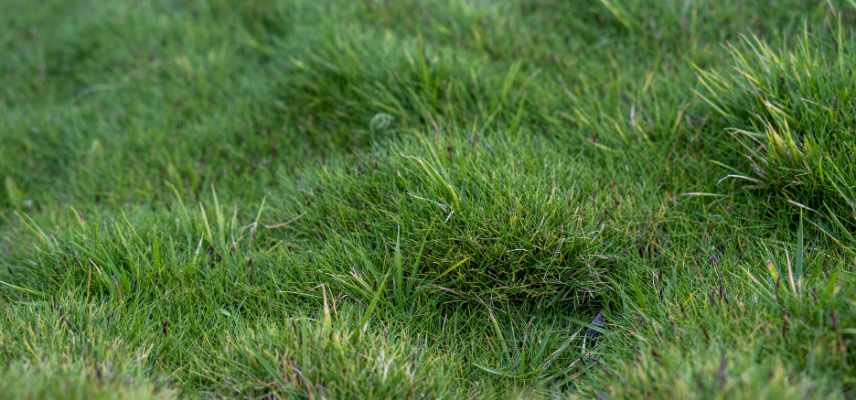
Its growth is relatively slow, which is an advantage as it requires little mowing. However, if you are not very patient, it is better to consider other alternative plants to lawn or plan for a sufficient number of pots per m². Count on approximately 7 to 9 pots per m² to evenly cover the soil within 1 to 2 years. Zoysia is suitable for both large and small areas and adapts to multiple uses in all well-drained soils. That said, if you wish to remove the lawn from large areas, we recommend more sustainable mixes of flowering meadow type where perennials and grasses blend together.
Discover other Alternatives to lawn
View all →
Available in 2 sizes
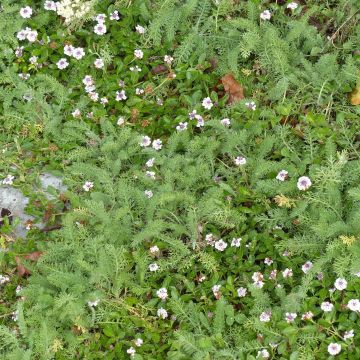
Available in 0 sizes
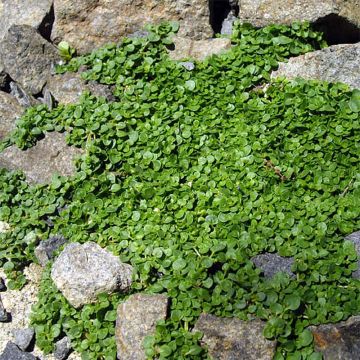
Available in 2 sizes
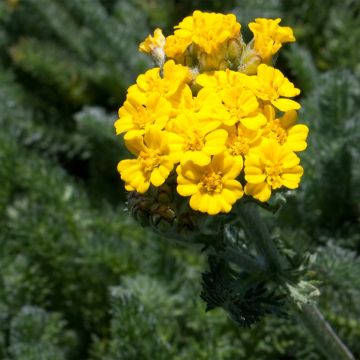
Available in 1 sizes
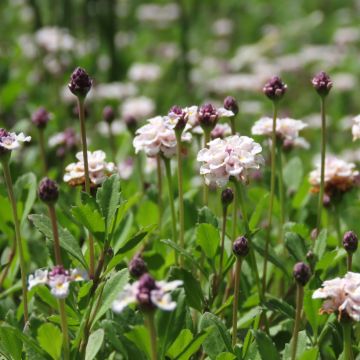
Available in 1 sizes
Available in 1 sizes
Available in 2 sizes
Available in 2 sizes
Available in 1 sizes
Available in 2 sizes
For what uses?
In the garden, Zoysia tenuifolia, or Mauritius grass, finds its place both between the slabs of pathways, Japanese stepping stones, on slopes or in rockeries. It can also replace the lawn in a small urban garden, on a play area, or even green a roof where it will form beautiful, undulating carpets.
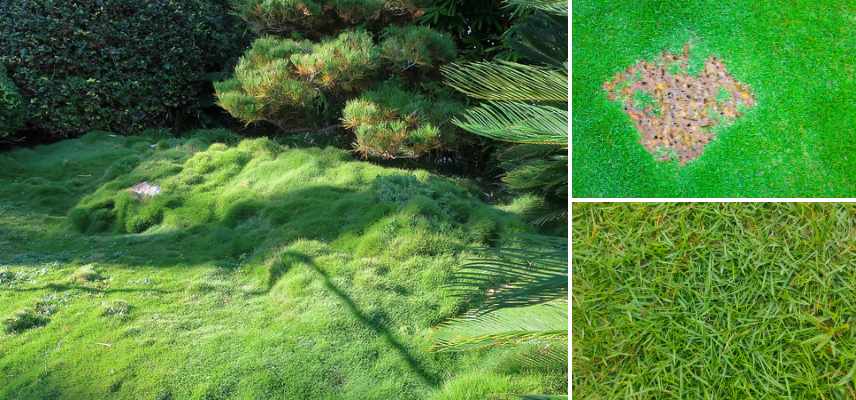
As a substitute for the lawn in small areas (© Cultivar 413), to mark a pathway… Zoysia tenuifolia offers beautiful perspectives
In which region to plant it?
Zoysia tenuifolia will advantageously replace lawn in the south of our country, in the periodically watered areas of the garden. It thrives only in our not too cold regions. It is a good alternative to lawn in gardens in the south, as it is more drought-resistant than most groundcovers. Additionally, it tolerates scorching exposures very well, with half the water requirements of traditional lawn. While most lawns will yellow due to lack of water, your Zoysia tenuifolia will remain dignified with its always green blades. Although it is cold-resistant down to -12/-15°C, it cannot withstand intense and repeated cold. This is why its cultivation is only possible in our most sheltered regions of the Mediterranean coast or even the Atlantic coastline. In winter, as soon as the thermometer drops below -5°, it temporarily yellows. Even though it will green up again in the following spring with the first rains, it will not survive a too harsh climate and will systematically yellow in cold regions.
When and how to plant it?
Accustomed to difficult conditions, Zoysia tenuifolia establishes itself in most well-drained soils. A dry, stony soil does not deter it. However, it fears overly heavy and wet soils in winter, where it will surely perish. To ensure proper establishment, make sure there is enough substrate (15 cm of soil height is sufficient). It thrives in full sun, but also in partial shade. Allow 2 years to achieve a beautiful, uniform carpet.
Plan to install it in spring on warmed ground to give the roots time to settle before the hot season. Autumn planting is also possible in warm climates. To successfully establish Zoysia tenuifolia, a few rules must be followed. It is advisable to:
- Prepare the ground by loosening the planting surface to a depth of 30 to 40 cm, breaking up large clumps, and clearing the soil of weeds and stones
- Aerate the soil using a garden fork
- Ensure proper drainage; if necessary, add clay balls or pumice to improve it
- Spread a thin layer of compost at the bottom of the planting hole
- Do not skimp on the number of plants per m²: plant about 7 to 9 pots per m² in a staggered pattern, spaced 30 cm apart. This will allow for uniform coverage of the surface.
- Water
How to maintain your Zoysia lawn?
This type of lawn is easy to maintain, requiring very little upkeep. Once established, this groundcover manages almost on its own.
- At planting, apply a slow-release fertiliser such as lawn fertiliser or a bit of compost. Renew each year at the beginning of spring.
- After planting: water every 3 to 4 days to encourage establishment. Once well established, it will be drought-resistant; however, during prolonged dry spells, it is advisable to water occasionally in summer: about 15 litres of water per square metre every 8 to 15 days. Always water while allowing the soil to dry out between waterings.
- Weed regularly in the first year to prevent competition with adventive plants—give it a clear field—afterwards, you can limit weeding to once or twice a year.
- With slow growth, mowing is not necessary, especially as it ages well without thinning out, eventually creating very attractive natural undulations. However, if desired, you can mow this lawn once or twice a year, at the end of winter to encourage growth, and in autumn before the plant enters dormancy.
- Every 4-5 years, in summer, scarify the thatch that has formed
Can it be paired with other plants as alternatives to lawn?
Yes, fortunately, these alternative plants to lawn work well together. Mixing them creates a lovely, diverse lawn that looks beautiful in all seasons, provided you choose plants with the same needs as our Mascarenes lawn. There are several varieties of Zoysia grass; you will select the one that best suits your needs and desires. Among the plants that can replace grass in dry soil and complement Zoysia, you will find Achillea crithmifolia, which will take over in winter by forming a persistent carpet of a very soft grey-green. Many combinations are also possible, with Thymus (wooly thyme, hairy thyme). It can be paired with other vigorous ground-cover plants with complementary growth cycles, such as Phyla nodiflora, one of the best alternatives to lawn in dry and trampled soils. It forms large, very low mats of more or less persistent foliage tinged with grey-green, topped with lovely mauve flowers in spring.
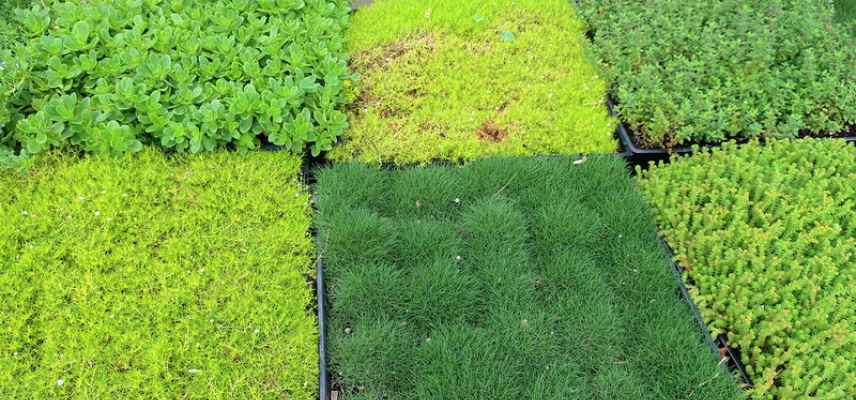
Zoysia tenuifolia at the bottom centre, with some other good companions like thyme at the top right, as well as sedum and sagina on the roof terrace (© Cultivar 413)
- Subscribe!
- Contents
Comments