





























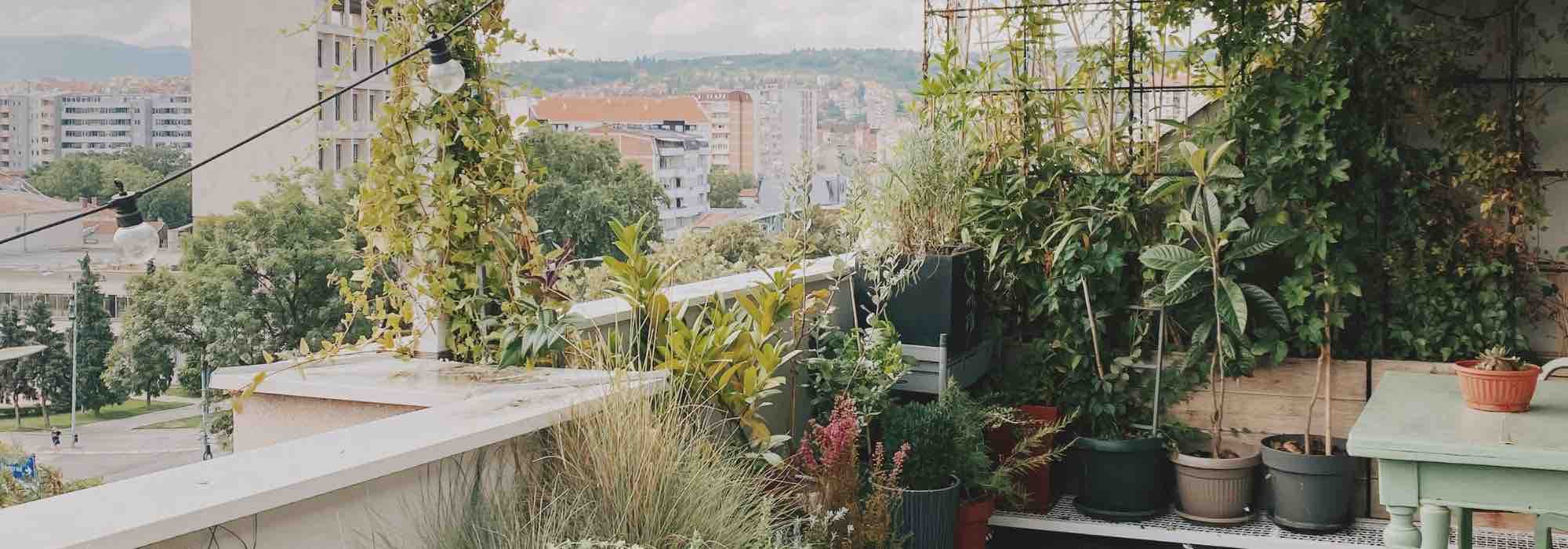
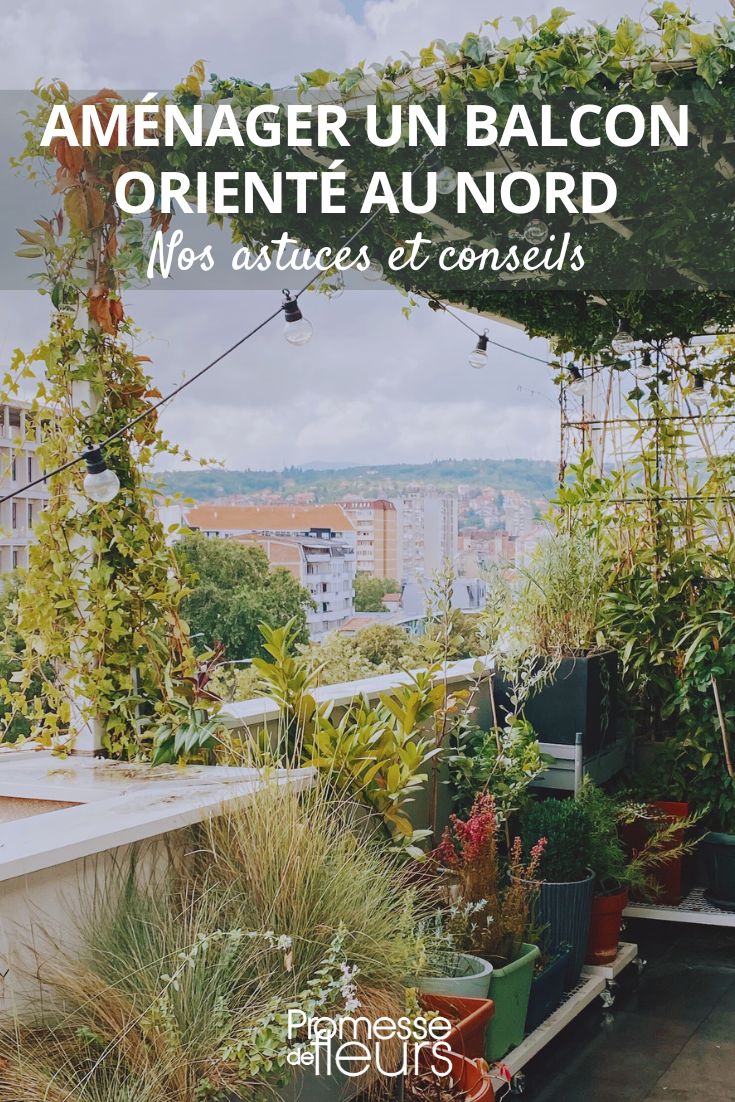
How to design a north-facing balcony?
Our tips to make the most of this exposure
Contents
Setting up a north-facing balcony may seem challenging, but with a bit of planning and the right choices, it is entirely possible to create a pleasant and welcoming space. North-facing balconies receive little or no direct light from the sun, which can pose problems for some plants and limit options. However, there are many solutions to overcome these obstacles and transform this space into a corner of relaxation and greenery.
The main challenges associated with north exposure are the lack of direct sun, which can affect the growth of plants, and higher humidity, especially in autumn and winter. In addition, the constant shade can make the space cooler, requiring smart choices in furniture and decoration to ensure comfort and sociability.
Good planning is essential to successfully arrange a north-facing balcony. By choosing shade-tolerant plants, optimising the available space and creating a warm ambience with well-chosen decorative elements, you can fully enjoy this outdoor space, whatever the season.

Choosing the right plants
In the north, it’s essential to opt for plants that thrive in shade or indirect light, or risk watching your plants languish and wither. You’ll probably have to forgo exuberant flowering, but you can still achieve a lush ambience.
Plants for shade or lack of sun
Some plants are particularly well suited to shaded environments or north-facing exposures, which can be fairly bright when there is no shadow and a nearby white wall to reflect light. However, many large-flowered plants or those with abundant flowering require sun to flower. Thus it’s about making wise choices that won’t deprive you entirely of lush foliage and light flowering. Shade-loving plants suffer in the sun, so they will perform best in these conditions.
Choose plants with varied growth habits for a lush ambience: climbing plants, deciduous and evergreen shrubs, perennials, and annuals.
Shrubs
Shrubs with deciduous and evergreen foliage form the backbone of your planting scheme. To the north, consider fatsias with large palmate leaves, and daphnes with evergreen foliage and fragrant winter flowering for Daphne odora. A Hebe such as ‘Ouessant’ is quite suitable too if the site isn’t shaded and is therefore bright. Nandina domestica is another shrub well worth considering for the shape and colour of its foliage. Also look at the hardy fuchsia shrubs with compact growth.
Climbing plants
Climbing plants are excellent for vertical cover on walls or railings. Install a small-growing climbing hydrangea such as ‘Silver Lining’ with bright variegated foliage. Also look at ivies and honeysuckles. Trachelospermum asiaticum ‘Ogon-Nishiki’ (star jasmine) appreciates a north-facing position and offers generous ornamental qualities.
Perennial plants
Many choices among perennials. These include ferns, hostas, heucheras, Hakonechloa for the quality of their foliage. For foliage and flowering, consider Tiarella, Epimediums, Japanese anemones, some hardy geraniums such as Geranium nodosum, and periwinkles. Personal favourite: the superb Phlox divaricata ‘Chattahoochee’ with bright, fragrant blue flowers.
Here are our specific articles on choosing plants for balconies or terraces facing north:
- 7 perennials to grow in pots on a north-facing balcony
- 5 climbing plants to grow in pots on a north-facing balcony
- What can be planted on a north-facing terrace?
- 8 dwarf bushes to grow in pots on a north-facing balcony
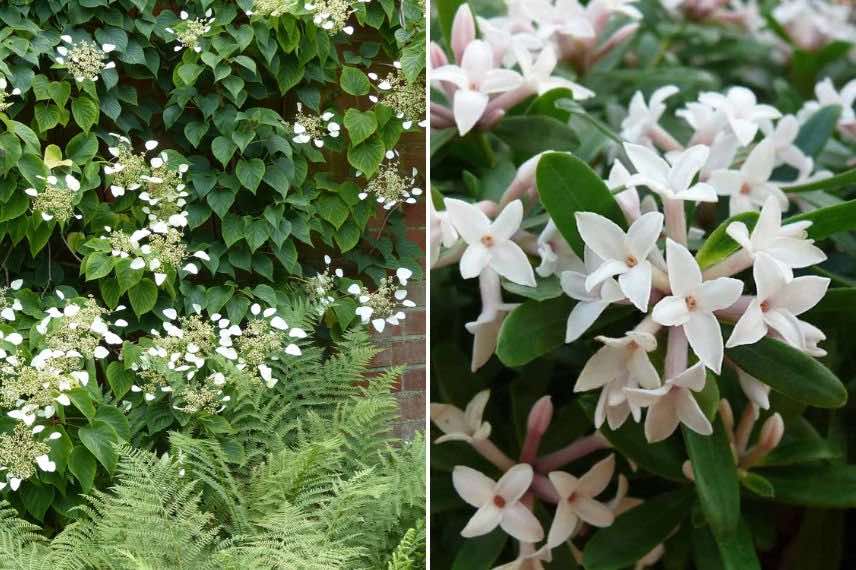
Plants suited to a north-facing balcony, which even reward you with a lovely flowering display: Schizophragma hydrangeoides, ferns and Daphne.
Optimise space
Designing a north-facing balcony requires clever space optimisation to maximise its use and create a harmonious environment.
Using hanging planters and pots on shelves
Hanging planters free up floor space while adding a decorative touch up high. You can plant ferns, begonias, small fuchsias or other shade-tolerant plants. Likewise, wall-mounted shelves are ideal for placing pots of varying sizes, creating a vertical garden effect. Ensure the shelves are sturdy and well-secured to support the weight of the pots and plants.
Installing shelves or trellises for climbing plants
Trellises are perfect for climbing plants such as ivy or honeysuckle. They allow you to create a living wall, adding greenery without crowding the floor space.
Tips for organising plants according to their size and light needs
When arranging your plants, consider their size and specific light needs. Place the largest plants at the back or along the sides. Plants that require a little more light should be placed where they can receive maximum indirect light. Group plants according to their watering and care needs to simplify maintenance.
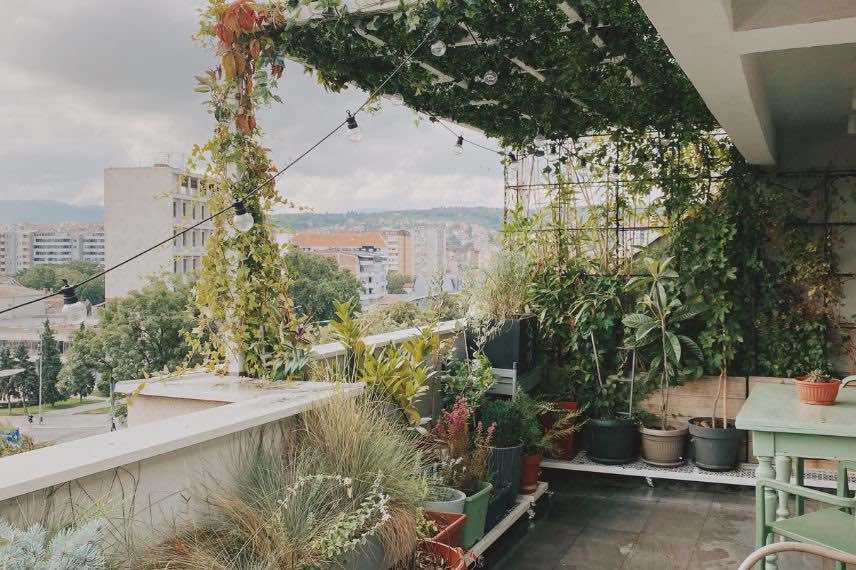
Install shelves and use height to green the entire space—it’s the key to a successful ambience in what is often a tougher display.
Create a cosy ambience
Creating a cosy ambience on a north-facing balcony is essential to make it a welcoming and pleasant space, despite the lack of sun. Here are a few ideas to transform your balcony into a true haven of relaxation.
Selection of Furniture
A balcony is inherently a small space, so opt for folding chairs and compact tables that can be easily tucked away when not in use. Benches with built-in storage are also an excellent option for maximising space while providing comfortable seating. Choose moisture-resistant materials, such as metal or treated wood, to ensure the durability of your furniture. Wood offers a warmer and more inviting look than metal.
Cushions and throws for added comfort
Cushions and throws add a touch of comfort and warmth to your balcony. Choose weather-resistant fabrics to prevent them from deteriorating too quickly. The colours and patterns of the cushions can also bring a note of cheer and personalise your space. In winter, add cosy throws to enjoy your balcony even on chilly days.
Ambient Lighting
Lighting is a key element in creating a cosy ambience on a north-facing balcony. String lights provide a soft, warm glow, ideal for evenings. Solar lamps, practical and eco-friendly, can be placed along balustrades or integrated into planters to subtly illuminate the space. Also consider lanterns and LED candles to add a romantic and soothing touch.
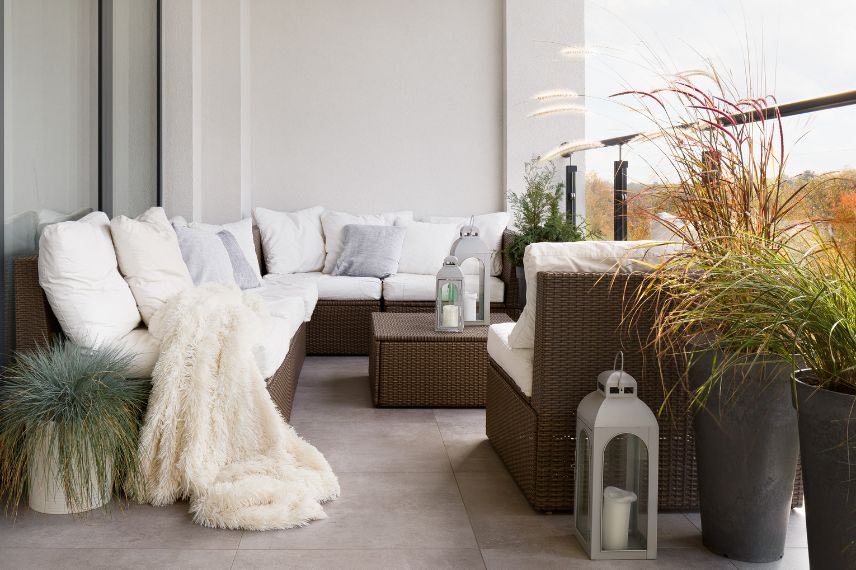
Cushions, throws and warm lighting are your best allies, as are natural or warm colours.
Looking after your balcony
Regular maintenance of your north-facing balcony is essential to ensure plant health and the durability of the space. Without sun and with potentially higher humidity, soils and furniture can deteriorate more quickly, becoming slippery. To keep a cosy space, regular maintenance is essential.
Appropriate watering
Watering is a crucial aspect of maintenance, especially for a north-facing balcony where humidity can be more persistent. Water your plants according to their specific needs, avoiding excess water that could lead to fungal diseases. Use pots with good drainage to prevent water accumulation. For plants in hanging baskets or pots on shelves, ensure water drains away properly.
Plant care
Regular pruning of plants is important to promote growth and maintain a neat appearance. Remove wilted leaves and flowers to stimulate continuous flowering and prevent diseases. Periodic fertilisation with suitable fertilisers can also be beneficial. Regularly monitor your plants for signs of disease or parasitic infestations and act quickly to treat them.
Regular cleaning of furniture and soil
A clean balcony is more pleasant to spend time on. Regularly clean the furniture to prevent the buildup of dirt and mould, especially after periods of rain. Use products suitable for the materials of your furniture to avoid damage. The soils should also be swept and washed to remove fallen leaves, dust and debris. In the north, moss growth, if the atmosphere is humid, is faster and more pronounced. In winter, protect your furniture and accessories from snow and frost.
Decor ideas to personalise
Personalising your north-facing balcony can transform this space into a true extension of your home, with a few decorative touches to add a unique and colourful touch to your balcony.
Using colours to brighten the space
Colours can play an important role in decorating your balcony. Use coloured pots to bring cheer and vibrancy. Textiles, such as cushions and outdoor carpets, can also be chosen in bright and varied shades. Plants themselves, with coloured foliage and colourful flowers, help create a dynamic and pleasant environment.
Decorative accessories
Decorative accessories add a personal and unique touch to your balcony. Lanterns and LED candles provide a warm ambience and romantic, ideal for evenings. Mirrors can be used to visually enlarge the space and reflect light, making the balcony brighter.
DIY: make your own decorative pieces
DIY (Do It Yourself) is a great way to personalise your balcony whilst letting your creativity run free. Make your own planters or plant pot covers using recycled materials such as wooden pallets or decorated tin cans. Create mobiles or hanging decorations from found objects, such as shells, beads or pieces of coloured glass. These DIY elements add an authentic, personal touch to your space.
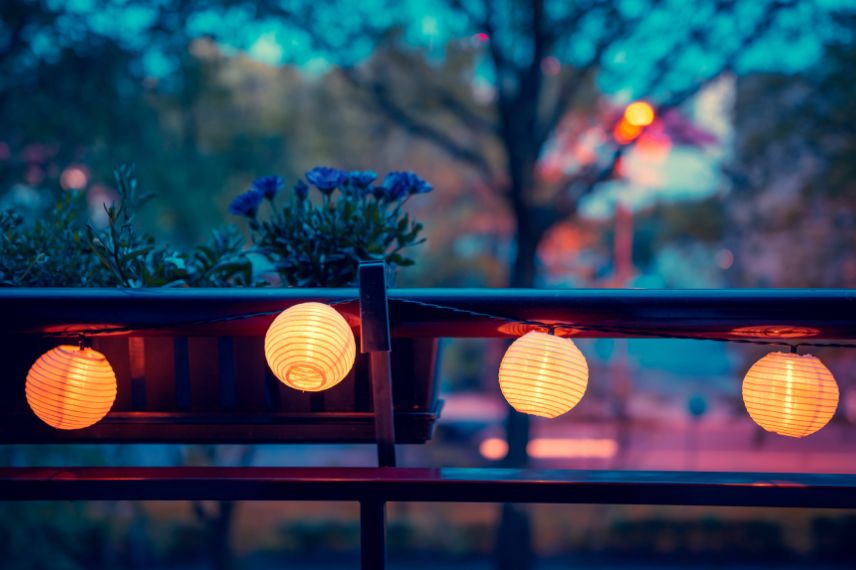
Solar garlands are essential!
- Subscribe!
- Contents
Comments