





























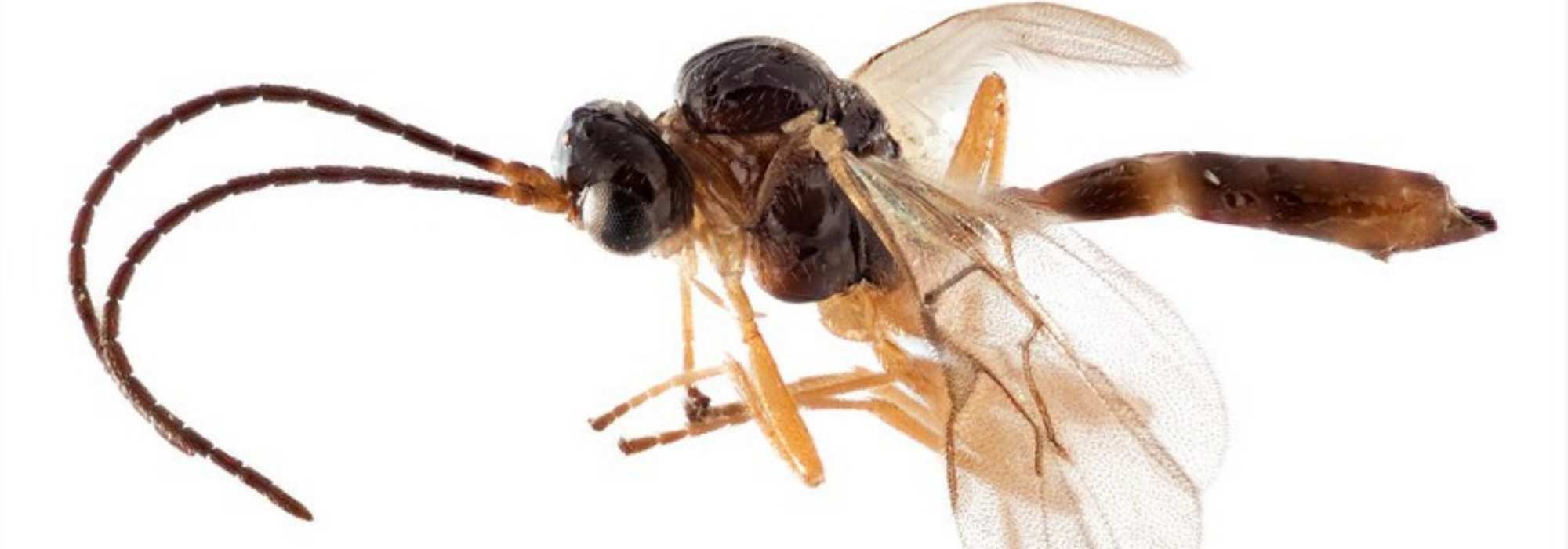
Auxiliary insect in the garden: Aphidius
a mini parasitic wasp of aphids
Contents
Aphidius are small beneficial insects that parasitise aphids in the vegetable garden, on roses, in ornamental gardens, or in orchards. The female of this tiny wasp, known as a parasitoid, is only a few millimetres long and lays her eggs directly inside the bodies of aphids. The larva feeds within the aphid and eventually transforms it into a dry, empty “mummy.” Aphidius are so effective in controlling aphids that they are even used in organic pest management.
→ This advice sheet will tell you more about these mini parasitoid wasps: Aphidius.

What is this insect?
Aphidius are insects of the order Hymenoptera (like bees, wasps, ants…) and of the family Braconidae and subfamily Aphidiinae. The genus Aphidius includes around forty species worldwide.
Adult aphidius measure only a few millimetres (microhymenoptera), are generally black, and have very veined wings. The females possess a long ovipositor, a kind of syringe-like tube, allowing the female to lay eggs.
Adult aphidius are very discreet and barely forage. However, the aphidius is a parasitoid wasp of many aphids (hence the name, as Aphides = aphid): notably the green tomato aphid (Macrosiphum euphorbiae), the green peach aphid (Myzus persicae), the striate aphid of foxglove (Aulacorthum solani), and the green rose aphid (Macrosiphum rosae).
In this regard, aphidius, as auxiliary insects in crops, are sometimes marketed as part of biological control or integrated pest management. This is the case for Aphidius erpi, Aphidius picipes, Aphidius colemani, and Aphidius matricariae, which are used in the biological control of pest insects (here, aphids) within crops and plant production.
Please note: there are other species of parasitoid wasps that parasitise other types of insects, such as certain butterfly caterpillars like the cabbage white caterpillar, for example.
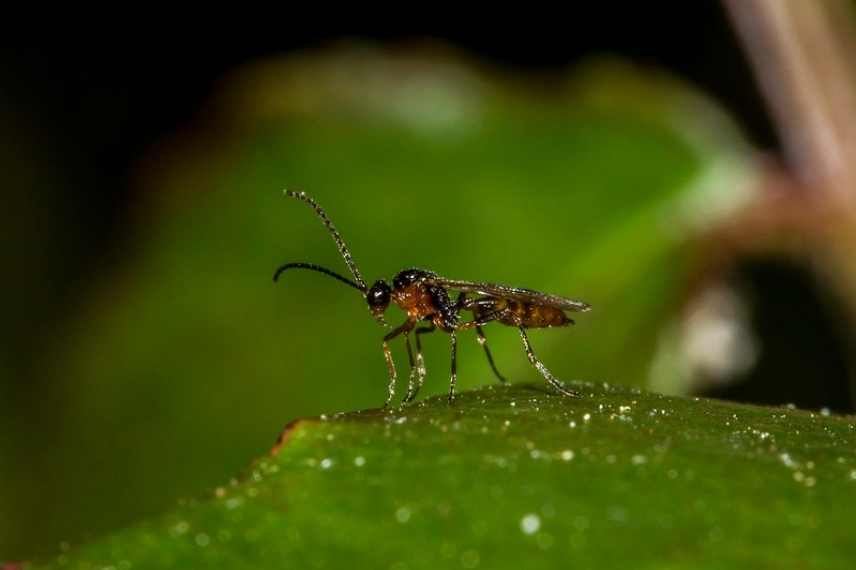
Aphidius ervi © Nikk
A parasitoid wasp? What does that entail?
Each female can lay around a hundred eggs in just a few days. However, she doesn’t lay them just anywhere! She lays them directly inside the aphids, one egg per aphid.
The larva of Aphidius emerges from its egg and begins to gently devour the aphid from the inside. The aphid gradually swells to the size of a pinhead. About ten days later, the aphid stops feeding and dies; this is the moment for the larva to emerge into the open air and become an adult. The cycle can then restart for our aphidius, this efficient little parasitic.
The aphid, drained of its substance, remains stuck to the plant as an empty, desiccated “mummy.” Gardeners sometimes mistake these “mummies” (a term used by entomologists themselves!) for pest insects, even though they will no longer cause any damage…
How to attract aphidius to your garden?
- Avoid biocides (even natural ones) and let nature take its course: a natural balance will gradually establish itself;
- Welcome as many wild plants as possible: each wild plant nourishes insects or serves as a host plant for their larvae and caterpillars;
- Stop panicking at the sight of aphids: aphidius, along with other larvae such as ladybird larvae or hoverfly larvae, will soon take care of the problem.
- Subscribe!
- Contents
![[Aphidius] beneficial insect](https://en.promessedefleurs.eu/blogwp/wp-content/uploads/2022/06/Aphidius.jpg "[Aphidius]")
Comments