





























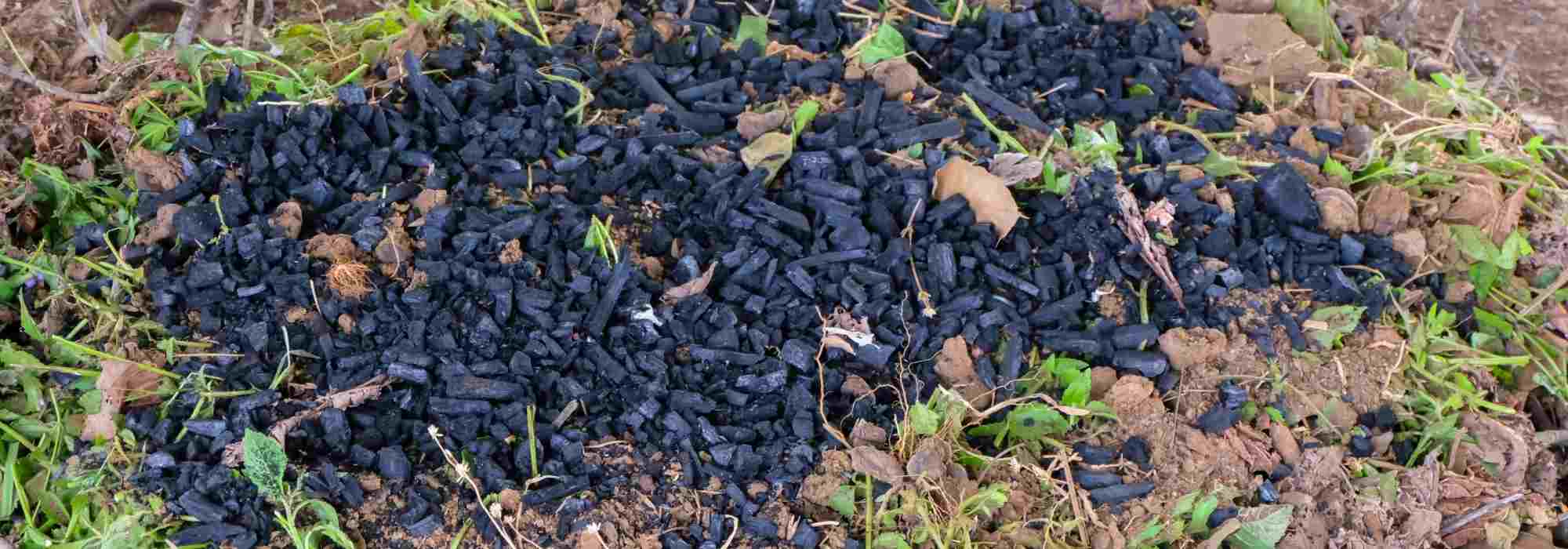
Biochar: what is it?
a type of vegetable charcoal
Contents
Biochar or agrichar is a type of charcoal for agricultural use, obtained through pyrolysis. Biochar is used to enhance soil quality and its productivity. Additionally, biochar helps combat climate change due to its ability to trap atmospheric carbon dioxide (CO2) in the soil. Biochar now plays a significant role in new, more environmentally friendly farming techniques: permaculture, agroforestry… and, of course, in private gardens.
→ What is biochar? Can it be used in the garden? We provide all the details in this article.

What is biochar?
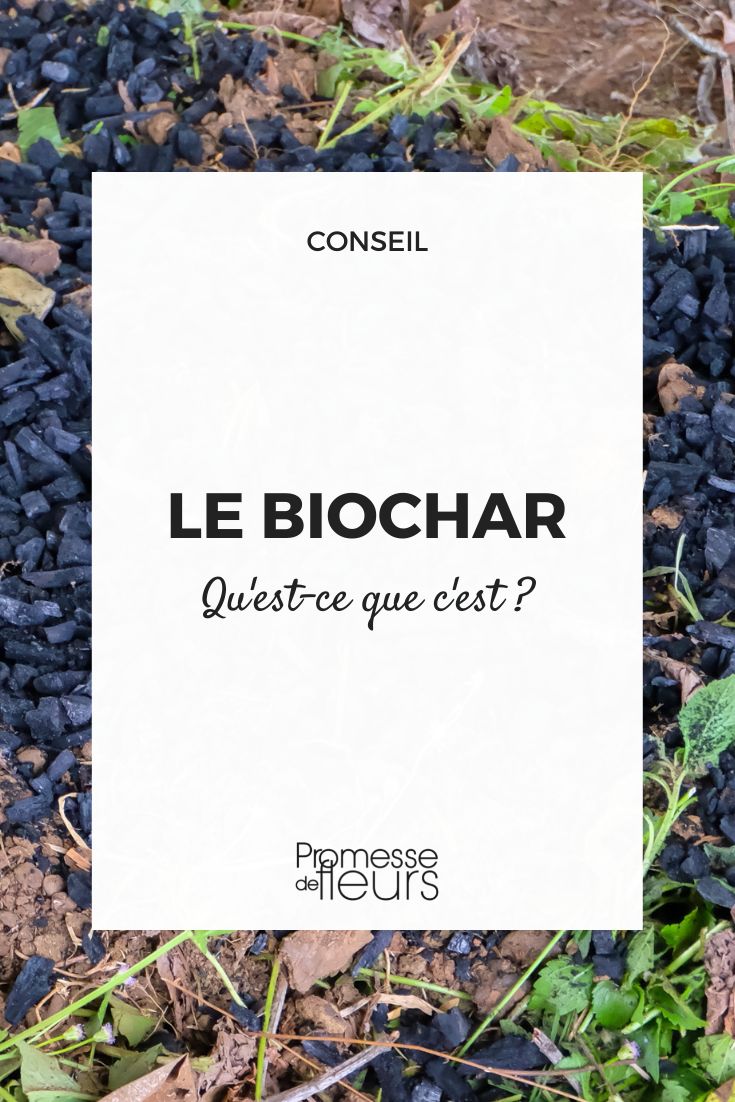
Biochar or agrichar is a type of solid, microporous plant charcoal obtained through pyrolysis (see point number 2). The term “biochar” is a neologism derived from the contraction of “bio” (organic) and “char” (for charcoal in English).
Biochar is a soil amendment used in agriculture to enhance its quality and thus increase yields. Biochar is incorporated into the soil in the form of powder or small fragments. This amendment improves the physical, chemical, and biological properties of the soil. Biochar can be used in agriculture, horticultural production, agroforestry, permaculture, organic market gardening, and even in gardens.
Biochar is particularly recommended for stabilising and improving tropical soils, which are naturally acidic and degraded by deforestation, intensive agriculture, and erosion.
The carbon obtained through pyrolysis is stable and degrades very slowly in the soil. Therefore, biochar functions as a “carbon sink” (for your information, humus, turf moors, forests, oceans… are also carbon sinks), meaning it can absorb and store carbon from the carbon cycle, including atmospheric CO2. This is known as carbon sequestration. A “carbon sink” thus helps combat climate change through carbon sequestration.
Please note: do not confuse biochar, which comes from pyrolysis, with biocoal, which is derived from a biological process. Biocoal is more akin to “single” charcoal used as fuel.
Please note: the idea of incorporating charcoal into the soil to improve its physical properties is not new. Pre-Columbian Native Americans (between 800 BC and 500 AD) integrated charcoal into the earth to enhance its fertility.
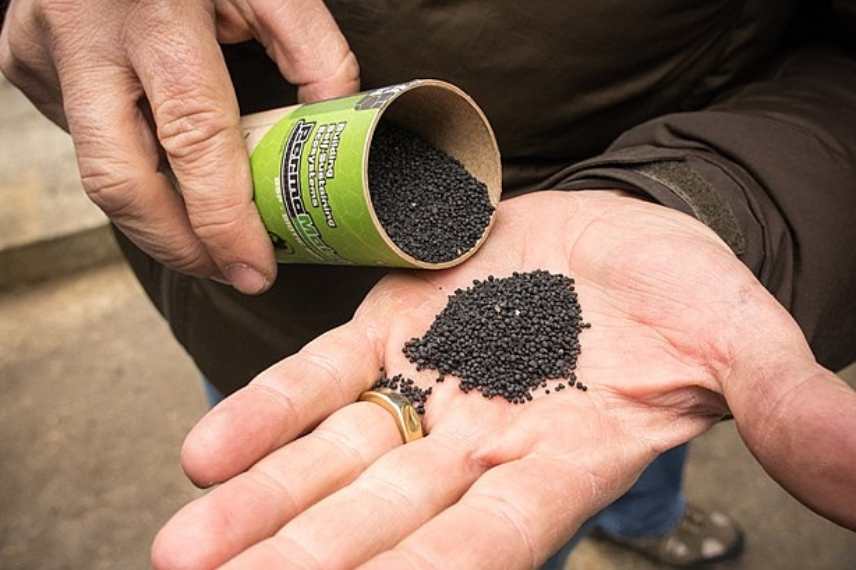
Biochar granules (© Oregon Department of Forestry)
How is biochar made?
Biochar is derived from the pyrolysis of organic materials (agricultural and garden waste, forestry residues…) in special kilns, known as pyrolysis kilns. Pyrolysis (or thermolysis) is a chemical decomposition of an organic compound through a very high increase in temperature (over 350 °C in the case of biochar). This process is carried out in practically the absence of oxygen to prevent oxidation, but especially combustion. Therefore, pyrolysis does not produce flame.
Pyrolysis is interesting for valorising cellulosic biomass (plant waste): it produces, in addition to biochar, vapours, combustible gases, and solid minerals, which can be recycled in agriculture.
Note: the qualities of the produced biochar vary depending on the raw material. If produced from wood, it will be rich in carbon but relatively low in nutrients. If produced from herbaceous plants (hay, reed, miscanthus, hemp…), it will be low in carbon but rich in calcium, magnesium…
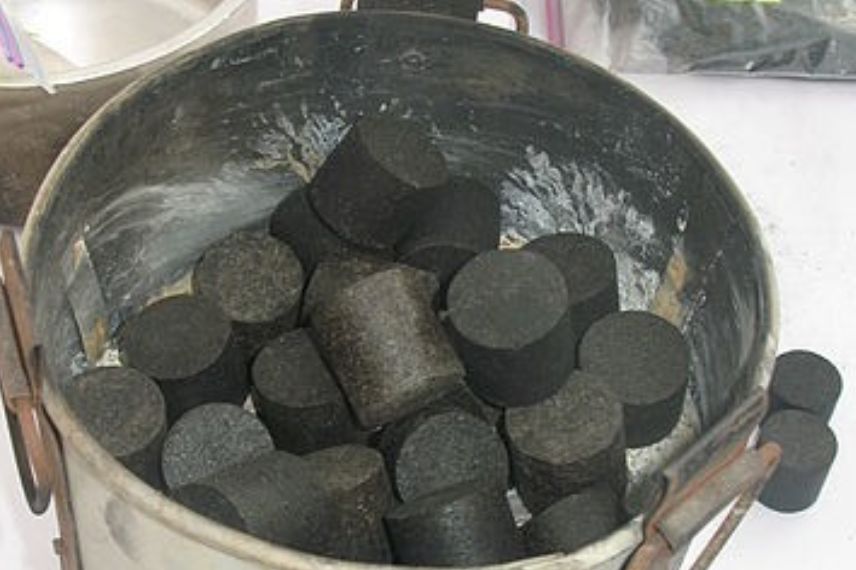
Biochar in fragment form (© Sunstainable Sanitation Alliance-Wikimedia Commons)
Discover other Fertilisers and added nutrients
View all →
Available in 1 sizes
Available in 1 sizes
Available in 1 sizes
Available in 1 sizes

Available in 2 sizes

Available in 2 sizes
Available in 1 sizes
Available in 1 sizes
Available in 1 sizes
Available in 2 sizes
What are the benefits of using biochar?
Improving soil fertility
- Increased biological activity in soil: the porosity of biochar helps protect soil microfauna (bacterium, arthropods, earthworms…);
- Improvement of the soil structure: biochar helps to “lighten” the soil. The porous structure of biochar retains water and nutrients, redistributing them when plants and soil life need them;
- Enhanced nutrient content: biochar allows for better retention of nutrients such as calcium, potassium, magnesium…;
- Buffering effect and reduction of soil acidity: being highly basic, the incorporation of biochar into acidic soil will raise the pH towards neutrality.
A benefit for the environment
- Carbon sink: the carbon in biochar is stable and degrades very slowly. Therefore, biochar can act as a “carbon sink” just like meadows, forests, turf moors, oceans, and humus…;
- The charcoal in biochar can improve water circulation in soils through filtration and pollutant retention (including some heavy metals). This water subsequently enters waterways. The use of biochar could reduce pollutants found in river waters;
- The production of biochar allows for a reduction of organic waste and the valorisation of other products from pyrolysis: vapours, combustible gases, and solid minerals, which can be recycled in agriculture.
How to use it in the garden?
Biochar should never be used as the main substrate. It must be soaked in water before use. Additionally, biochar will be more effective if it is mixed with compost or potting soil (50/50) before being used in the soil.
The uses of biochar in the garden are numerous:
- In pots, planters, or vegetable beds: this is where biochar will be most useful. By retaining water and nutrients while keeping a well-drained substrate. An addition of 1/10 biochar to 9/10 substrate (potting soil, compost, garden soil) is considered sufficient;
- At the planting of trees, bushes, or perennials: add 1/10 biochar to 9/10 good garden soil and potting soil at planting;
- On the lawn: sprinkling a few handfuls of biochar on your lawn with a bit of potting soil will help to rejuvenate it.
- On the layers of the vegetable garden: add about 1 litre of biochar per m²;
- In flower beds, at the base of trees or bushes: apply a bit of biochar mixed with compost (at a ratio of 40/60) that you will lightly scratch into the soil at the base of your established plants.
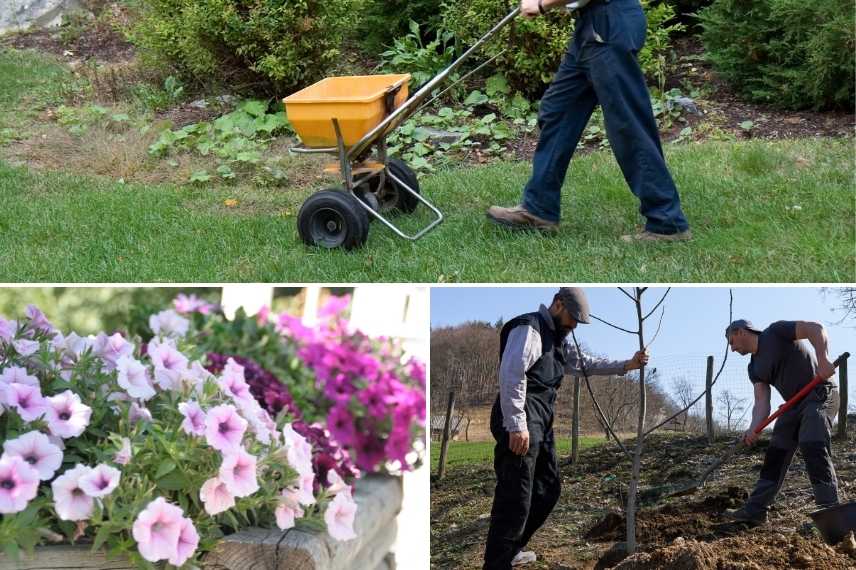
Lawn, planters, planting of trees or bushes: the uses of biochar are numerous
Does biochar really represent a miracle solution for the environment?
On paper, everything always seems wonderful. Biochar is a way to valorise organic waste while improving soils and sequestering carbon. It sounds great!
Except that… we must be careful not to fall into the usual pitfalls of industry and intensive agriculture.
- If biochar is produced using organic waste, that’s very good. However, if it requires clearing forests, reed beds… to produce it (business… business…), it is undoubtedly an environmental folly;
- Moreover, dead wood and “organic waste” contribute to the production of humus in forests (and even in our gardens!) and to soil fertility in general. Removing everything to produce biochar will impoverish natural environments and soils destined for agriculture;
- Some soils are naturally acidic and host specific flora (and therefore fauna). Altering the pH of these soils through massive biochar addition would be disastrous for local biodiversity;
- Unless there is a local biochar production chain using organic waste from the region, biochar sometimes comes from very far away. This is far from being ecological;
- Some simple pyrolysis systems do not have a double wall to retain the gases emitted. These gases released during pyrolysis also contribute to climate change.
In short, on paper, biochar seems like an excellent idea. The concern is that human nature being what it is, deviations, mainly related to money, are likely to arise. Let’s stay vigilant!
Lastly, it is important to emphasise the stability of carbon from biochar. It will remain in the soil for many years. Therefore, we should think carefully before incorporating it, as if the use of biochar proves to be disastrous for various reasons in a particular type of soil, that soil will be degraded for a long time.
- Subscribe!
- Contents
Comments