





























Camelia sick: what to do?
Identify, manage, and prevent diseases and pests
Contents
The Camellia is a self-sufficient plant with low maintenance. As long as it is planted in the right soil and in the right location. You will appreciate its delicate flowers during the quieter seasons in the garden. However, you may sometimes worry about certain symptoms that appear. If you notice a yellow leaf on your Camellia, and then several, it is likely suffering from chlorosis, its most commonly encountered issue, caused by the presence of lime in the soil. A few other fungal diseases and parasitic issues can also affect your Camellia.
Learn to identify the symptoms it may be subject to. Discover the best practices and natural treatments suitable for keeping it healthy.

Chlorosis
This is probably the most common deficiency encountered in a Camellia. Your Camellia is yellow when it should have dark, green, glossy leaves. As Camellias grow in slightly acid soil, they sometimes face a well-known problem among gardeners: chlorosis. Induced by the plant’s difficulty in assimilating iron in alkaline soil, it is recognised by the presence of yellow leaves. Beyond the aesthetic aspect, the blockage of iron leads to a deficiency that subsequently hinders the proper synthesis of chlorophyll. The leaves necrose, fall off, the plant’s growth slows down, ultimately leading to the plant’s death. Asphyxiating soils that are too heavy and waterlogged are also aggravating factors. Conversely, drought can have the same effect.
Natural Treatments
There are commercially available anti-chlorosis products based on iron chelate, which will have a very effective effect on the affected leaves, but will not address the soil issue. Nettle manure, due to its richness in iron and minerals, also has a short-term effect on chlorosis.
Therefore, in a second step, it is necessary to amend the soil that hosts your plant to enrich it with organic matter, lighten it, and modify its structure. Choose suitable amendments. To acidify the soil, add heather soil for ericaceous plants. Mulch with pine needles for the same purpose. If your plant is young, you may also need to uproot it to remove the soil and replace it with a slightly acid mixture.
Prevention
Specific attention to ericaceous plants from the moment of planting can help avoid this type of inconvenience later on, although other factors may exacerbate an iron deficiency:
- Firstly, if your soil is alkaline, it may be better to consider plants that tolerate or appreciate this condition.
- You can also plant them in pots using an appropriate substrate.
- Others still choose to plant in the ground, replacing garden soil with mixtures for ericaceous plants. In this case, monitor the Camellia over the years to take action if it shows signs of chlorosis.
- Mulch your Camellia to avoid leaving the soil bare. Amend it to improve its structure and lighten it.
- Finally, very alkaline watering water will have the same deleterious effect on the plant.
To learn more, read Virginie’s article on iron chlorosis.
→ Plant in suitable soil with our Plantfit application.
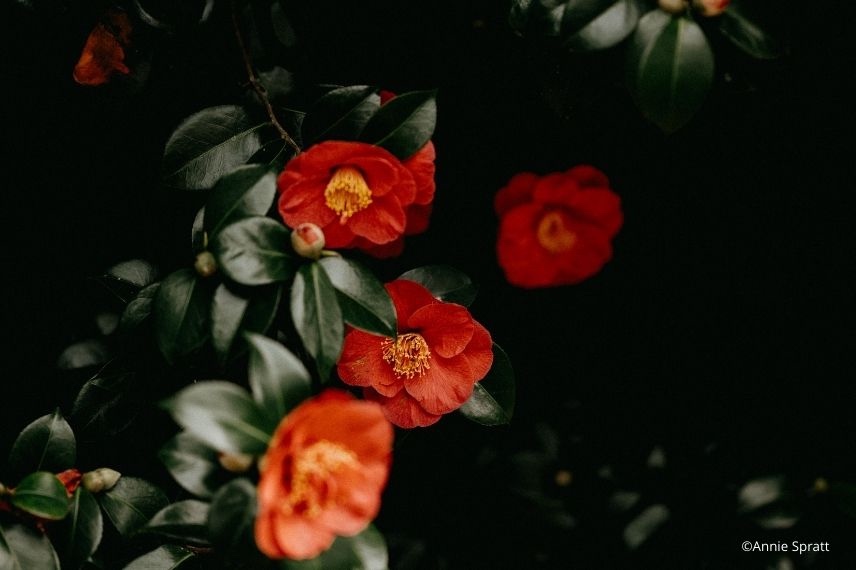
A healthy Camellia displays dark, glossy leaves
Read also
Camellias: planting, pruning and careFungal diseases
Caused by fungi, cryptogamic diseases can also be a source of symptoms on your Camellia.
Leaf Spots and Pestalozzia
Although originating from different causes and exhibiting different symptoms, these two diseases share the same underlying issue. In mild and humid weather, grey spots with brown edges may develop for the first and brown spots for the second. In both cases, collect the infected leaves from the ground, prune the affected branches, and burn them.
Camellia Blight
The leaves become distorted and swell into blisters. Prune the affected branches and burn them. The following year, treat with Bordeaux mixture as a preventive measure.
Sooty Mold
This is a disease induced by an infestation of scale insects. The leaves then turn black. Warm and confined environments promote the appearance of both the insects and the disease. See the next chapter for more explanations on scale insects.
Discover other Camellia
View all →
Available in 2 sizes
Available in 2 sizes
Available in 1 sizes
Available in 2 sizes
Available in 1 sizes
Available in 1 sizes
Available in 2 sizes
Available in 1 sizes

Available in 0 sizes
Available in 2 sizes
Parasitic insects
Some parasitic insects may also visit your Camellias:
Mealybugs
Parasites of confined environments, mealybugs feed on the sap of plants. You may spot them visually, or you might notice the next stage, sooty mould, when your leaves turn black. To learn more, read Virginie’s article on mealybugs.
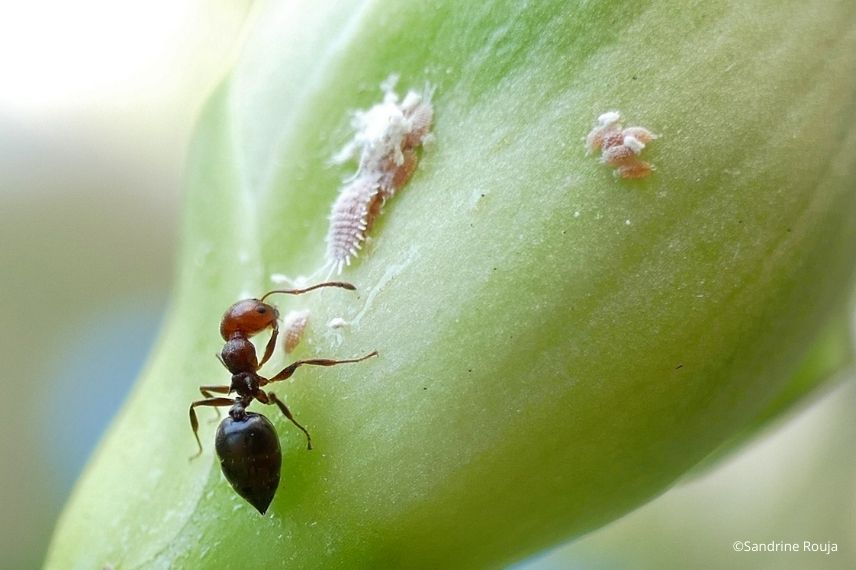
Mealybugs are often difficult to spot
Vine Weevils
These are small beetles that cause quite visible damage: the adults puncture the edges of the leaves. This sign is often how their presence is recognised. The Camellia is probably not their first choice on their path. However, if you suspect yours is affected, read this article by François.
Read also
7 essential camelliasOther symptoms in case of unsuitable climate conditions
The Camellia needs protection from the scorching rays of the sun and requires moisture in the soil to flower. You may therefore observe these symptoms on your Camellia:
Leaf Burn
If the young leaves of your Camellia appear sunburned, it is likely too exposed, especially during the hot hours of the day. Plant it in partial shade, ensuring it is protected between noon and 4 PM.
Falling Buds
Many Camellias form their buds in summer, a time when soil dryness can quickly occur. As soon as the buds appear, be particularly attentive to ensuring your bush benefits from cool soil by maintaining frequent watering, which you should adjust according to climatic conditions. Don’t hesitate to touch the soil in the top few centimetres to check that it is receiving enough water. This advice is even more crucial if your Camellia is planted in a pot.
For winter-flowering Camellias, also remember to water them outside of frost periods, as soon as the temperature rises a bit, to help the buds to open.

Frozen Camellia Bud
- Subscribe!
- Contents
Comments