





























Chicken eggs: why do they come in different colours?
All you need to know about white, brown, blue, green, or speckled chicken eggs...
Contents
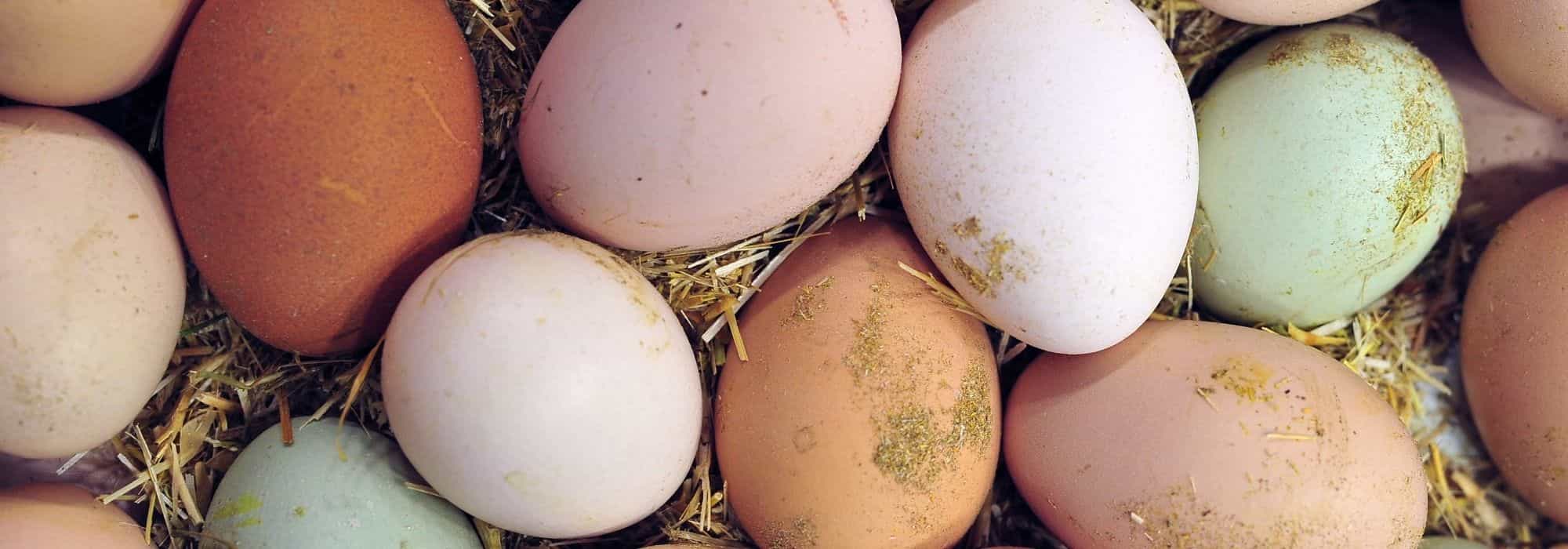
Not all hens are equal when it comes to their eggs. Some are very good layers, while others are a bit less so. Some are good sitters, and others are not quite as reliable. And then, some produce large eggs, while others produce smaller ones… Not to mention the colours of the eggs. In France, commercial eggs are generally more or less beige, while elsewhere, they are often white. When you own hens, you’ll quickly notice that each of your hens lays a different egg. In my daily collection, it’s not uncommon to find a very light beige egg, another speckled with small brown dots, and another sprinkled with various shades… Of course, the colour of an egg depends greatly on the breed of the hen but also on genetics. Let’s explore together how to explain the different colours of hen eggs.

How is an egg made?
At adulthood, a hen produces, in a single ovary, thousands of follicles that actually represent the number of eggs she will lay in her lifetime. Grouped in a string, these ova mature to form the yolk in about ten days. This yolk consists of a cell, the future embryo, and vitellus, the nutrient substance intended to nourish it. Then, about twenty hours before laying, the ovum glides into the oviduct, rotating as it moves. It remains there for approximately an hour during which the white (the endosperm) forms to surround the yolk.
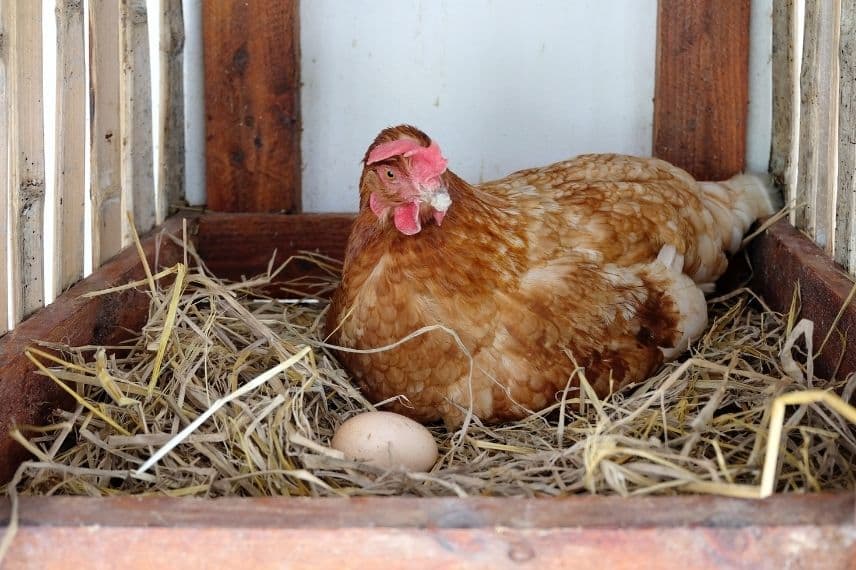
It takes about twenty hours for an egg to form
Just before reaching the uterus, the yolk and white are covered by two shell membranes that protect them from bacteria. Then comes the crucial step of shell formation.
The role of pigments in shell formation
It is in the uterus that the shell forms. This calcification stage, caused by the action of epithelial cells and lasting about twenty hours, occurs at the end of the day and during the night. The shell is actually a shell made of calcium carbonate, particularly strong, which protects the potential embryo.
Once this calcification work is completed, one to two hours before laying, the epithelial cells get to work again to deposit pigmentation on the surface of the shell. It is at this precise moment that the egg takes on its final colour.
Here, science shows its limits as the presence or absence of colour nuances is not really explained. We only know that the substance responsible for the brown colour is called protoporphyrin, and the one that gives the bluish-green hue is biliverdin. But why certain breeds of hens produce eggs of specific colours remains a mystery!
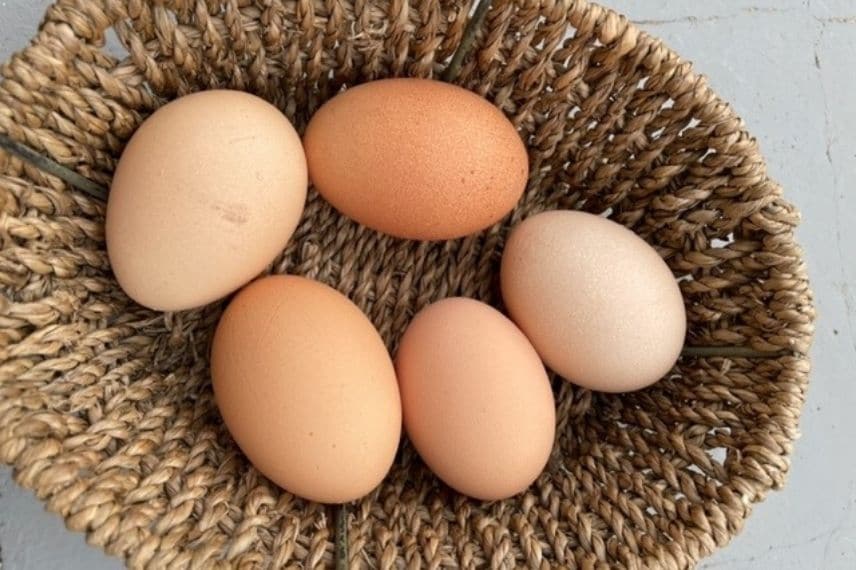
The eggs from my hens (4 Red Hens and one Sussex) display various shades from beige to brown
To complete the process, a thin, slightly greasy film, the cuticle, covers the egg before it is expelled through the cloaca.
Other factors that interfere with egg colour
During a hen’s life, her eggs will also evolve, with the colour being more or less dark. Indeed, several factors can legitimately change their coloration in ways that are barely visible to the naked eye. Starting with the age of the hen. The eggs of a young hen are smaller than those she lays when she reaches adulthood. However, the amount of pigments remains the same. Logically, the eggs of a young hen are darker because the pigments cover a smaller surface area.
Diet can also affect the colour of an egg’s shell, just as an illness or the administration of medical treatment can.
Finally, any kind of stress caused by a predator attack, a change of coop, or the arrival of new layers can also influence the colour of the egg.
A question about chicken breeds as well!
For that reason, it is primarily the breed of the hen, and possibly the cross-breeding between breeds, that determines the colour of an egg. Since each breed carries a gene that will decide this very colour. This is where any hen enthusiast can indulge by multiplying the breeds within their flock to obtain colourful baskets that could almost evoke a painter’s palette.
White Eggs
Most breeds of hens lay white eggs, with some shells being more immaculate than others. For instance, the eggs of the Caussade hen, a bird with beautiful black plumage, or the Crèvecœur hen, a very hardy Norman poultry with a magnificent crest, have shells of a very marked whiteness.
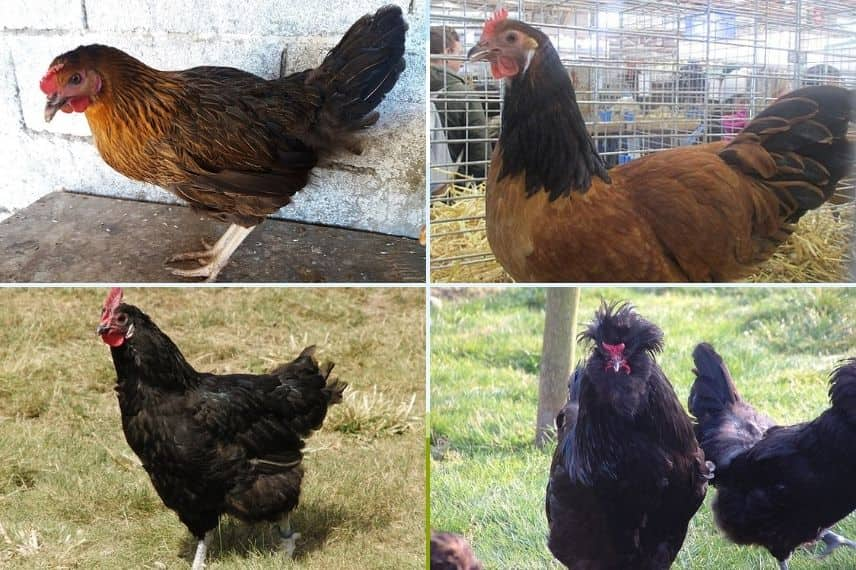
The Harco (©WAV12), Vorwerk (©Thomon), Berbézieux (© Eponimm), and Crèvecœur (©Blaise de Saint-Jouin) hens lay white eggs.
The Ardennaise hen, Gournay, Barbézieux hen, black Berry hen, Alsace hen, Leghorn, Padoue, Hergnies, or Gâtinaise also offer us lovely white eggs. In contrast, those from the Bourbonnaise, Gauloise, Coucou des Flandres, Harco, or Charollaise hens range between white and cream. The Vorwerk’s eggs are yellowish-white.
Beige Eggs
Beige eggs are the most common in French shops. Simply because egg producers primarily raise red hens. This is also the hen most often found in family coops.
However, other breeds of hens also produce eggs of varying shades of beige, such as the Sussex, Coucou de Rennes, Brahma, Orpington, Forez Naked Neck, and Wyandotte. Some of the eggs from these hens may take on almost brown-red hues. In contrast, those from the Ayam Cemani, Géline de Touraine, or Bourbourg can be almost pinkish. The Ayam Cemani, native to the island of Java, is more of an ornamental hen as it only produces 80 eggs per year. In contrast, the Géline de Touraine is an excellent layer with stunning black plumage, just like the Bourbourg, a strong and very hardy farm hen.
Brown Eggs
Extra-red or brown eggs evoke chocolate and sometimes take on coppery, mahogany, or even shiny hues. Several hens lay this type of egg, starting with the Marans, a large hen, good layer, and good brooder, nicknamed the hen with golden eggs, very easy-going as it is very sociable.
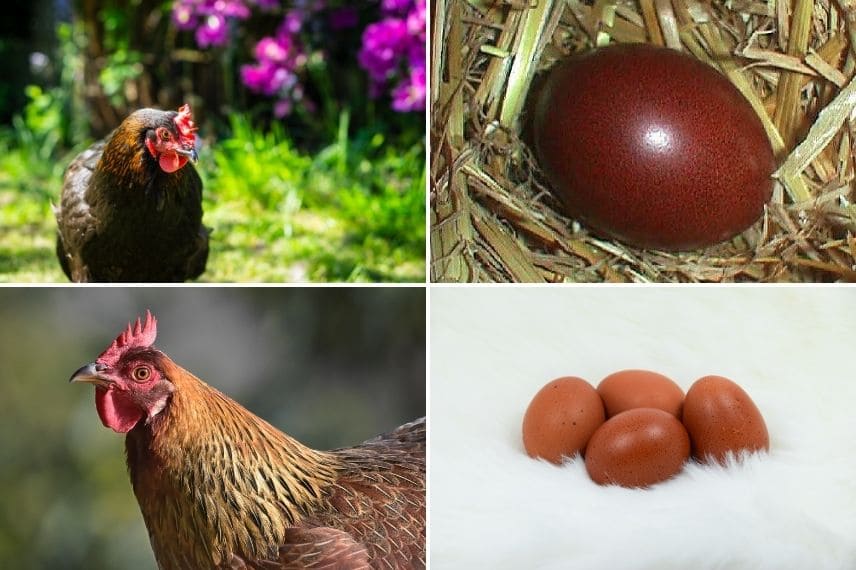
The Marans and Welsummer hens and their respective brown eggs.
Other less common breeds also lay brown eggs. Thus, Penedesenca or Empordanesa, Spanish-origin hens, produce eggs with dark red to brown shells. Just like the Welsummer, a friendly Dutch hen, whose brown eggs are speckled with darker reflections.
Blue to Green Eggs
Some eggs are more pastel and are adorned with soft shades ranging from blue to green. Among the most emblematic hens, the Araucana stands out. This remarkable hen, native to Chile, lays blue to green eggs coloured by a particular pigment. Low in cholesterol, these eggs also have a very hard shell. This hen is also unique in its appearance: no wattles, no tail, fluffy feathers.
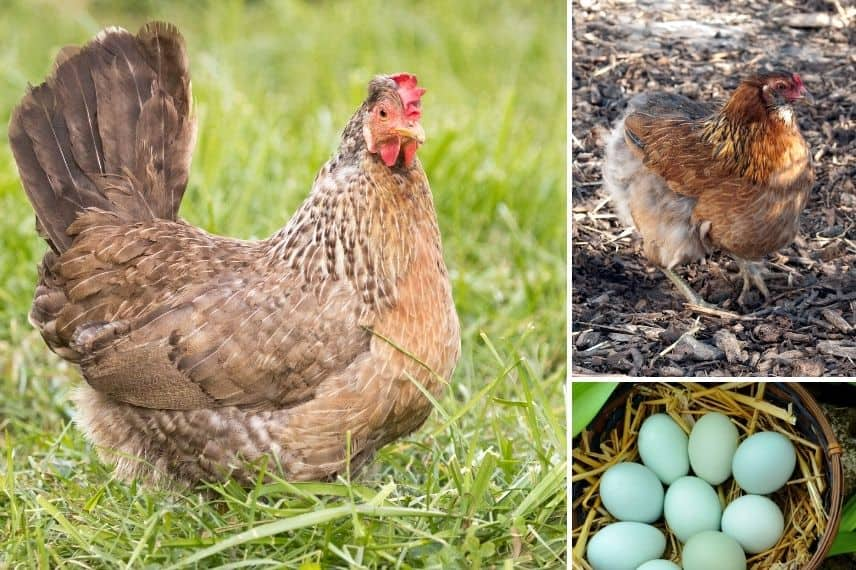
The Cream Legbar and Araucana hens lay eggs that range in colour from blue to green.
The Ameraucana is a direct descendant of the Araucana, developed in the United States in the 1970s. This docile and gentle hen lays light blue eggs. Unlike its ancestor, it has a tail and wattles.
To stay in the blue theme, let’s meet the Cream Legbar, a hen created by the English. Easy to raise, a very good layer, hardy, it has a small crest on its head.
Of a completely different kind, the Azure hen also lays blue eggs with turquoise hues. Very elegant, it sports a rather unique silver-white plumage. Its eggs are large and have a particularly strong shell.
Finally, the Emerald hen, a close relative of the Araucana, lays eggs that are greener than blue and of medium size. Its plumage is white, and it also lacks a tail.
Multicoloured Eggs
To finish our beautiful display of eggs, let’s take a look at the eggs of the Easter Egger or Olive Egger, resulting from a cross-breeding of different breeds, which can lay olive, sage, beige, or even dark brown eggs.
- Subscribe!
- Contents
Comments