











Choosing a mangave for your garden or a pot
Buying guide to find the right Mangave
Contents
Mangaves are succulent, bold and distinctive plants, with their fleshy, decorative leaves arranged in a rosette. Native to the Americas, they originate from a cross between Manfreda and Agaves. They bear a rosette of evergreen foliage, soft and supple, with speckled patterns, adding a touch of whimsy to a garden or balcony. They come in a range of colours, from purple to red, and their leaves, if dentate, are only mildly spiny. They come in different sizes, ranging from 10 to 50 cm for the height of the foliage, and from 1.5 metres to 2 metres for the height of flowering. They are not very hardy, withstanding down to −6.5°C, and are generally grown in pots so that they can be brought indoors to shelter from frost and cold. They can, however, be planted in the ground in regions with a mild climate, in a dry or Mediterranean-style garden. They prefer full sun, in a fairly dry, well-drained substrate that can be sandy or stony. Drought-tolerant, they require little maintenance. Discover our buying guide to choose a Mangave based on various criteria and select the one that best suits you.

Choosing a Mangave according to its foliage
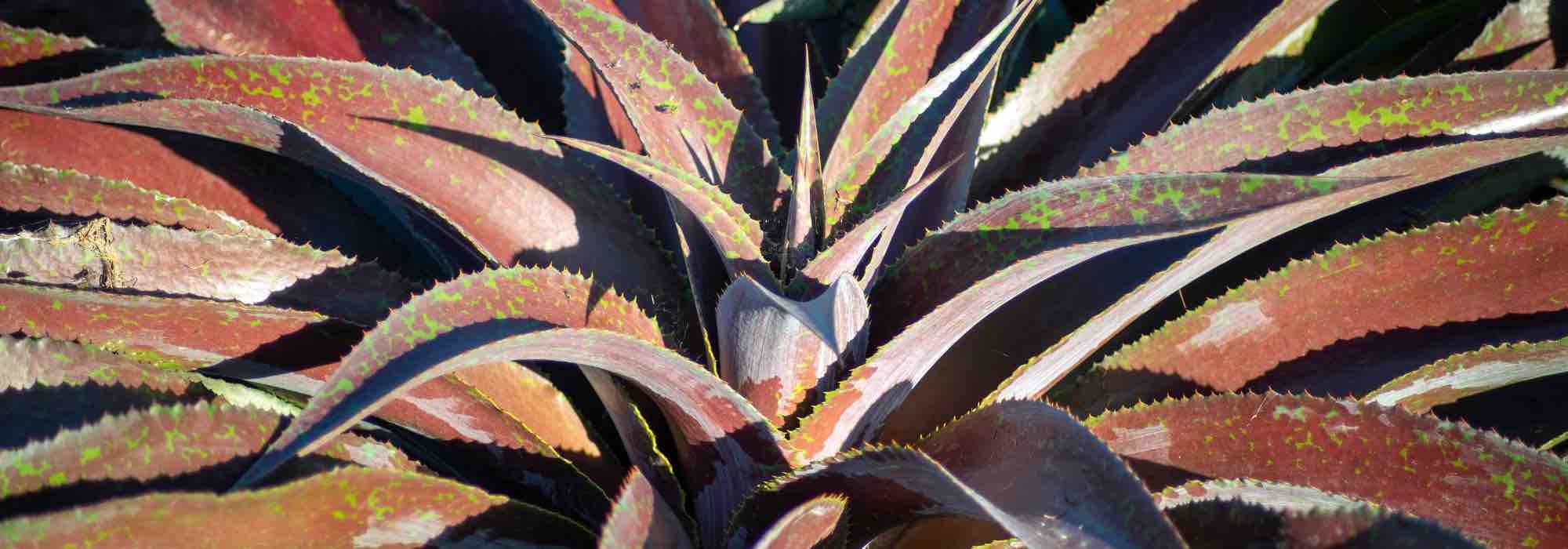
With a highly graphic appearance, mangaves form rosettes of fleshy, elongated and pointed leaves, resembling those of agaves. Arranged symmetrically, they are slightly dentate along the edges, arched, and have a trailing habit. The leaves come in a variety of shapes and colours.
They can be thin and narrow as with the Mangave Moonglow, or wider as with the Mangave Silver Fox. The most distinctive are undulating, such as the Mangave Chocolate Chips.
Mangave leaves tend to have rather dark and unusual colours. They are generally green with brown or purple speckles, but can take grey-green or red tones. Each has distinctive characteristics that give it its own unique charm.
- The Mangave Pineapple Express offers mint-green foliage punctuated with burgundy, while the Mangave Moonglow bears a rosette of leaves mottled with dark grey-purple on a bluish-grey background. Even more striking, the Mangave Chocolate Chips produces leaves of a blue-green hue heavily mottled with dark brown, even black.
- The Mangave Redwing has purplish-pink foliage on an acid green background, while the Mangave Bloodspot displays a green-grey bluish hue mottled with numerous red-to-purple spots. Its leaves bear small decorative red spines that are not prickly.
- The Mangave Purple Passion features leaves coloured bronze-green in winter, which change colour under full sun, becoming green-brown, purple and then aubergine.
- The Mangave Mission to Mars is composed of long, broad, trough-shaped leaves. They are glossy and intensely mottled with brown on a green background, turning reddish-purple in the sun.
- The Mangave Inkblot has bluish-green-grey foliage with purple spots that intensify when exposed to sunlight.
- The Mangave Silver Fox bears a plump, luminous silvery-grey rosette, coated with a thick waxy coating.
- The Mangave Lavender Lady features almond-green leaves finely dusted with pink that turn to dark grey.
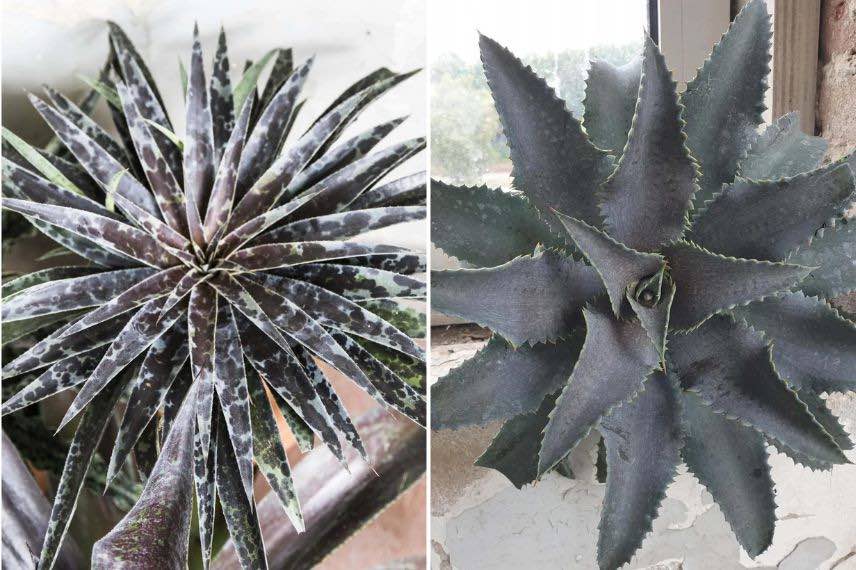
Two mangaves with distinctly different foliage: ‘Moonglow’ and ‘Silver Fox’
Read also
Pairing ideas with MangaveChoose a Mangave according to its height
You can choose a Mangave based on its size at maturity. There are dwarf Mangaves and others more imposing, their height ranging from 10 cm to 50 cm and their width from 20 to 80 cm in diameter.
Height from 10 cm to 20 cm
The Mangave ‘Chocolate Chips‘ is the smallest, reaching a height of 10 cm, but grows to a width of 60 cm.
The Mangave ‘Mangave Lavender Lady‘ climbs to 20 cm with a spread of 30 cm.
You can also opt for 25 cm-high plants, such as the Mangave Pineapple Express which offers a width of 40 cm or the Mangave Moonglow which can spread to 70 cm.
Height from 30 cm to 50 cm
Certain Mangaves grow up to 30 cm high, such as the Mangave Silver Fox with a width of 40 cm or up to 35 cm high, like the Mangave Bloodspot with a spread of 35 cm.
Among the tallest, you can choose The Mangave ‘Purple Passion‘ which grows to 50 cm high with a spread of 60 cm.
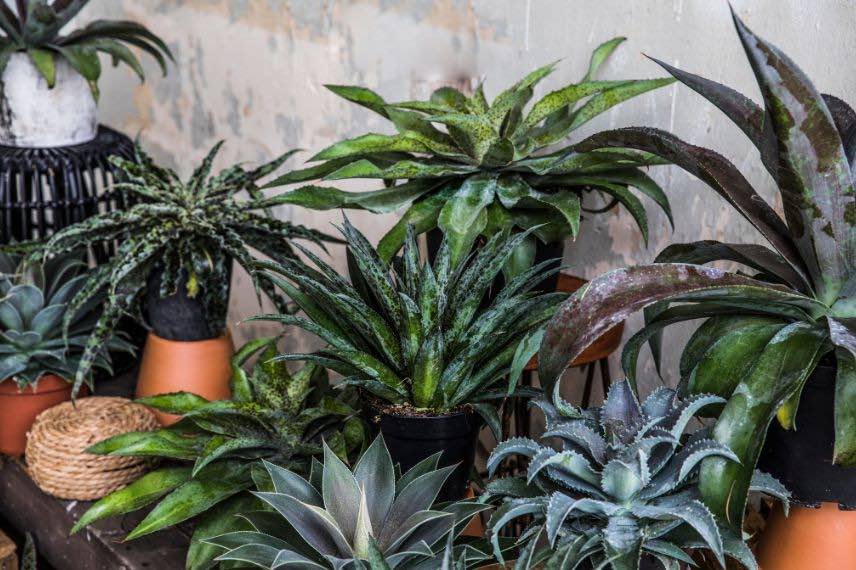
Mangaves remain small plants, ranging from 10 cm for the smallest to 50 cm in height for the largest.
Choose a Mangave according to its flowers
Mangaves bloom after a few years of cultivation, and if the climate is sufficiently mild, for example if you live by the sea. Flowering takes place between August and October. From a rosette of leaves, a tall, thick flowering stalk emerges, which becomes adorned with delicate white star-shaped flowers, gathered into a panicle. The inflorescence can reach a height of 1.5–2 m.
For a more unusual flowering, select mangave ‘Chocolate Chips’ which offers spikes of green, airy flowers from which curious black filaments emerge.
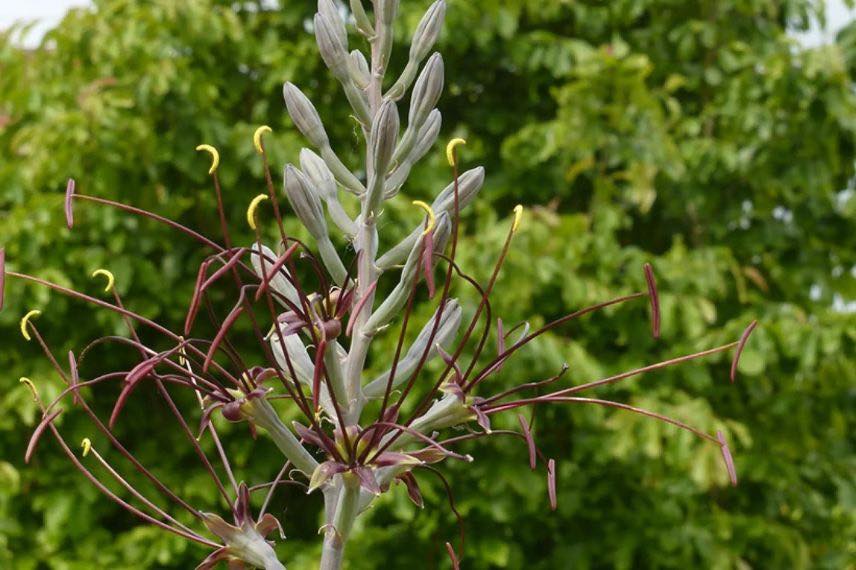
Mangave flower ‘Chocolate Chips’
Read also
Growing mangaves in potsChoosing a mangave based on growth
Mangaves grow a little faster than agaves. They inherited this quality thanks to their cross-breeding with Manfreda.
If you are looking for a Mangave with rapid growth, you can opt for the small Mangave ‘Chocolate Chips’ which reaches a height of 10 cm and a width of 60 cm, or the Mangave ‘Purple Passion’, which grows up to 50 cm tall.
Choosing a Mangave according to your use
Mangaves are planted in a dry, very well-drained substrate, even sandy or stony. They are not very hardy and tolerate frosts down to -6.5°C. They grow in full sun, but if the sun is too intense, they prefer to be placed in partial shade.
In a region with a mild climate and no frost, such as the Côte d’Azur or the Breton coast, Mangaves can be planted directly in the garden.
You can create a dry garden and accompany them with cacti and other plants accustomed to desert and arid climates.
In a colder region, you will need to plant Mangaves in a pot and grow them on a balcony or terrace. Pot culture allows them to be brought indoors easily in winter.
To learn more, discover our full range of Mangaves as well as our advice sheet on the cultivation and planting of Mangave.
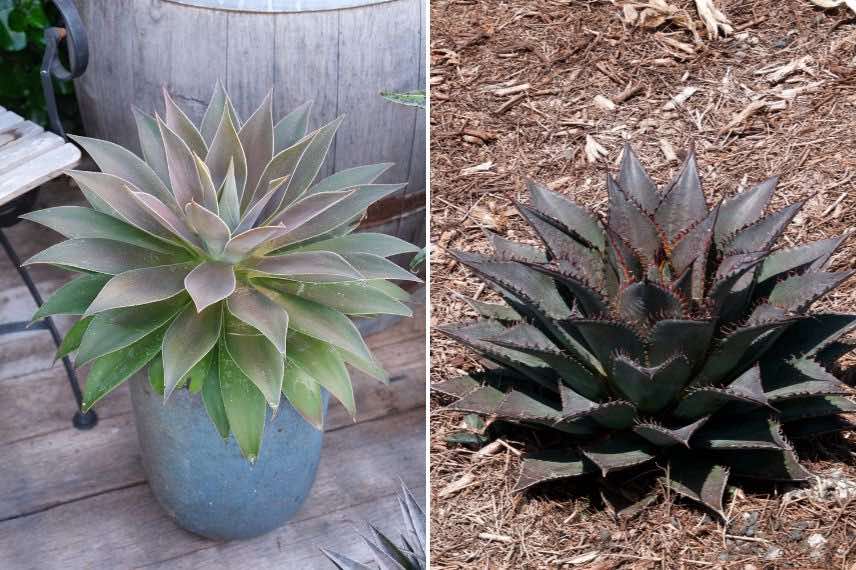
Mangaves are often planted in pots, which they adorn in the most beautiful way. In the milder regions, they can also be planted in the ground
- Subscribe!
- Contents
Comments