





























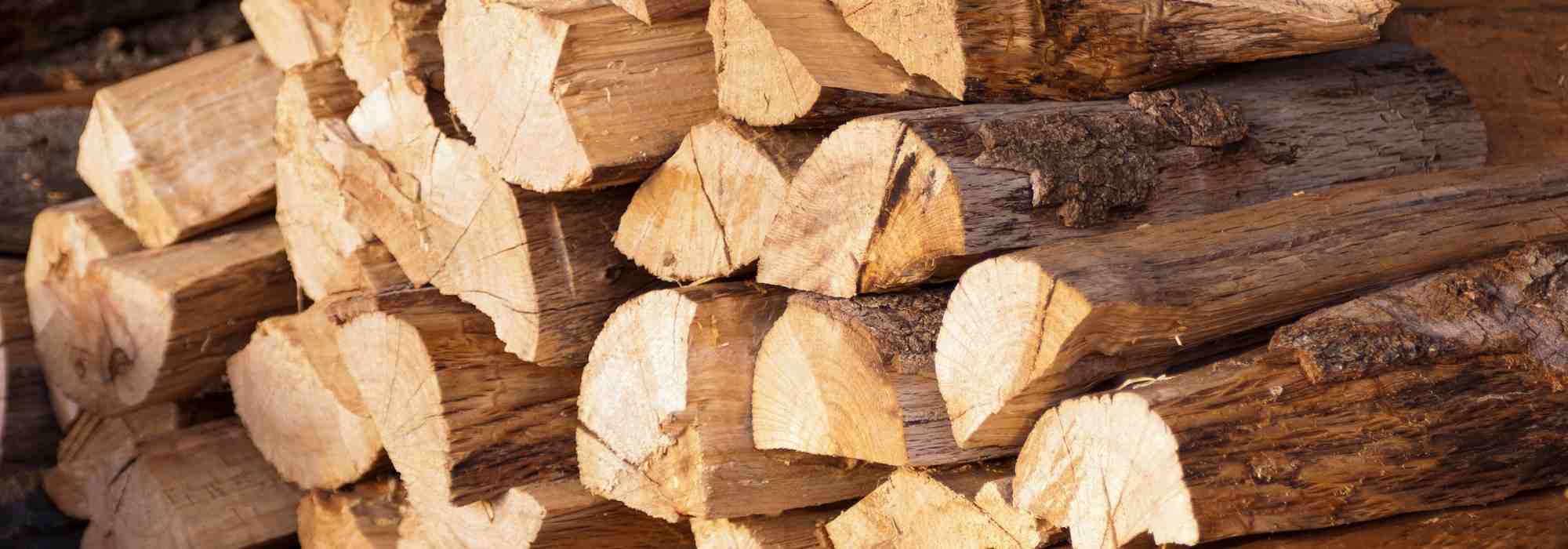
Choosing the right firewood
Choosing, Splitting, and Storing Your Firewood
Contents
Heating with wood can be an economical and ecological alternative despite the poor reputation of combustion. The carbon footprint is neutral, as heating with wood allows the use of renewable energy, limits reliance on fossil fuels, and thus helps combat climate change. And let’s admit, the atmosphere of a wood fire is unmatched for lifting spirits during the long winter months.
Discover our tips for choosing your firewood wisely.
Experience the pleasures of fireplace fires… by choosing the best firewood!
Choosing quality wood
Before buying or going to collect firewood for free, it is essential to gather information about the species offered as well as its general condition.
These two parameters are extremely important to know, as not all wood species are equal.
Moreover, even if the species is suitable for burning, how the wood has been stored before you collect it is very important. Wood that has spent too long in the forest and has been attacked by fungi will not have the same calorific value as perfectly dried wood.
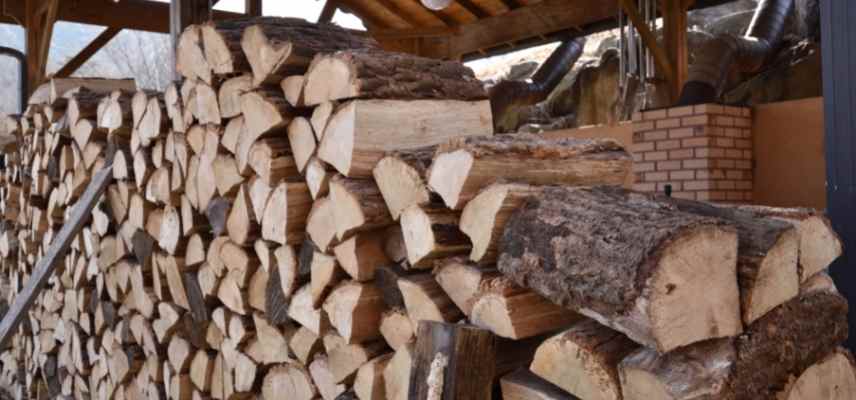
Wood species, quality, and storage time should be considered in your choice of firewood
Choosing the Species
This is a determining factor for ensuring a fire provides sustained heat. Hard and dense wood species should be prioritised: oak, hornbeam, beech, chestnut, elm, olive, and maple offer very high efficiency and sustained heat.
It is worth noting that wood grown at altitude will always be denser and harder than its lowland counterparts. These trees grow much more slowly and have closer tree rings, which gives the wood great density.
To a lesser extent, other tree species can also be suitable. For example: black locust, cultivated or wild fruit trees, cherry, service tree, rowan, and walnut.
Other species with very low density and soft wood are of little interest: lime, walnut, alder, poplar, or plane tree do not constitute quality fuel for achieving a sustained fire.
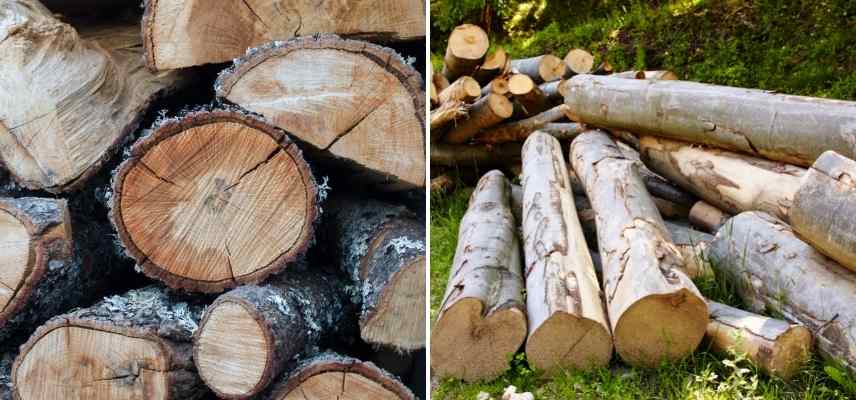 Oak and beech are among the most calorific woods
The Condition of the Wood
In addition to the species, the condition of the wood is important. Check that it is not lightweight (loss of carbon caused by fungal attack) or of a suspicious colour.
This would diminish the heating qualities of the wood even for a noble species.
Read also
How to split wood?Woods to Avoid
A simple rule to remember regarding woods not to use in a fireplace: do not burn resinous wood.
Conifers that produce resin, such as spruce, fir, pine, cedar, cypress, or larch, should be avoided. These woods are low-density and will pose a danger to your fireplace by clogging it with their resins.
However, you can effectively start a fire with fruit crates made of resinous wood or small bundles, as long as they are only used to ignite the flame.
Woods that are not dry and are leaking water from their ends must be removed immediately! Burning wet wood is extremely harmful to your health as it releases toxic chemicals.
Using chestnut wood can pose a risk, as it tends to explode during combustion.
Should it be reminded that treated, varnished, painted, or glued woods with resins are to be avoided for your health and that of the environment?
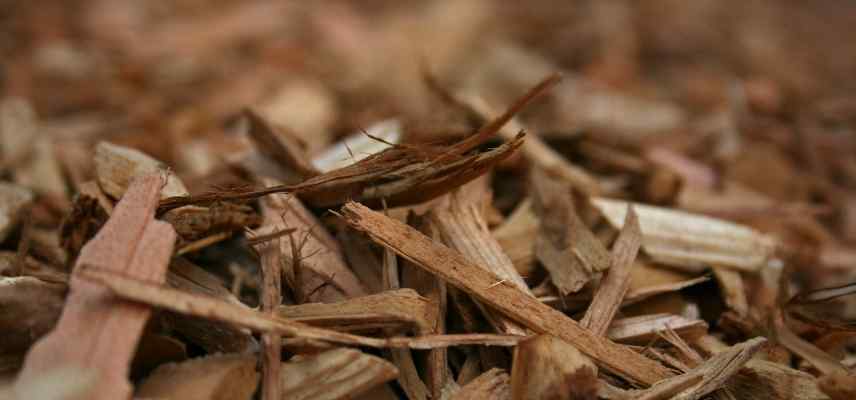
Only for starting the fire, the small wood may contain some resinous types
Other tips
It is always better to buy wood either standing or already split. It is more “honest” to assess the true volume being offered. Stacks of wood contain too many gaps when the logs are in the form of rounds. If you buy wood in this form, you risk purchasing more air than wood…
- Subscribe!
- Contents
Comments