





























Choosing the right season to plant perennials
Seasonal guide to successful planting
Contents
When it comes to creating a flowering border, planting perennials proves to be a wise choice for your garden. Indeed, perennial plants are renowned for their ability to rebloom year after year, bringing colour and vitality to any green space. However, to ensure spectacular flowering and healthy growth, a key factor to consider is the best time to plant. Whether you plan to plant them in the ground or in pots, discover our tips for planting perennials at the right time, taking into account the weather conditions, the season and the type of perennials.

The best time to plant in the ground
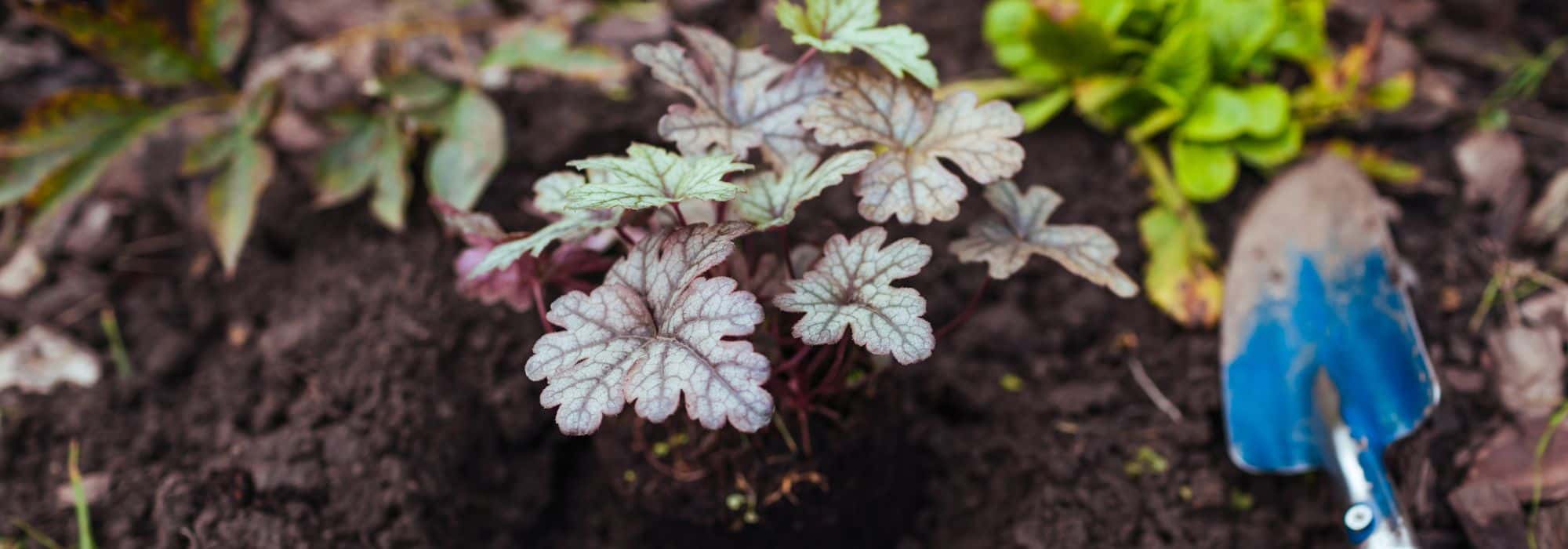
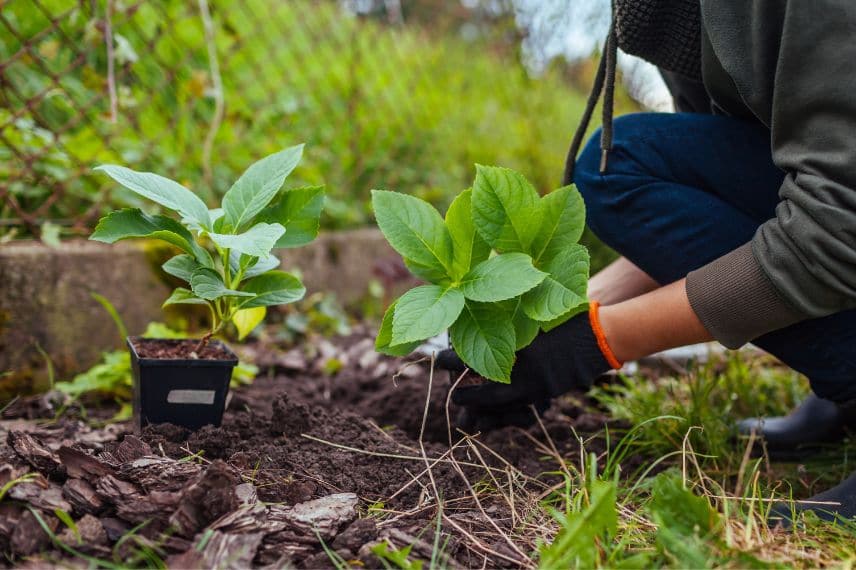
The vast majority of perennials we buy are intended to be planted in the ground in the garden. Choosing the planting season is important to ensure the plant establishes itself, develops a healthy root system and grows well.
Spring
Spring is generally the best time to plant most perennials. The soil begins to warm up, which facilitates rooting. In addition, spring rains and still mild temperatures provide moist soil and help with rooting. Most perennials enter a period of active growth during this season, making establishment and development easier. It is also the season with the widest choice of varieties in nurseries.
However, you will need to wait until the risk of late frost has passed in cold regions. In the Mediterranean region, spring can be dry, so you should be vigilant with watering, or opt for autumn planting.
Autumn
Autumn is also a good choice, especially in regions where winters are not too harsh. Similarly for deciduous perennials that gradually go into dormancy during this season, which reduces planting stress. The soil remains relatively warm and moist thanks to seasonal rains, which allows for gentle planting.
Moreover, planting in autumn allows perennials to develop their roots during the cooler months, preparing them to push on vigorously in the following spring, often resulting in abundant flowering.
This is also the right time to plant bare-root perennials, bare-root roses and bare-root shrubs, whose purchase is typically cheaper than in spring.
You will then need to be mindful of winter frost during the first winter, particularly in regions with harsh winters. In this case, plan winter protection (frost cloth, mulch, etc.) to shelter the young plants, or opt for spring planting.
Winter
In regions with mild winters, planting can extend through winter, from December to March, always outside of a frost period. Planting should be followed by 4 to 5 days without frosts and a good organic mulch (straw, fallen leaves, etc.) to insulate the roots from the cold.
The best time to pot up young plants
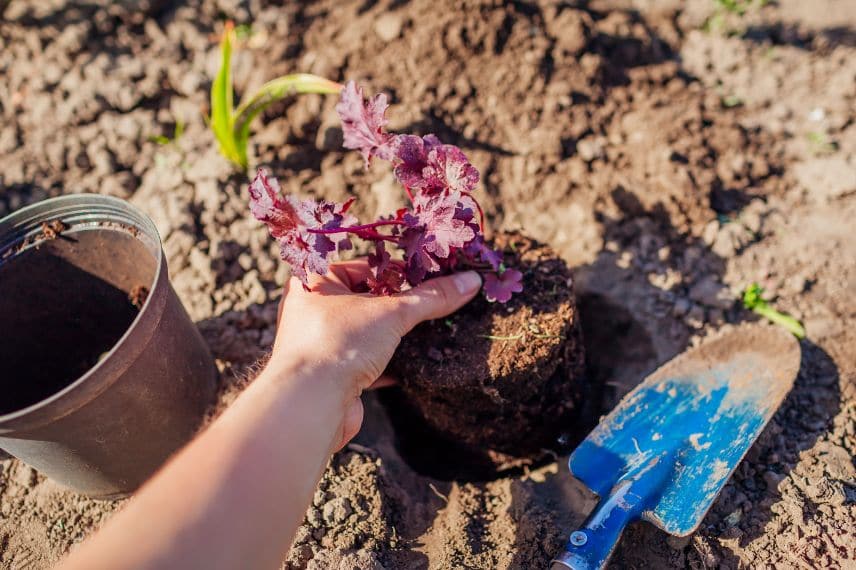
Pot planting offers additional flexibility, often allowing you to sidestep the seasonal restrictions typical of planting in the ground.
Spring and autumn
For pot or container planting, spring and autumn are the two best periods. As with planting in the ground, the mild temperatures and ambient humidity of these two seasons enable gentle hardening and robust root development.
Summer
Perennials can also be planted in summer in pots, provided the gardener is thorough with watering. Indeed, the growing medium dries out more quickly in this season. Opt for watering early in the morning or late in the evening, or invest in an automatic watering system. Also consider providing protection against extreme temperatures for your young perennials, or move your pots to partial shade in Mediterranean regions. However, avoid repotting during heatwaves! The water stress and heat can take their toll on your cherished perennials.
Winter
Winter planting is not advised for perennials destined for pots on balconies or terraces. The culprit being the cold temperatures and the risk of frost. But planting remains possible in regions with mild winters or if you place your pots in a greenhouse or conservatory. Indeed, bear in mind that a plant in a pot is much more sensitive to cold than one in the ground, especially if it is still young.
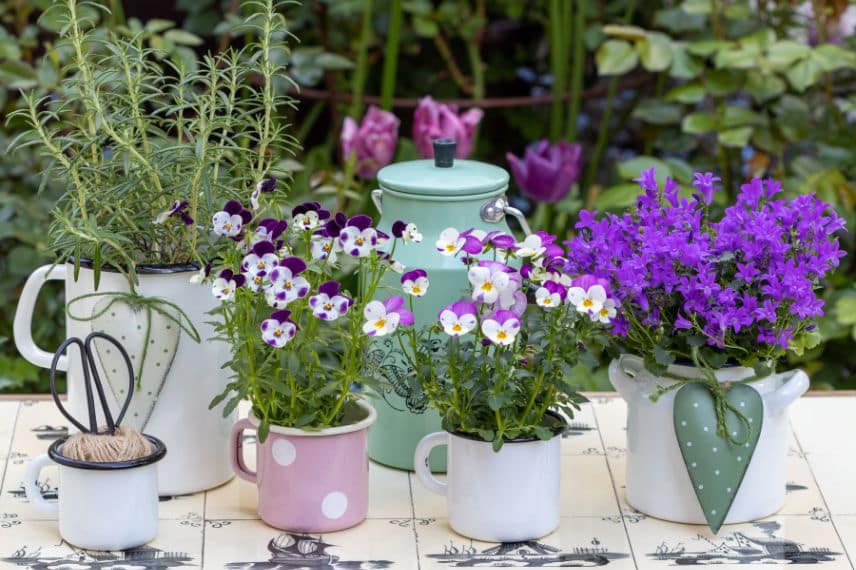
Rosemary, campanulas and violas.
Extreme weather conditions to avoid
Avoid periods of intense frost
Frost and temperatures that are too low can damage young plants. Therefore, it is essential to wait until the frost risk has passed in spring or to plant sufficiently early in autumn so that the plants establish themselves before winter.
Summer heatwaves and drought, periods of risk
Planting perennials during a drought or a summer heatwave can expose them to significant water stress. High temperatures accelerate water evaporation and can cause thermal shock, especially if the plants are not yet well established. In this case, it is advisable to postpone planting to a more temperate period, such as autumn.
Care during periods of torrential rain
Perennials need water to develop, but periods of heavy rain, particularly in spring or autumn, can saturate the soil. This is particularly problematic in regions with clay soils, which can lead to poor soil aeration and promote root rot.
Avoid strong winds
During storms or in autumn, strong winds, particularly in coastal or mountainous regions, can not only damage perennials but also quickly dry the soil, thereby increasing their water needs. In regions such as Brittany, it is preferable to plant in late winter or in spring to avoid autumn storms.
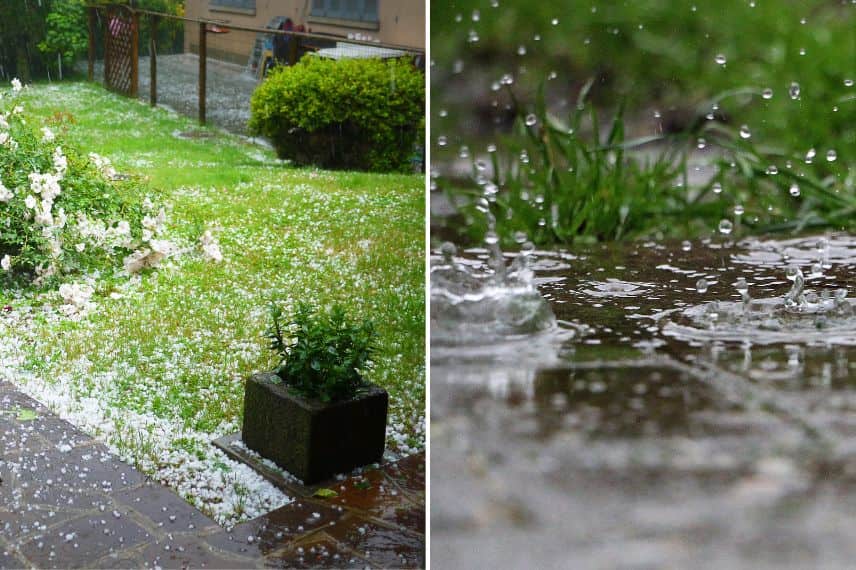
Heavy hail and rain do not mix well with planting.
Read also
10 ways to naturally kill a plant!Practical tips for planting perennials
To plant your perennials successfully, here are some practical tips:
1- Choose a plant suited to your climate region.
2- Plant at the right time, choosing the period suitable for your local climate and according to the specifics of each plant (these are listed on the plant page).
3- Choose a site and exposure suited to the needs of your perennial.
4- Improve soil quality before planting, notably drainage and soil fertility. In a pot with drainage holes, use clay balls at the bottom and a quality potting compost.
5- Water regularly after planting, adjusting according to natural rainfall.
6- Add mulch to help maintain soil moisture and protect the roots in winter.
Now it’s your turn to garden!
- Subscribe!
- Contents
Comments