





























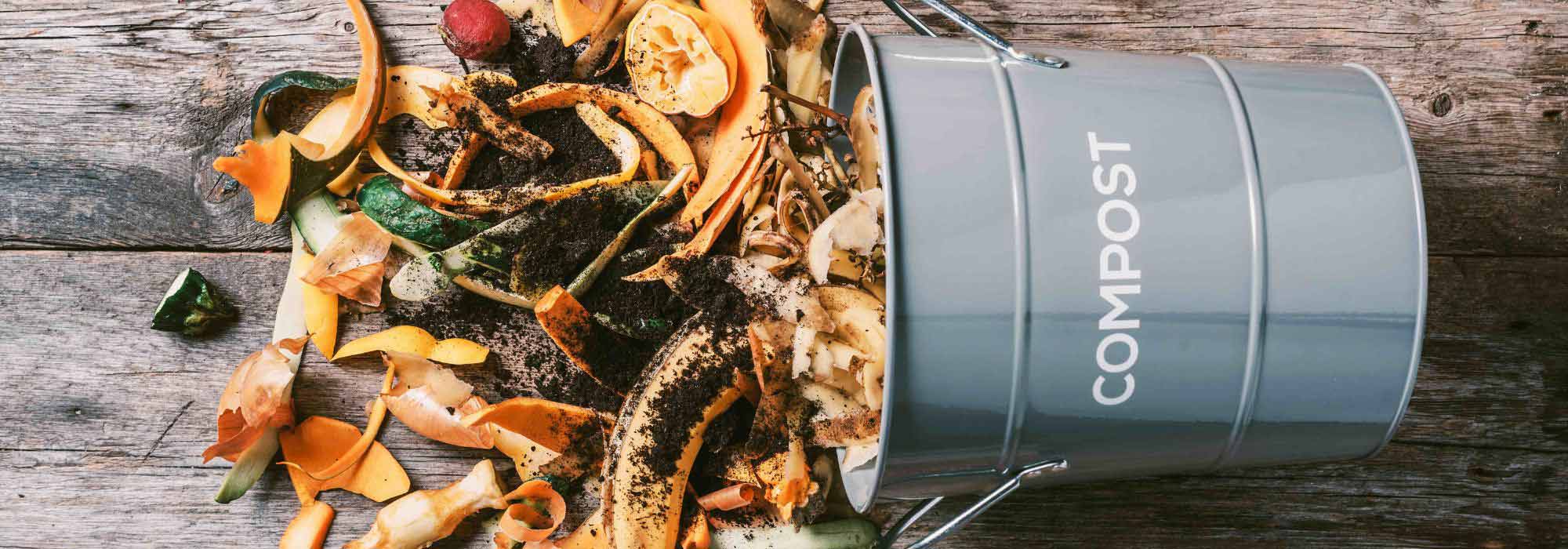
Compost tea: recipe and uses for the garden
A liquid with numerous benefits for soil and plants
Contents
If we are well acquainted with compost and its benefits, compost tea is considerably less popular. However, it is said to have multiple virtues for both soil and plants.
This mixture was developed in the United States by Dr Elaine Ingham, whose pioneering research makes her one of the leading soil biologists today. Compost tea is derived from an extraction and fermentation process that multiplies the microorganisms naturally present in compost.
Let’s explore the benefits of compost tea, how to make it yourself, and how to use it effectively to boost our plants.
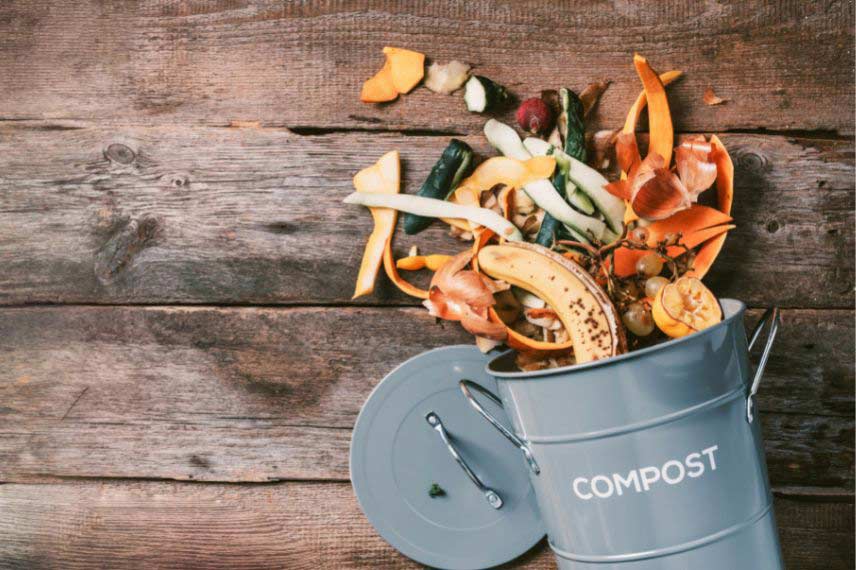

What is compost tea or compost juice?
Compost tea has numerous benefits. It can indeed:
- enrich and revitalise soils with micro-organisms;
- improve soil structure by stimulating microbial life and activating the decomposition of plant residues;
- nourish plants, helping them to better assimilate and retain nutrients, thus enhancing their growth and vigour;
- prevent diseases by strengthening the plants’ immune system and competing with pathogenic micro-organisms.
Compost tea thus influences both the rhizosphere (the underground part of plants including roots and associated micro-organisms) and the phyllosphere (the aerial parts above the soil and associated micro-organisms). A promising programme indeed!
But what is it concretely? To put it simply, it is a maceration of compost in water. Compost tea is somewhat of a mixed form between:
- a plant manure, as it is a fermented extract derived from soaking in water;
- a kefir, this drink whose micro-organisms are fed by sugar, thus triggering fermentation and their multiplication.
This liquid, extracted from compost made of organic materials, will be oxygenated to allow it to develop all its micro-organisms (bacteria, fungi, protozoa, nematodes) and nutrients. This is known as aerobic fermentation. Its full name is TCO (oxygenated compost tea) or JCAA (active aeration compost juice). This addition of oxygen also prevents the development of unpleasant odours.
There is an anaerobic version of compost tea (without oxygen), but this will mainly have a fertilising effect due to its richness in nutrients. It will not contain the famous beneficial micro-organisms.
For some gardeners, compost tea represents a true alternative to fertilisers, chemical fertilisers, as well as fungicides or pesticides. It is a valuable third element in the garden, complementing traditional compost and mulching, to optimise and balance soil life.
It is worth noting that compost tea is different from leachate or “worm tea”, the liquid fertiliser derived from the last layer of a worm composter. TCO is indeed less rich in nutrients but much higher in micro-organisms.
Read also
Succeeding with composting in 5 StepsHow to make compost tea?
It is entirely possible to buy ready-made compost tea online or in specialist shops. However, you can also make your own compost tea (TCO). For this, you will need some equipment, as well as likely a few “test” experiences to find the right balance!
Equipment
Always use clean instruments and equipment. Ensure they are thoroughly cleaned and rinsed immediately after use.
Our advice: if you are trying this for the first time, opt for making a small quantity of TCO.
For approximately 10 litres of tea, prepare the following items:
- A clean, waterproof container of at least 12 litres: bucket, tub, basin, bin. If it has a tap, the final filtration step will be easier, but it is not essential.
- Rainwater, spring water, or dechlorinated water (let it sit for 24 hours). It should be at a temperature between 18 and 20 °C. Plan for about 8 litres of water for 10 litres of compost tea.
- A thermometer or immersion heater to check the temperature.
- A filter of about 400 microns, which retains particles but allows microorganisms to pass through. This can be a cloth, a canvas or nylon bag, an insect net, a cheesecloth, or tights.
- An aquarium or pond aerator for oxygenation.
- An air pump or compressor.
- 30 g of pure cane molasses or black beet molasses to nourish and develop the microorganisms.
- 250 g of balanced, mature, well-decomposed organic matter compost (at least 6 months old and without unpleasant odours). It can come from a standard household compost or vermicompost.
The quantities are indicative: they can be adjusted according to the density and composition of the compost.
Note that there are complete equipment kits for making compost tea, available online from around a hundred euros.
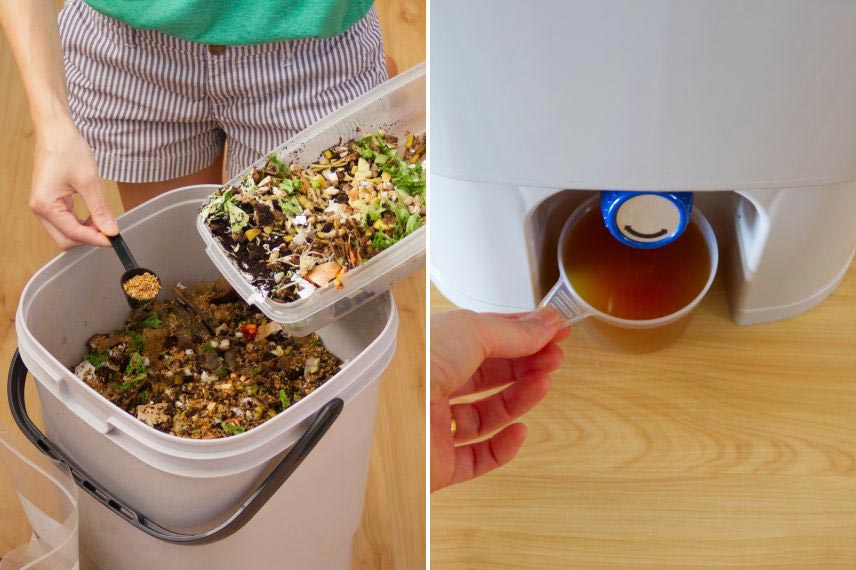
It is possible to buy composters that make it easy to produce compost tea
Recipe
- Install the air aerator in the container, then fill with water.
- Add the molasses and mix.
- Add the compost, mix again vigorously to break up the material. Some recipes recommend placing the compost directly in the filter, like a giant tea bag. This method is more convenient for filtering but less so for regularly stirring the mixture.
- Turn on the aerator and pump and let it ferment out of direct sunlight. Oxygenation will help develop the “good” microorganisms. In the absence of oxygen, however, pathogenic microorganisms that may be harmful can multiply, which is why this step requires careful monitoring.
- Stir the mixture 1 to 2 times a day, reaching the bottom of the container. Also check that the temperature remains between 18 and 20 °C.
- Within 24 to 48 hours, the formation of foamy bubbles on the surface will indicate that fermentation is underway. The lower the outside temperature, the longer the stirring duration will be. The mixture is ready when it has taken on a beautiful amber colour. Your oxygenated compost tea should not emit unpleasant odours. Like compost, it should smell of fresh earth and humus. If your tea does not smell good, it has likely gone into putrefaction. We advise against using it to avoid transmitting pathogens to your crops and soil.
- Turn off the aerator and filter the mixture into a new container.
To further enhance the compost tea, some professionals or gardeners enrich it with nutrients and additives: seaweed extracts like spirulina, humic acids, trace elements, dried plants, fruit pulps, or soluble bacteria. These supplements help optimise certain properties of the compost juice. You can thus obtain a bacterial tea, a fungal tea (to better degrade organic matter and combat cryptogamic diseases, for example), or a protozoan tea (rich in nematodes, natural predators of certain pests).
Storage
Compost tea does not store well: it should be used quickly, ideally within 4 to 6 hours, to benefit from the living microorganisms. The quicker it is used, the more effective and high-quality it will be.
If kept cool and stirred regularly, it can last a few extra hours, but generally not more than one or two days, depending on the sources.
How to use compost tea?
Compost tea can be used in both professional crops (market gardening, forests, etc.) and in private gardens. It is suitable for vegetable gardens, ornamental gardens, and even houseplants. It is, of course, fully compatible with organic farming practices.
To avoid any risks, we recommend always using it diluted: about ¼ of a cup of compost to ¾ of rainwater or dechlorinated water (to avoid killing the microorganisms we have carefully extracted and multiplied!).
Compost tea is generally used in spring, when most plants begin to grow, then every 1 to 2 months during flowering and fruiting. It can be used until autumn.
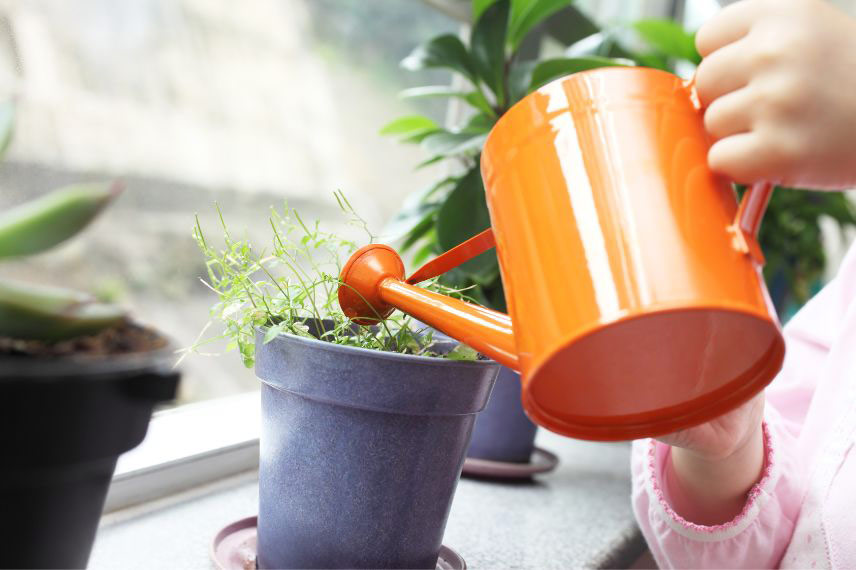
To spray
Oxygenated and well-filtered compost juice can be used as a foliar spray, that is, on the leaves of plants. Apply early in the morning or late in the day, when the sun’s rays are less likely to cause burns.
Compost tea can also be used as a preventive measure against diseases and pests, sprayed on all aerial parts of the plant (stems, leaves, and undersides). The application should be done at a frequency of once a week for about 3 weeks during high-risk periods. Some professionals use it, for example, to protect sensitive crops from aphid attacks or tomato plants from grey mould. It is also believed to have beneficial effects in preventing other fungal diseases, such as downy mildew, rust, as well as against pests like chafer larvae, weevils, or cutworms.
As a watering solution
Compost tea can be applied directly to the soil as a watering solution.
This can be done:
- before planting to enrich the soil;
- at the time of sowing;
- alongside crops, to stimulate soil life and young plants.
Water early or late in the day, out of direct sunlight. Avoid any application during dry spells or heatwaves, when plants cannot properly absorb nutrients.
And of course, avoid any use of fungicides at the same time.
If you start making compost tea, feel free to share your feedback with us!
- Subscribe!
- Contents
![[plant_name] : Comfrey
To make compost tea, fill a bucket with water and add a handful of [plant_name] leaves. Let it steep for a few days, stirring occasionally. Strain the liquid and dilute it with water before using it to water your plants. Compost tea is a great natural fertilizer that will help your plants thrive!](https://en.promessedefleurs.eu/blogwp/wp-content/uploads/2022/12/The-de-compost-recette-et-utilisation-au-jardin.png "[plant_article title=\"Compost Tea Recipe and Garden Use\"]
Compost tea is a natural and nutrient-rich fertilizer that can greatly benefit your garden plants. To make your own compost tea, follow these steps:
1. **Ingredients**:
- 1 bucket of water
- 1 shovel of {glossary}compost
- 1 tablespoon of molasses
2. **Preparation**:
- Fill a bucket with water and add the compost.
- Stir well and let it sit for 24 hours.
- After 24 hours, add the molasses and stir again.
3. **Application**:
- Strain the mixture to remove any solid particles.
- Use the liquid to water your plants, making sure to cover both the leaves and the soil.
- Apply the compost tea in the early morning or late afternoon for best results.
Compost tea is a fantastic way to boost the health of your plants and improve soil fertility. Try making your own and see the difference it can make in your garden!")
Comments