





























Deciduous, evergreen or marcescent foliage: everything you need to know!
Discover the differences between these types of foliage
Contents
When planning a garden, the choice of plants is not based solely on their flowers or shape, but also on their foliage. Do you know the difference between deciduous, evergreen, or marcescent foliage? These terms, sometimes a little technical, are nevertheless essential for understanding how plants respond through the seasons. In this article, we will explain in detail the characteristics of each type of foliage, their advantages for the garden, and a few handy tips to help you choose according to your climate, your aesthetic preferences and the maintenance you desire.

What do we call deciduous foliage?
Let’s start with the most familiar: foliage deciduous. You have surely observed trees or shrubs that shed their leaves every year in autumn. These are plants with deciduous foliage.
Why does this phenomenon occur?
In autumn, the shortening of day length and the drop in temperatures signal to the plants that winter is coming. During this period, conditions become less favourable for photosynthesis, the process by which plants produce energy. The plant then enters dormancy, and consequently sheds its leaves to limit its energy and water needs during the winter, a period when these resources are often scarce.
De plus, les feuilles sont riches en eau et, en hiver, elles risqueraient de geler et de causer des dommages importants à la plante. By shedding its leaves, the plant protects itself from frost damage and minimises the risk of tissue desiccation due to the cold.
Enfin, en hiver, le sol est souvent gelé, ce qui limite l’accès à l’eau. Leaves, through their stomata, participate in what is known as evapotranspiration, a process by which the plant loses water (it is said to ‘transpire’). By shedding its leaves, the plant greatly reduces this loss and can survive with the limited water resources available in the soil. Note that this phenomenon can also be observed in summer, when the soil becomes dry for too long.
Examples of plants with deciduous foliage:
Among deciduous trees, well-known species include oak, maple, and birch. For shrubs, think roses, hydrangeas, as well as lilacs and many others.
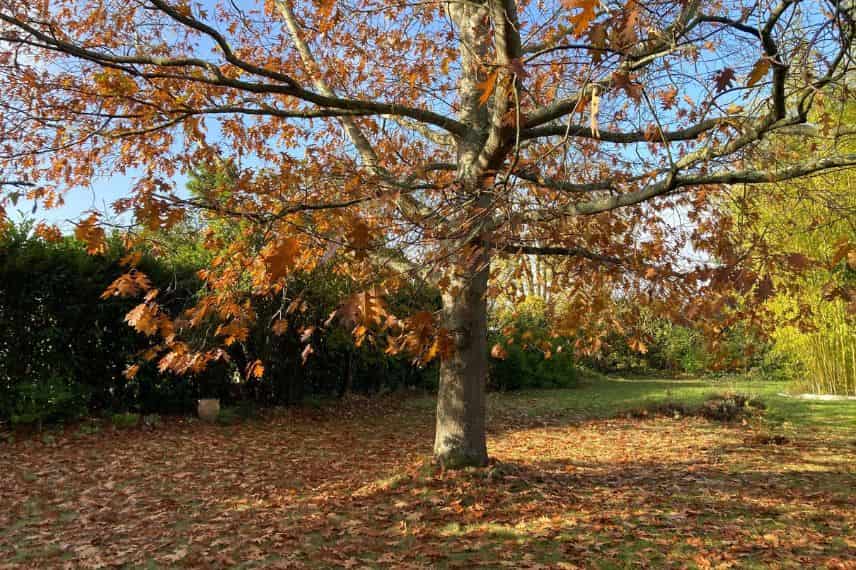
Oak is a deciduous tree that loses its leaves in autumn. Photo Gwenaëlle AUTHIER DAVID
The benefits of plants with deciduous foliage in a garden:
- This type of foliage is very interesting in the garden, as it allows you to punctuate the seasons with a stunning display of colour in autumn before the leaves fall.
- The shedding of foliage also allows light to pass in winter, providing a favourable environment for perennial plants or bulbous plants that emerge in spring. This extra light is also beneficial for the home, letting in more sun during the colder months.
- The fallen leaves on the ground decompose and naturally enrich the soil with nutrients. This helps improve soil fertility and structure, which is beneficial for the overall health of garden plants.
What is an evergreen foliage?
Evergreen foliage plants, unlike deciduous plants, keep their green, active leaves year-round. That doesn’t mean they never lose leaves, but their renewal is gradual, over several years, particularly in spring, which prevents the plant from becoming bare.
In contrast to deciduous foliage, evergreen leaves are often thicker and tougher, sometimes coated with a waxy covering.
Why does this happen?
Evergreen foliage has developed as an adaptive mechanism in regions where winters are milder and daylight hours in winter are longer. They are generally plants native to Mediterranean or tropical climates, where winters are not extremely cold, but drought periods can be long. Evergreen foliage allows the plant to continue its photosynthesis year-round, even though activity is reduced during the coldest months.
Thanks to their thicker and sometimes glossy leaves, these plants limit water loss through evaporation, enabling them to better withstand drought and strong winds.
Examples of evergreen foliage plants:
Laurustinus (Laurustinus, Oleander, etc), holly, pine and Cypress are classic examples of evergreen foliage plants. These plants are especially valued for keeping a green garden year-round.
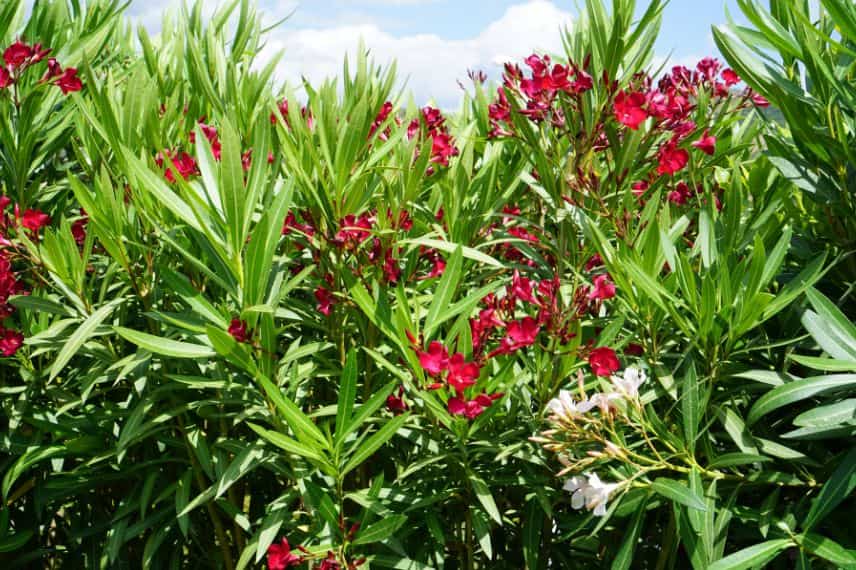
The oleander is an evergreen shrub.
Advantages of evergreen foliage plants in a garden:
- The most obvious advantage of evergreen foliage plants is their ability to maintain green cover year-round, even in winter. They provide continuous decorative presence and add structure to the garden during the coldest months, when other plants are in dormancy.
- In hedges, these plants also act as windbreaks to protect more sensitive plants. They are also used as privacy screens to hide the garden from neighbours.
- Moreover, they provide a constant habitat for local wildlife, particularly for birds, insects and small animals that can find shelter there all year round, even in winter.
- Because of their ability to retain their leaves year-round, these plants require less leaf litter to clear in autumn, reducing garden maintenance.
And semi-evergreen foliage?
Semi-evergreen foliage is a type of foliage that lies between deciduous and evergreen. In mild climates, these plants can keep most of their leaves during winter, while in colder climates they will lose more, bringing them closer to the behaviour of deciduous plants.
What is a marcescent foliage?
Marcescent foliage refers to a type of foliage that, although dead, remains attached to the branches of plants during winter, rather than falling in autumn as deciduous leaves do. The marcescent leaves only drop in spring, when new shoots appear. These dead, dry leaves are no longer functional for photosynthesis.
Why does this phenomenon occur?
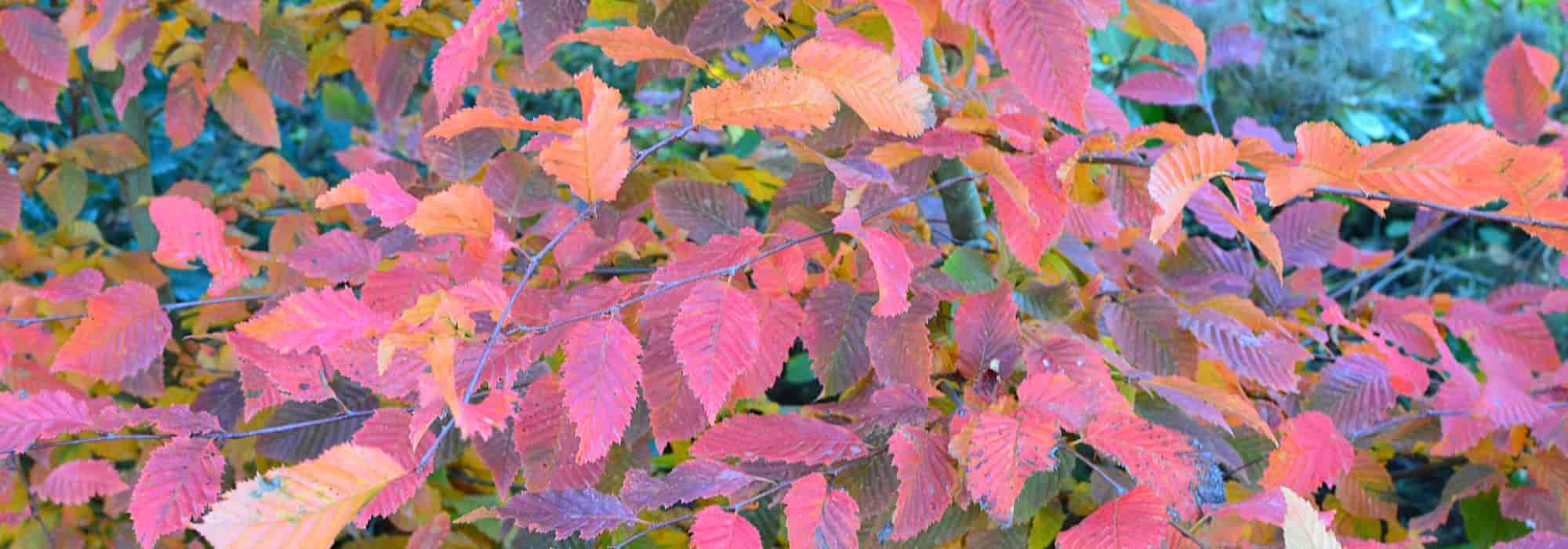
First, as with deciduous plants, plants with marcescent foliage enter dormancy during winter. They thus limit their energy expenditure, which is no longer covered by the cold and the short daylight hours. The foliage then takes on golden, purplish and brown hues before wilting.
But why does the plant retain this dead foliage? Although the marcescence phenomenon is known and observed by botanists, its purpose remains relatively poorly understood, and several hypotheses seek to explain why.
By retaining its dead leaves, the plant seems to create a protective barrier against wind and intense cold for its buds that will yield future shoots.
It is also possible that marcescence is an adaptation to limit browsing by herbivores. Dead, dry and nutrient-poor leaves are less attractive to animals such as deer or goats, which prefer to eat young shrub shoots.
By retaining their dead leaves until spring, these plants may delay decomposition and thus the release of nutrients into the soil. When they fall to ground in spring, the leaves decompose and release nutrients at the time the plant needs them most for growth.
Examples of marcescent foliage plants:
Several species of trees and shrubs display marcescent foliage. Among the most common are the hornbeam and the beech.
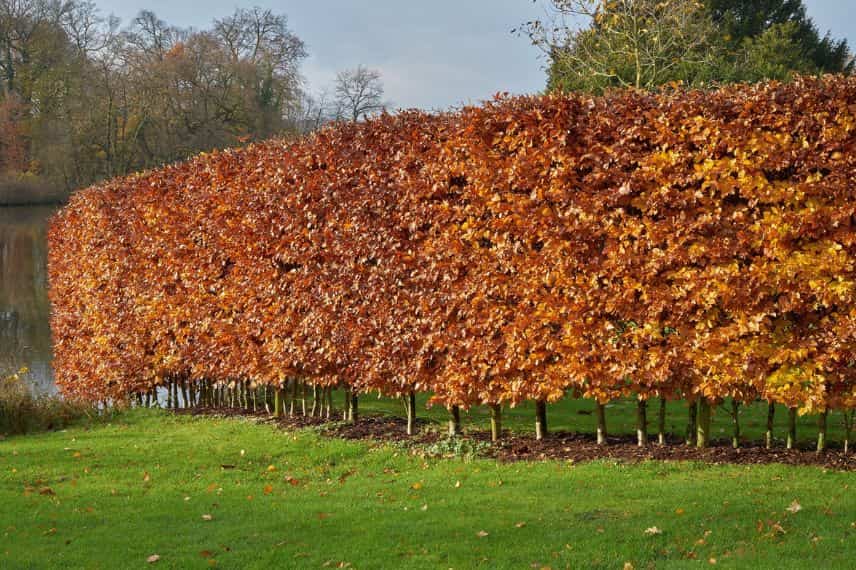
A hornbeam hedge with marcescent foliage
The advantages of marcescent foliage plants in a garden:
- Just like evergreen foliage, dead leaves of marcescent plants, often in tones of brown, gold or copper, can add colour and interest to the garden during the winter season.
- Additionally, this foliage still present can act as a privacy screen or windbreak in winter.
Read also
Evergreen tree and shrub: what are they?How to choose the right foliage for your garden?
Now that you know the differences between foliage types, it’s time to think about your own garden. Each has its advantages and disadvantages, and the choice should be made based on several criteria:
Based on climate
In dry or Mediterranean climates, plants with evergreen foliage are often better suited, as they withstand drought better. Conversely, in regions where winter is harsh, deciduous foliage plants will be more suitable and resistant to cold and frosts.
Based on aesthetics
If you want a lush garden all year round, opt for evergreen plants. Deciduous plants, on the other hand, allow you to create evolving gardens with a diversity of colour and texture throughout the year. Finally, marcescent plants add extra interest during the winter months, with their brown and gold leaves, which persist on the branches.
A deciduous plant may also allow more light to pass through in winter, when the sun is low and dim.
Based on maintenance
Deciduous plants often require more leaf clearance, especially if you have a lot in the garden. Evergreens, on the other hand, lose fewer leaves, but may require more pruning.
Mixing different foliage types: a wise choice for your garden
By mixing deciduous plants with evergreen and marcescent plants, it is possible to create a garden that is both structured and evolving. Deciduous plants allow the appearance of the garden to be renewed with each season, while evergreens provide visual constancy, particularly in winter.
- Subscribe!
- Contents

Comments