


Decline of Pollinators: The Consequences for Plants
and the cascading effects on living organisms
Contents
Alarmist scientific reports are multiplying: a massive decline in insects is currently underway and happening at an alarming rate. As you read this, over 40% of insect species are at risk of extinction. It is a silent tragedy. And while we are all aware, we do not yet grasp the devastating impact of this collapse on plants, as well as on all forms of life on Earth, including our own.
For insects perform essential functions in nature, particularly pollination. The plant world will therefore be greatly affected. Here’s a brief overview of the dramatic consequences of the decline of pollinating insects on plants.
To learn more, feel free to also listen to our podcast:
“`html
“`

What are pollinating insects?
When we talk about pollinating insects, we immediately think of bees. However, pollinating insects belong to four main orders that encompass numerous species:
- Hymenoptera: which includes bees, wasps, hornets, bumblebees, and ants
- Lepidoptera, such as butterflies
- Coleoptera: represented notably by ladybirds and beetles
- Diptera: which includes, for example, flies and hoverflies
In our regions, it is known that 85% of the pollination of flowering plants is carried out by wild insects, and only 15% by domestic bees. Unlike bees, these foragers cover all periods of flowering, and some, like bumblebees, can even pollinate in cold and rainy weather.
Over millions of years, some of them have even co-evolved, and certain insect-plant pairs could no longer survive without each other, such as the fig tree and its unique pollinator, the fig wasp Agaonidae. For their part, hoverflies, for example, pollinate the small flowers overlooked by larger insects, bumblebees can vibrate tomato flowers to release pollen, and the hummingbird hawkmoth, a long-tongued butterfly, can alone collect nectar from certain deep tubular flowers.
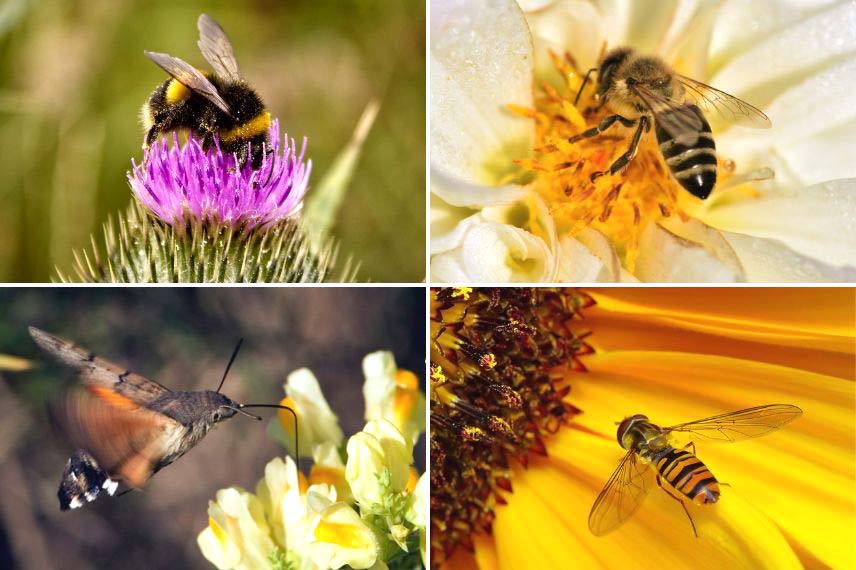
Bumblebee, bee, hummingbird hawkmoth, and hoverfly are all complementary pollinating insects in nature
Read also
Flowers for bees!How do they contribute to the mechanism of pollination?
Over 80% of flowering plants depend on pollinating insects for their reproduction, along with a few birds like hummingbirds and small mammals such as bats. These pollinating insects are remarkably efficient “farm workers,” but also irreplaceable.
Indeed, the sexual reproduction of plants requires the transport of pollen from the male organs, which are the stamens, to the female organs of the flowers, the pistils. In more than 80% of cases, this transport of pollen is carried out by foraging insects, while others are pollinated by the wind, and more rarely by water or autogamy (self-fertilization) as seen in certain cereals like oats, barley, or rice.
Thus, let us not be deceived: the delightful scents of roses, lilacs, or Buddleias and the lovely colours of flowers are not intended for gardeners, but indeed for foraging insects, who cannot resist and rush towards the pollen and nectar generously offered to them… in exchange for their services! And without bees, flies, ants, or butterflies: no more flowers… and therefore no more fruits! And as everyone knows: fruits contain seeds, which give rise to new plants, in a cycle that has been perpetuating for 135 million years.
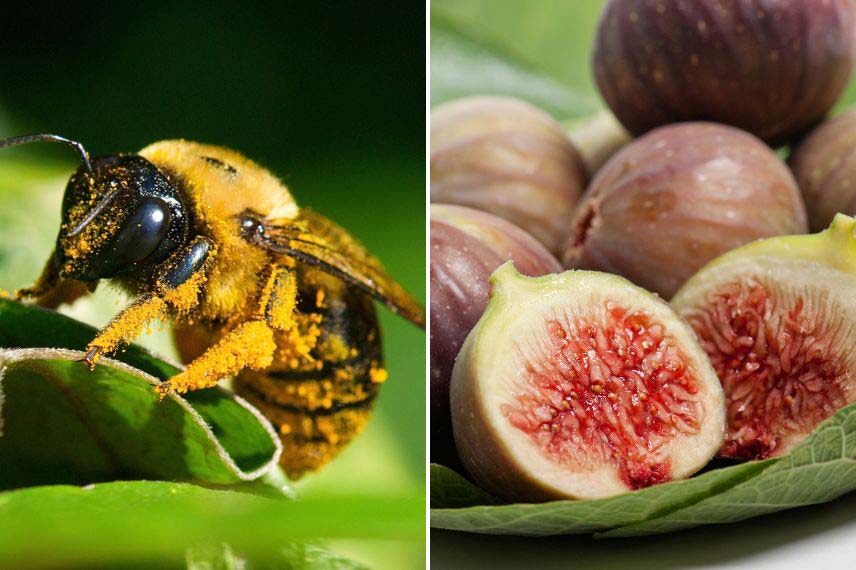
Pollinating insects ensure the reproduction of flowering plants and the production of fruits
Essential ancillary services
But that’s not all, as nature is infinitely well-designed: in addition to ensuring the reproduction of plants, pollinators ensure the genetic mixing of vegetation, allowing them to:
- adapt to their environment
- adapt to climate changes
- overcome stressful situations (pest attacks, water stress…)
- overcome diseases
Researchers have shown that even in the short term, a change in insects in their environment influences the evolution of plants, their flowers, and therefore their fruits.
Read also
10 good reasons to let weeds growThe causes of pollinator decline
Over millions of years of evolution, plants and insects have adapted to interact harmoniously, providing mutual benefits and ensuring survival.
- But in just half a century, modern agriculture has created true biological deserts, with millions of hectares of monocultures drenched in pesticidal substances, polluting the air, water, and flowers that pollinators depend on for decades. Their food supply and habitat are directly affected, and they themselves are poisoned by the billions, to the point that in less than 30 years, the mass of flying insects has decreased by 70%.
- Monocultures limit diversity and the availability of pollen over time.
- Intensive agriculture and urbanisation (roads, buildings…) have led to the destruction of natural habitats (trees, hedgerows, meadows…)
- Systematic tilling of soils destroys the nests of certain pollinators.
- Climate change and globalisation disrupt plant/pollinator interactions and introduce new predators, such as Varroa or the Asian Hornet.
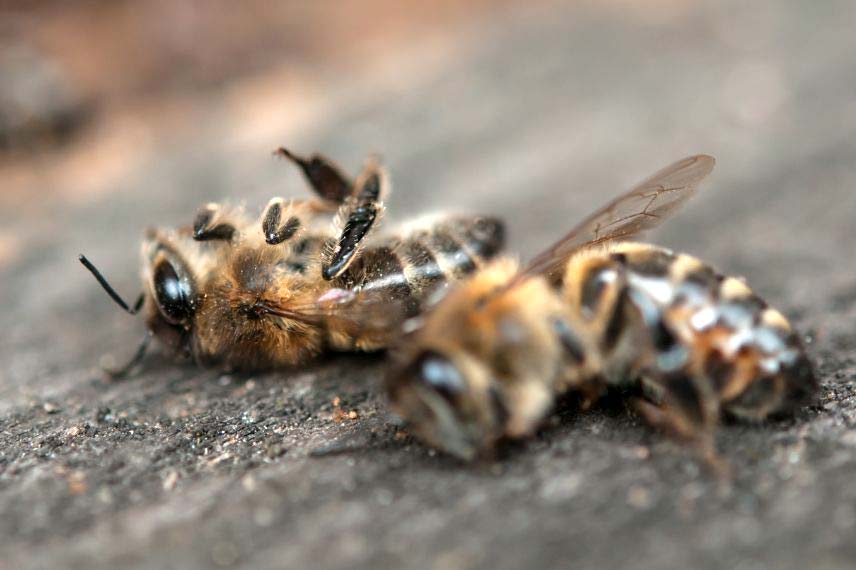
In fifty years, we have decimated insect populations on the planet
The consequences on the plant world
In their relentless search for food while simultaneously transporting pollen from flower to flower, pollinators ensure the success of cross fertilization in plants. The survival of tens of thousands of flowering plant species also depends on them.
They are an essential link in maintaining biodiversity on Earth and the balance of ecosystems. Most flowering plants (angiosperms) simply could not reproduce without pollinators. It is important to note that over the course of evolution, these plants have come to dominate the plant world, representing nearly 9 out of 10 plants!
In gardens, orchards, and fields, various wild insects complement each other, and without their contribution, our food supply would be – or rather will be – greatly impoverished: virtually no more fruits and vegetables on our plates, nuts will disappear from our daily lives, as will legumes like peas or broad beans and oleaginous plants like olives, rapeseed, or peanuts. Goodbye to coffee and chocolate as well… Only a few crops like wheat, maize, or rice, pollinated by the wind, will survive.
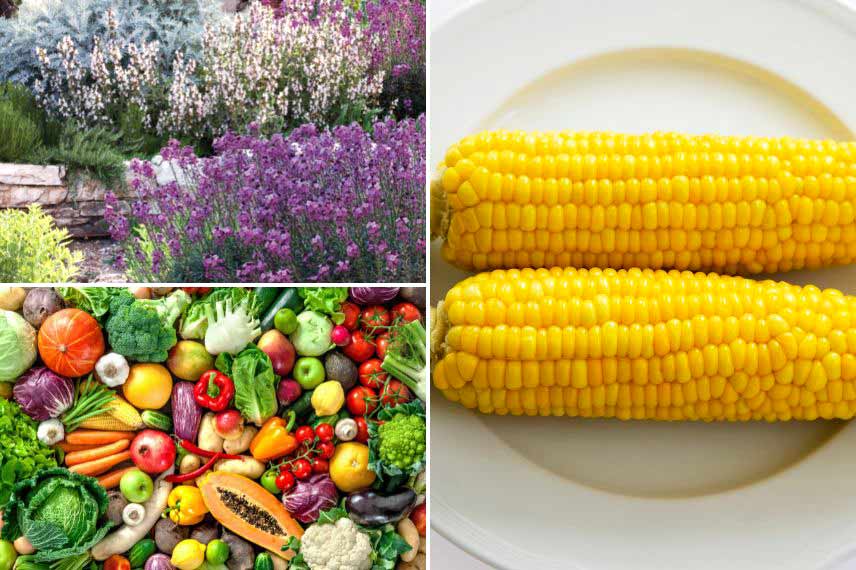 Without foraging insects, many flowering plants that beautify our gardens and produce a large part of our food will disappear. Only certain plants like maize, pollinated by the wind, will remain.
What can we do to help pollinators?
Even if at our individual level we think our efforts are in vain, every action counts in preserving biodiversity:
- Welcome insects into your garden, on your balcony, or in your yard by providing them with shelter and food: plant melliferous and nectariferous plants
- Plant diverse hedges, groves, and generous flower beds that will provide shelter
- Build and install insect hotels
- Completely ban any use of insecticides and pesticides in the garden and at home. Remember that “natural” insecticides like black soap are harmful to all insects, not just those you want to remove from your plants (aphids…)
- Raise awareness among the younger generation about the need to respect and preserve insects. Teach them not to be afraid of wasps, bumblebees, or bees
- If possible, welcome beehives into your garden!
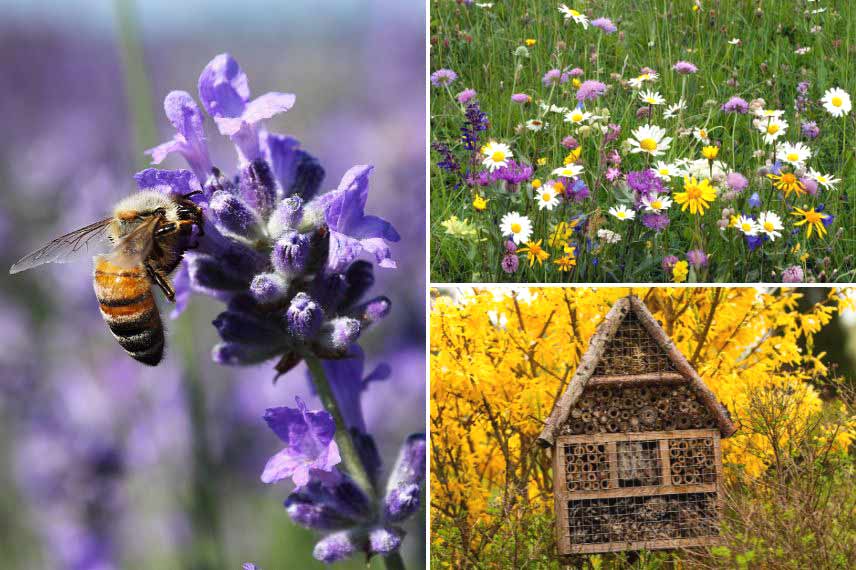
Numerous actions allow everyone to easily welcome foraging insects into the garden

- Subscribe!
- Contents
Comments