





























Gardening under pine trees: plants to grow and tips
Tips and ideas for planting under conifers
Contents
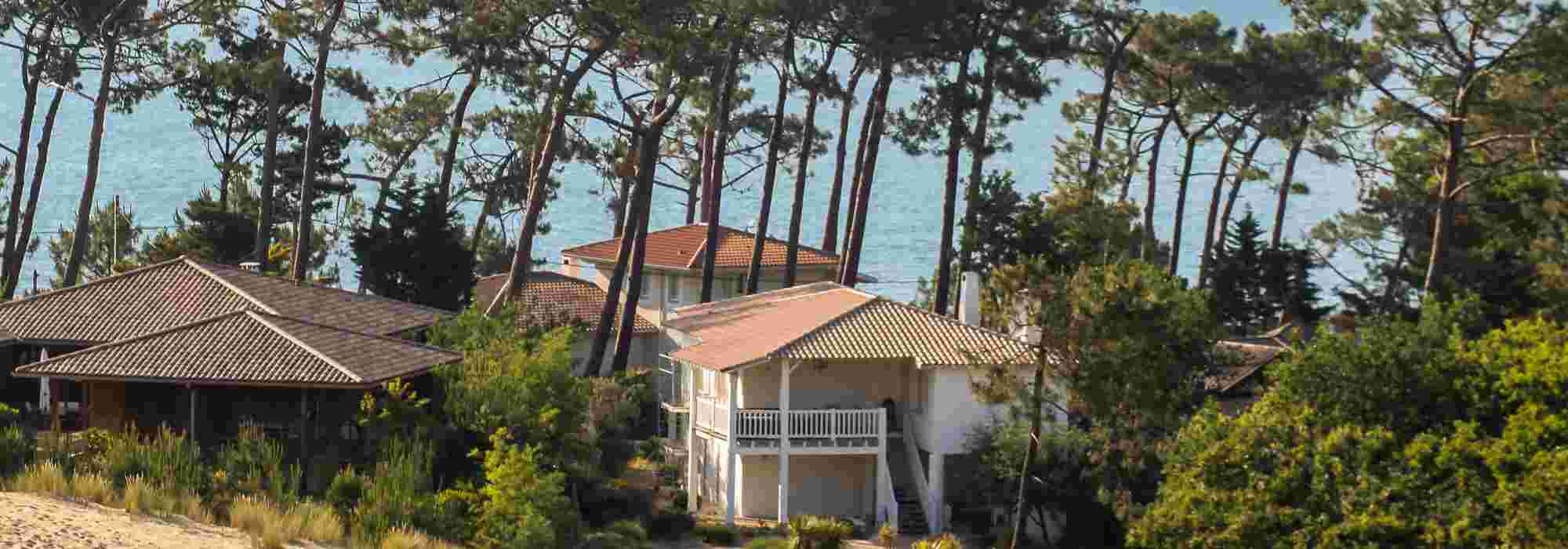
When you live in La Baule-les-Pins, on the Arcachon Basin or the Atlantic coastline in France, in the Landes or along the Mediterranean coast, you know it well: the garden is often beneath pine trees. A superb environment, to be sure, with these conifers, their unique and majestic habit that really showcases the architecture of the houses, but a garden not exactly easy to grow.
Which plants grow well under pine trees? What plantings should be considered in this context? We guide you through this article, providing you with all the advice to manage your garden effectively!

Disadvantages of a garden under pine trees
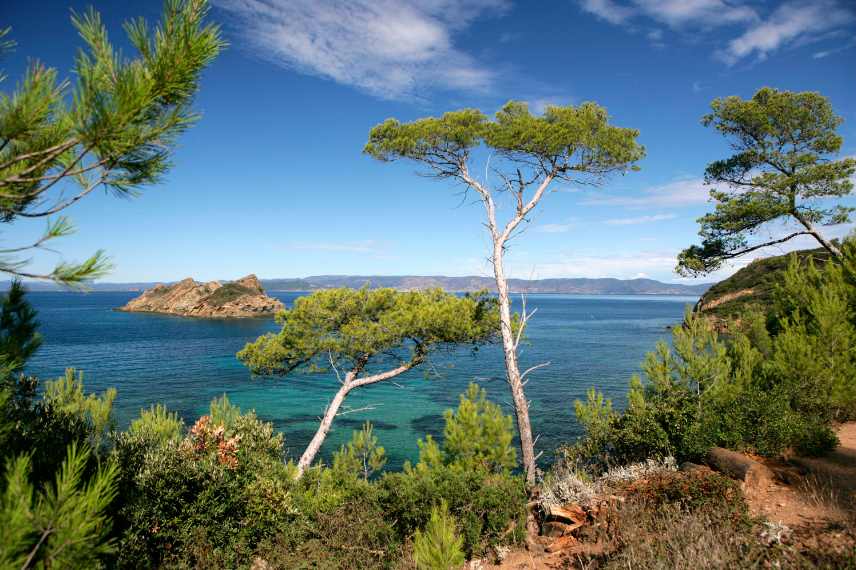
Even though the atmosphere created by the pines is unique and evocative, with their parasol-shaped silhouette often reminiscent of the nearby sea, these conifers nonetheless have quite specific characteristics. Whether maritime pines, umbrella pines or Scots pines, all these trees create an environment not always easy to manage:
- They form an evergreen cover, more or less dense: shading can be problematic. The pines and other evergreen conifers, with a dense canopy (the crown comprising the branches and foliar mass), let little light through. This is less the case when the trees are mature, as the canopies are then usually very high, and therefore allow more sun to filter through. But when planted in numbers—as is often the case in a seaside garden, at forest edges or in the Landes—we find ourselves having to manage dimmer light.
- Root competition is strong as pines spread their shallow roots over a wide area. Water competition is therefore the main pitfall, often undermining the cultivation of other plants at their feet.
- The sandy soil is often poor, it dries out, has few nutrients, limiting the range of plants that will thrive there.
- Pine needles litter the soil, accumulating over time, and eventually form a carpet where planting will be difficult if maintenance is not carried out.
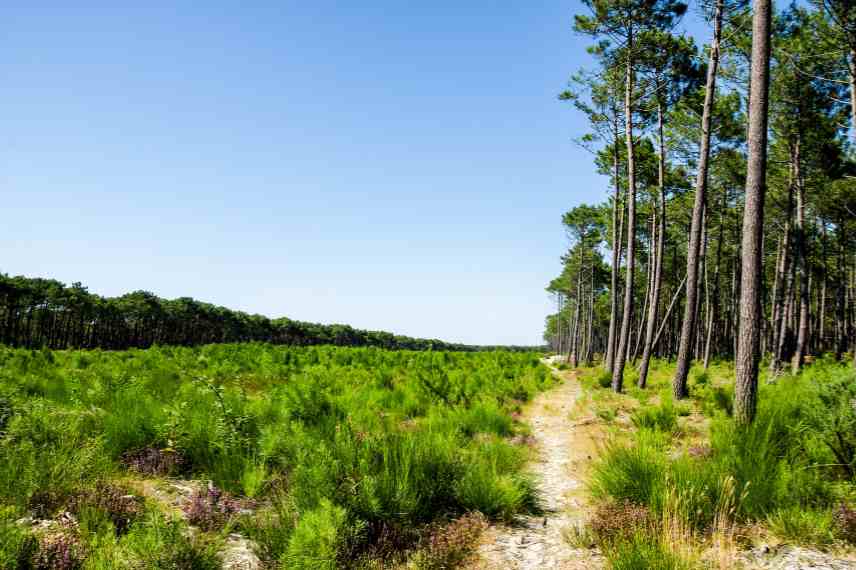
The Landes forest shows signs of vegetation that can thrive in sandy, nutrient-poor soil
Which plants should you prioritise?
The shade beneath pines can be dense or lighter, depending on the age of the trees, but also on the species and shape of the crown (umbrella pine, maritime pine growing on sandy soils which it stabilises along the southwestern coastline, being less dense at the canopy, Aleppo pine, the Scots pine being denser in colder regions, etc.). This will inevitably influence different choices if one wishes to plant under these trees.
What grows under pines? Let us look to nature to verify. When wandering through a pine forest, one quickly notices that few plants withstand it: here we mainly see ferns, brooms and heathers. Their common trait? They prefer acidic soils, even dry ones. These three plants are the champions under pines that receive enough sunlight. We can thus create under pines a carpet of heathers, chosen from different species, allowing almost year-round flowering, in a colourful, low, tufted groundcover.
Among the most interesting are Erica vagans, a native of the Landes forest, Erica x darleyensis for winter flowering, Erica carnea, Calluna vulgaris and their hybrids, and Erica cinerea (grey heath), keen on sandy acidic soils.
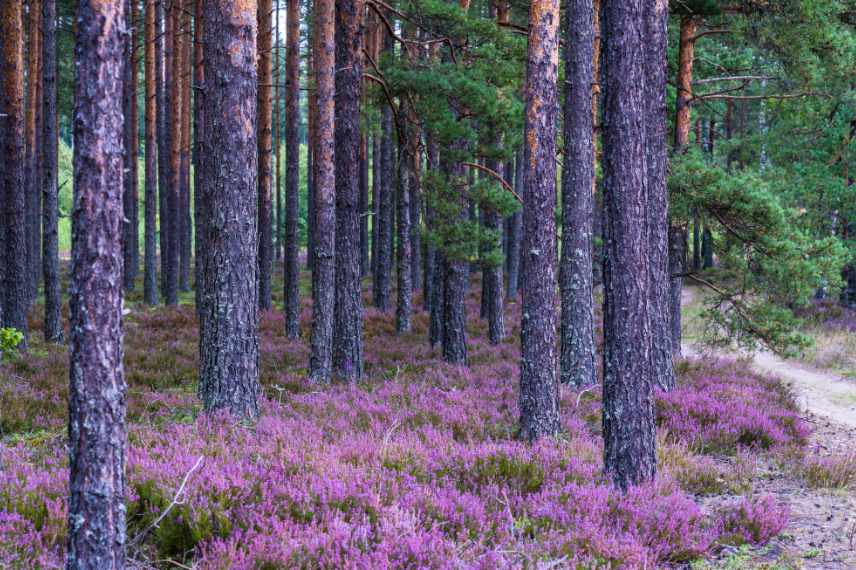
A carpet of heathers is highly suitable and wonderfully ornamental under pines
The approach also involves planting plants that go dormant in summer, as well as ultra-tough plants: Arbutus unedo, Yucca, dwarf palms, which add to the coastal garden vibe, and bulbs such as Naples cyclamen will also be welcome, taking a break in midsummer.
Few herbaceous plants will be planted, but one can rely on the unfailing Arenaria montana, with pretty white flowers in late spring, a low-maintenance groundcover, as well as on l’Armeria maritima, l’Armeria juniperina or Sandy Alyssum, in a well-exposed position to receive sufficient sun, and on geraniums tolerant of dry partial shade. We can also rely on a mass of adapted grasses, planted here and there under pines (among the best are Carex testacea and the delicate foliage, bright like ‘Lime Shine’ or Buchanan’s sedges, or even Sesleria: this type of low grasses really enhances the majesty of pines). In dense shade, in the case of a very tight stand of pines, lean toward Luzula.
We can also install plants with a great tolerance for arid soils such as the helianthemums, on sandy soils like linaria (toadflax), and pioneering plants such as Artemisia, Helichrysum, and Cytisus salvifolius or sage-leaved rockrose, which wonderfully complements the maritime pine and also tolerates shaded situations.
Finally, plants with a root system that penetrates well into the soil will be ideal, such as Lithodora, which also offers the advantage of being evergreen and which forms a very pretty blue-flowered groundcover.
Heather-soil shrubs such as azaleas and rhododendrons are, of course, worth considering to add a splash of colour in spring: they should be planted on the woodland edge or in a grove, and will therefore benefit from ideal sunlight for their development.
→ Read also our article: 5 tips to successfully grow heath soil shrubs.
Our planting and care tips
Planting under pine trees is best in autumn, this season being the most conducive to the establishment of evergreen plants, which will form this framework. They then benefit from the autumn and winter rainfall, which is beneficial and will promote better rooting.
Allow sufficient space between plants: many heathers or perennials will spread as they grow, so planting distance must take this into account (at least 1 metre apart between each plant for a harmonious result).
Choose three or four key plants, no more, preferably planted in bulk at the base of conifers: the effect will be striking! Install, for example, clump-forming plants such as grasses, ferns for the texture of their foliage, and a flowering plant such as heathers or azaleas for the “cushion” effect. Also play with leaf colouring, incorporating foliage ranging from green-yellow to golden. Ideally, plant in multiples of five for a strong mass effect on small subjects like grasses.
For plants in heather soil, even though they tolerate dry soil, recreate favourable conditions to ensure their successful establishment. Planting pockets will be created to mildly enrich the soil to give the plants a helping hand as they establish themselves. Alternatively, they can be planted in the upper layer with added substrate.
Par la suite, comme on le fait pour des arbustes ou arbres dans un contexte plus favorable, a careful watering regime should be followed, but also mulching. Watering will be carried out for two years after planting to promote the development of the root system, and mulch will be applied to all plants to keep the soil cool and moist.
Rockeries or Japanese-style landscaping are possible, and will even add to the character of your garden like no other. Mulch can be used in the form of pine bark, and paths can be laid with sand to evoke the sea still closer in coastal gardens.
The airial, the wide space around the old Landes houses, deserves to be highlighted and not planted around, or requires a specific approach.
Final tip: if your heart is set on a plant that isn’t pine-friendly, just use containers—ideally around a terrace—and let your pine grove thrive in peace!
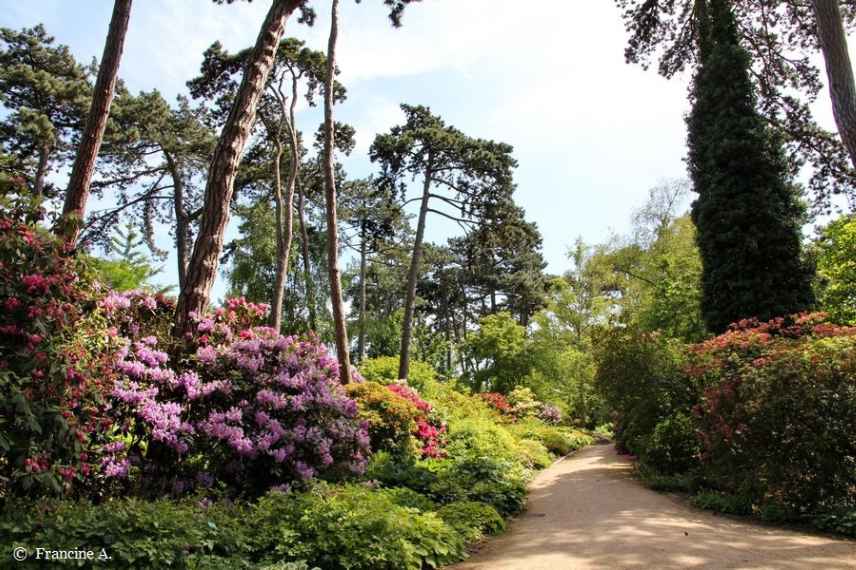
Get inspiration from gardens you have visited, such as the Parc Floral in Vincennes near Paris, which features colourful vegetation comprising rhododendrons
- Subscribe!
- Contents
Comments