





























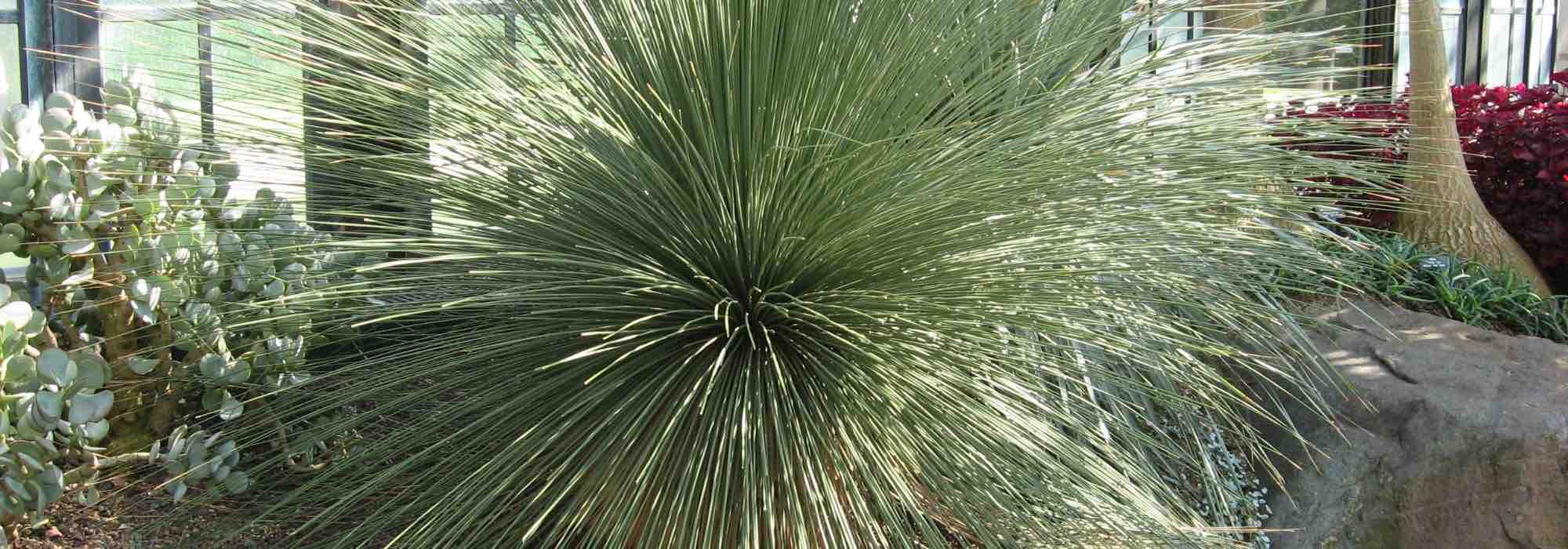
Diseases and parasitic pests of Dasylirion
Identification, prevention and natural solutions
Contents
Originating from the deserts of North America and Mexico, Dasylirion is a shrub suited to semi-arid climates. This ornamental plant is drought-tolerant and frost-hardy. It is prized for its ease of cultivation and for its silhouette of linear, graphic leaves, which makes it a top choice for a contemporary garden. Although it is robust, it can be affected by certain diseases and parasitic pests. Discover how to identify, prevent and treat diseases and pests naturally that can attack the Dasylirion, such as root rot, red spider mites and scale insects.

Root rot
Root rot can affect the health of Dasylirion. It is generally caused by an excess of water and poorly drained soil.
Symptoms
Root rot is characterised by leaves turning yellow, wilted and soft, and by the growth of the plant which seems to stop. An odour may also rise from the soil, due to root rot in the soil.
Prevention
To prevent root rot in Dasylirion, the best approach is to avoid its cause, namely: overwatering. Not to water the plant excessively and to plant it in well-drained soil, which is not clayey and heavy. To improve soil drainage, consider adding sand or gravel or planting your Dasylirion in a pot with a perforated bottom.
Treatment
Treatment focuses on improving soil drainage. Take your Dasylirion out of the soil and clean the plant by removing the soil around it as well as any rotten roots. They are brown in colour rather than white. To cut away the infested parts, use disinfected tools with alcohol beforehand. Let the roots dry if necessary then replant the Dasylirion in well-drained soil. You can add sand or gravel to the soil to ensure better drainage.
Red spider mites
Red spider mites are tiny mites that can cause significant damage to plants by feeding on their sap. They thrive in warm, dry conditions and can develop more easily in greenhouses.
Symptoms
Red spider mites are not visible to the naked eye. The signs to alert you are the small white or grey bristles on the leaves. These dry up and fall off.
Prevention
As red spider mites favour dry, warm conditions, you can combat them by regularly spraying water onto the leaves. This helps to raise the air humidity, especially in greenhouses, and to create an environment less favourable to red spider mites.
Also ensure that there is good air circulation between plants. Avoid applying nitrogen-rich fertilisers. You can also occasionally spray nettle manure or a horsetail decoction on the leaves.
Treatment
To eliminate established red spider mites, you can spray with a garlic decoction diluted to 30% or with a natural solution prepared from rapeseed oil, liquid black soap and rosemary essential oil. To prepare it, mix in 1 litre of water 20–25 drops of rosemary essential oil with 3 or 4 drops of liquid black soap and 5 ml of rapeseed oil.
Another option for controlling red spider mites: use biological control by employing natural predators of these mites which are lacewing larvae and Phytoselulus persimillis.
For more information, see our advice sheet: “Red spider mite: identification and treatment”.
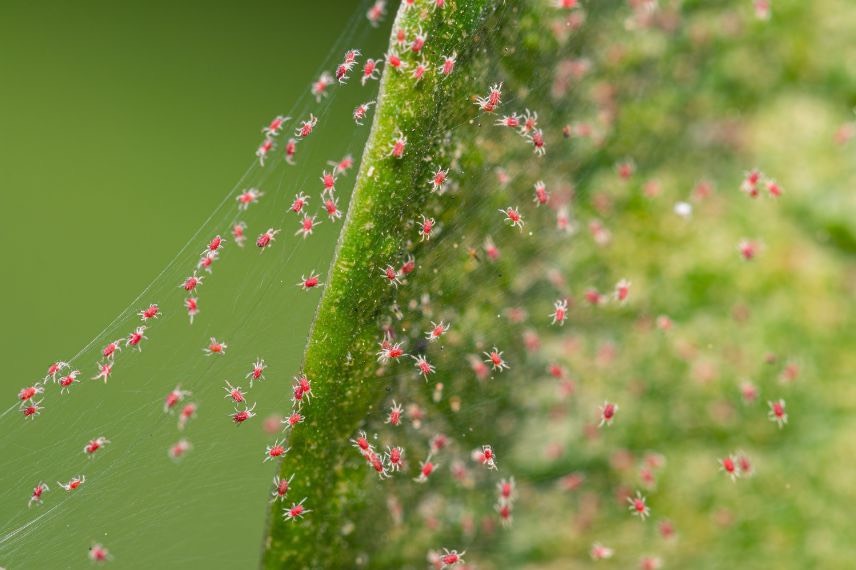
Close-up: you may sometimes spot red spider mites more readily by their webs
Mealy bugs
Mealybugs are sap-sucking insects that attach themselves to the leaves and stems. They weaken the plant and compromise its health.
Symptoms
Mealybugs appear as small white, brown or black clusters visible on the leaves and stems. Leaves may yellow and become deformed, then dry and drop. Mealybugs produce honeydew, a sticky substance that can lead to the growth of black moulds known as sooty mould.
Prevention
Ensure that Dasylirion is grown under optimal cultivation and care conditions to keep it healthy and robust. Promote good air circulation for the plants by taking them outside into the open air, for example. Do not crowd your plants together to prevent pest spread.
Treatment
You can remove mealybugs by hand in the case of a small infestation. Take a cotton bud dipped in alcohol and remove the mealybugs manually. In the case of a more severe infestation, apply to the leaves a solution based on liquid black soap diluted in water that you have prepared to eliminate the mealybugs. Into 1 litre of water, mix:
– 1 teaspoon of liquid black soap
– 1 teaspoon of denatured alcohol
– 1 teaspoon of vegetable oil, such as rapeseed oil.
Start by spraying this solution twice, 30 minutes apart. Then spray every 8 days until the mealybugs disappear completely.
For more information, consult our advice sheet: “Mealybug identification and treatment”.
In addition, discover our guide: “Identify the main parasitic insects and plant diseases,” as well as our full guide on the planting and care of Dasylirion.
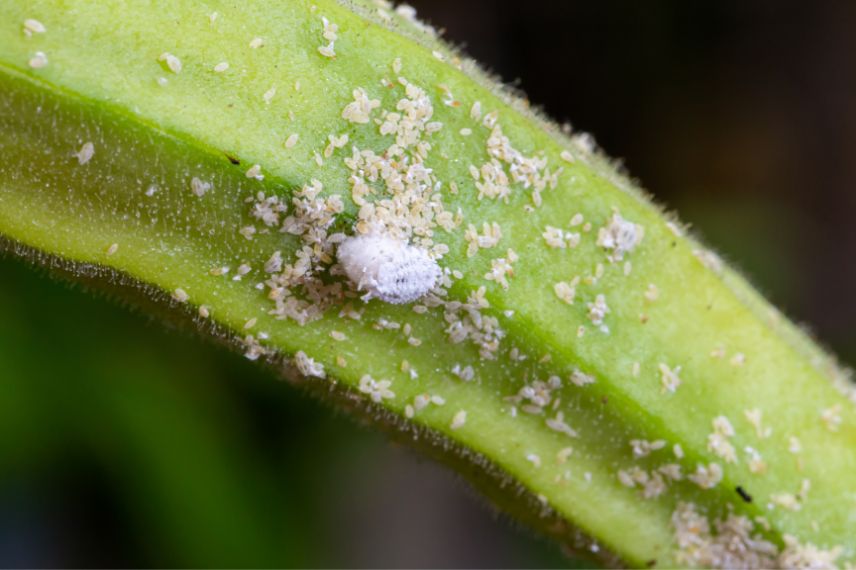
Mealybugs form small white cottony clusters
- Subscribe!
- Contents
Comments