





























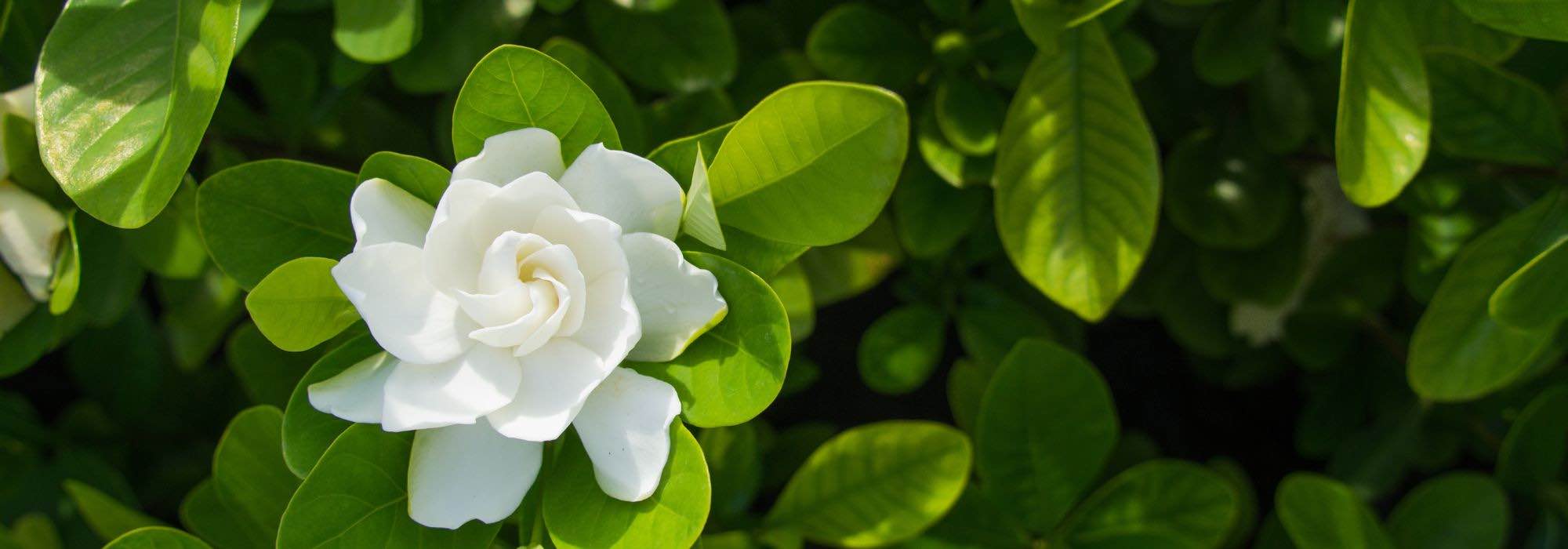
Diseases and pests of Gardenia
Identification, prevention and natural treatments
Contents
Gardenia is a shrub valued for its highly fragrant flowers and evergreen foliage. Moderately hardy, it can be grown as an indoor plant or outdoors in regions with a mild, damp climate. It bears white flowers with delightful fragrances, reminiscent of jasmine, from May to October. Its cultivation remains somewhat delicate as it requires ideal conditions, with fertile heather soil, cool and well-drained, and a sheltered position away from wind and stagnant humidity. Gardenia, like any young plant, can be attacked by insects or certain diseases. Discover gardenia diseases and parasitic pests, how to identify them, prevent them and treat them naturally.

Grey mould or Botrytis cinerea
The Botrytis cinerea, also known as grey mould, is a fungus that attacks the plants placed in a very humid and confined atmosphere. This cryptogamic disease is highly contagious.
Symptoms
Brown spots appear accompanied by a grey mould resembling rot. The flowers wilt and abort.
Prevention
Several preventive actions are possible. Do not plant plants too close together and ensure that air circulates well between the plants. Do not water in the evening and make sure not to splash the leaves. Avoid over-watering, as well as excessive nitrogen, and thoroughly disinfect your tools before pruning.
Treatment
You can treat by removing the affected parts and applying Bordeaux mixture.
For further reading, consult our article: Botrytis or grey mould
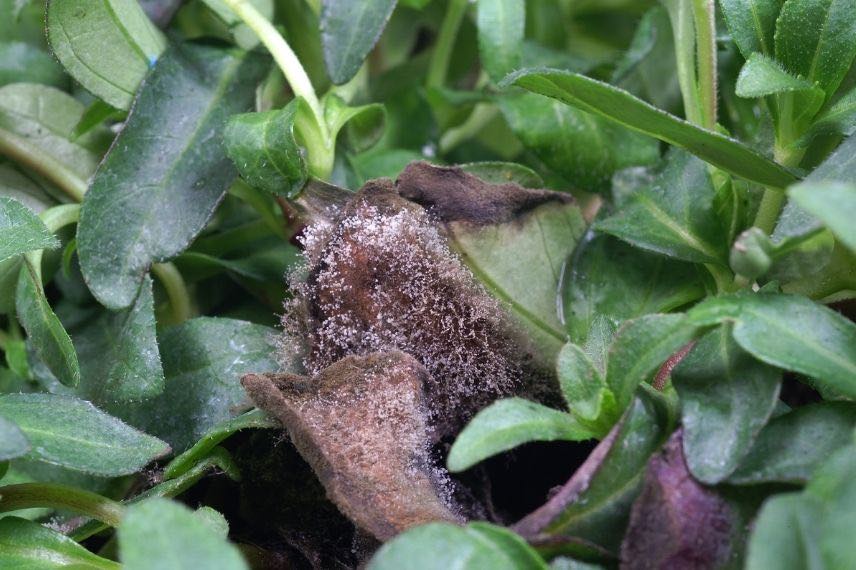
Grey mould on leaf
chlorosis
Chlorosis is a deficiency, most often of iron, which can be caused by an excess of lime in the soil.
Symptoms
Chlorosis manifests as yellowing of the leaves, with the veins remaining green.
Prevention
Avoid watering with hard water. Only use rainwater for outdoor watering and spring water for indoor watering.
Treatment
Water with nettle manure, which is naturally rich in iron and minerals. Dilute 1 litre of nettle manure in 9 litres of soft water.
Discover our tutorial on how to make nettle manure.
For further reading, consult our article: Iron chlorosis.
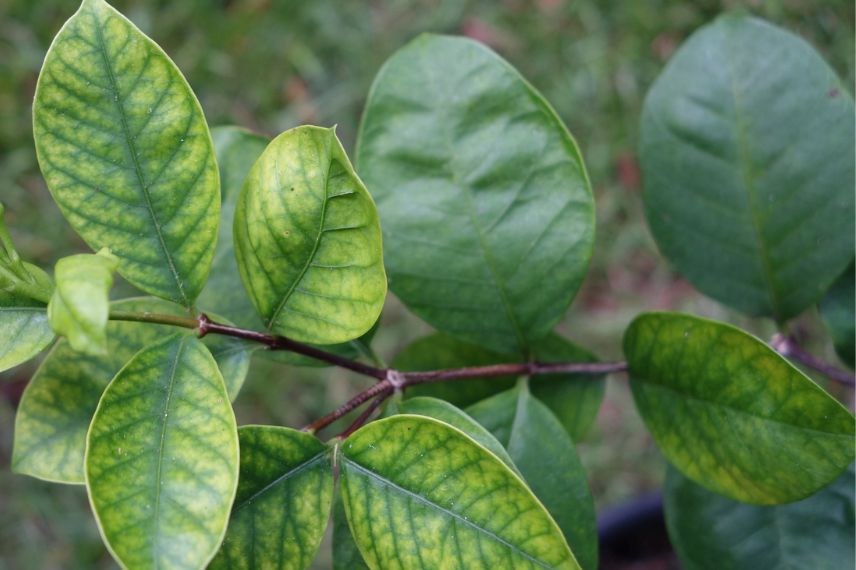
Chlorosis manifests as discolouration of the leaves
Aphids
Aphids are parasites that attack many plants, including gardenias. They can be green, black, grey or yellow.
Symptoms
These sap-sucking insects are recognised by their clustering on the young shoots and the undersides of the leaves. Honeydew, a sticky black substance on the leaves and shoots, is also observed.
Prevention
To prevent aphids from appearing, you can use beneficial insects, such as ladybirds, lacewings and hoverflies, which eat aphids.
Treatment
If the young plant is infested with aphids, wash the leaves with a jet of water to dislodge the insects. You can also spray a diluted black soap solution onto the plant. Mix 15 to 30 g of black soap in one litre of water and spray onto the affected parts.
For further reading, see our article: Aphid: identification and treatment
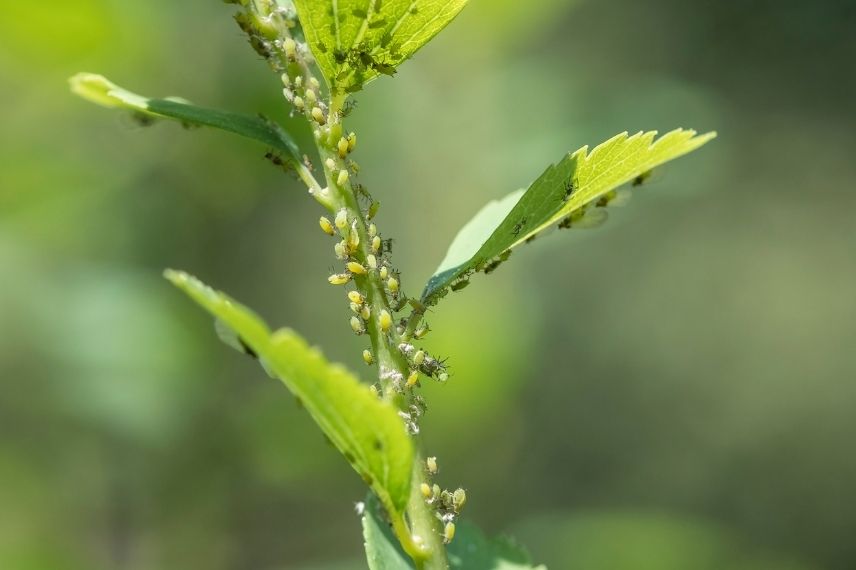
Green aphids on leaves and stems
Read also
Potted Gardenia: Planting and CareMealy bugs
Mealy bugs are tiny insects that are hard to see with the naked eye. They suck sap from the plant and weaken it. They thrive in a confined, warm and humid environment. There are two types of mealybugs: mealybugs and armoured scale insects.
Symptoms
Mealybugs betray their presence through small white, cottony masses on the leaves and branches, small brown spots or a sticky black substance that resembles soot. Leaves may become distorted and the plant’s growth may be stunted.
Prevention
There are several ways to prevent the development of mealybugs. Avoid placing the bush in a confined and poorly ventilated environment. Introduce beneficials into your garden that are predators of mealybugs, such as ladybirds, lacewings or blue tits.
Treatment
On the treatment front, there are also several options. Try removing the mealybugs with a cotton bud dipped in 90% alcohol. If the mealybugs are numerous, you can spray a strong jet of water onto the branches and leaves to try to get rid of them.
Another option, spray the gardenia with a solution based on black soap and rapeseed oil.
In 1 litre of water, dilute:
– 1 teaspoon of liquid black soap
– 1 teaspoon of methylated spirits
– 1 teaspoon of rapeseed oil.
Repeat the operation every eight days until the complete disappearance of the mealybugs.
For further reading, see our article: “Mealybug identification and treatment”
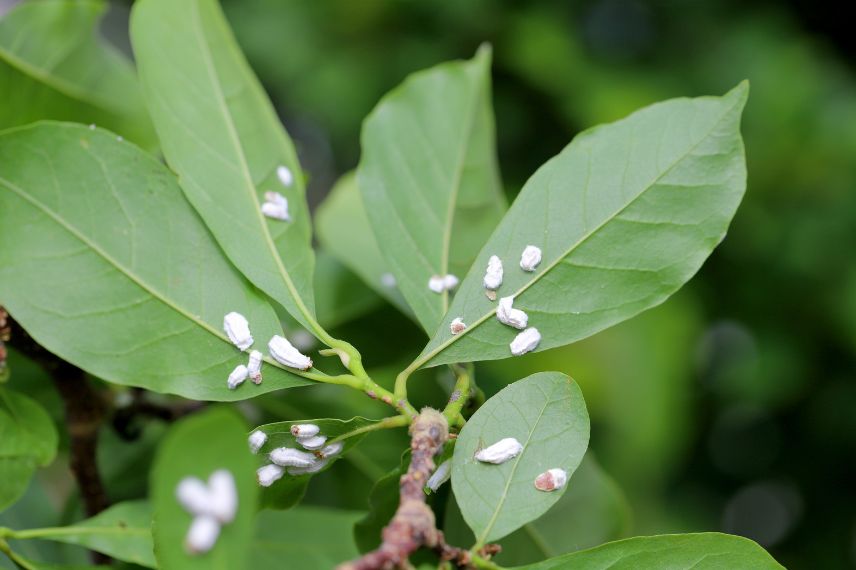
Mealybugs form small white cottony masses on the leaves
Further reading
Other issues can be observed with gardenias, such as flowers dropping before they open. This may be due to a lack of humidity, which can be corrected by misting the leaves with soft water. Gardenias can also be attacked by red spider mites when kept in a warm, dry atmosphere. You can spray the leaves with soft water.
In addition, see our guide: Identify the main parasitic insects and plant diseases, as well as our comprehensive guide on the planting and maintenance of the gardenia
- Subscribe!
- Contents
Comments