





























Diseases and pests of Asparagus
Recognising the symptoms and treating them naturally
Contents
With their refined, sweet and bitter flavours, white, green or purple asparagus delight our meals from April. The asparagus or Asparagus officinalis is a perennial plant eaten as a vegetable, which takes green, white or purple colours depending on the cultivation method used and the amount of light it receives. To eat it, one must be patient, as it is harvested after three years of cultivation, then every year for a period of 10–15 years. It comprises a rhizome called rootstock, made up of fleshy roots arranged in a star shape, from which stems called turions emerge that can reach 50 cm to 1.5 m in height. It is the tip of the stems bearing a terminal bud that is consumed. Easy to grow, it has a few requirements: full sun or partial shade, as well as sandy, well-drained, moist soil rich in humus. Asparagus plants are hardy, but they are susceptible to cold and damp, as well as certain diseases and certain parasites, like all plants.
Discover the diseases and parasitic insects that can affect asparagus cultivation, their symptoms, the methods to prevent them and natural treatments to use.

Purple Rhizoctonia
This is the most common disease of asparagus. This fungal disease is caused by a fungus that can linger in the soil.
Symptoms
The young plants turn yellow and wither. The roots, also called claws, are, likewise, dried out and are covered with purple filaments characteristic of purple rhizoctonia. This fungus is present and persists in the soil.
Prevention methods
Wet soils favour the appearance of purple rhizoctonia. The best way to prevent this disease is to to ensure healthy roots are planted in healthy, well-drained and light soil to avoid the disease developing. Another option is to plant asparagus in soil that has previously been used to grow leeks.
Treatment
There is no effective treatment. Remove and burn the infected asparagus crowns and do not replant asparagus in the affected part of the soil for several years, because the fungus persists in the soil for a long time.
Read also
Succeeding in growing asparagusAsparagus fly
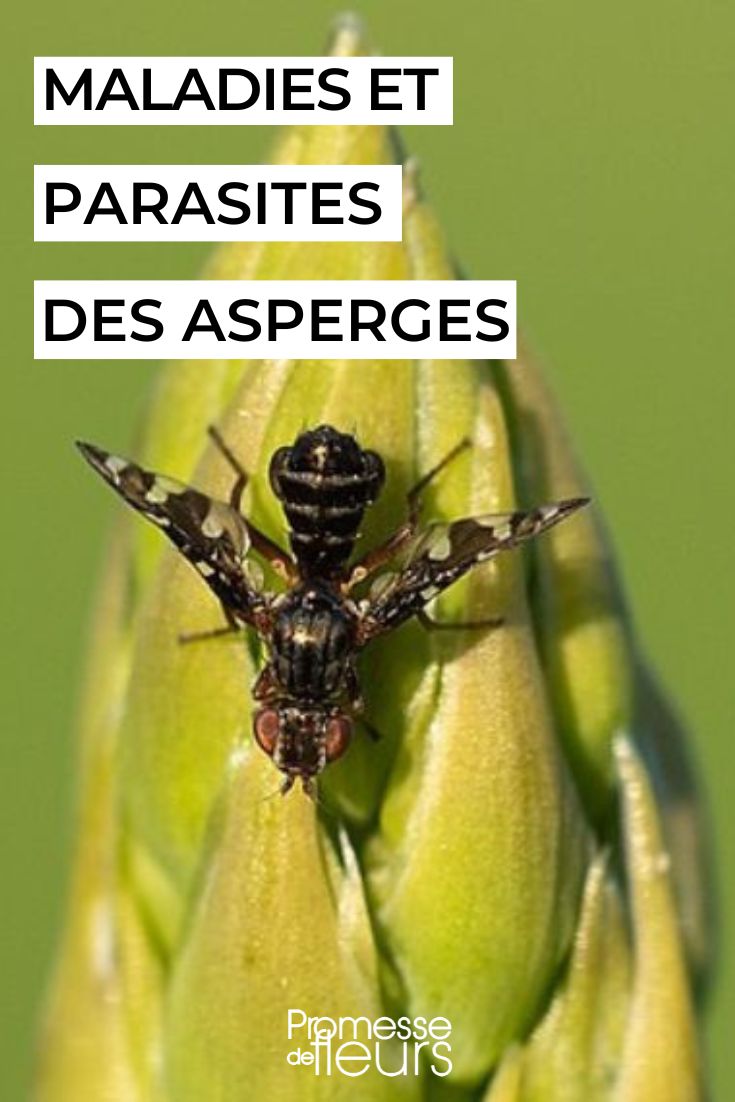
The asparagus fly is one of the main pest insects affecting the asparagus plant. The asparagus fly is most active in spring, in April and May, the period when this small insect lays its eggs at the tips of the stems or new shoots of the asparagus.
Symptoms
The tips of the stems are withered and deformed. On closer inspection, white larvae can be seen feeding on the tissue and boring galleries in the stems.
Prevention methods
Burn the dried tops of the asparagus at the end of the season. You could also try planting near tomato plants, which are said to deter the asparagus fly with their scent.
Treatment
Remove affected asparagus spears to destroy the larvae and eggs of the fly.
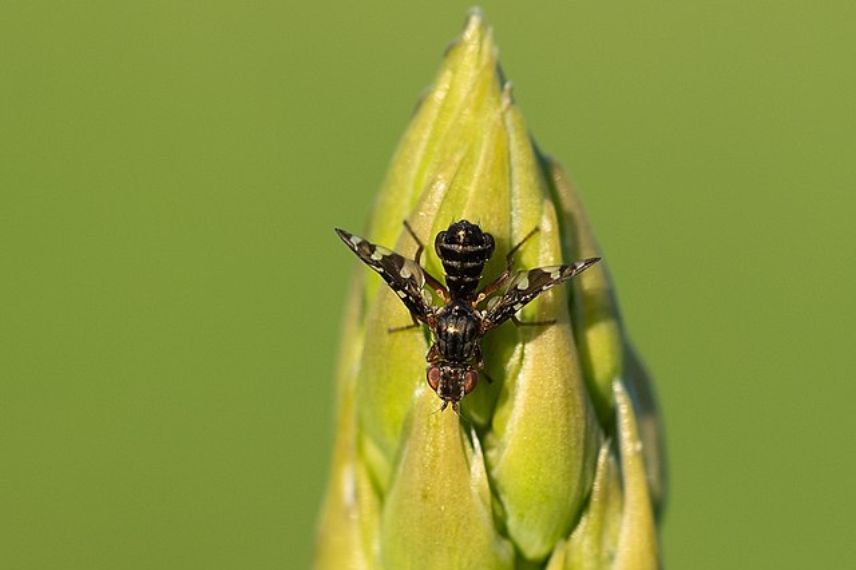
The asparagus fly
The asparagus beetle
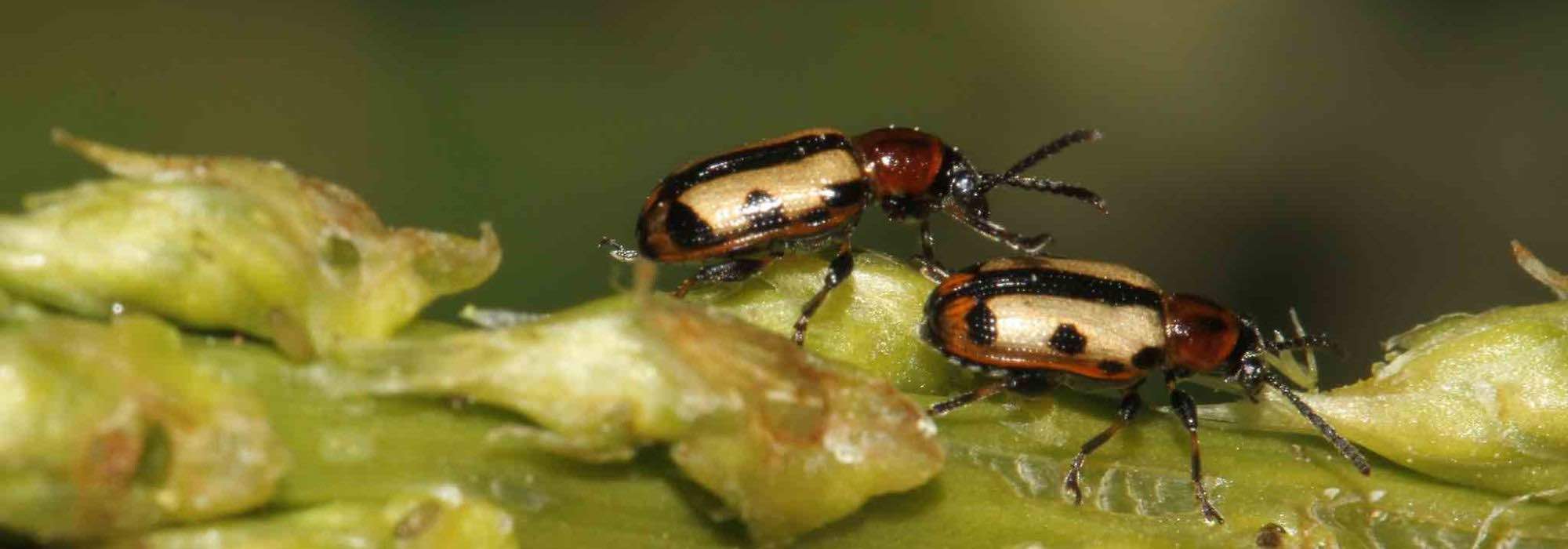
The asparagus beetle is another pest that can affect asparagus. It appears from spring through to summer, devouring the leaves and the tips of the stems.
Symptoms
The leaves and the stems are eaten and yellow. You can observe on asparagus the presence of adult asparagus beetles, which are small elongated beetles about 6 mm long, coloured black, red and white, as well as gray larvae.
Prevention methods
Burn the withered asparagus stems at the end of autumn. Carry out regular hoeing.
Treatment
Remove the insects by hand and spray a pyrethrum-based solution on your plants.
Consult our article on How to use pyrethrum in the garden?.
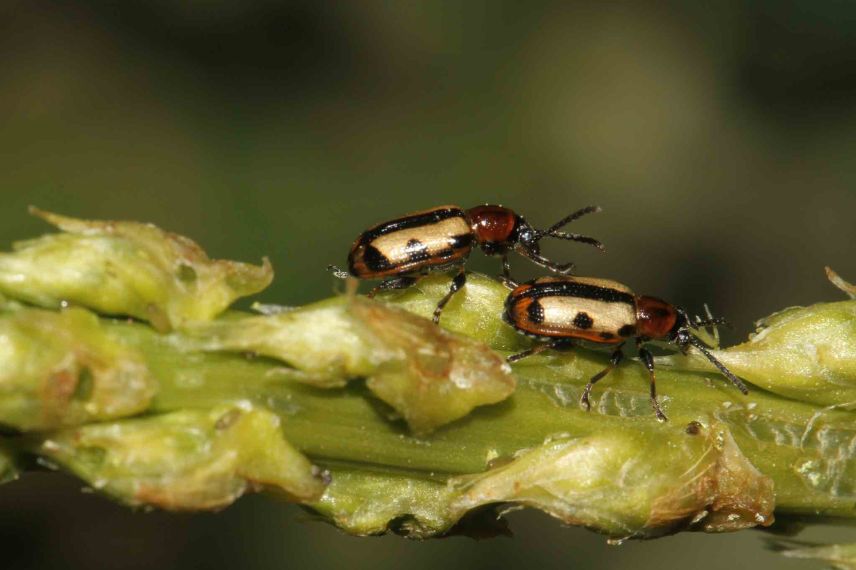
The asparagus beetles (© Miltos Gikas)
Read also
Plant asparagusRust
Rust is a another cryptogamic disease caused by a fungus, which can affect asparagus.
Symptoms
Small orange or black spots appear on stems and leaves, which dry up.
Prevention measures
Plant asparagus in well-drained soil and in a well-ventilated area to avoid moisture. You can apply Bordeaux mixture to prevent rust.
Treatment
Remove diseased stems and burn them. Avoid watering leaves and stems. Treat with Bordeaux mixture or a horsetail infusion.
Additionally, consult our page How to Get Rid of Rust?

Symptoms of rust on asparagus
Stemphyliosis or summer scorch
Stemphylosis is caused by a fungus and appears when the atmosphere is humid and temperatures exceed 15°C, resulting in heavy dew.
Symptoms
Small brown spots appear on stems, which look scorched, and the leaves and spears dry up.
Prevention methods
Plant asparagus in a well-ventilated location, where air circulates well.
Treatment
Remove the affected plants and burn them. At the end of the season, burn any remaining dry leaves.
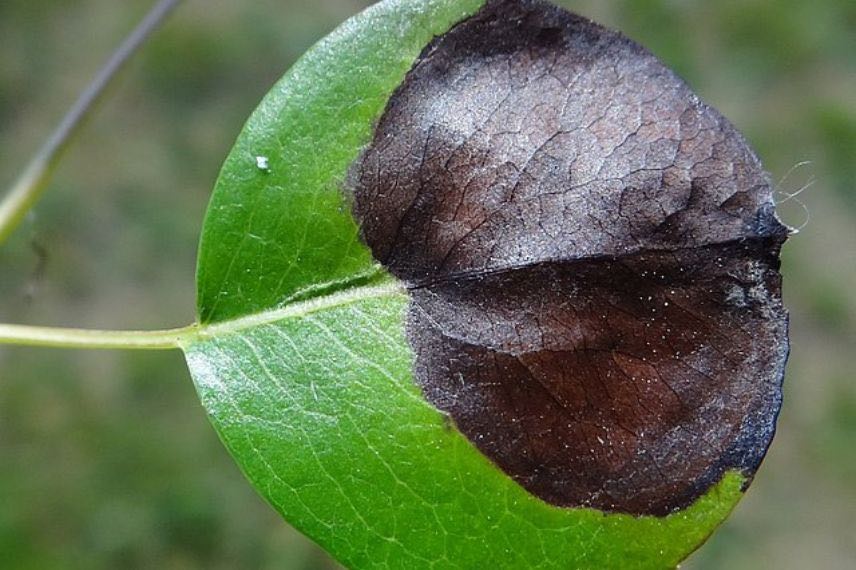
Stemphylosis on a pear leaf
Fusarium wilt
This is yet another disease caused by a fungus that can linger in the soil.
Symptoms
The stems turn yellow, dry up and sometimes rot at their base. The roots are covered with a white, woolly mould characteristic of the disease.
Prevention methods
Plant in well-drained soil to avoid moisture that promotes the development of fungal diseases. Avoid excessive mounding of soil around the roots, as the accumulation of soil favours the development of Fusarium wilt.
Treatment
Remove and burn the infected plants. Wait several years before replanting in this area of soil.
Further reading
In addition, discover our article: Identify the main parasitic pests and plant diseases, as well as our comprehensive guide on asparagus planting, cultivation and harvest.
- Subscribe!
- Contents
Comments