





























Diseases and pests of Berberis
Identifying, treating naturally and preventing
Contents
The Berberis, commonly called barberry, is a thorny shrub prized for its robustness and its ability to form dense, colourful hedges. With its glossy leaves, attractive berries and ease of maintenance, it adds structure and colour to the garden. Although it is not very susceptible to disease, in this article we nevertheless look at the few attacks and infections it can suffer that may compromise its health and appearance. Discover our practical advice to identify them quickly, effective prevention strategies and natural solutions to treat them, in order to protect Berberis and ensure the health of hedges or borders.
→ Read our guide on Berberis to learn more.

Berberis rust
Rust is a fungal disease that often appears as bright orange or yellow pustules on leaves and stems. These symptoms are not only unsightly but can also weaken the plant.
Identify: Watch for small yellow spots on the upper surface of the leaves that develop into orange pustules on the underside. These signs are usually the first indicators of an infection.
Prevent: Choose resistant varieties and ensure good air circulation between plants to avoid moisture stagnation. When watering, do not wet the foliage, only the base of the plant. Thoroughly remove plant debris and dead leaves in winter at the base of the plants, where the fungal spores can overwinter. Disinfect pruning tools between each use.
Treat naturally: Remove and destroy infected parts to limit the spread. Sprays of Bordeaux mixture or sulphur-based treatments, a natural fungicide, can help control the disease while being environmentally friendly. As a preventative or at the first signs of an attack, sprays of horsetail decoctions or nettle decoctions are effective.
→ Read Virginie’s article on rust to learn more about how to treat it effectively.
Important to know: Berberis can transmit rust to a nearby wheat field. In some countries, control measures are applied to this shrub.
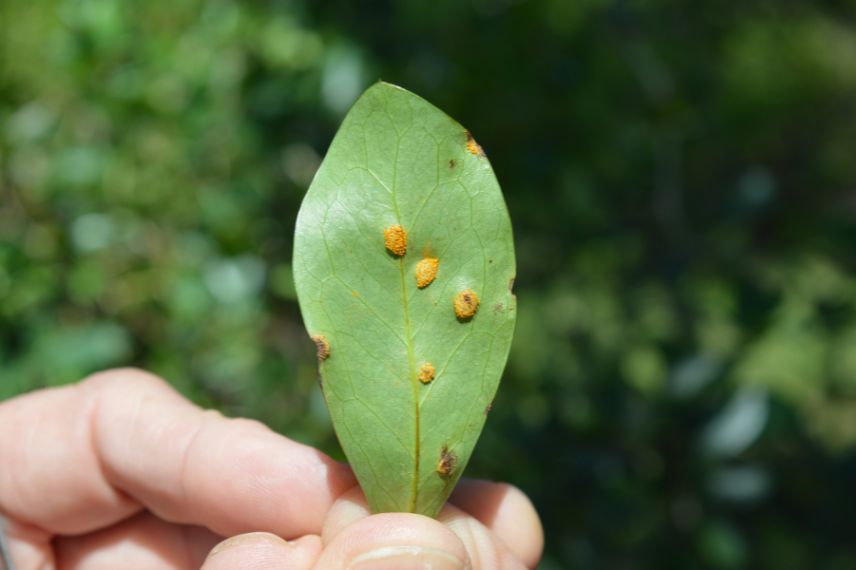
Rust on a Berberis leaf
Read also
How to create a Berberis hedge?Powdery mildew on Berberis
Powdery mildew is another common fungal disease that is characterised by a white or greyish felt-like coating on the leaves, which can cause them to deform.
Identify: The first signs include white powdery patches on the leaves and stems, which can spread and cover large areas if left untreated.
Prevent: Keep shrubs well aerated through regular pruning and by leaving adequate space between plants. Avoid excess nitrogenous fertiliser. Use horsetail decoctions as a preventative. Mulch to prevent the soil from drying out.
Treat naturally: Remove affected parts without delay. Solutions based on bicarbonate of soda, sulphur or milk are effective for treating powdery mildew. Apply these treatments as soon as symptoms appear to prevent their spread.
→ For everything you need to know about natural treatments for powdery mildew, read Virginie’s article.
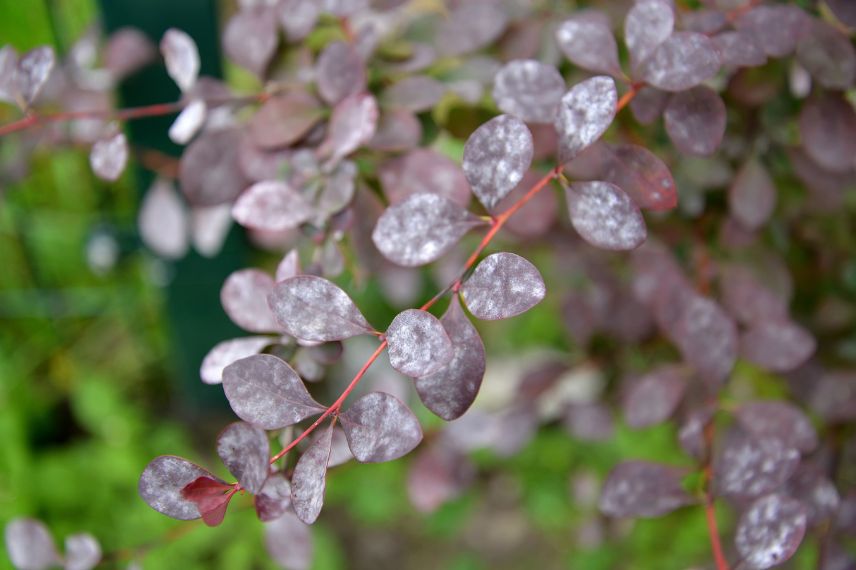
A Berberis affected by powdery mildew
Aphids
These small sap-sucking insects can cause the wilting of leaves, deformation of new shoots and the production of honeydew, encouraging the development of sooty mould.
Identify: Keep an eye on new shoots and the underside of leaves for small clusters of green, yellow or black insects. The presence of honeydew, a sticky substance on the leaves, can also indicate an aphid infestation, as can curled leaves.
Prevent: Encourage the presence of natural predators such as ladybirds and hoverflies in your garden. Avoid using chemical insecticides that can harm these allies.
Treat naturally: A strong jet of water can help as a first step to dislodge aphids. Sprays of black soap diluted in water, at a rate of 15 to 30 g of soap per litre of water, are effective at eliminating them without harming the environment.
→ Read Virginie’s article to become an expert on aphids.
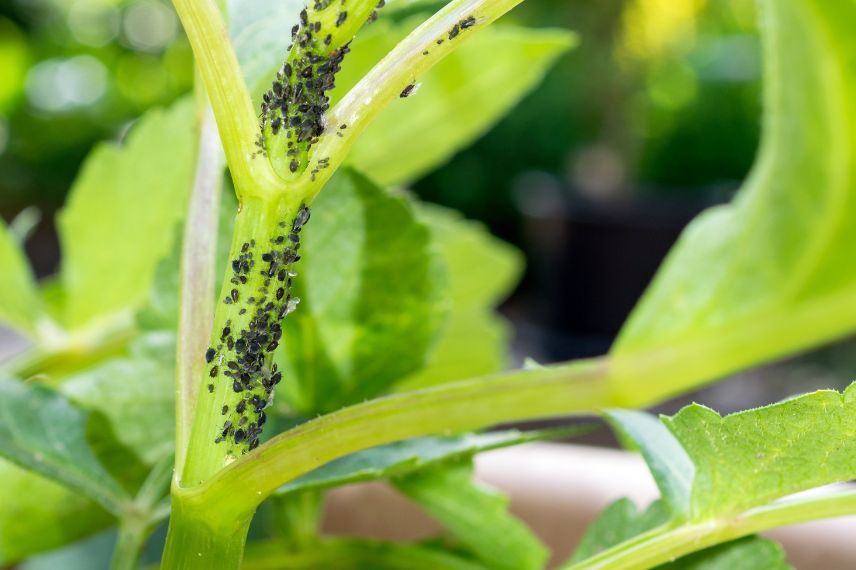
Black aphids in the leaf axils
Read also
5 Perfect Berberis for hedgesMealybugs
These pests are recognised by their white, cottony appearance and can weaken the shrub by sucking the sap from the leaves and stems.
Identify: Inspect your Berberis regularly for small white cottony masses hidden in the crevices of the stems or under the leaves.
Prevent: Maintain a good nutritional balance for your plants, as mealybugs are often attracted to weakened or over-fertilised shrubs.
Treat naturally: The 90% alcohol applied with a cotton bud removes mealybugs on contact. Then spray a solution made from black soap, oil and alcohol. Introducing natural predators, such as ladybirds or lacewings, can also help reduce their population.
→ For more on treatment, read Virginie’s article on mealybugs.
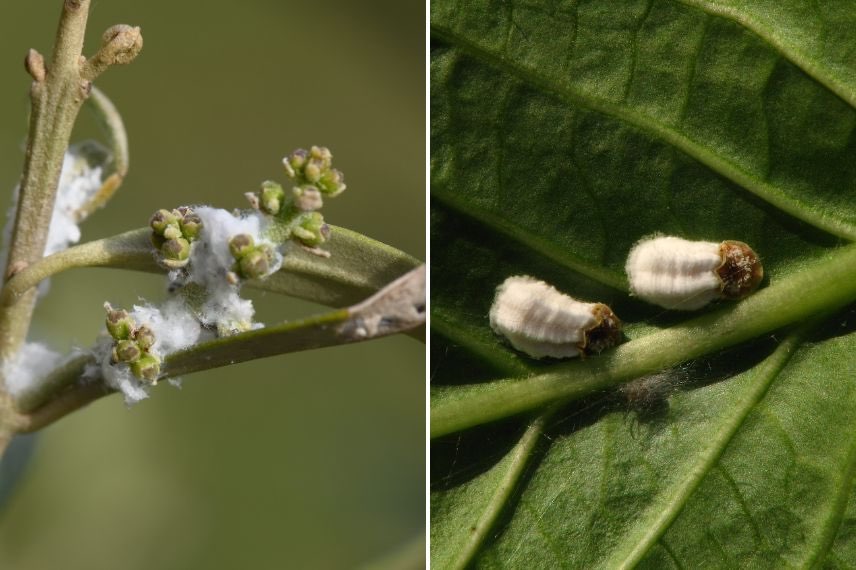
Cottony masses and mealybugs on the undersides of the leaves
Some general tips for good practice
Integrated management of diseases and pests
Managing diseases and pests is not limited to one-off interventions; it requires a holistic, preventive approach. Integrated pest management involves using sound, organic and mechanical practices to reduce pest populations and overall disease risks in the garden.
Importance of plant diversity
Plant diversity in the garden creates a more resilient ecosystem where pests and diseases are less likely to spread widely. Take inspiration from permaculture principles. Promote biodiversity by leaving less-managed, wilder areas in the garden.
Use of natural, environmentally friendly products
Opt for natural treatment products that also preserve biodiversity. Organic fertilisers, composts and mulches are not only better for plant health, but they also contribute to soil health and disease prevention.
- Subscribe!
- Contents
Comments