





























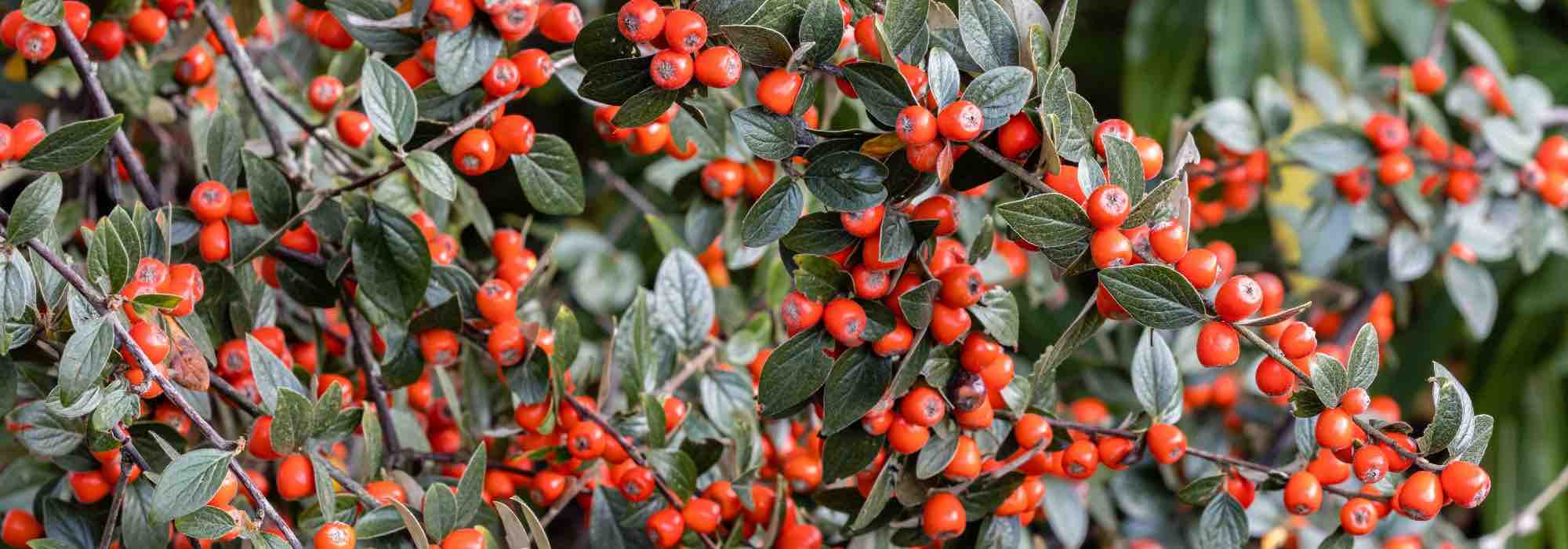
Diseases and pests of Cotoneaster
How to recognise and treat them naturally?
Contents
Cotoneaster, valued for its dense foliage and attractive berries, is a robust bush that is easy to grow. Used as groundcover on a slope, as a hedge or as an ornamental tree in a garden, it displays different habits and has evergreen foliage that turns fiery in autumn. It offers a white or pink flowering in spring, followed by a profusion of small colourful fruits. Very hardy, it is not demanding about soil type and establishes itself in full sun. Vigorous, this bush is, like all plants, susceptible to various diseases and pests. The most feared is fire blight, but it can also be attacked by pests. Discover how to identify, prevent and treat the most common diseases and pests of Cotoneaster naturally.

Fire blight, a serious threat
Cotoneaster is susceptible to fire blight, a serious disease caused by the bacterium Erwinia amylovora, which attacks certain plants of the Rosaceae family, including Cotoneasters. This disease is particularly dangerous, as it can spread rapidly to other plants in the garden and cause considerable damage.
Symptoms
Fire blight can be recognised by various symptoms. The leaves wilt and turn brown, the branches, the stems and the flowers appear scorched or blackened. A viscous, whitish ooze may also be observed on the bark.
Prevention
As this disease can be fatal to the bush, prevention is better than cure. Prevention consists of thoroughly disinfecting pruning tools in the garden before using them and avoiding excess moisture. A regular monitoring of the bush to quickly identify any sign of fire blight and act promptly is also an essential preventive measure.
Treatment
Unfortunately, there is no curative treatment. All parts of the Cotoneaster affected by fire blight must be removed by cutting them back very short and destroyed by burning. If the bush is particularly affected, it should be uprooted completely and destroyed to prevent any spread. The appearance of the fire blight disease must be reported to the town hall or the Regional Plant Protection Service.
For further reading, consult our article: “Fire blight: preventing and controlling this disease”
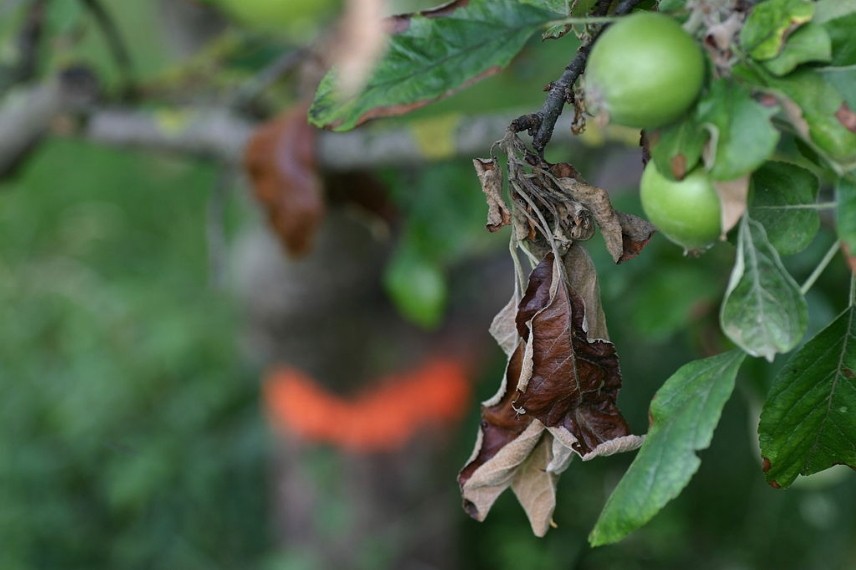
Wilting and browning of leaves characteristic of fire blight
Read also
Cotoneaster: which to choose?Aphids
Aphids are small sap-sucking insects that attack young shoots and leaves. They appear in spring and summer. They can weaken the plant and thereby leave it vulnerable to disease.
Symptoms
You may notice the presence of small green or brown aphids on young leaves, shoots and stems. They are often found on the undersides of leaves. Ants may also be attracted to these aphid colonies. Under the action of aphids, leaves and shoots become deformed and covered with honeydew, a sticky substance. A black coating may also appear on the honeydew. This corresponds to the appearance of sooty mould, a fungal disease caused by a fungus. This impairs the plant’s photosynthesis.
Prevention
To prevent the appearance of aphids, one preventive method is to introduce natural predators of these insects such as ladybirds which feed on them. It is also recommended not to overuse nitrogen-based fertilisers, as they encourage the development of aphids.
Treatment
Among natural methods for treating aphids, you can use a mixture of black soap and water to spray on affected stems, leaves and shoots. In one litre of water, dilute 15 to 30 g of black soap. The treatment should be repeated as often as necessary and regularly in order to get rid of aphids effectively.
Prior to this, you can remove the aphids by hand with a soaked cotton pad or spray the stems and leaves of the bush with a strong jet of water to dislodge them from the plant.
For further reading, consult our article: “Aphid: identification and treatment”.
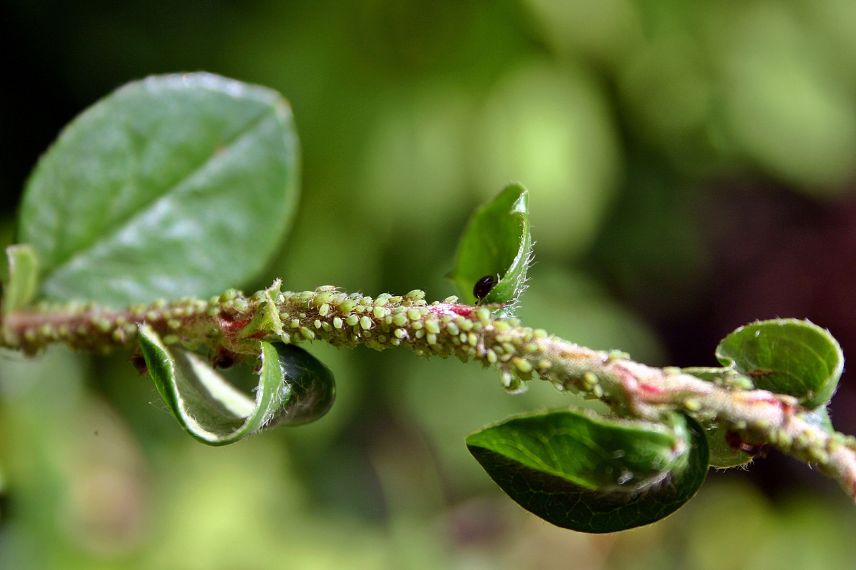
Aphids, often very common in the garden
Scale insects
Scale insects are small piercing‑sucking insects that parasitise the leaves, young shoots, stems and branches of plants. Immobile, they are difficult to spot and are covered by a shell that protects them from treatments. There are different types of scale insects, such as the mealybug with a white shell and the armoured scale with a brown or black shell. These parasites suck the sap from the plant, thus weakening the attacked bush (as aphids do).
Symptoms
These insects, 1 to 6 mm long, appear as small white or black shells, or as little cottony clusters. When you scrape the bark with your nail, these small shields come away from the branch easily. Yellowing of the leaves and the presence of sticky honeydew on which sooty mould can develop are other possible symptoms of scale insect attacks.
Prevention
Scale insects develop in confined, warm and humid environments, so maintaining good air circulation around the Cotoneaster is a good preventive measure. You can also encourage the development of natural predators of scale insects, namely certain ladybirds, lacewings and hoverflies.
Treatment
Several natural treatments are possible. You can soak a cotton bud with 90° alcohol or soapy water and use it to remove scale insects from stems, leaves and branches. You can also remove them with a knife that is not too sharp and then burn them. Another method: spray a solution of black soap, alcohol, oil and water onto the infested parts. To prepare this solution, mix in a sprayer:
– 1 teaspoon of liquid black soap
– 1 teaspoon of denatured alcohol
– 1 teaspoon of vegetable oil, such as rapeseed oil.
Spray twice, 30 minutes apart, then repeat the operation every 8 days until the scale insects have disappeared.
Further reading, consult our advice sheet: Mealybug: identification and treatment.
Other rarer diseases and pests can attack a Cotoneaster such as collar gall, root rot and defoliating caterpillars.
In addition, see our sheet: Identify the main parasitic insects and plant diseases, as well as our full sheet on Cotoneaster planting and maintenance.
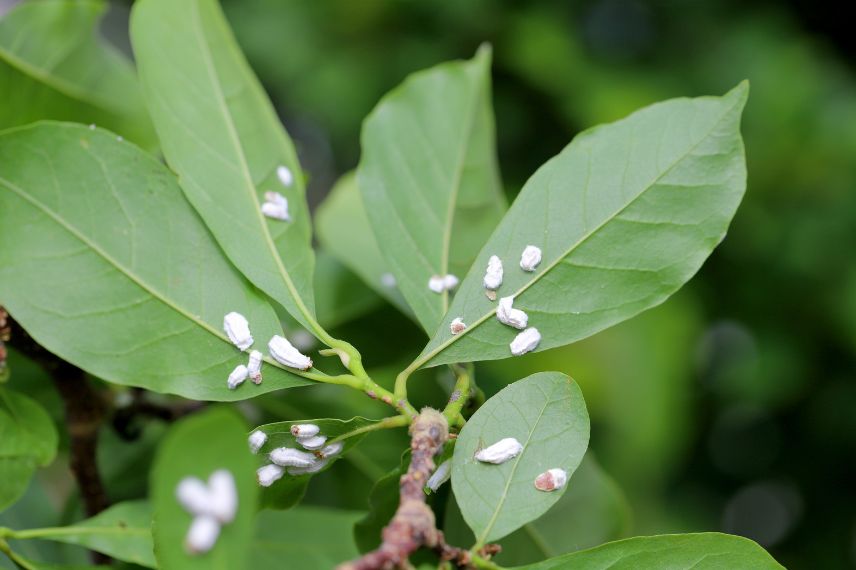
Scale insects, easily identifiable
- Subscribe!
- Contents
Comments