


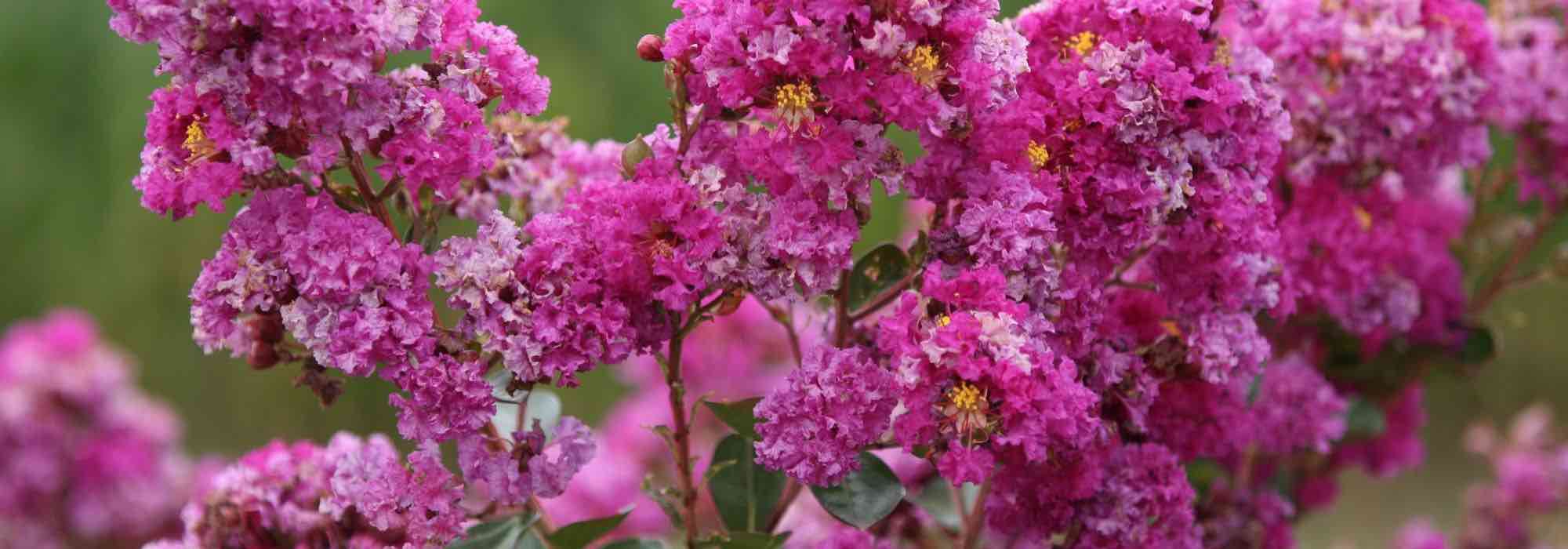
Diseases and pests of crape myrtle or Lagerstroemia
Identification, prevention and natural solutions
Contents
Lagerstroemia, also known as crape myrtle or summer lilac, is a shrub with beautiful, colourful summer flowering in curly panicles. It is also valued for its ornamental foliage, which takes on beautiful, fiery autumn colours, as well as for its remarkable bark, which peels with age.
This shrub is hardy and fairly easy to grow, provided it enjoys sun, fertile and moist soil. Fairly hardy, it can, however, be susceptible to certain pests or diseases. Let us look at how to identify the most common cultivation problems, prevent them and treat them naturally if necessary.
And to learn all there is to know about crape myrtle cultivation, discover our full guide: Lagerstroemia, crape myrtle: planting, growing and care.

Powdery mildew
Description and symptoms
Powdery mildew is a fungal disease, i.e. it is caused by a fungus. It is one of the most frequently encountered diseases in the garden. If it is also known as the “white disease”, it is because it is one of the main symptoms used to recognise it. It is identified by, in fact, the white-grey, powdery-feathery coating it leaves on the plants. This disease affects all above-ground parts: leaves, stems and flower buds.
Ultimately, it causes the leaves to dry out, premature leaf drop, deformation of flowers and new shoots.
Powdery mildew thrives particularly in warm and humid conditions, as well as confined atmospheres. The disease appears in spring or autumn and is highly contagious. It can spread quickly to neighbouring plants.
Prevention
As a precaution, you can take a variety of measures to prevent powdery mildew from appearing, as well as other fungal diseases in general.
- Start by improving the growing conditions of your crape myrtles. Meet their needs by growing them in a sunny location, sheltered from the wind. Avoid calcareous or overly heavy soils, which will retain excess moisture. If you are growing several plants, for example in a hedge, ensure planting distances to promote natural aeration. Avoid planting a Lagerstroemia on a plot that has recently been contaminated in the past: the spores can indeed survive in the soil for a long time.
- Inspect your plants regularly, to quickly identify any signs of disease and prevent spread.
- During pruning (balancing pruning, removing faded flowers, etc.), always remember to disinfect your cutting tools beforehand with alcohol. This limits the risk of disease transmission between plants.
- When watering, avoid wetting or splashing the foliage.
- If you fertilise your crape myrtle, limit excessive nitrogen inputs, which can weaken the plant and make it more susceptible to diseases.
Natural treatments
As soon as the first symptoms appear, cut away the affected parts immediately and dispose of them at a household waste recycling centre. Do not compost them, as the spores may survive and contaminate other plants in the future. As a treatment, you can use a copper sulfate-based fungicide, such as Bordeaux mixture. This powder is approved for organic farming. However, its use remains controversial, as systematic and excessive use can disrupt soil balance, cause pollution and encourage the development of new pathogens. Therefore, use this product sparingly. You can also opt for a sulfur-based fungicide.
Even though their effectiveness has not been scientifically proven, plant manures or plant decoctions are prized by many gardeners, both for preventative and curative use. Nettle and horsetail manures would help strengthen the plants’ natural defences and have antifungal properties. They should always be used diluted in water, then sprayed onto the infected parts away from direct sunlight. Find our tutorial on making nettle manure or our tutorial on making horsetail manure.
For more information on this disease, discover our related articles “Powdery mildew or the white disease” and “All you need to know about fungal diseases”.
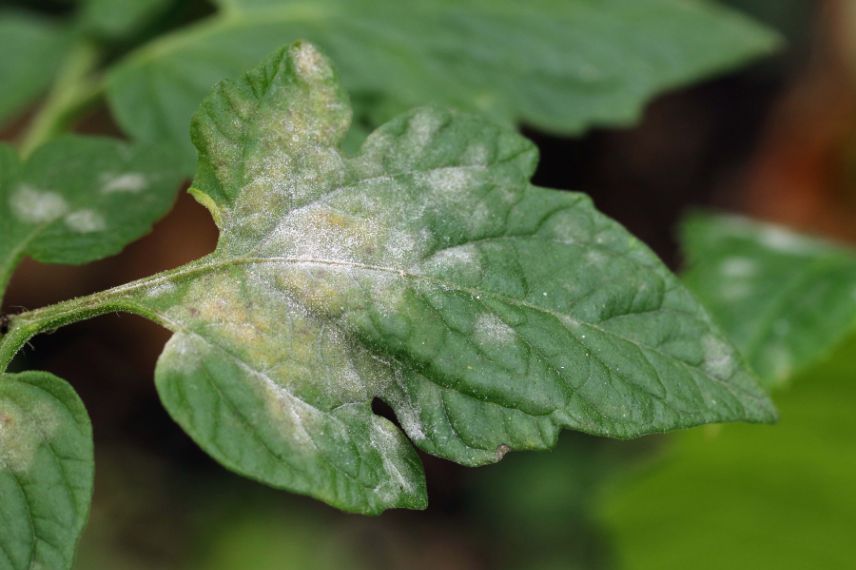
Manifestation of powdery mildew on the leaves of plants
Red spider mites
Description and symptoms
These are tiny mites measuring barely 1 mm, that feed on the sap of crape myrtles. Their small size makes them hard to spot, but their presence becomes evident as webs appear on foliage, which resemble spider silk and explain their name. In addition, the foliage may develop yellow or white spots. It will then dry out and eventually fall off. The plant’s photosynthesis may be affected. In cases of particularly severe infestation, these parasitic pests can cause the plant to decline.
Red spider mites thrive in enclosed, warm and dry conditions, which is why they are commonly found during cultivation in a veranda or glasshouse. Summer is a particularly favourable season, and these pests develop very quickly.
Prevention
As a preventive measure, again, care for the growing conditions of your crape myrtles. Plants grown in accordance with their needs will naturally be more resistant to pest and disease attacks.
Regular observation of the foliage of your plants will also help detect the presence of the first pests sooner.
Avoid fertilisers that are too rich in nitrogen, which make the aerial parts of the plants more appealing to piercing-sucking insects.
If your crape myrtle is grown in a dry and confined atmosphere, remember to aerate regularly and, ideally, to move it outdoors during the warmer months.
As red spider mites favour dry conditions, you can install organic mulch at the base of your plants to retain moisture for longer.
Nettle and horsetail manures would also help deter pests and limit parasitic attacks.
Natural treatments
At the early stage of infestation, you can spray the foliage to wash off the pests. Do this away from direct sunlight, which could damage the foliage. If you can, isolate the affected plant for the time needed to verify that the red spider mites have indeed been eliminated, to limit the risk of spread.
If the infestation is serious, use a natural insecticide based on black soap. To do this, mix in a spray bottle 1 to 2 tablespoons of black soap in 1 L of lukewarm water (preferably rainwater). Let it cool to room temperature. Spray onto the affected parts away from direct sunlight. Repeat after a week if necessary. Note that this insecticide, even though natural, is not selective. Be sure before treatment that there are no other beneficial insects on your crape myrtle.
If the plant is too infested, its survival may be threatened, especially if it is a young plant. It may then be preferable to remove it to prevent spreading to other plants.
For more information: « Red spider mite: identification and treatment »
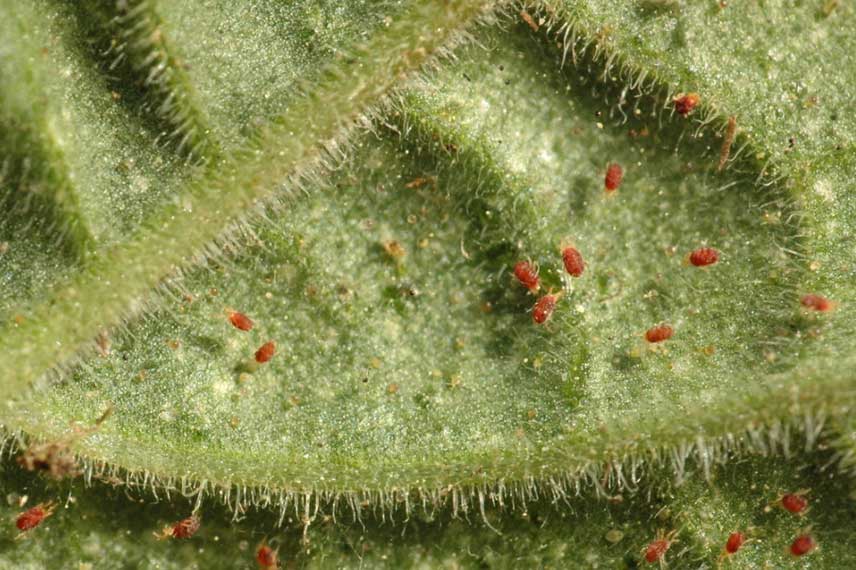
Zoomed view of red spider mites on the leaves. The silk threads of the webs are sometimes more visible
Whiteflies
Description and symptoms
Whitefly is a small insect with floury-textured wings. It has two pairs of wings with a floury texture.
As you approach an infested plant, a cloud of tiny whiteflies takes flight, betraying their presence.
These pests favour warm, dry conditions in confined, poorly ventilated spaces, just like red spider mites.
By piercing plants to feed on sap, they weaken them. Surtout, comme les pucerons, they secrete honeydew, a substance that promotes the development of a fungal disease: sooty mould. This is visible as a sticky black soot on leaves, limiting photosynthesis. Whiteflies can also transmit other pathogens and provide easy entry points for other diseases.
Plant growth is affected; leaves yellow, and flowering is less abundant. A whitefly infestation can even cause a crape myrtle to decline.
Prevention
Prevention methods are the same as for red spider mites (see above).
In addition, favour biodiversity in the garden, to attract natural predators of whiteflies. To do this, ban chemical products, leave fallow patches, grow melliferous flowering plants, install insect hotels, provide water sources, etc.
Natural treatments
Natural treatments are the same as for red spider mites (see above): spray the foliage, use a natural insecticide based on black soap, or try plant manures.
In addition, you can opt for biological control (biological control), which involves introducing a whitefly predator (parasitic wasps Encarsia formosa, green bugs Macrolophus pigmaeus, small black ladybird Delphastus pusillus) to eliminate them. However, these products need to be used under specific conditions to work and are more effective as treatments in a confined space.
It is also possible to trap adult whiteflies using coloured sticky bands. However, this device, while effective, is not selective and may also affect other insects, even beneficial ones.
For more information: “Whitefly or white fly: identification and treatment” and “Biological control in the garden and the vegetable patch: beneficial insects.”
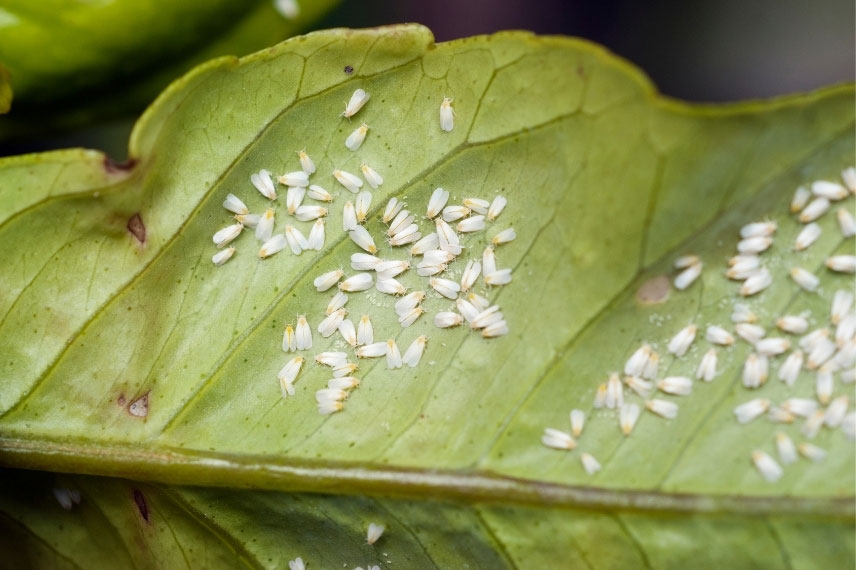
Whiteflies
- Subscribe!
- Contents
Comments