





























Diseases and pests of Elaeagnus
Identification, prevention and natural remedies
Contents
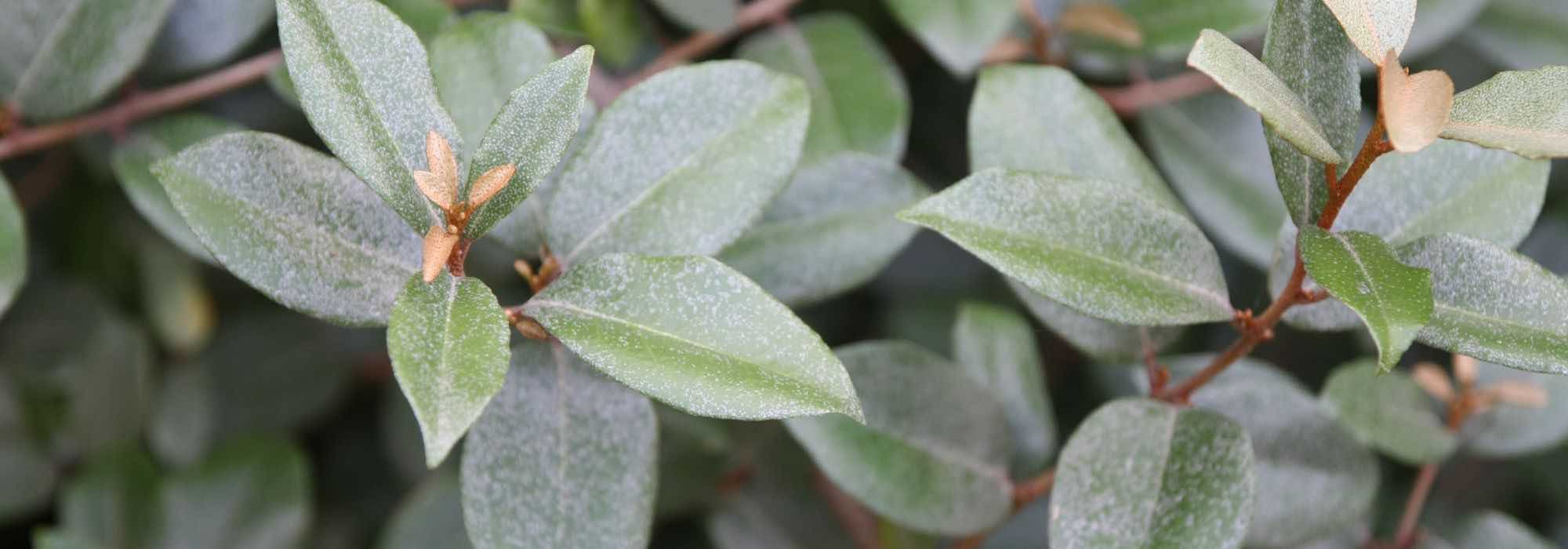
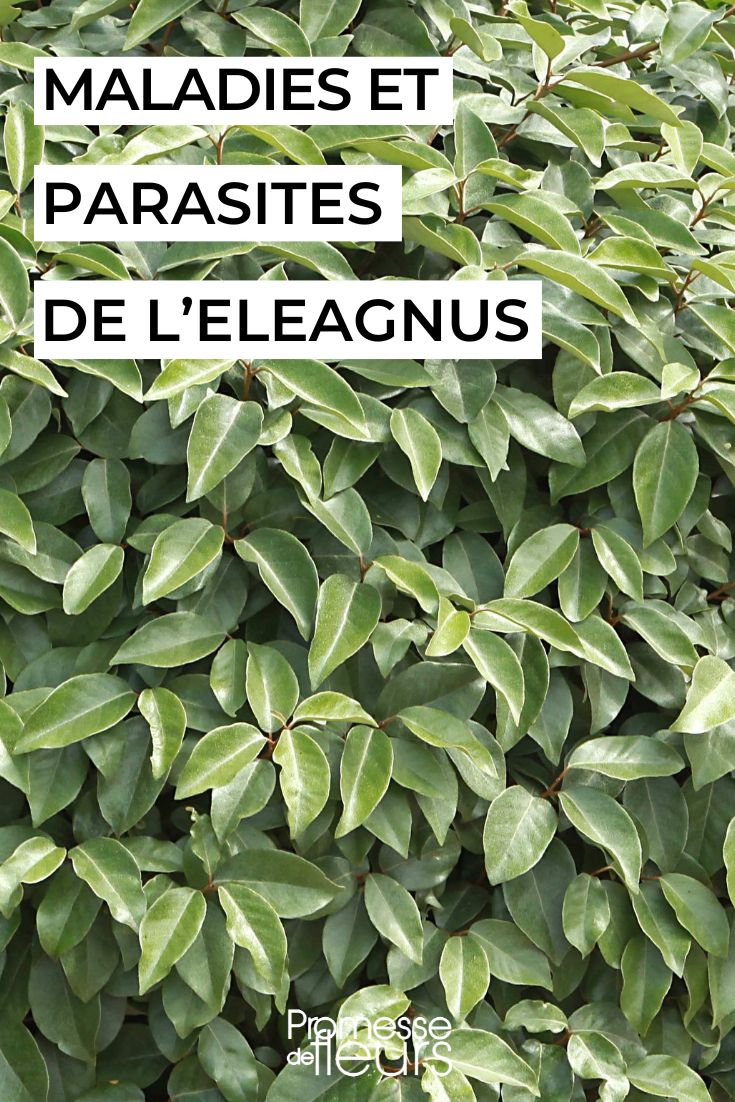
Elaeagnus, also called oleaster, is a dense, vigorous bush often used to form a hedge. It has lanceolate, green or silvery foliage, most often evergreen, and inconspicuous, slightly fragrant flowers, followed by the appearance of berries. Fast-growing, it tolerates drought, cold, wind and pollution. It thrives in full sun or partial shade and adapts to all well-drained soils — sandy, even dry and poor — but not calcareous. Although it is reputed to be hardy, Eleagnus, like any plant, can be affected by certain diseases or pests. To keep it healthy, it is important to learn to recognise these potential problems so they can be dealt with as quickly as possible. Discover the diseases and pests that can affect Eleagnus, their symptoms, and methods to prevent and treat them naturally.

Coral disease
Coral disease is caused by a fungus called Nectria cinnabrina. It generally affects plants weakened by disease or injury. This is a serious disease that can kill the shoots and the branches of the bush. It appears as small coral-coloured spheres on the bark of the Elaeagnus and can spread very quickly to nearby trees and bushes.
Symptoms
The most visible symptoms of coral disease are small, spherical and smooth lesions or pustules that form on the bark. These lesions, similar to cankers, are distinguished by their coral-red or orangey colour, hence the name of the disease. They turn brick-coloured or black over time. They usually start as small spots that enlarge to release spores when mature, which will settle in the cracks or wounds of other plants. The fungus involved blocks the plant’s vessels and prevents the sap from circulating, causing the drying out of buds and shoots. Cracks then appear in the bark and the shoots die.
Methods of prevention
Coral disease spreads on weakened or wounded plants or on dead wood. The best way to prevent it is therefore to keep the Elaeagnus healthy and avoid injuring it. Regularly clear the bush of its dead shoots, cutting them properly with disinfected tools. Apply a wound-sealing putty to the area where you have cut to protect it from fungal attack. You can also apply a mixture of clay and bouillie bordelaise to the cut to protect it.
Treatment
If you notice small coral-red spheres on the branches of the Elaeagnus, cut the affected shoots with a pruning shear or a saw disinfected beforehand. If the entire Elaeagnus is affected, it is best to destroy it to prevent the disease spreading to other plants in the garden.
Apply putty to the wounds caused by the pruning of the cut shoots.
Then, spray a copper-based fungicidal treatment such as bordeaux mixture over all parts of the shrub.
Then regularly clean the garden and remove dead shoots, as they can contaminate other plants.
For further reading, discover our advice sheet: How to prevent coral disease?
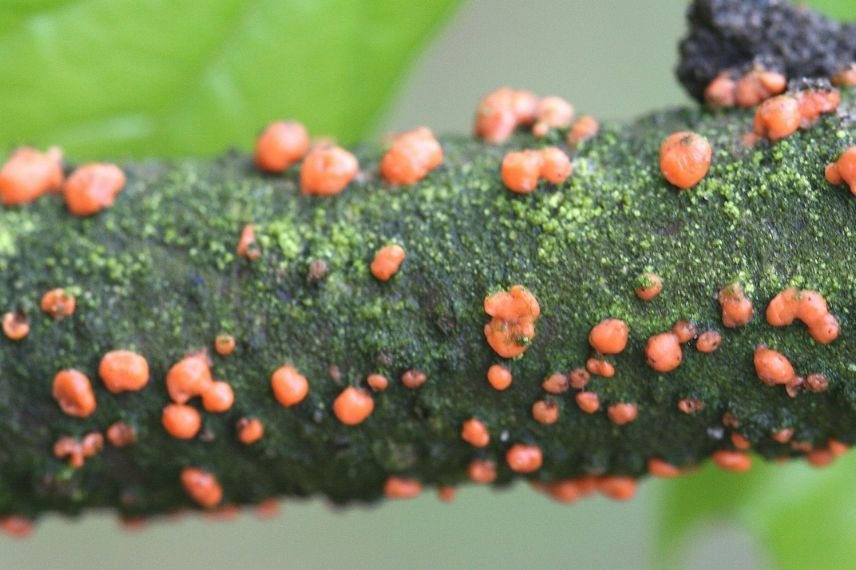
The characteristic pustules of coral disease
Read also
Elaeagnus: when and how to prune?Chlorosis
Chlorosis is the result of a nutrient deficiency, most often an iron deficiency, and appears as yellowing of the leaves. It can be caused by various factors such as problems related to soil with too high a pH or an excess of lime, or by hard water. This condition can slow the growth of the plant and cause affected leaves to drop.
Symptoms
Chlorosis typically appears as yellowing of the leaves, particularly between the veins, which remain green. This yellowing may appear across the whole plant or be localised on certain branches.
Prevention methods
As chlorosis can result from excess lime in the soil or in the irrigation water, plant Eleagnus in non-calcareous soil and water it with rainwater rather than tap water.
Treatment
To treat a chlorosis problem on an Eleagnus, several solutions are possible. You can add well-rotted compost to the soil and a little heather soil to make the substrate less calcareous. Water also with rainwater. Other possible natural treatments: add to the irrigation water an iron chelate-based product and mulch the base of the Eleagnus with pine needles which will add acidity to the soil, helping to correct its excess lime.
It is also recommended to ensure that the soil is well drained.
further reading, discover our advice sheet on the iron chlorosis.
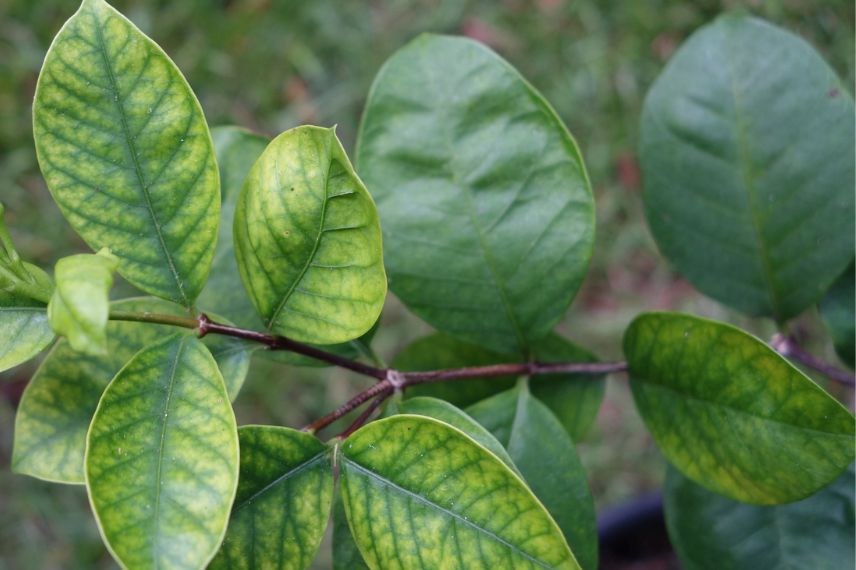
Chlorosis causes leaf discolouration, the veins remain green
The psyllids
Psyllids are harmful insects that can affect Eleagnus. These small parasites are tiny sucking aphids that feed by sucking the sap of the leaves and young shoots, causing various symptoms and damage. Psyllid infestations can be particularly troublesome and require prompt attention to prevent serious damage to the plant.
Symptoms
Signs of a psyllid infestation include the presence of the insects themselves, which are small and often green or yellow. They measure between 2 and 6 mm long and move across the leaves by hopping. The damage caused by their presence appears as deformation of the leaves and shoots, as well as the production of a sticky substance called honeydew, waxy filaments and a black dust called sooty mould, which is caused by a fungus. Leaves curl up and then fall. You can also observe under the leaves the psyllid larvae, which look like tiny yellow, brown or green slugs. When the plant is infested with psyllids, ants are also often present.
Methods of prevention
The presence in your garden of natural predators of psyllids such as ladybirds and hoverflies can help prevent the development of these pests.
Treatment
Natural methods for treating psyllids are the same as for aphids.
Spray the affected parts with a 5% solution of black soap in water.
You can also introduce natural predators of psyllids, such as ladybirds or hoverflies, into your garden.
For further reading, see our advice sheet: How to get rid of psyllids?
Additionally, see our sheet: Identify the main parasitic insects and plant diseases, as well as our full sheet on the planting and maintenance of Eleagnus.
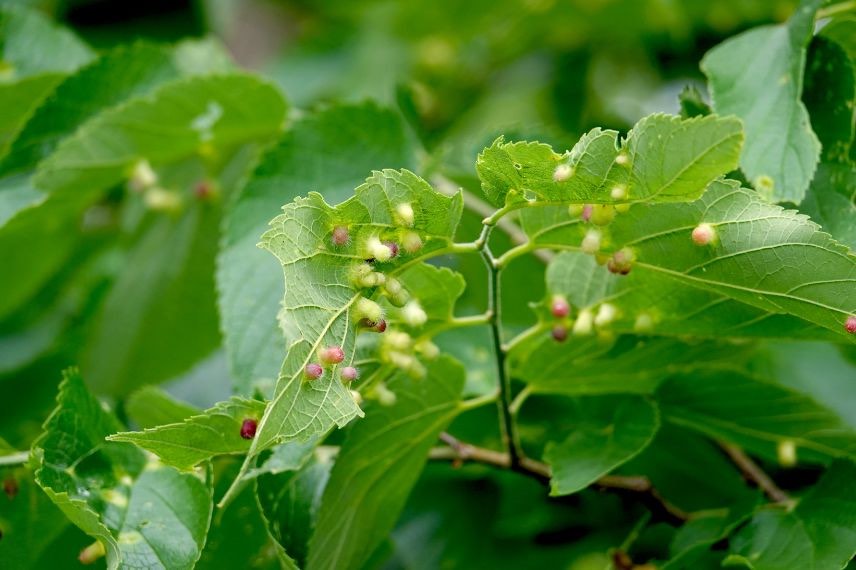
Psyllid larvae under the leaves
- Subscribe!
- Contents
Comments