





























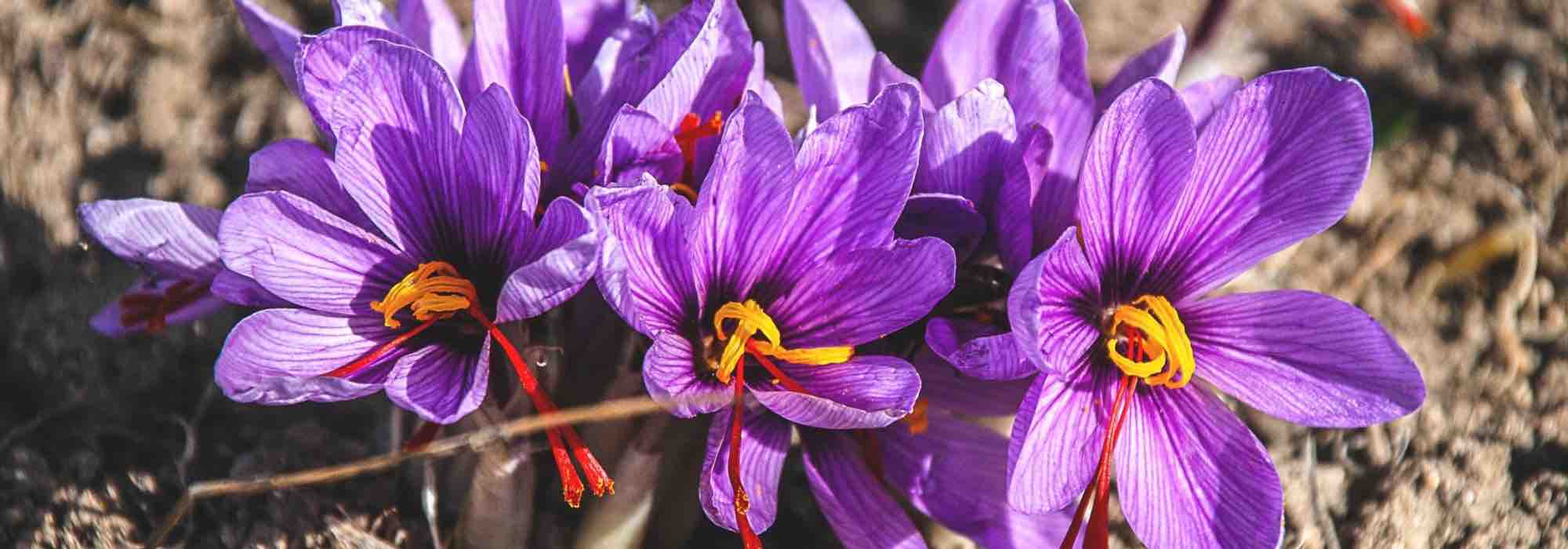
Diseases and pests of saffron
Identifying and preventing
Contents
Crocus sativus, from which the precious saffron filaments are harvested, can be affected by several diseases, parasites and pests. They can jeopardise the harvest and subsequent harvests if the symptoms are not identified in time. Discover in this article the different risks to protect your crops.

Fungal diseases of saffron
The two main diseases that can affect saffron are Fusarium wilt and violet root rot, highly contagious. We have listed a few others, less common.
Fusarium wilt
The Fusarium wilt, caused by the fungus Fusarium oxysporum, is a disease that affects saffron crops. This fungus invades the corms (bulbs) and infects the root system, disrupting uptake of water and nutrients. This soil-borne fungus is often present in the soil, but it becomes particularly virulent under favourable conditions such as excessive moisture, poor drainage or prolonged monoculture. Fusarium wilt can not only significantly reduce yields, but also cause plant death if not treated promptly.
Fusarium oxysporum is a very resilient fungus that can survive in soil for many years as dormant spores. It is mainly transmitted through soil, contaminated tools or infected bulbs. When it comes into contact with saffron corms, it spreads through the vascular tissues and obstructs the plant’s vessels. It is this obstruction that causes visible symptoms, such as wilting and yellowing of the leaves. The fungus can also spread via irrigation water, making containment even more difficult once it has infested a plot.
Initial symptoms of Fusarium wilt may go unnoticed, as they first develop at the roots and underground corms. Gradually, visible signs appear on the aerial part of the plant: progressive yellowing of the leaves, necrosis on the bulbs, along with general wilting of the plant and stunted growth.
Conditions favourable to the development of Fusarium wilt are poorly drained soils and excessive moisture.
To prevent this disease, crop rotation (avoid planting saffron on the same plot for several years), ensure the soil is well drained, and disinfect gardening tools.
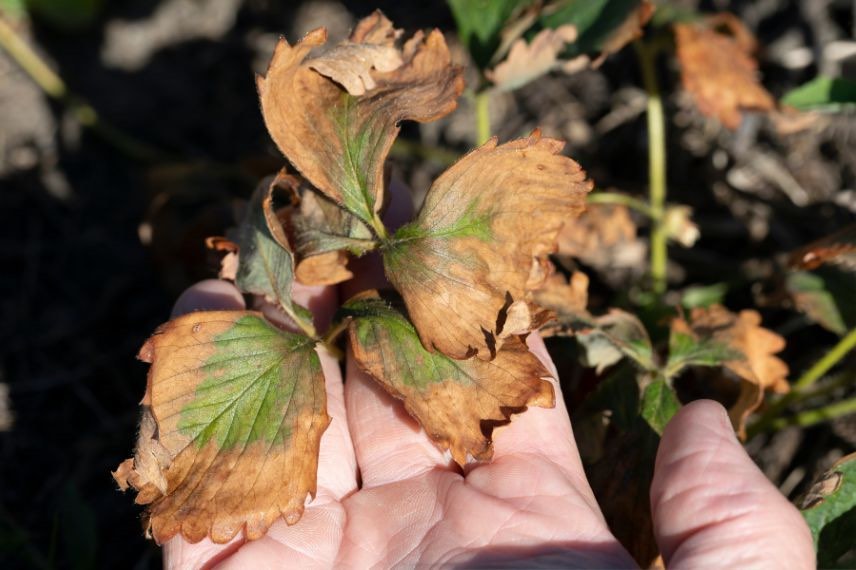
Strawberry leaves affected by Fusarium wilt
Violet root rot
Violet root rot, caused by the fungus Rhizoctonia crocorum, is another major saffron disease, insidiously attacking the corms (bulbs). It manifests as a dark purple rot that gradually invades the bulb, leading to advanced decay.
Visible symptoms are wilting of the leaves, slowed growth and purplish spots on the corms. Violet root rot develops mainly in overly damp, poorly drained soils.
Prevention for this disease also relies on healthy bulbs, soil drainage, and crop rotation. Careful inspection of the corms before planting is crucial to prevent introducing the fungus into the plot.
If, despite preventive measures, bulbs are infected with Fusarium wilt or violet root rot, they must be destroyed.
Grey mould
Grey mould, caused by the fungus Botrytis cinerea, mainly affects the aerial parts of saffron, particularly the leaves and flowers. This disease typically appears when conditions are too humid, especially with overwatering or poor air circulation around the plants.
Symptoms appear as brown and black spots on the leaves and flowers, followed by rapid wilting. In advanced cases, a grey mould may cover the infected parts.
Prevention relies on proper irrigation management, avoiding waterlogged bulbs. The use of natural fungicides, such as horsetail infusion or copper-based products, can help reduce the risks.
Rust
Rust is a fungal disease caused by several species of fungi that mainly attack saffron leaves. It is characterised by the appearance of small orange to reddish pustules on the leaves, which eventually necrose, weakening the plant and reducing photosynthesis. This leads to reduced growth and flowering.
Rust generally spreads in humid weather, but also when plantings are too dense.
To limit its appearance, promote good air circulation. Copper-based fungicides may be applied to combat this disease, but adopting good cultural practices, such as crop rotation and removing infected plants, remains essential to prevent its development.
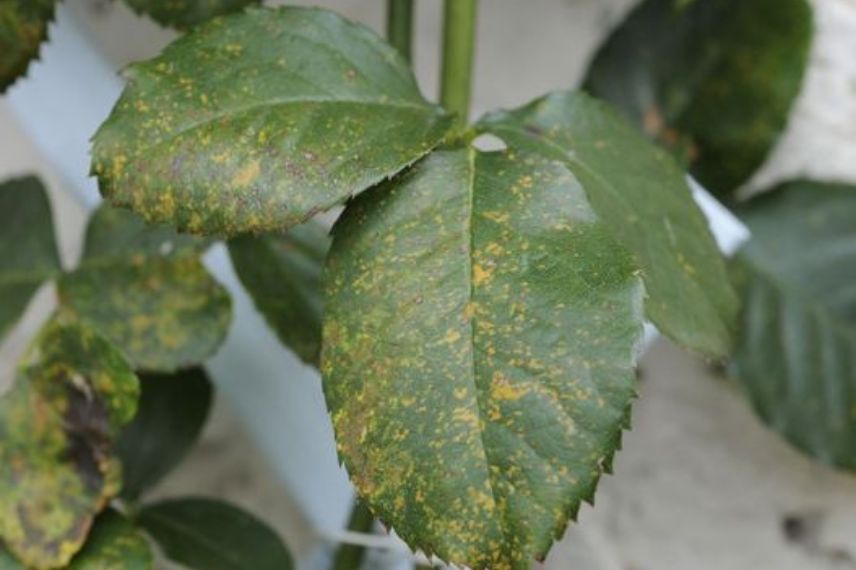
Rust symptoms on a rose leaf
Rodents and parasitic pests of saffron
Rodents and moles
Rodents such as rabbits, field voles and field mice, as well as moles, pose a threat to saffron bulbs. These animals dig into the soil in search of food and can seriously damage the corms, or even destroy a large portion of the harvest in a season.
Bulbs unearthed, gnawed or displaced are clear signs of rodent activity. Plants may also appear suddenly wilted or dead if the corms have been eaten or moved by rodents or moles.
Rodents multiply rapidly and can cause significant damage in saffron fields, especially in autumn and winter when food is scarcer. Moles, although they do not feed directly on the bulbs, disturb the soil by digging their tunnels, thereby exposing the corms to attacks by rodents.
To protect the bulbs, it is possible to use meshes or baskets to prevent rodents from accessing the corms. Natural deterrents, such as certain strongly-scented plants, can be planted at the edges of the crops to discourage these pests.
Read our tips to deter these rodents in our article on field mice and the one on fighting against the mole or field vole.
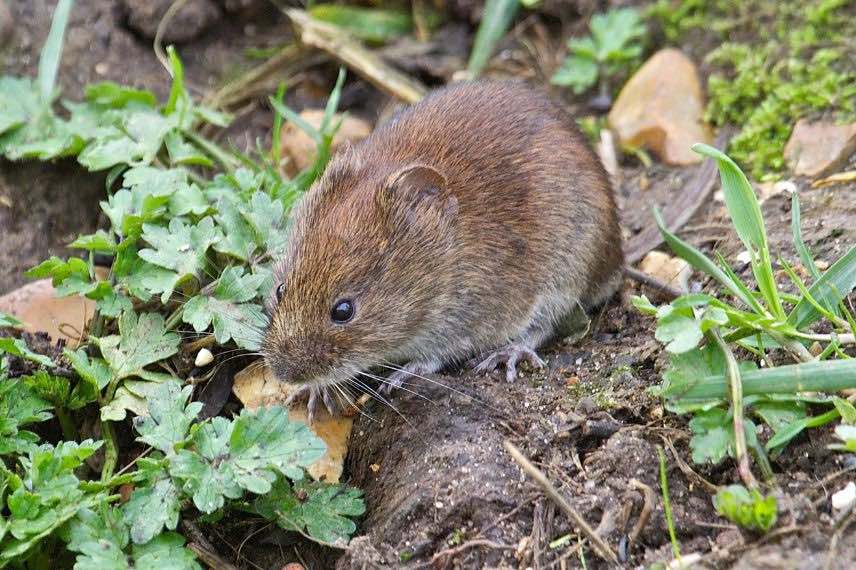
Small field vole
Birds
Birds, drawn to young shoots and freshly planted corms, can cause significant damage in saffron fields. They are particularly fond of young plants that emerge from the soil, but may also dig to access the bulbs.
Saffron plants can be uprooted or damaged by the beaks of birds. The bulbs, for their part, can be unearthed and scattered on the soil surface. Signs of birds’ presence include claw marks or feathers around damaged plants.
Birds, particularly corvids (crows, magpies), can act individually or in groups, and damage can be significant in a short time. They are especially active at the start of the growing season, when the freshly planted bulbs begin to sprout.
The most common method for combating birds is to install protective nets over the plantings. Deterrent devices, such as shiny objects or reflective strips, can also be used to deter them. Other methods include installing fake predators (such as kites shaped like birds of prey) or sound devices to deter them.
Nematode pests
Nematodes are microscopic worms, often invisible to the naked eye, that attack the roots and corms, causing damage that can be irreversible.
Nematode-infested plants show signs of general decline: yellowing of leaves, slowed growth and wilting of the aerial parts. Underground, the corms may show lesions or abnormal swelling, and the roots are generally atrophied, which prevents the plant from absorbing water and nutrients properly.
Nematodes spread mainly through soil and irrigation water, but they can also be carried by infected bulbs. Warm and humid conditions are particularly conducive to their development.
Soil solarisation is a natural method that involves covering the soil with a clear plastic sheet in midsummer to create intense heat, thereby killing the nematodes. Crop rotation is also essential to prevent the accumulation of nematodes in the soil. Some plants, such as marigolds, are reputed to repel or reduce nematode populations, because their roots secrete a chemical substance, thiophene, which inhibits nematode growth.
Prevention and best cultural practices
Prevention is essential for safeguarding the health and longevity of saffron crops, as once diseases and pests establish themselves, it can be difficult to eradicate them.
Crop rotation
Crop rotation is one of the most effective techniques for preventing the build-up of diseases and pests in the soil. By avoiding growing saffron on the same plot year after year, you significantly reduce the pressure exerted by pathogens specific to this plant.
Alternate saffron crops with plants not susceptible to the same diseases or pests. Crops such as legumes (peas, beans) can be planted between two saffron cycles to improve soil structure and reduce populations of pests such as nematodes.
In all cases, rotate at least every five years.
Plant spacing
The corms should be spaced at least 15 cm apart.
Improving soil structure and moisture management
A well-drained, well-structured soil is essential to prevent saffron diseases, particularly those caused by fungi such as Fusarium wilt and purple Rhizoctonia. Heavy, poorly drained soils create conditions conducive to the development of these pathogens.
Drainage can be improved by adding organic matter, such as compost or well-decomposed manure. These amendments loosen the soil, improve water movement and increase nutrient retention.
Well-aerated soil allows roots to develop properly and beneficial micro-organisms to thrive. Digging or the use of a broadfork helps aerate the soil without unduly disturbing its natural structure.
Avoid excess water. Drip irrigation is recommended to provide a precise amount of water to the bulbs without saturating the soil. This helps prevent water stagnation, a key factor in the development of fungal diseases.
Selection of healthy bulbs
Choosing bulbs is crucial to ensure the health of saffron crops. Infected bulbs can introduce diseases and parasites directly into the field, jeopardising the entire harvest.
It is essential to use only healthy bulbs, free from any disease. Purchasing corms from certified suppliers ensures they have been tested and show no signs of contamination. Before planting, the bulbs should be carefully inspected for any abnormalities (stains, mould, rot).
- Subscribe!
- Contents
Comments