





























Diseases and Pests of Sea Buckthorn
Detecting and treating them naturally
Contents
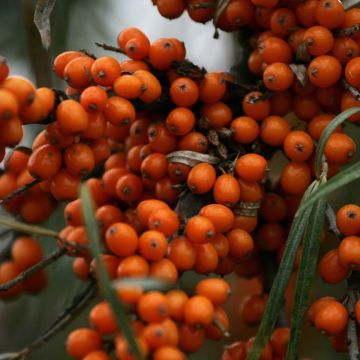
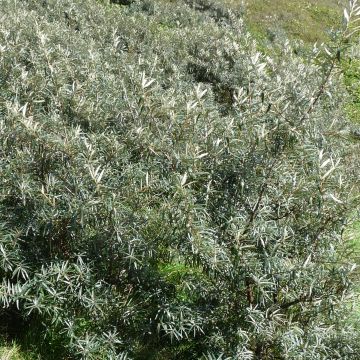
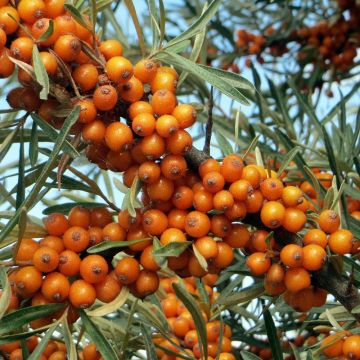
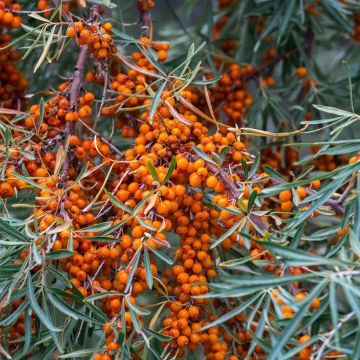
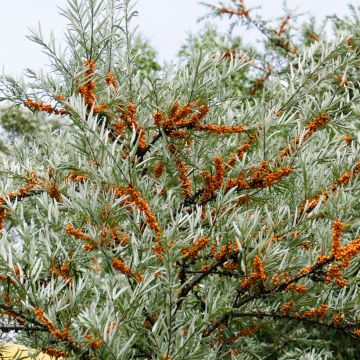
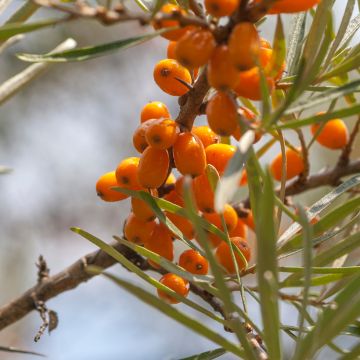
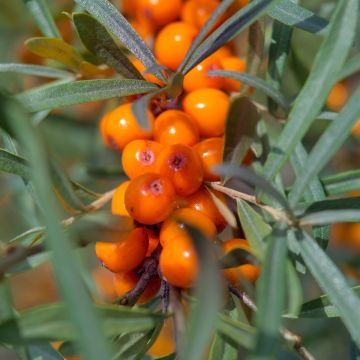
The Hippophae rhamnoides, commonly known as Sea Buckthorn, is a large bush or small thorny tree and deciduous, native to the dunes of Europe, Asia, and North America. It boasts a beautiful, flexible, and bushy silhouette with its fine silver-grey leaves, and its discreet flowering gives way to abundant fruiting on female specimens. Indeed, the Sea Buckthorn is known for its edible orange fruits, the sea buckthorns, which are particularly rich in vitamins A and C, as well as antioxidants. Also called “Shining Thorn,” the sea buckthorn is a very hardy sun-loving bush, well adapted to poor, saline soils and tolerant of drought once established.
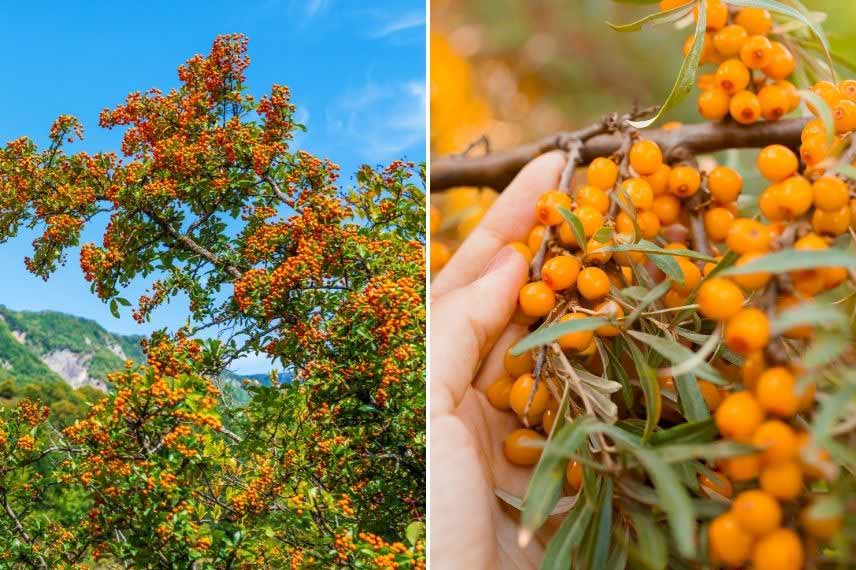
Hippophae rhamnoides, tree and fruits
Particularly resilient and undemanding, adapted to harsh growing conditions, the Sea Buckthorn can nonetheless be subject to attacks from diseases or pests. Here, we list the main ones and ways to address them naturally.

The Sea Buckthorn Butterfly
Symptoms and Cause
The Sea Buckthorn Moth, Gelechia hippophaella, is a night butterfly with four wings and a body covered in scales, which lays its eggs inside the fruits of the Sea Buckthorn before ripeness. The larvae then feed on the pulp, compromising the harvest. The berries shrivel, dry out, and fall. The larvae then burrow into the soil, where they hibernate, continuing their life cycle.
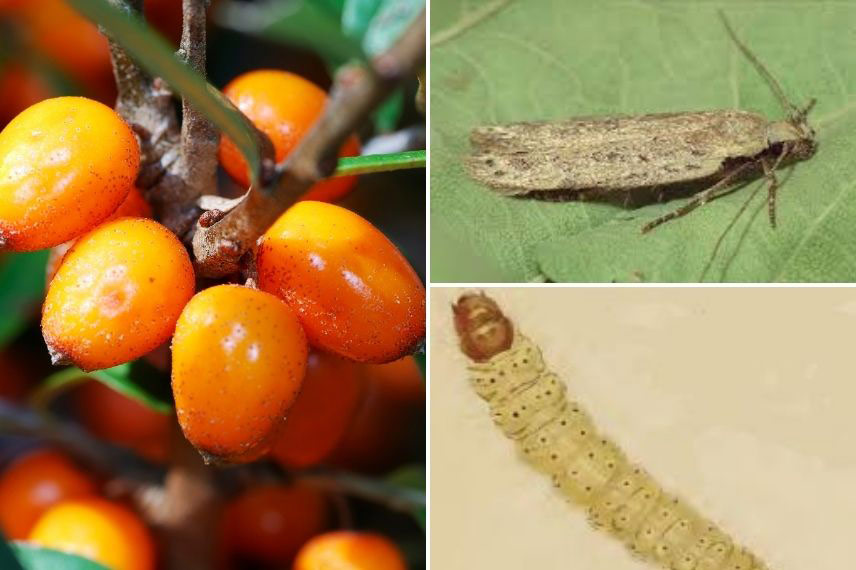
The Sea Buckthorn Moth, Gelechia hippophaella (Wikipedia)
Preventive Measures and Treatment
- Controlling Gelechia hippophaella mainly involves preventing overwintering moths from emerging from the soil and stopping larvae from burrowing into the soil. A thick mulch (10-15 cm) applied at the beginning of spring will be beneficial. It can consist of straw, plant pruning waste, or even compacted seedless adventives placed under the crown after weeding.
- Systematically collect and destroy fallen berries that contain larvae.
Verticillium wilting
Symptoms and Cause
Verticillium wilt is the most dangerous fungal disease for Sea Buckthorn. Capable of killing the tree within two years, it causes yellowing of leaves and branches, followed by necrosis, drying of shoots, and a general weakening of the plant, leading to its death.
Preventive Measures and Treatment
- The cause of the disease is a fungal infection. If it has entered the Sea Buckthorn from above (through wounds in the bark or branches), you can attempt to save it by cutting off the dried branches. If the lesion has reached the root system, the tree will die. As of now, effective control methods have not yet been found, so tree experts recommend digging up and destroying affected specimens and not replanting Sea Buckthorn in the same location for several years. The cut wood must be destroyed to prevent the spread of the disease.
Discover other Hippophae
View all →
Available in 0 sizes
Available in 1 sizes
Available in 1 sizes
Available in 3 sizes

Available in 2 sizes
Available in 1 sizes
Available in 1 sizes
Available in 1 sizes
Available in 1 sizes
Available in 1 sizes
Endomycosis
Symptoms and Cause
Endomycosis is a fungal disease affecting Sea Buckthorn fruits, generally appearing during the first fortnight of August. The affected berries soften and become watery. Then their skin breaks down, releasing not only the fruit’s contents but also the spores of the fungus, which will be carried to healthy berries to infect them in turn. Frequent seasonal rains contribute to the spread of the disease.
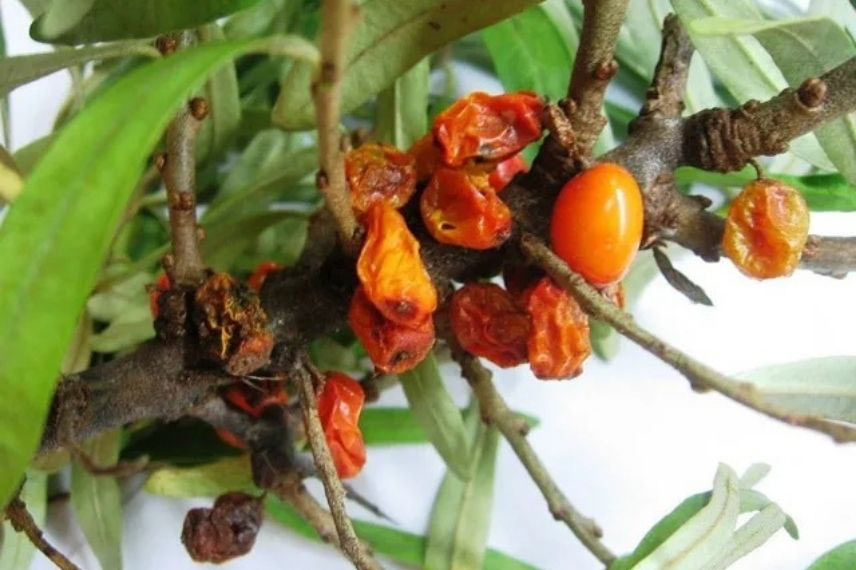 Endomycosis destroys sea buckthorn
Preventive Measures and Treatment
- Pruning the tree allows for better air circulation and prevents moisture stagnation in the branches
- Avoid overhead watering
- In spring and early summer, treat Sea Buckthorns with horsetail manure, for its antifungal and bio-stimulant properties
- In case of infection, collect and dispose of contaminated fruits
- If the attack is severe, an application of Bordeaux mixture should help you overcome it.
→ Find Virginie’s article: How to make horsetail manure? RECIPE AND USES
The Sea Buckthorn Fungus
Symptoms and Cause
The Sea Buckthorn Phellinus or Phellinus hippophaeicola, is a species of fungus in the Hymenochaetaceae family. It primarily parasitises the wood of Sea Buckthorn, but also, more rarely, of Eleagnus. This rather rare fungus develops in isolation or sometimes in small groups that attach laterally by their thickest part. Brown in colour and having no specific odour, it can be found year-round, but only develops outside of frost periods, taking the form of hoof-like structures or ridges 4 to 8 cm wide and 2 to 4 cm thick.
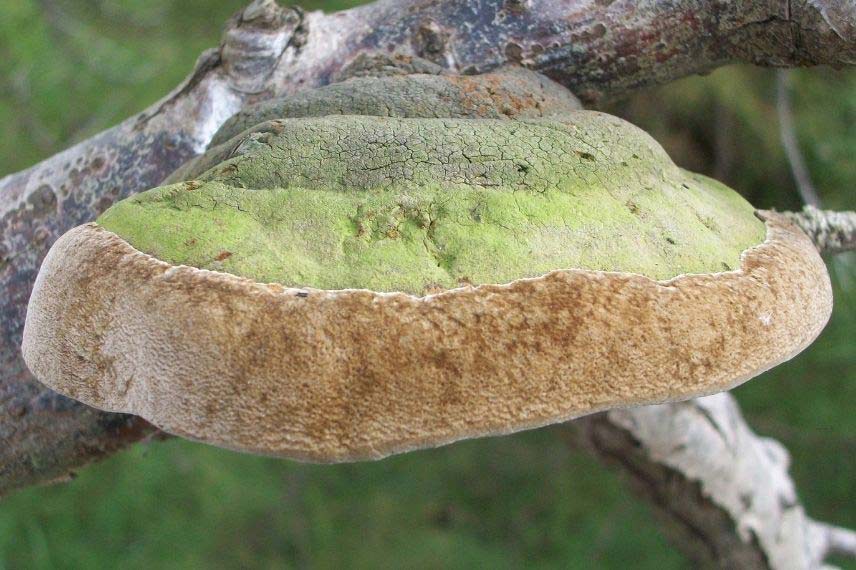 The Sea Buckthorn Phellinus affects dead or dying trees
Preventive Measures and Treatment
- A tree affected by this fungus cannot be treated. A parasite of a wounded and dying tree, the Phellinus develops white rot that degrades lignin. While it can be uprooted, taking the bark with it, its mycelium cannot be destroyed and inexorably degrades the wood. The Sea Buckthorn becomes brittle and falls. Upon its death, the fungus continues its role as a decomposer as a saprophyte.

- Subscribe!
- Contents
Comments