





























DIY: Bird Feeders
DIY Bird Feeder Ideas
Contents
Winter is approaching and the little garden birds have little left to put under their beak. Indeed, fruits are becoming scarce in the garden, apart from a few small berries, and the insects have gone into hibernation for the winter. Our feathered friends could really use a helping hand to get through the coming harsh months, especially if you live in an area where frost and snow occasionally make an appearance. So, to help them out, there’s nothing better than making your own seed feeders to nourish them.
Discover our ideas and tips for making your own seed feeders, DIY style!

When should you feed garden birds?
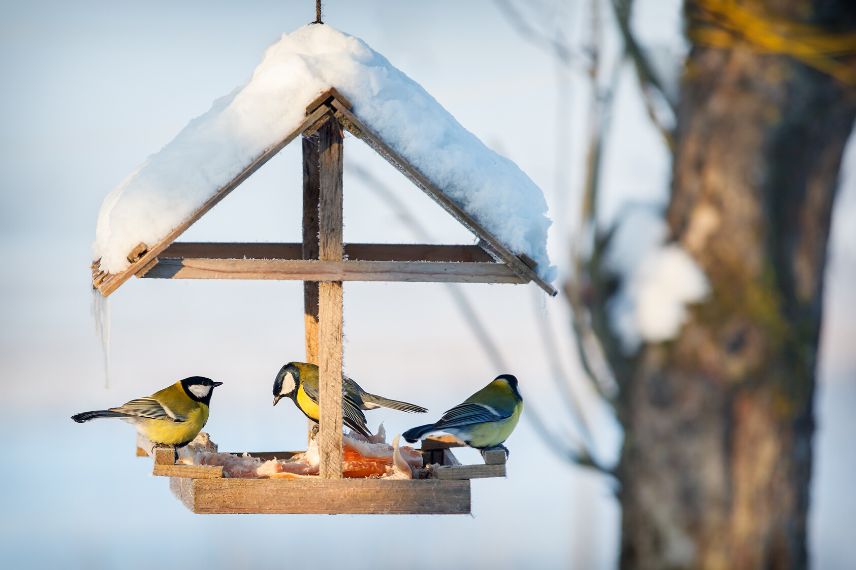
Birds find themselves quite helpless when the cold wind arrives, that is to say, from the first signs of chill, generally from mid-November to the end of March. They will need to be fed throughout the winter, and even into early spring, while waiting for insects to emerge from their dormancy. Do not stop feeding them halfway through winter, as this could disturb the little birds and jeopardise their survival. During the warmer season, it is unnecessary to provide seeds for birds, as they will suffice with insects and then the fruits from the garden.
A few tips and rules to follow
- Opt for seed mixes specifically designed for birds and composed of different varieties to satisfy as many bird species as possible.
- You can create your own mix, using sunflower seeds, peanuts, millet, wheat, and crushed corn. Be careful not to give salted or snack seeds.
- Feel free to pick and add small berries that birds love: Berberis, Hips, Holly, and Hawthorn.
- Use exclusively plant-based fat, such as margarine. It must be salt-free. Do not use animal fats like lard or butter, which are poorly tolerated by our feathered friends’ digestive systems.
- Do not give dry bread, rusks, or biscuits to birds. Indeed, dry cakes and other breads expand in birds’ stomachs when in contact with water, which can be fatal.
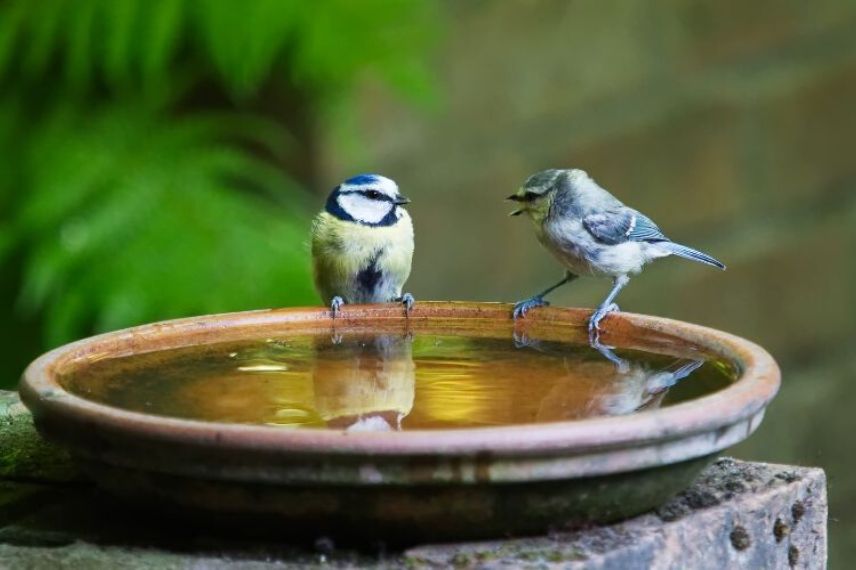
- Don’t forget to provide water points for birds, especially during frosts or snow. Tip: to prevent ice formation in the bowl, place a floating ball in it.
- Regularly check your seeds to avoid any mould formation. Also, remember to clean your feeders and waterers regularly.
Make a seed cup
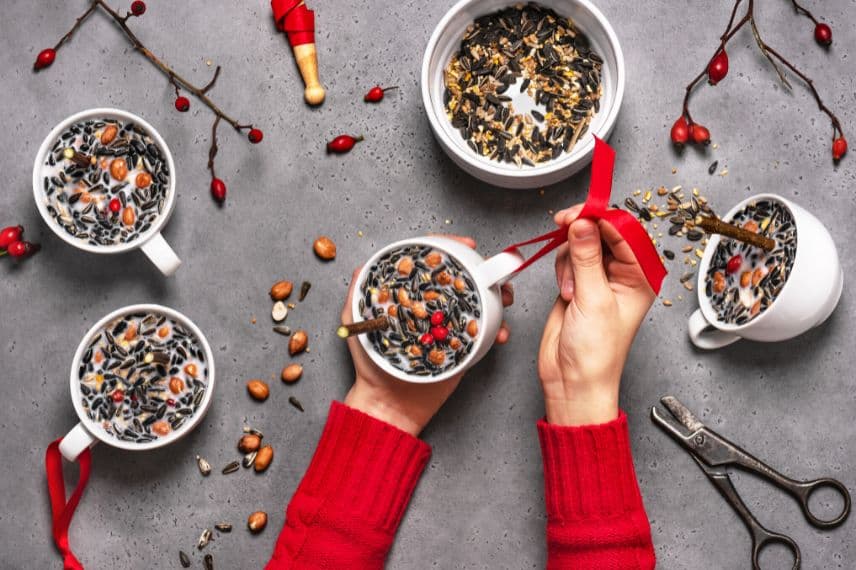
We all have, at the back of our cupboard, mugs that sometimes gather dust. Why not turn one into a lovely hanging feeder for birds?
- Simply fill the mugs with seeds
- Then, pour melted vegetable fat over the top and mix
- A little trip to the fridge for a few hours (8 to 12 hours) and you’re done.
- You can then hang the mug from the branches of bushes or simply place it on your garden table.
- Avoid placing it in direct sunlight to prevent the fat from melting on warm days
Tip: place a stick in the mug to serve as a perch for the birds.
→ Find our complete tutorial: Make a seed mug for birds in winter
A zero waste seed bowl
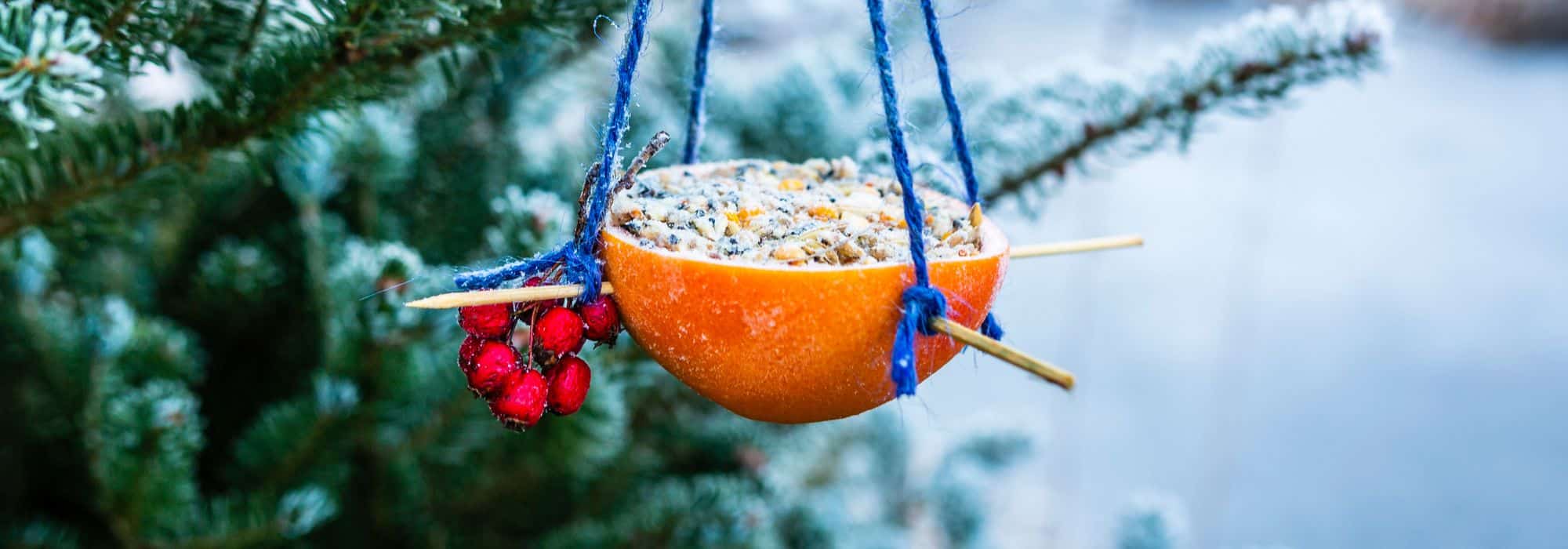
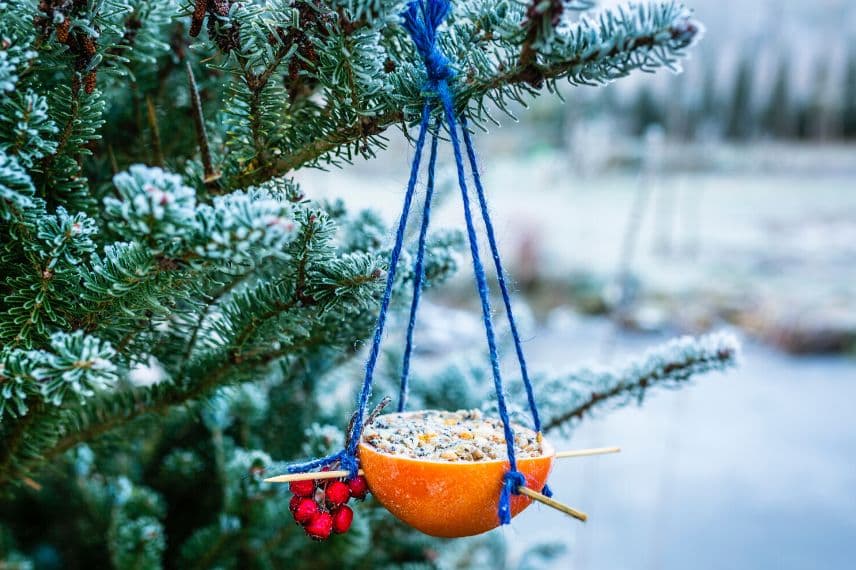
In the same spirit as the seed cup we just saw, it is also possible to create a zero-waste seed bowl without using Aunt Adelaide’s expensive earthenware. For this, you just need to have a coconut, an orange, or an apple at home—basically, any round fruit.
- Start by cutting your fruit in half and hollowing it out.
- Make 4 holes around the edge to thread a string or, even better, long sticks (branches or skewers) that will serve as perches.
- Then pour bird seeds into the fruit.
- Melt some plant-based margarine and pour the liquid over the seeds. Mix everything together.
- Place your seed bowl in the refrigerator for 12 hours.
- Then set up your little zero-waste feeder in the garden.
→ Find our complete tutorial: how to make a bird feeder from oranges.
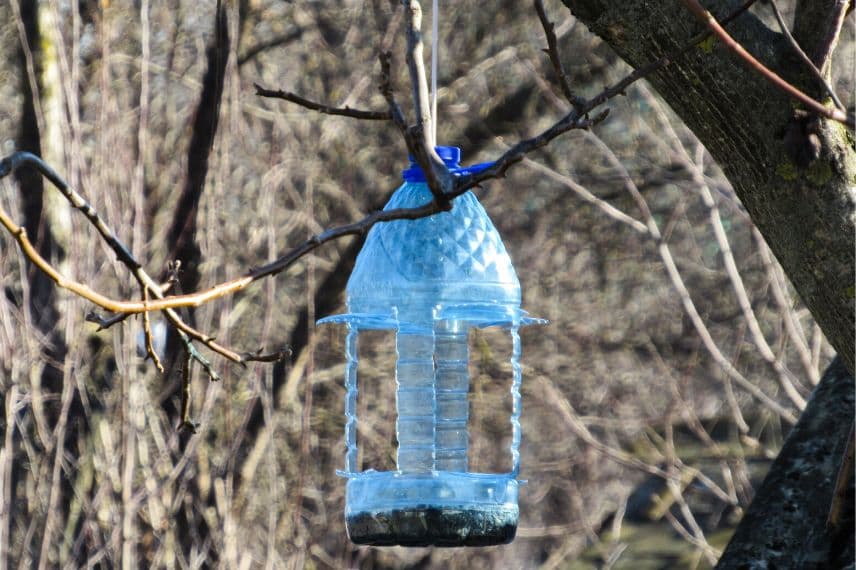
A bottle feeder
A bird feeder can easily be made from a plastic bottle or a carton of milk or fruit juice, giving a second life to our waste.
- Take an empty bottle and make two large openings (or more) on the sides using a craft knife, in a U shape.
- Fold the plastic back like a small awning to limit rainwater infiltration.
- Make sure to dry the inside of the bottle thoroughly.
- Attach a piece of string to the neck or secure it with the cap.
- Then pour seeds inside the bottle and place this recycled feeder outdoors.
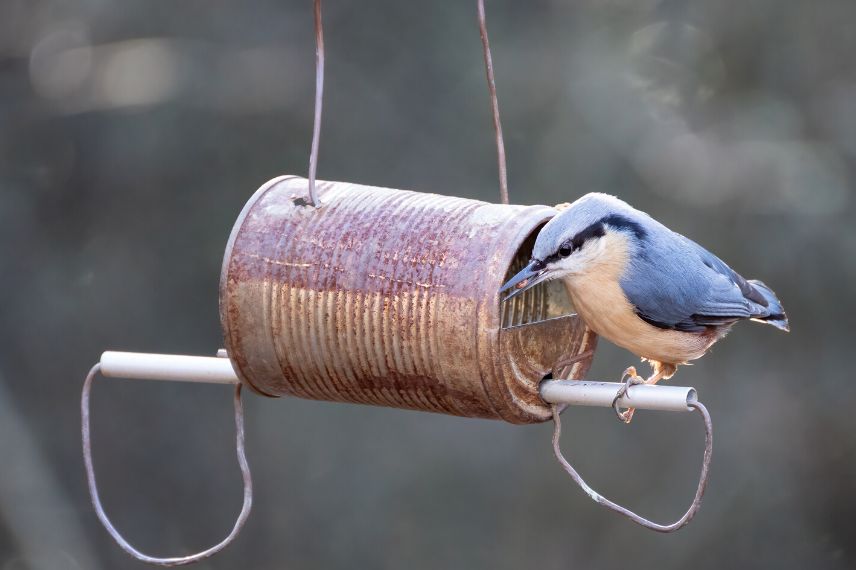
The tin can feeder
Another idea for recycling waste is to transform a tin can into a bird feeder. This technique requires a bit more dexterity.
- Open the lid of your tin can halfway.
- Empty the contents of the can, then clean it and let it dry (be careful! It’s sharp! Don’t hesitate to wear thick gardening or DIY gloves).
- Open the bottom lid in the same way, that is, on the same half.
- Next, drill a hole in the base of both lids.
- Slide a branch through, so that the birds can perch on it.
- Then fold the upper half of the lids inward or remove it if you’re handy.
- Thread a cord or string through the tin can to hang it up high.
- Pour birdseed inside.
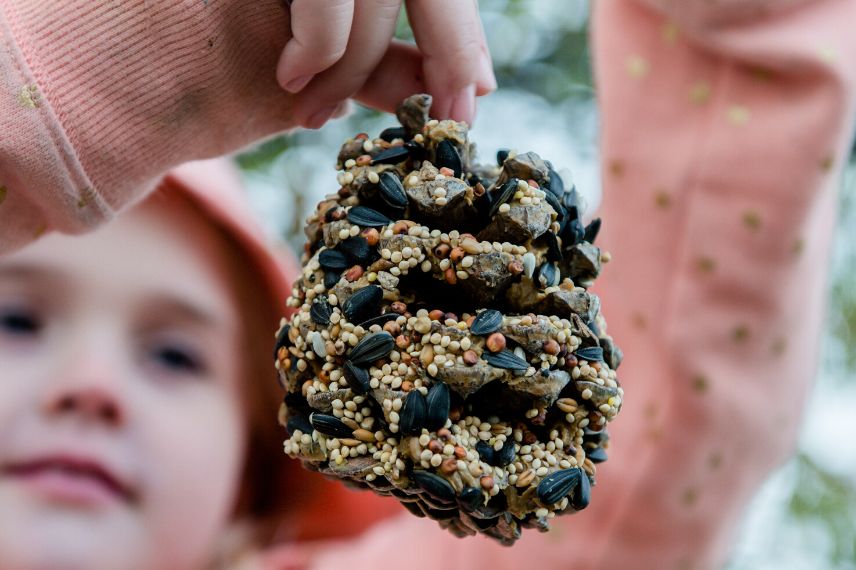
Pine cones with seeds
Here’s a very easy way to make your own seed fat balls. It’s also a simple workshop to do with children in no time.
- Collect pine cones and tie a string to them so you can hang them up.
- Roll the pine cones in vegetable fat.
- Once your pine cones are nice and sticky, roll them in a plate filled with bird seeds.
- Place the pine cones in the refrigerator for 5 to 6 hours to set the fat and seeds.
- You can then hang them on the bushes in your garden.
Seed filament: the real bad idea
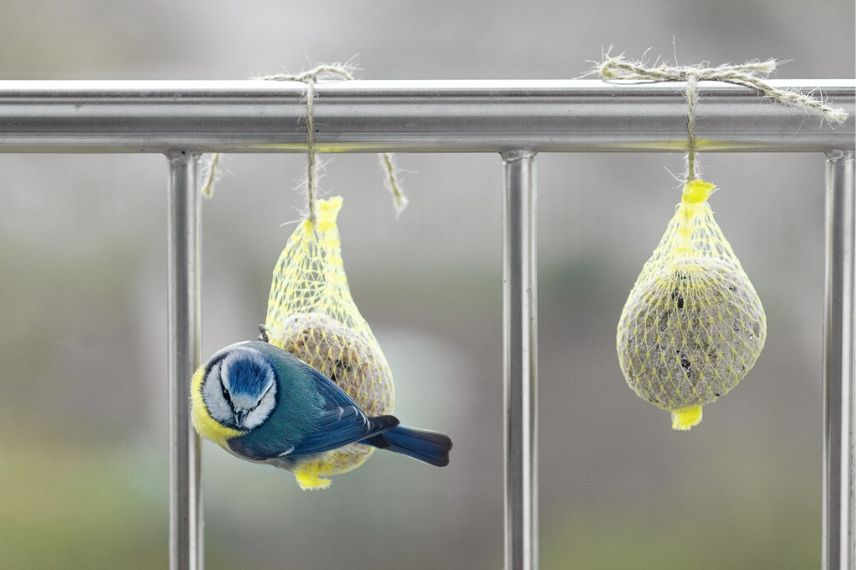
You may have come across them in the pet section or in a shop: the seed filaments that often surround fat balls for birds. Very easy to make yourself, they are, however, dangerous for our feathered friends. Indeed, small birds cling to this filament to peck at the seeds, but sometimes their feet get caught in the mesh. Unable to fly, they are then at the mercy of predators, the winter cold, or simply die from being upside down and exhaustion. In short, you will have understood, we reserve filaments for something other than feeding birds.
For further reading
- Find Olivier’s video tips on how to properly feed birds in winter:
- Subscribe!
- Contents
Comments