





























Fertilisers for window boxes and planters: when and how to use them?
Tips for choosing the most suitable fertilisation
Contents
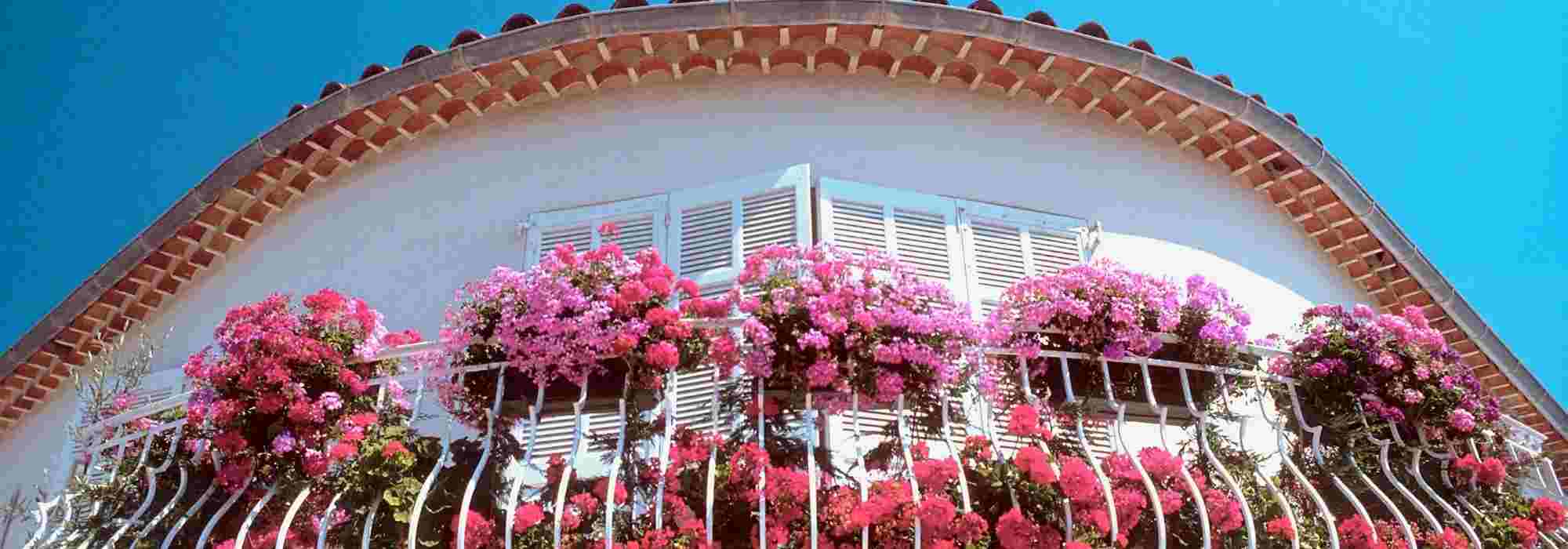
Dipladenias, petunias, surfinnias and calibrachoas, geraniums and pelargoniums, begonias and bacopas… in summer, on windows, balconies and terraces, in courtyards and patios, and even in the garden, annuals, biennials or perennials grown in balcony boxes, containers or pots, provide a spectacular display with abundant and colourful flowering. But to achieve an abundance of blooms, regular watering is essential, as is removing spent flowers.
As for fertilisation, it is essential. Indeed, the supply of fertilisers, specifically designed for window boxes and pots, allows plants to perform at their best.
Discover our complete guide on fertilisers for flowering plants in balcony boxes and pots: which forms to choose? How to dose? When to apply?

How to choose fertiliser for window boxes and pots?
Rightly, you expect from your annuals, biennials or perennials, grown in planters, hanging baskets or pots, that they provide beautiful flowering, abundant and colourful, all summer long.
Why add fertiliser to balcony plants?
But, at the same time, these plants grow in sometimes challenging conditions, constrained by the small size of the container and the exposure that is largely sunny. Indeed, these geraniums, petunias, lobelias, annual verbenas and other bacopas put in a tremendous amount of energy to flower. They therefore need nutrients to ensure the display. Much more than the same plants grown in soil.
On the one hand, flowering plants grown in containers have far less substrate. Consequently, they have access to fewer minerals and trace elements. On the other hand, that same substrate, provided in limited quantities, is exhausted very quickly. Simply due to watering or rain. Indeed, the excess water supplied to planters, pots and hanging baskets tends to escape through the drainage holes, taking the nutrients away with it. Whereas in soil, water rich in nutrients is drawn up by capillary action to feed the plants. And, as balcony and terrace plants are generally watered several times a week, nutrients are leached away in bulk.
That is why it is essential to make regular fertiliser applications to achieve good growth, but above all radiant flowering. But not just any fertiliser!
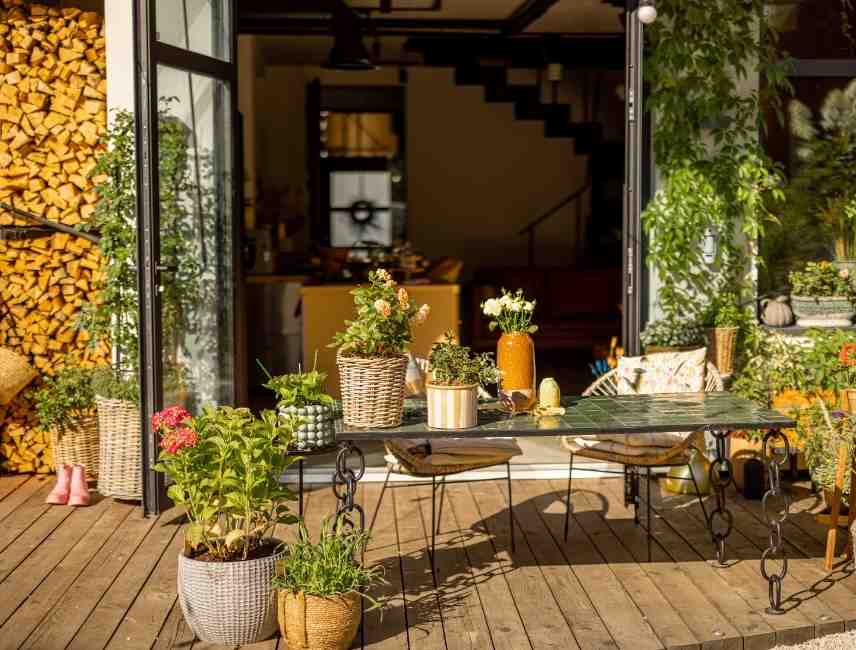
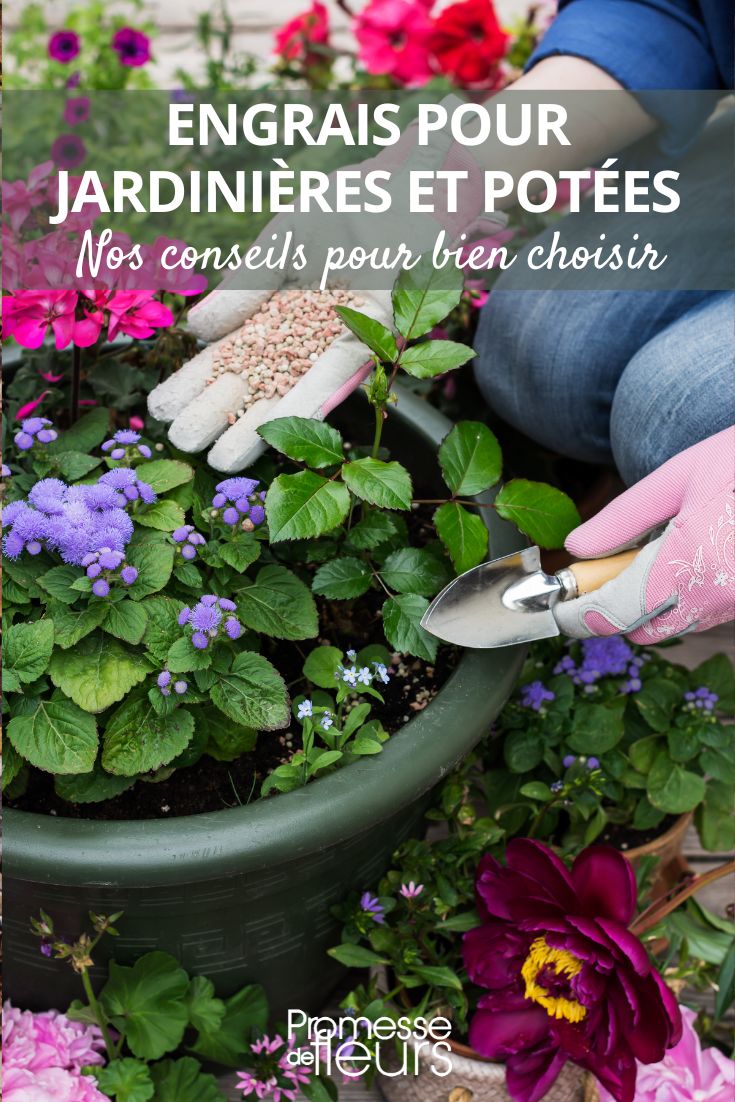
In pots or planters, the plant substrate quickly becomes depleted. Fertiliser helps to feed the plants.
Which fertilisers are suited to plants in planters and pots?
For flowering plants that grow in pots, you should favour fertilisers rich in phosphorus (P) and potassium (K), two primary macro-nutrients, essential for root system development and for flower formation. Whereas nitrogen contributes more to the growth of the above-ground part of the plant, namely the stems, leaves and buds. However, if your planters include flowering annuals and perennials chosen for their foliage (Coleus, Heuchera, Hosta…), nitrogen is also necessary.
That’s why, for your flowering plant planters and hanging baskets, you will need to select fertilisers with an NPK formulation where potassium (K) has the highest figure. Some are even enriched with trace elements such as boron, copper, iron… to address the main deficiencies. Or magnesium, necessary for the development of lush green foliage. In any case, these fertilisers are clearly identified as specifically suited to balcony flowering plants of the geranium-type.
Read also
Potted plants: how to grow and care?The different forms of fertilisers and their uses.
You now know which fertiliser is best suited to your plants in window boxes, hanging baskets and pots. But a new dilemma presents itself. Organic, mineral or organo-mineral fertilisers come in three distinct forms: granules or powders, sticks and a liquid form. So which should you choose between solid fertilisers and soluble fertilisers?
- Fertilisers in granules or powders: these are slow-release fertilisers that will release nutrients over the long term, roughly around three months of flowering. Most are of organic origin; these solid fertilisers take time to decompose and release the nutrients. They therefore help prevent potential problems with over-fertilisation, but they require a small amount of preparation to incorporate them into the growing medium.
- Fertiliser sticks: they are also solid slow-release fertilisers, perfectly suited to flowering plants grown in pots, hanging baskets or window boxes. Some are even specifically intended for indoor plants. Very easy to use and with no risk of over-fertilisation.
- Liquid fertilisers: they are diluted in the water used for watering for a “boost” effect. They are indeed immediate-release fertilisers that are also well suited to potted plants. The nutrients are therefore quickly available to the plants. These fertilisers are very easy to use, but there is always a risk of over-fertilisation if the doses and the application schedule are not observed.
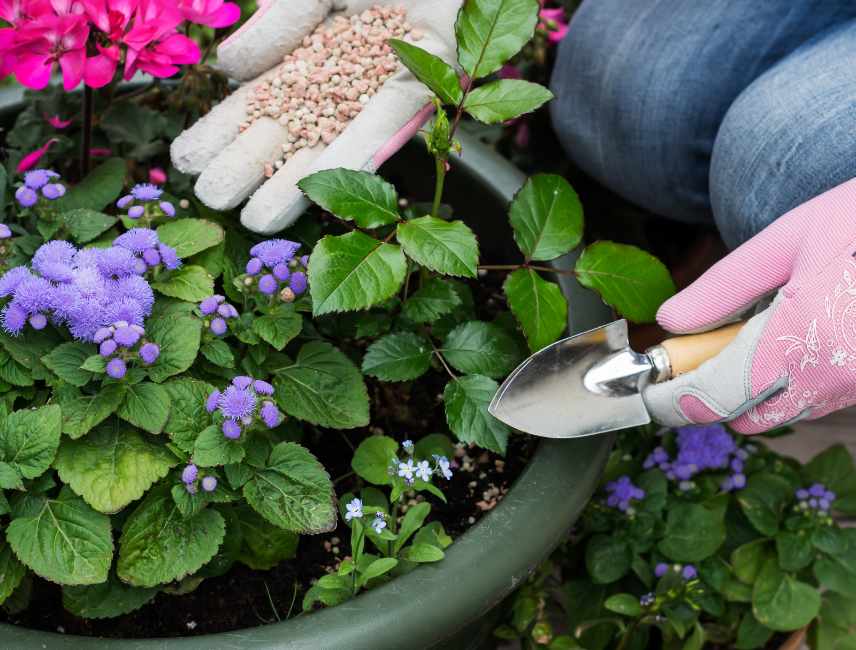
There are three types of fertilisers for window boxes and pots: granules or powders, sticks or liquids.
Concrètement, pour les plantes de jardinières, de potées ou de suspensions, nous vous recommandons d’utiliser un engrais solide à diffusion lente et un engrais liquide à effet booster. En effet, les besoins de ces plantes sont décuplés et ces deux types d’engrais seront nécessaires pour les couvrir. Sans cette fertilisation, vos plantes annuelles ou vivaces risquent de végéter et de ne pas fleurir comme elles pourraient le faire.
When and how should they be applied?
Let us now turn to the mode and timing of application. As noted above, for the health and flowering of window box and potted plants, it is recommended to use two different fertilisers.
Slow-release fertilisers, whether in powder, granules or sticks, are applied at planting in spring. Thus they will diffuse their nutrients to the plants over a long period, gradually. Knowing that this type of fertiliser diffuses for about two to three months, it is not out of the question to make another application during the summer, in August or September to enjoy even longer-lasting flowers. In terms of dosages, it is essential to refer to the instructions on the labels of the different brands. And above all, it is essential to adhere to the doses to avoid deficiencies and trigger adverse effects.
During planting, it suffices to mix the solid fertiliser into the potting mix. If you wish to add some during cultivation, spread the powder or granules over the potting mix, then incorporate them with a light rake. Then water well to dissolve the fertiliser.
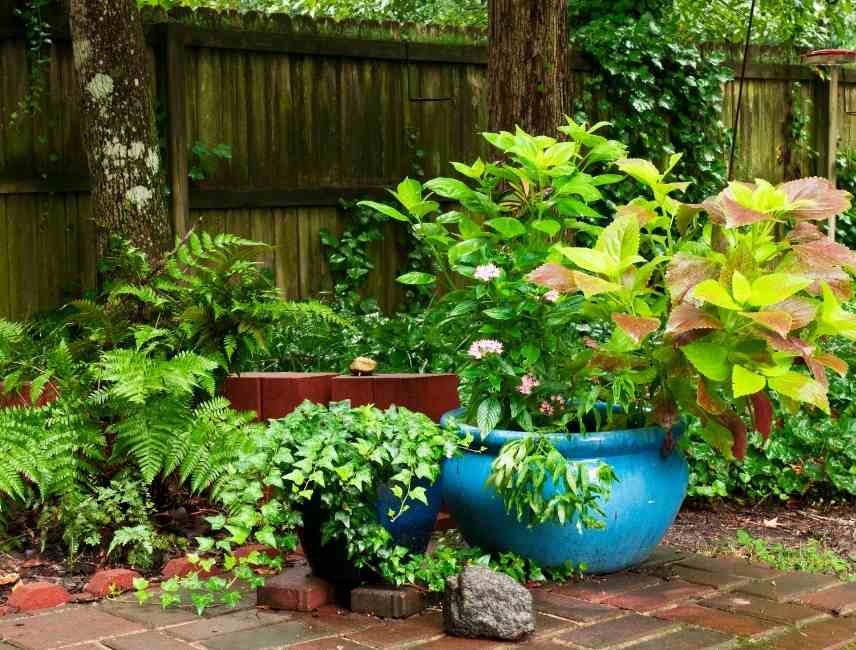 Pot-grown plants require regular fertiliser feeding.
Fertiliser sticks are easier to use. Just push them into the potting compost. Their nutrients will diffuse gradually with each watering.
Immediate-release or fast-diffusing fertilisers, most often soluble, are used during watering, during the growing season, which roughly spans from April to September, depending on the varieties of annuals or perennials. Depending on brands, dosages and timings vary. This information is clearly explained on the packaging.
You simply mix the contents of the cap into the water in the watering can. For better dilution, it is preferable to slightly moisten the potting mix before watering with the fertiliser solution.
- Subscribe!
- Contents
Comments