





























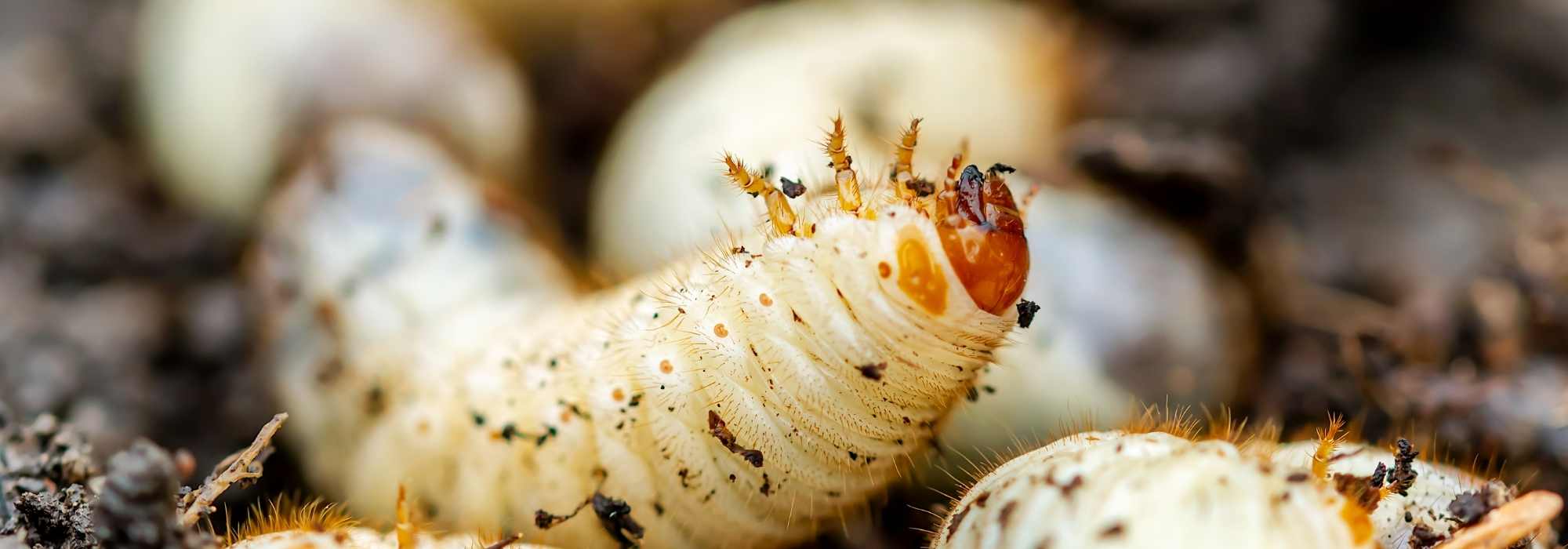
Flower chafer larvae and cockchafer larvae: what are the differences?
How can you tell them apart easily?
Contents
The soil in a garden or vegetable plot is rich in a multitude of microorganisms and insects that interact and contribute to the health of ornamental or vegetable plants. Sometimes, a simple swing with a croc, a spade or a hand hoe reveals only a tiny part of this underground world. And straight away, gardeners tend to regard this larva as a pest that merely seeks to gorge itself on our vegetables or flowering plants. Yet, some of these large grubs are not as harmful as they may seem.
Among these soil larvae, two are quite similar and often confused: the larvae of the rose chafer and the cockchafer. However, it is essential to differentiate them, as one can be useful or at least harmless, whereas the other is devastating for vegetable crops.
Our tips for recognising and distinguishing the larvae of the rose chafer and the cockchafer!

The rose chafer and the cockchafer, two cousins of the order Coleoptera.
The rose chafer and the cockchafer are beetles, belonging to the very large Scarabaeidae family. There are hundreds of varieties of rose chafer and cockchafer, but the most common in the area are the golden rose chafer and the common cockchafer. Let’s explore them to understand how they live.
The golden rose chafer, often referred to as the “rose chafer”
The golden rose chafer (Cetonia aurata) is a species of beetle often seen on flowers, particularly in the heart of blooms of roses or dog-rose. But it does not shy away from foraging in the inflorescences of other shrubs and herbaceous plants, such as lilac, firethorn, privet, elder, hawthorn, or even thistles and umbellifers. It also loves to bask in the sun!
Hard to miss, as its carapace is so beautiful. The golden chafers, 15–20 mm long, indeed have a coat of magnificent metallic green, with the elytra slightly mottled with white. Males and females are very similar and generally mate between April and May.
Egg laying occurs in May and June in plant debris, and the larvae hatch very quickly. They go through several developmental stages, taking two to three years to reach adulthood. From then, the cycle begins again.
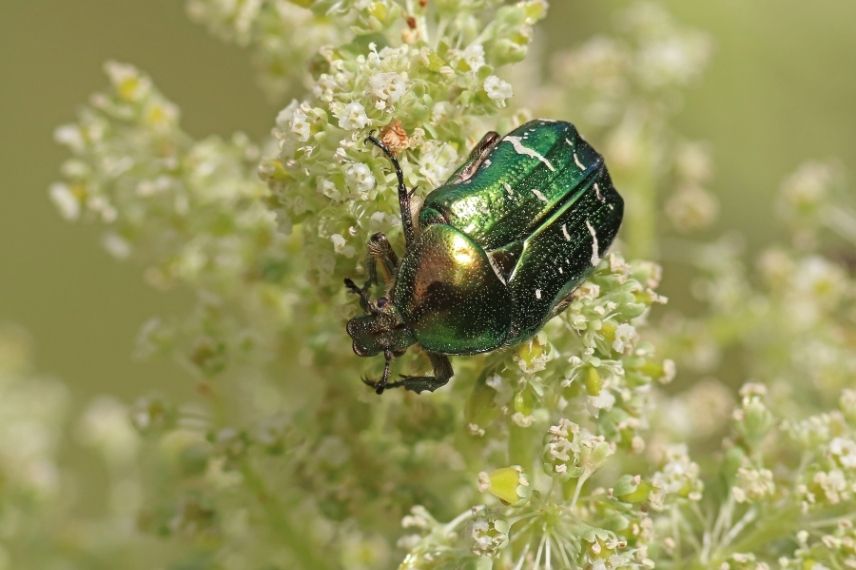
The golden chafer has a metallic green carapace
Further reading : Golden rose chafer: all you need to know about this large garden insect
The common cockchafer, an insect that has made a comeback
There was a time when extermination campaigns, aptly named “hannetonnages,” were carried out systematically. It must be said that at that time cockchafers were numerous. Insecticides have almost finished decimating the population of common cockchafers (Melolontha melolontha). But you can still hear them flying at dusk…
The cockchafer is a beetle, 25–30 mm long, with mahogany-coloured elytra. It also has lamellate antennae that unfold like a fan. In spring, after mating, the eggs are laid in loose soil, at a depth of 10–15 cm. Between late June and early July, the larvae hatch, move about and feed on whatever is at hand, i.e., roots. This is followed by three years of moving through the soil to hibernate and feed. Hence the damage caused in vegetable plots…
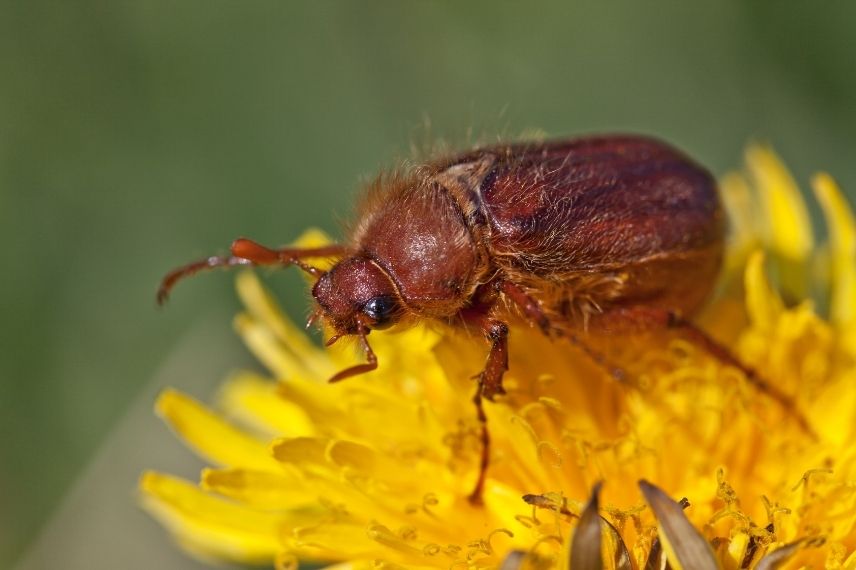
The common cockchafer is recognisable by its mahogany elytra
Further reading : Cockchafer: identification, damage and control methods
Flower chafer larvae and cockchafer larvae: one is beneficial, the other a pest.
As noted earlier, the rose chafer loves flowers. Admittedly, it may nibble a few petals or the stamens. But, as it moves from one flower to another, it facilitates cross-pollination between varieties. Not always with great delicacy, but we can forgive the occasional nibble!
As for the larva, it is saproxylophagous, meaning that it feeds on decaying plant matter, such as stumps and hollow trees, dead wood, but also compost, which it speeds up the decomposition of. The larvae of the rose chafer also relish the decaying matter in compost, as they are highly nutritious, unlike dead wood. They are therefore very useful and it is essential to protect them. Sometimes, when compost is taken to enrich the soil of the garden or allotment, or in containers and pots, a rose chafer larva may migrate. Take care to return it to the compost, because in the soil or, at worst, in a pot, it would not survive.

The rose chafer is regarded as a pollinator
The cockchafer is regarded as a pest, especially in its larval stage. However, during its short life, the adult gnaws the leaves and buds of trees such as oak, maple, the beech, the chestnut tree, the horse chestnut, and fruit trees… It is also a favourite prey for the hedgehogs, the toads, bats, and some birds.
But gardeners mainly fear cockchafer larvae that gnaw the roots of all plants, from ornamental plants to the lawn, including vegetables in the garden. Plants that eventually die. The larvae are often detected during autumn digging in the three years following the laying of eggs.
How can you tell them apart without making mistakes?
If, while turning the soil, you come across one of these big white grubs, it’s essential to tell them apart: rose chafer larvae are beneficial, and cockchafer larvae are pests.
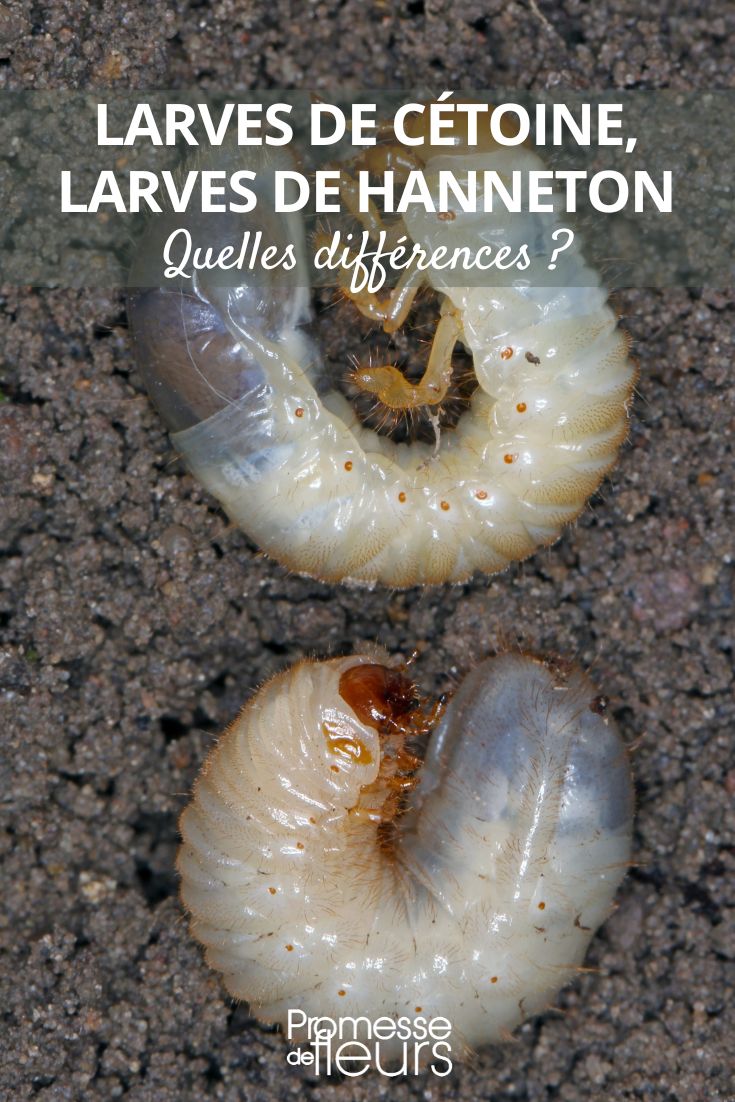
Several points help distinguish them, summarised in a few words: Small head and big rear, it’s a rose chafer. Big head and small rear, it’s a cockchafer!
Otherwise, here are the features to tell them apart:
-
- The cockchafer larva has a large head with powerful mandibles, whereas the head of the rose chafer larva is smaller.
- The abdomen of the cockchafer larva is thinner than its head, while the abdomen of the rose chafer larva is more swollen.
- The cockchafer larva is pale to yellowish, the rose chafer larva is rather greyish.
- The cockchafer larva has a smooth epidermis, the rose chafer larva is villous and bristly with hairs.
- The cockchafer larva has visible legs, the rose chafer larva’s legs are more inconspicuous.
- The cockchafer larva moves on its side, while the rose chafer larva moves on its back.
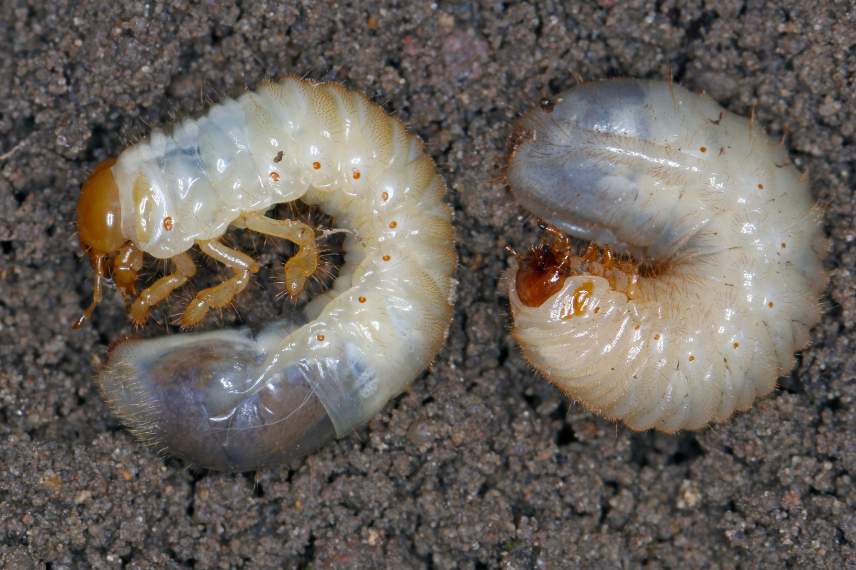
On the left, the cockchafer larva with visible legs and mandibles, and on the right, the rose chafer larva, slightly villous
How to get rid of cockchafer larvae?
Although part of the food chain, cockchafer larvae can cause some damage if they establish themselves in a vegetable garden (I’ve had first-hand experience!). A few simple steps can help you get rid of them:
- Turn soil over in autumn to a depth of about 25 to 30 cm. This method isn’t ideal, as it disrupts soil structure, but it is relatively effective. Alongside turning the soil, hens will be valuable allies, because they love these large white grubs.
- Hoe the soil regularly in spring, at a time when cockchafer larvae come to the surface to feed.
- Encourage natural predators of the cockchafer, such as blackbirds or hedgehogs.
- Subscribe!
- Contents
Comments