





























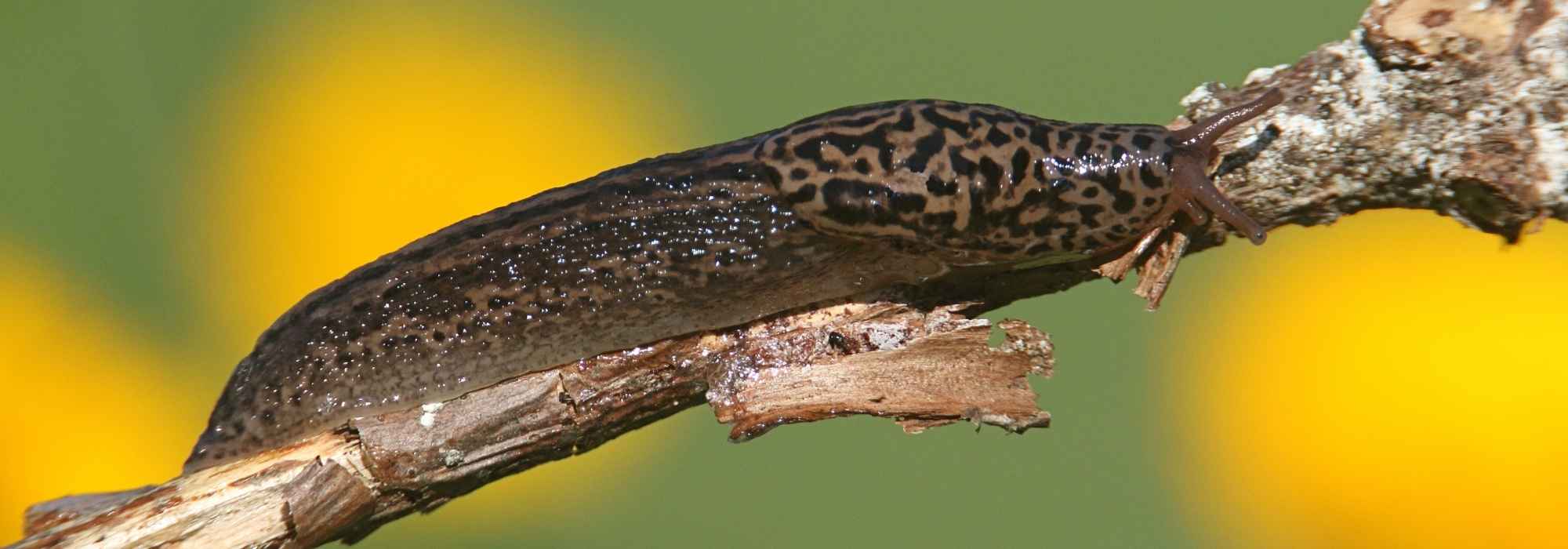
Gardener's ally: the leopard slug
a slug eater
Contents
The leopard slug (Limax maximus) is a large detritivorous slug, like most species of slugs. It thus contributes to the recycling of organic matter from plants (sick or dead plants, dead wood, fungi…) in nature and in the garden. However, it is also a carnivorous slug, predator of other slug species. All this means that Limax maximus is considered a gardener’s ally against slugs. Let’s quickly discover everything you need to know about the leopard slug.

How to identify this slug?
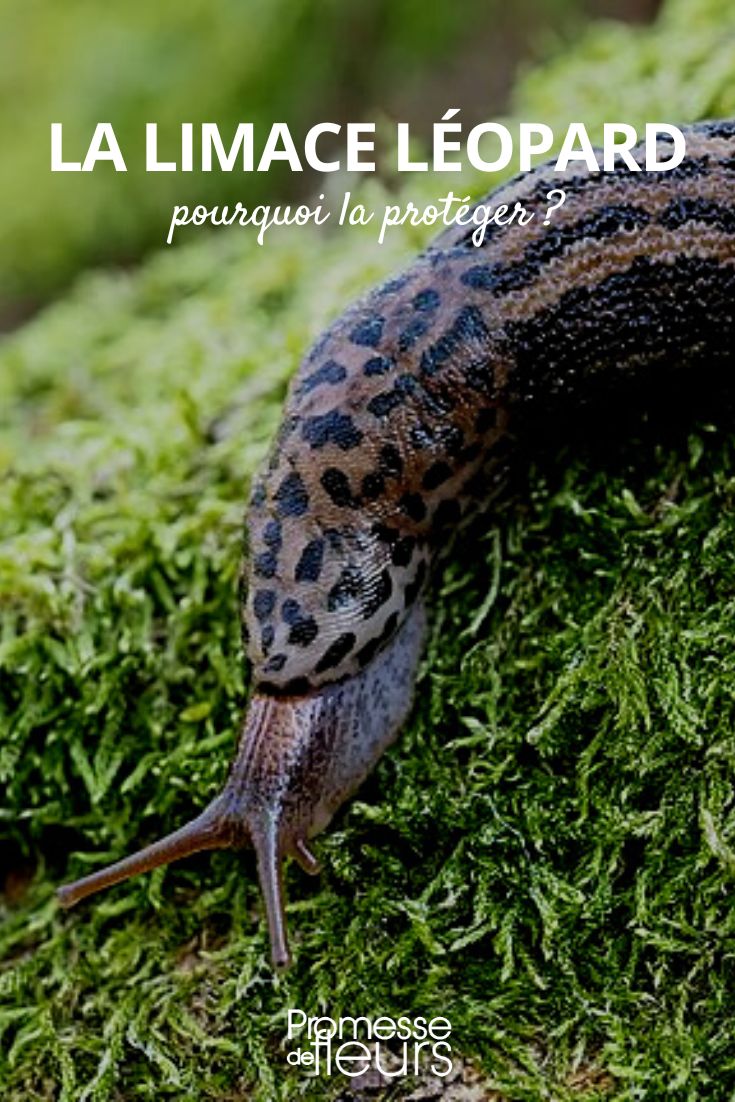
The leopard slug, sometimes referred to as the tiger slug, is a species in the family Limacidae. It is a large slug, rather long and slender, with a length ranging from 13 cm to nearly 20 cm at times.
The spotted slug is grey or light brown. Its back (shield) is speckled with black spots about 3 mm in size. These spots are aligned and can resemble longitudinal stripes on the tail. The dorsal keel (the part of the back near the head) is relatively short. The mucus is colourless and the pedal sole or “foot” (the muscle that allows it to move) is light grey. A remnant of a calcareous shell is present beneath its shield, reminding us that the slug is a “cousin” of the snail.
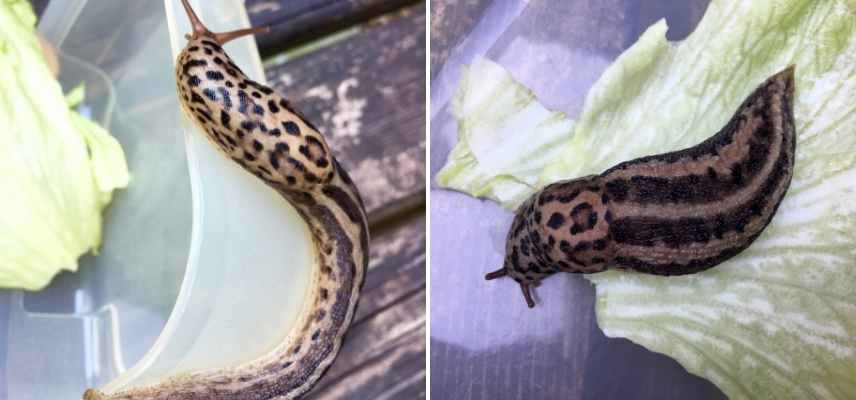
Limax maximus
Leopard slugs have a lifespan of 2 and a half to 3 years. However, to survive for 3 years, this terrestrial mollusc must spend the winter warm and avoid being eaten by one of its natural predators: toads, slow worms, thrushes, hedgehogs, moles, ground beetles…
Note: The vernacular names for Limax maximus are numerous. This slug is also known as the Spotted slug, Large grey loach, Ashen slug, Large ashen slug, Large grey slug, and even, in Burgundy, Guémace.
Warning! : Limax maximus can become the host of the larvae of the parasitic worm Metastrongylus, which causes coughing, bronchitis, and tracheitis in mammals (wild boars, cats, and dogs), sometimes fatally. Domestic animals such as dogs and cats can be contaminated by ingesting slugs infested with the worm. So, caution is advised!
The habitat of the leopard slug
The range of Limax maximus extends across central Europe, but gradually, this slug has been appearing in our area from the East (and is now also found in Australia and North America).
The leopard slug prefers relatively humid environments. This gastropod can be found in forests, wooded parks, and in our gardens. Like all slugs, the leopard slug mainly comes out at night, but can wander around during the day if the weather is really humid. During the day, the slug hides under dead wood, stones, or in crevices…
In winter, the leopard slug seeks warm places to hibernate: a compost heap, a greenhouse, a frost-free garage… Being composed of a lot of water, a single night of frost will kill the slug.
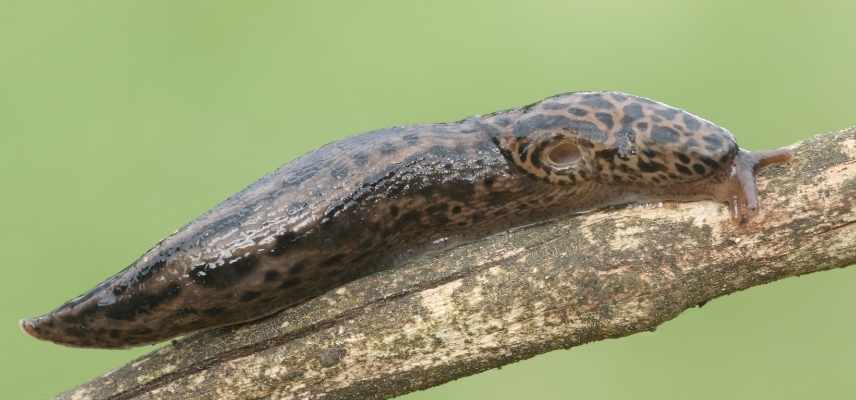 The leopard slug can be seen during the day if the weather is very humid
The diet of the leopard slug
The leopard slug is relatively omnivorous. Like most slugs, it is detritivorous: sick, withered, or dead plants, as well as moss, fungi, and dead wood… all fall into its stomach, helping to “clean” the garden. The leopard slug can therefore target some of your plants, particularly young seedlings and shoots. However, if this is the case, it indicates that your plants are suffering. This is true for all slugs, which are often considered pests, or even destructive, by gardeners.
It can also be carnivorous: the leopard slug consumes carrion or dog and cat food. But this slug also delights in other species of slugs, as well as their eggs, thus helping to reduce slug populations in the garden, particularly in the vegetable patch. The leopard slug is therefore, in itself, a slug deterrent. The leopard slug is capable of pursuing its prey at an astonishing speed of… 15 cm/min. It may not seem like much, but it is significantly faster than other slug species, whose average speed is around 7 to 8 cm/min.
Note: yes, there are people who measure the speed of slugs. But they also study many other aspects of gastropods. They are called malacologists. Malacology is the branch of zoology that studies the phylum of molluscs, of which the class of gastropods is a part.
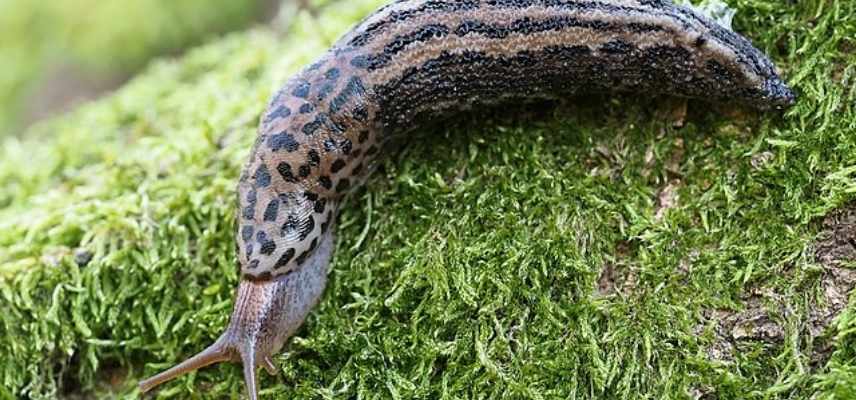
Leopard slug (© Frank Vassen)
Reproduction in the leopard slug
Slugs, like snails, are hermaphrodites and possess both male and female genital organs. Mating is unique: the two slugs will climb a tree, then suspend themselves in mid-air, held by a thread of mucus. Each slug will extend its bluish genital organ, which will hang down. The two slugs will entwine to fertilise each other. After mating, both slugs will lay eggs.
Living between 2 and 3 years, each individual can reproduce twice in its lifetime: the first laying occurs in July-August, during its second year, and then again around June-July in its final year.
The leopard slug lays between 100 and 300 eggs that are slightly elongated, measuring 4 to 5 mm in diameter. The eggs hatch after 20 to 45 days, depending on climatic conditions. Not all of these eggs hatch, as they are a delicacy for many predators, such as the rove beetle or the ground beetle.
- Subscribe!
- Contents
Comments