





























Growing a Russelia in a pot
Our tips for a beautiful coral plant in a pot
Contents
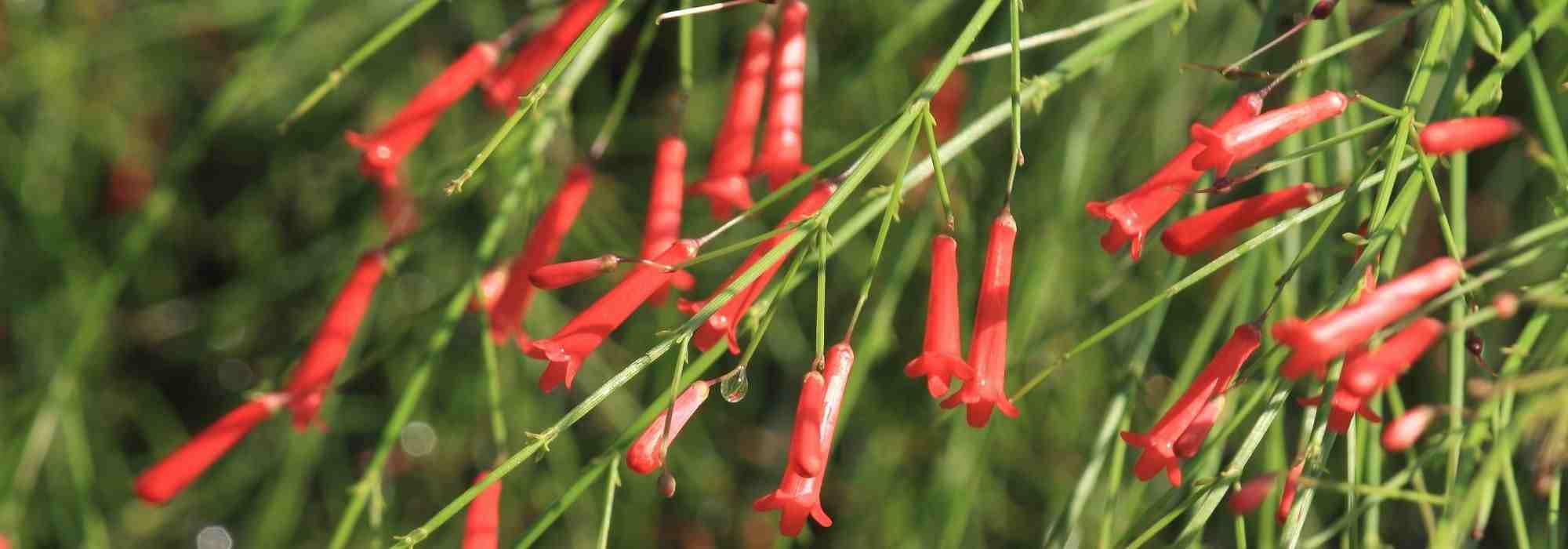
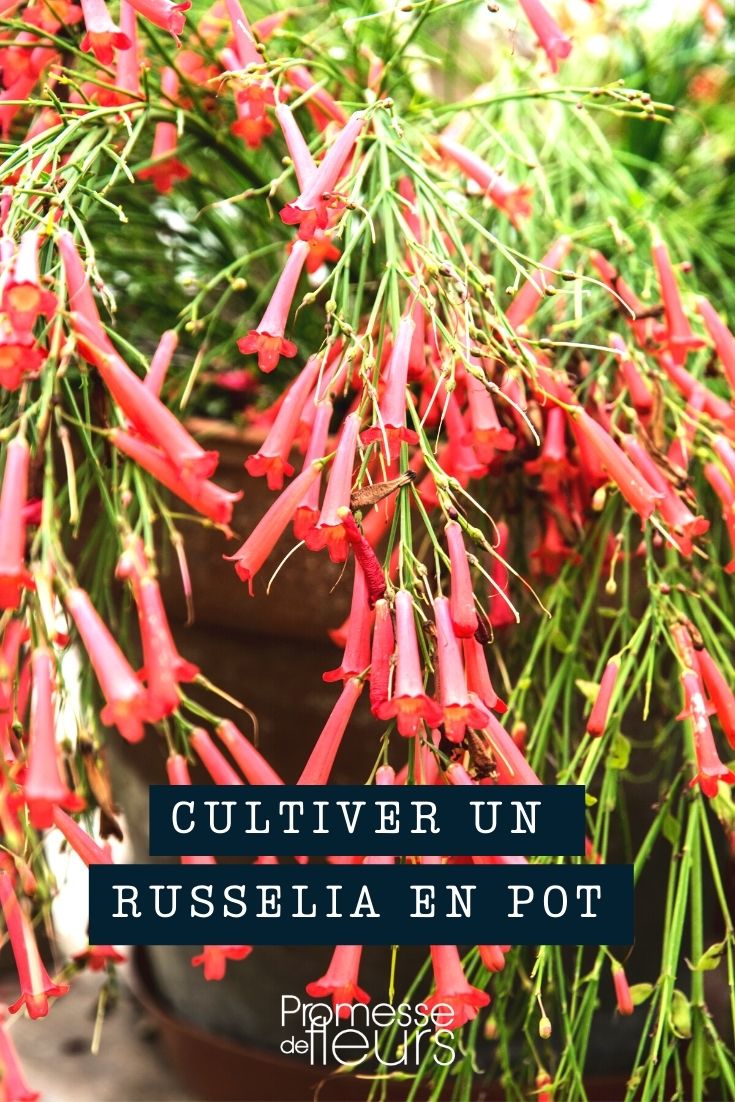
Superbly showcased when installed at height, russelia displays a trailing habit and is covered in a multitude of tubular flowers in white, yellow, orange, or bright red for the Russelia equisetiformis (or Russelia juncea). This red flowering has indeed inspired botanists who have given numerous names to this perennial: coral plant, coral fountain, blood drop, or even false horsetail russelia. While russelia grows easily in the ground in regions with a mild climate, it is in pots that it finds its place in the coldest regions. Discover our tips for growing russelia in pots: choosing the container and compost, exposure, planting period and technique, and maintenance.

When to plant russelia in pots?
Russelia is a perennial plant that is not very hardy. If you live in an area where winters are harsh, it is best to plant russelia in a pot in spring, after the last frosts, which is between March and May. Be aware that you will need to winter your russelia every year.
In warm climates with very mild winters, you can plant the false equisetum russelia in autumn from September to November, but also in spring.
Read also
Potted plants: how to grow and care?What type of pot for Russelia?
Due to its naturally trailing habit, avoid pairing blood drop with other plants in its pot. Choose a large container so that the root system of this undershrub has enough space to develop. The container should be wide, as the roots grow more horizontally than vertically. Plan for a container of at least 50 cm in diameter: a classic round pot, basin, or hanging basket. It should be even wider if you choose to plant 2-3 young plants in the same pot. To ensure the branches trail beautifully, place your container at a height, on a support (wall, column…) or plant the coral fountain in a tall, very deep pot.
Preferably opt for a pot made of natural material (terracotta or wood) that allows the soil to breathe, unlike plastic pots. Ensure there are drainage holes in the bottom of the container for excess watering to escape.
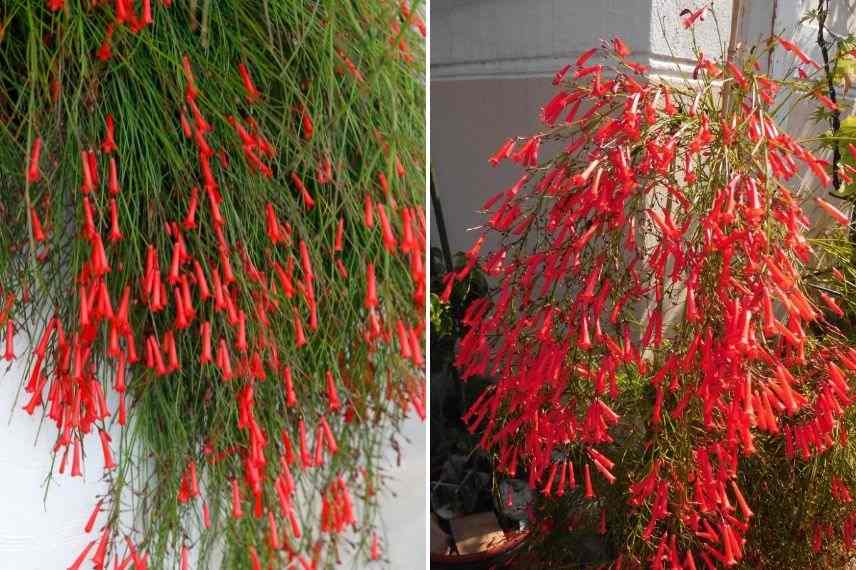
On the left, a naturally trailing russelia. On the right, a russelia with upright branches (photo candiru – Flickr)
What substrate to use?
Russelia thrives in light, well-drained soils rich in organic matter for a beautiful flowering, even stony ones. With a well-developed root system, the false rush can even tolerate slightly calcareous soil. Prepare a mix of ⅔ light compost for flowering plants and ⅓ river sand or perlite.
Read also
Mealybug: identification and treatmentHow to plant russelia in a pot?
Before planting your russelia, soak the root ball in a large bucket of water for about ten minutes to moisten it and eliminate any air pockets.
- Place a drainage layer (clay balls or pumice) at the bottom of the container to prevent root rot. Cover with a piece of geotextile fabric to stop the substrate from escaping through the drainage holes during watering. This step is not necessary if your pot is particularly deep.
- Fill the pot three-quarters full with your substrate mix.
- Remove your perennial from its pot and check the roots. If they are pot-bound, make a few cuts with your pruning shear around the edge of the root ball to loosen it more easily.
- Place your plant right in the centre, ensuring that the top of the root ball is a few centimetres below the rim of the pot.
If you wish to give your russelia a more upright habit, it’s time to install a support for the plant (optional). Here are three options:
⇒ using three bamboo stakes planted at equal distances and tied together at the top, you can create a tipi to which you can attach the branches of the russelia.
⇒ you can use a small climbing plant support column (a sort of cage).
⇒ you can make your own wicker support.
- Add the remaining potting soil to fill the gaps around the russelia.
- Firm it down by hand and add more substrate if necessary.
- Water generously to ensure the soil adheres to the roots.
To prevent the growth of adventive plants (weeds) that would be difficult to remove once the trailing branches are well developed, mulch the surface of the substrate with an organic mulch such as hemp or flax mulch, buckwheat husks, or coconut chips.
⇒ Discover our tutorial on how to create your own wicker support.
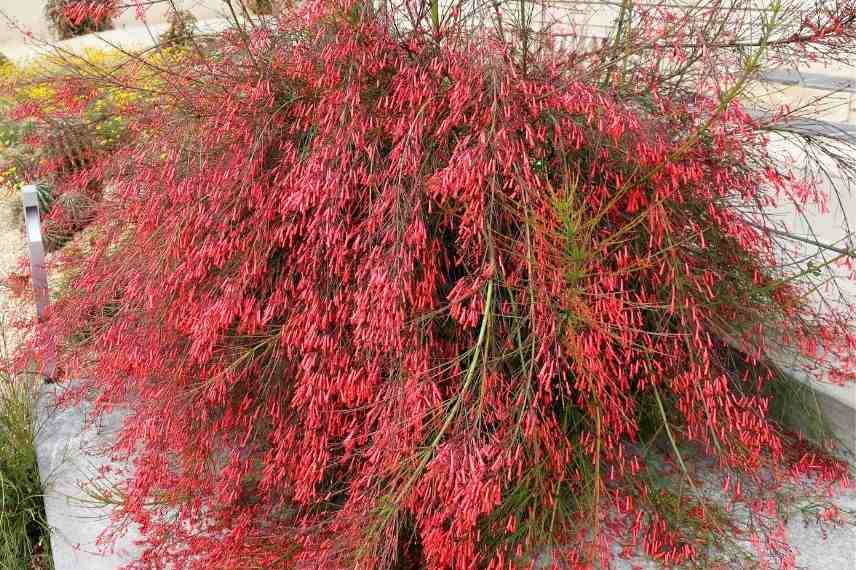
The stunning flowering of Russelia equisetiformis (photo cultivar413 – Flickr)
What exposure is best for potted Russelia?
Preferably, place your coral plant in a pot sheltered from the wind and in full sun, especially in the northern regions of France. In the warmer southern regions, a semi-shaded position is possible, but its flowering will be less abundant there. Native to Mexico and Central America (mainly Costa Rica and Guatemala), be aware that the Russelia tolerates sea spray.
Caring for potted Russelia
- Before the resumption of growth at the beginning of spring, lightly prune your russelia by shortening the length of the stems by ⅓ and removing any dried stems.
- Regular watering, but without excess, is necessary from the restart of growth in spring and throughout the summer. Ensure that the substrate dries out between waterings. In case of drought and high heat, water more frequently. During autumn and winter, waterings will be less frequent.
- For generous flowering, apply a liquid fertiliser for flowering plant diluted in the watering water, once a month from spring until the end of summer.
- Repotting of the russelia should be done in spring every 2 years or if you notice that the roots are coming out of the drainage holes at the bottom of the pot. You will then change the substrate and can divide your plant if you wish.
- Before temperatures drop significantly in autumn, bring your pot to a sheltered place from the cold (veranda or heated greenhouse at 12-15°C). Indeed, the russelia dies at temperatures below -7°C.
- In general, the russelia is quite resistant to diseases if planting conditions are good. Regarding pests, be aware that your pot of russelia may be susceptible to attacks from aphids and mealybugs.
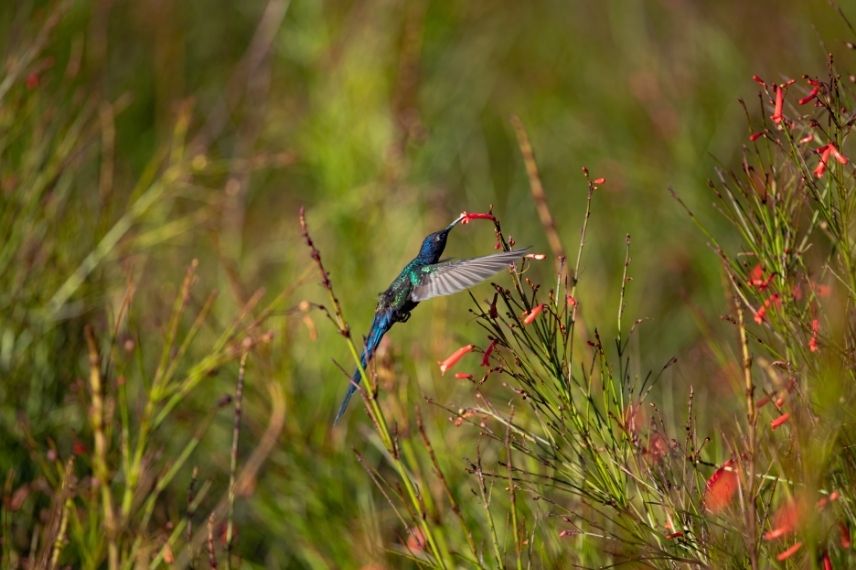 The nectar from the flowers of the russelia attracts hummingbirds, butterflies, and birds
For further reading
- Everything you need to know about root-related bun
- Also discover our sheets on Aphid: identification and treatment and Mealybug: identification and treatment
- Subscribe!
- Contents
Comments