





























Growing Tigridia or peacock eye in pots
All our tips!
Contents
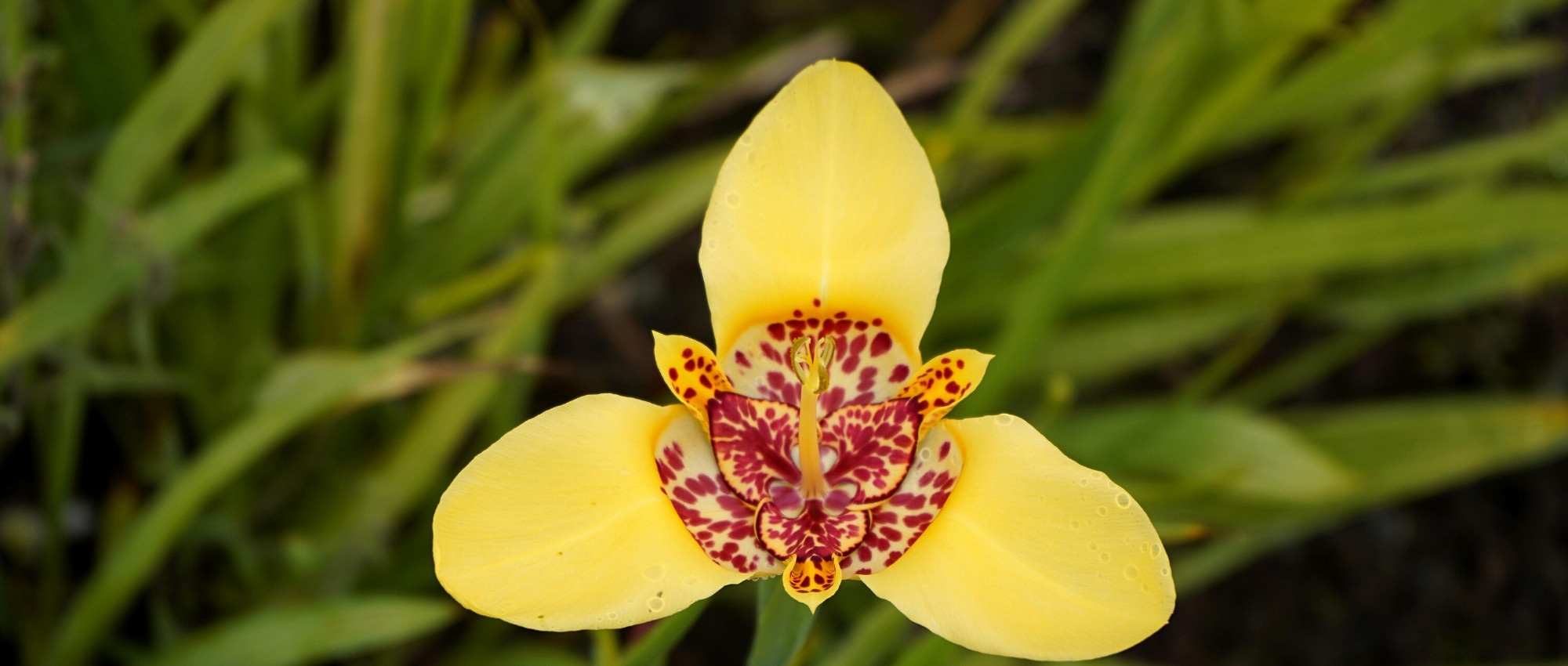
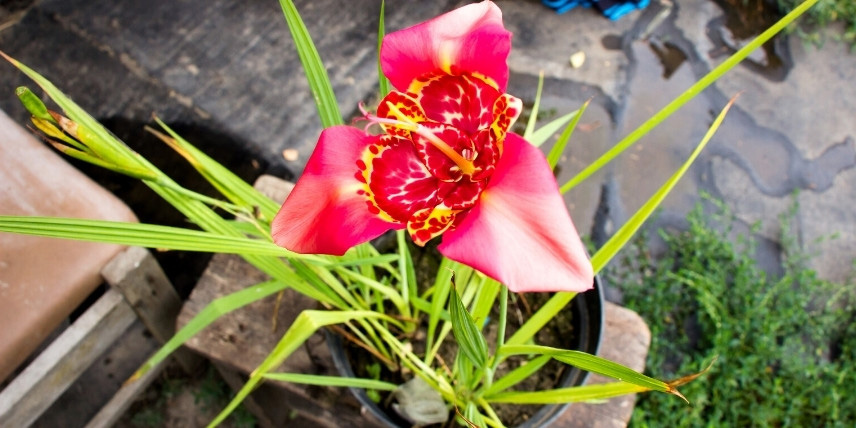
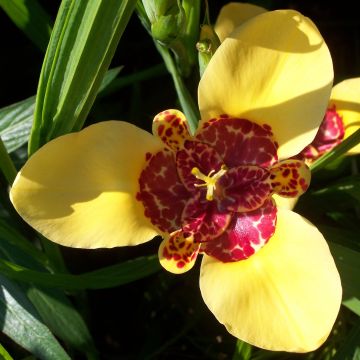
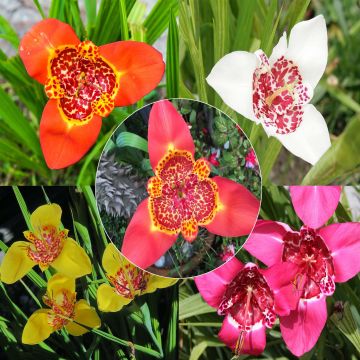
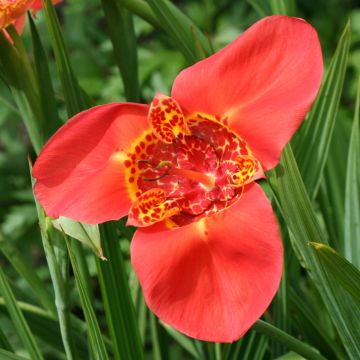
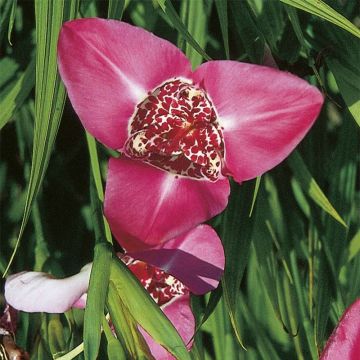
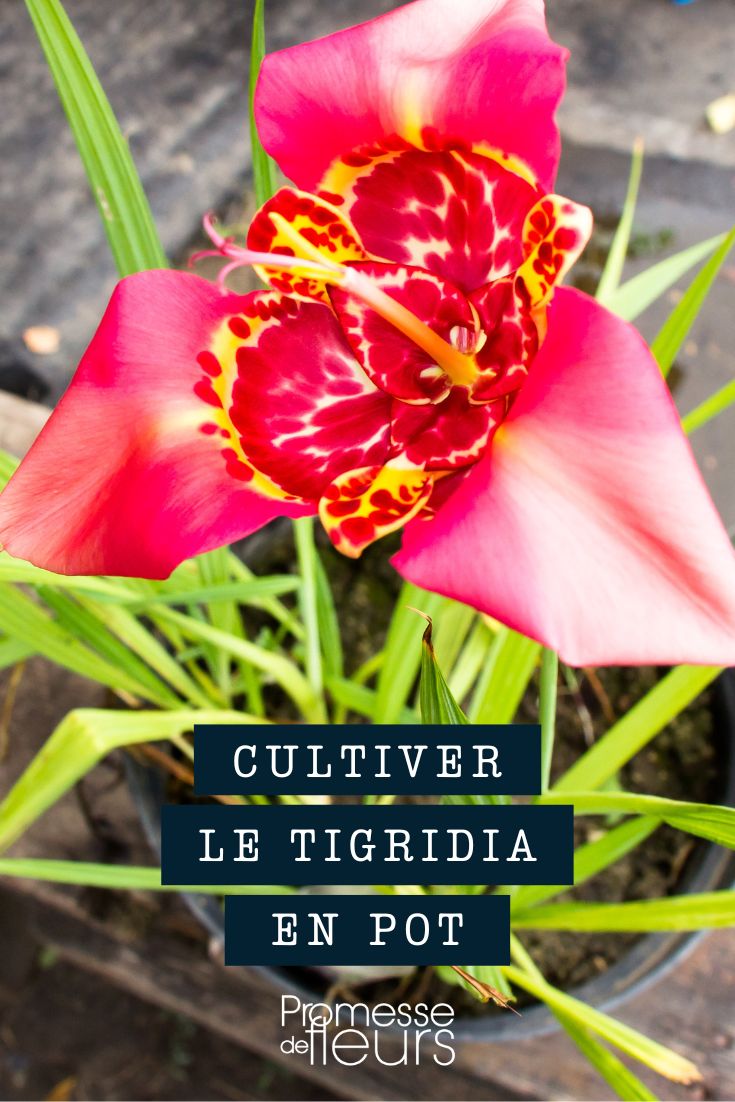
Tigridias are bulbous plants native to Central America, valued for their very exotic flowers! They bear beautiful triangular flowers in bright and vivid shades: red, yellow, orange, pink, or white, contrasted at the centre by dark red macules. In cultivation, the main variety found is Tigridia pavonia, which comes in various varieties. Rather sensitive to cold, tigridias can withstand short periods of frost where temperatures do not drop below -5 °C. Thus, except in regions with a very mild climate, such as the Mediterranean basin, they must be protected from the cold in winter. Growing in pots is therefore an excellent solution, as it allows for easy sheltering of the young plants in autumn, to bring them out again the following spring. Discover all our tips for growing Tigridias in pots: what type of pot and substrate to choose, how to plant and care for them.
And to learn more about Tigridias and their cultivation, feel free to consult our complete guide “Tigridia: Planting, Growing, and Caring for”.

What type of pot to choose?
To grow Tigridia, we recommend choosing a terracotta pot, as these pots are both more aesthetically pleasing and environmentally friendly, and have a better permeability to water and air than plastic pots. Since Tigridia requires good drainage, the substrate will dry out more quickly in a terracotta pot, preventing the bulbs and roots from rotting. However, if necessary, a plastic pot will also suffice. It will have the advantage of being lighter, making it easier to handle, and will allow for slightly more spaced watering.
Choose a pot that is large enough, at least 30-40 cm in diameter, to allow the Tigridias to develop properly. The corms of Tigridia should be spaced about 10 cm apart; thus, the larger the pot you choose, the more Tigridias you can fit in it. It is important that the pot has drainage holes at the bottom, allowing excess watering to drain away.
Read also
Tigridia: planting, growing and careWhich substrate to choose?
Tigridia is native to Central America, where it primarily grows in rocky areas and sandy soils. It therefore requires a well-draining substrate and is particularly sensitive to stagnant moisture during its dormancy period. You can create your own substrate by mixing one third of potting soil, one third of loamy soil, and one third of coarse sand. Feel free to also add a handful of well-decomposed compost to enrich the substrate.
Discover other Tigridia
View all →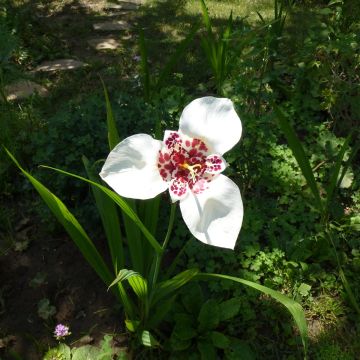
Available in 1 sizes
Available in 1 sizes
Available in 1 sizes
Available in 1 sizes
Available in 1 sizes
When and how to plant a Tigridia in a pot?
We recommend planting Tigridia in spring, around April.
- Place a drainage layer at the bottom of the pot, about 5 cm thick (gravel, broken pot pieces, clay balls…)
- Then fill with a portion of the substrate.
- Arrange the corms. They should be buried 8 to 10 cm deep and spaced about 10 cm apart. Make sure to place them the right way up: the point facing upwards, and the short stem of bulb facing downwards.
- Cover them with substrate, then lightly firm down.
- Water generously.
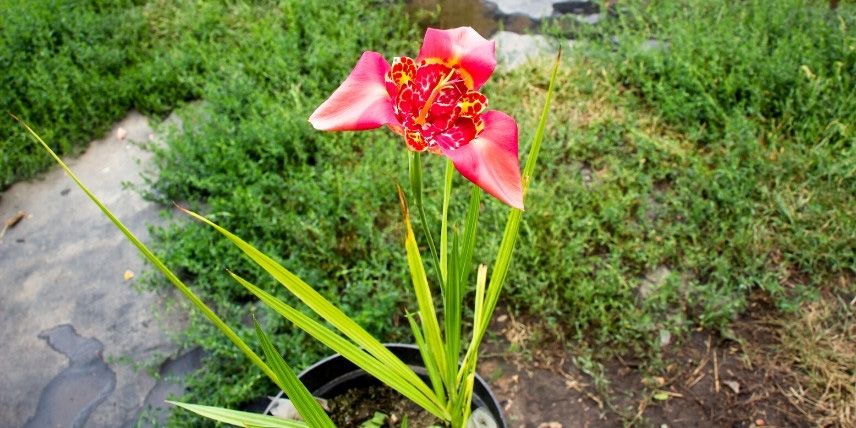
- All that’s left is to place the pot in a sunny spot, such as on your terrace or balcony. If possible, choose a location sheltered from cold winds, as Tigridia is a tender plant.
How to care for it?
Tigridia needs the soil to remain relatively cool during its growth and flowering period. We recommend watering it once or twice a week in spring and summer, allowing the substrate to dry briefly between waterings. Preferably water with rainwater, as Tigridia does not appreciate lime. You can also add a thin layer of mulch (made from straw, hemp, or flax…) on the surface of the pot to prevent the substrate from drying out too quickly.
In autumn, after flowering, the foliage of Tigridia dries out and the plant then enters dormancy. Space out the waterings, then stop them completely in autumn and winter. Excess moisture could cause the corms to rot.
In pots, mineral elements are limited, and the plant quickly depletes those in the substrate. In spring and summer, you can provide Tigridia with some liquid fertiliser, diluted in the watering water, at a rate of one application per month. Preferably choose a fertiliser rich in potassium, avoiding those high in nitrogen, as this element promotes foliage growth over flowering.
In autumn, bring Tigridia under cover to protect it from the cold. Ideally, keep it at a temperature of around 10 °C. You can take it out again on your terrace in spring, as soon as there is no longer a risk of frost.
Repot Tigridia each spring, providing it with a slightly larger pot each time to accommodate its growth. This allows for substrate renewal and gives it the space to develop properly.
- Subscribe!
- Contents
Comments