





























Hazelnut: growing, harvest, recipes
From the orchard to the kitchen
Contents
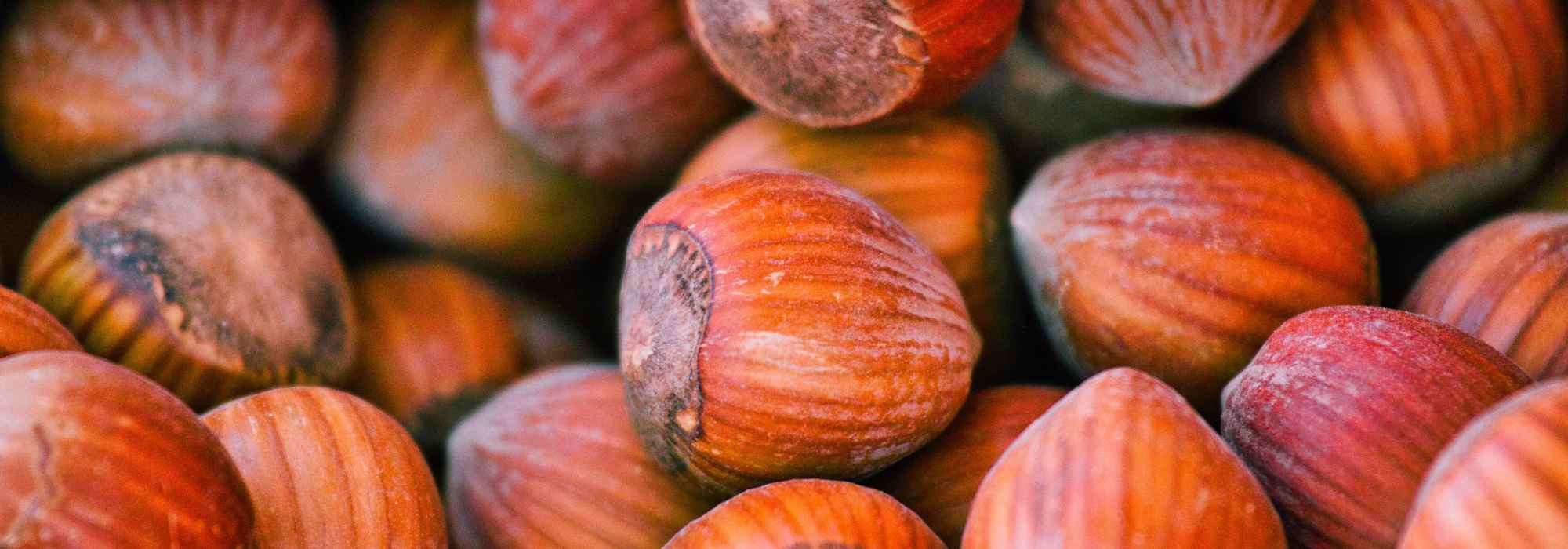
The hazelnut, fruit of the hazel bush (Corylus), is appreciated for its delicate flavour and crisp texture. It features in both sweet and savoury recipes, bringing an indulgent and refined touch to every dish. Growing a hazel tree in your garden allows you to harvest these delicious nuts each year, rich in benefits. Whether you eat them fresh, dried or transformed into delicious preparations,hazelnuts offer you a multitude of culinary delights. Discover how to grow this bush, how to use garden hazelnuts, store them and transform them into delicious recipes!

Hazel tree: an easy-to-grow and generous fruit tree
The hazelnut bush (Corylus avellana) is a hardy shrub belonging to the Betulaceae family, just like the birch or the hornbeam. It has given rise to numerous cultivars selected for their productivity. It forms a very decorative shrub, reaching up to 5 m tall at maturity and living up to 60 years. It offers rounded, dentate, dark-green foliage that takes on golden hues in autumn before falling, and it can be purple in some varieties. Spring flowering in long purple or bright yellow aments gives way to hard-shelled fruits: achenes, which are known as hazelnuts. Not particularly demanding in terms of maintenance, it grows in shelter from the scorching sun in any well-drained garden soil, even poor or rocky, without excess lime or acidity. The ideal planting period runs from November to March, excluding frosts.
From flowering to hazelnut harvest
Hazelnut harvest runs from late August, early September to October for the late-harvesting hazelnuts such as Merveille de Bollwiller, when the fruits begin to fall naturally to the ground. Gather them once their shells turn brown. Patience, however: it will take 5 to 8 years before a harvest of around 7 to 12 kg per tree.
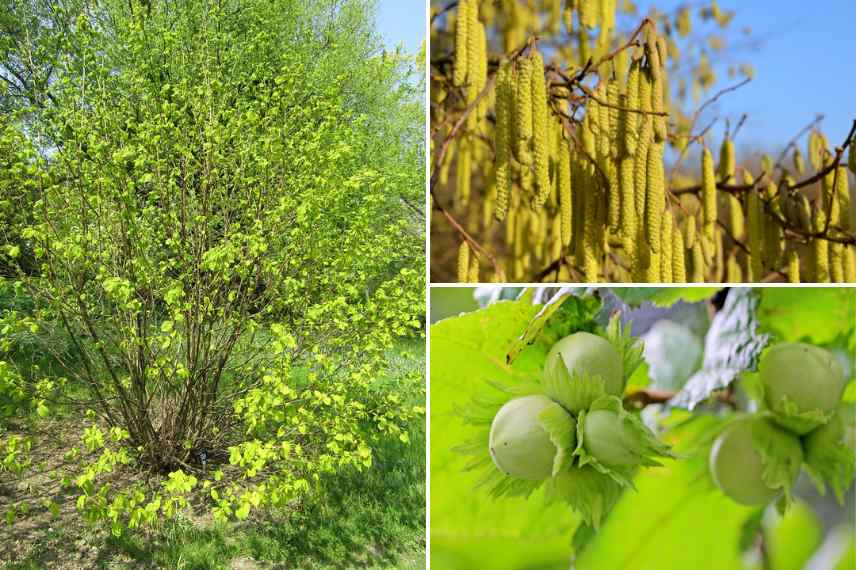
Corylus avellana ‘Aurea’ (Photo Leonora Enking), and to the right, winter flowering and hazelnuts
Read also
How to harvest and store hazelnuts?Which hazel varieties should you choose?
To achieve a healthy hazelnut yield, it is important to plant at least two different hazel varieties within a radius of 10 to 20 metres to ensure pollination, noting that self-fertile forms also exist. Here are some notable hazel varieties:
- Corylus avellana (common hazel): hardy and vigorous variety, ideal for hedges or copses, producing delicious, well-formed hazelnuts.
- Hazel ‘Merveille de Bollwiller’ or ‘Giant of Halle’: This vigorous, hardy variety quickly produces hazelnuts of good size, round and pointed, with white, fragrant and sweet flesh. It is harvested late, in September and October, and is particularly suitable for cold regions.
- Corylus avellana ‘Nottingham Frühe’ or ‘Pearson’s Prolific’: It yields medium- to large-sized fruits, elongated and with a well-filled shell. Harvest begins in mid-August.
- Hazel ‘Fertile de Coutard’: This vigorous, hardy and productive variety offers one of the largest hazelnuts in France. Its rounded fruits, with ivory-white flesh, firm and fragrant, are early but frost-prone. Place it on the north side to delay flowering.
- Corylus avellana ‘Webb’s Prize Cobb’: A variety prized for its large hazelnuts with a pronounced flavour, ideal for a abundant harvest and easy to shell.
- Corylus avellana ‘Tonda Gentile Trilobata’ : Very productive, it yields large-calibre hazelnuts with a thin shell, among the best, with a creamy texture and an exceptional flavour.
→ Discover more fruiting hazel trees
How do you prepare hazelnuts to eat them?
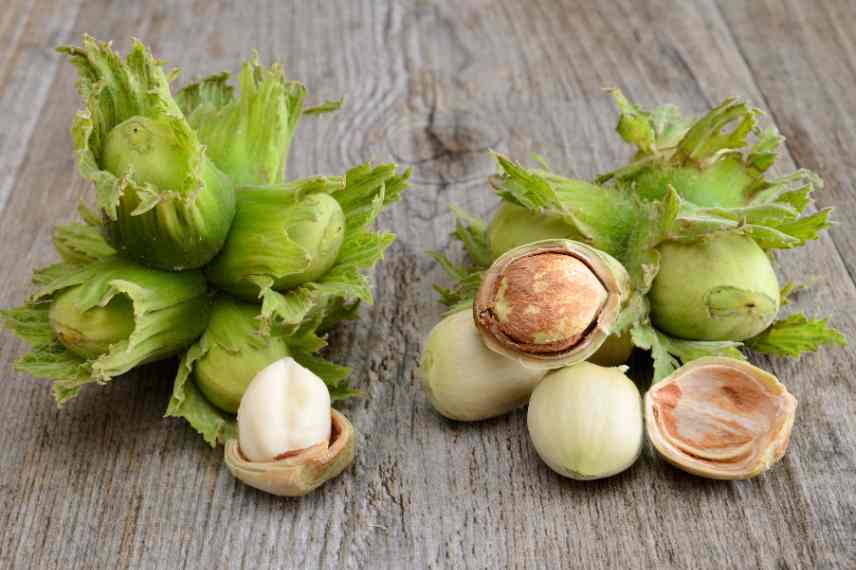
To eat hazelnuts, simply remove the dry husk surrounding them to reveal the brown shell. Then, with a nutcracker, gently crack the shell to avoid damaging the nut inside. Once the shell is open, you can enjoy the fresh nut directly. Hazelnuts can be eaten fresh or dried.
The different methods for storing and processing hazelnuts
After harvesting hazelnuts, there are several ways to store and process them to incorporate into a wide range of culinary preparations. These various processing methods allow you to fully exploit the hazelnuts’ potential, whether for sweet or savoury recipes, delivering a crunchy texture and a subtly roasted flavour each time.
Ground hazelnuts
Hazelnuts can be ground to obtain a fine powder, ideal for baking. Toast them first in the oven at 150°C for about 15 minutes to release their aromas before grinding. Once ground into powder, they blend perfectly into recipes like cakes, brownies, macarons or biscuits. Hazelnut powder can also replace part of the flour to impart a subtly sweet flavour and a light crunch to pastries.
Crushed hazelnuts
Crushed hazelnuts add a delicious crunch to many preparations, whether savoury or sweet. After roasting the hazelnuts, crush them roughly with a knife or a pestle and mortar. They can be added to salads, roasted vegetables, or used as a breadcrumb coating for meat or fish. In desserts, they are perfect for topping brownies, muffins, or even ice cream, delivering a contrasting texture and an intense flavour.
Hazelnut purée
By blending the roasted hazelnuts for a long time in a powerful blender, you will obtain a smooth and creamy purée. This hazelnut purée can be used as a base for a homemade chocolate spread, by adding melted chocolate and a little sugar. Plain, it can be added to smoothies, spread on bread or used in culinary preparations to replace fats such as butter.
Whole or peeled hazelnuts
To peel them (remove the skins), simply roast and rub them with a tea towel; the skins will come off easily. They are then ready to be incorporated into recipes or eaten as a healthy snack.
Hazelnut milk
Hazelnuts can be transformed into a plant-based drink. Blend 100 g of hazelnuts soaked in water for several hours with 1 litre of water, then strain the mixture through a muslin cloth. The result is a delicately flavoured plant-based drink, which can be used in smoothies, cereals or desserts as a substitute for milk.
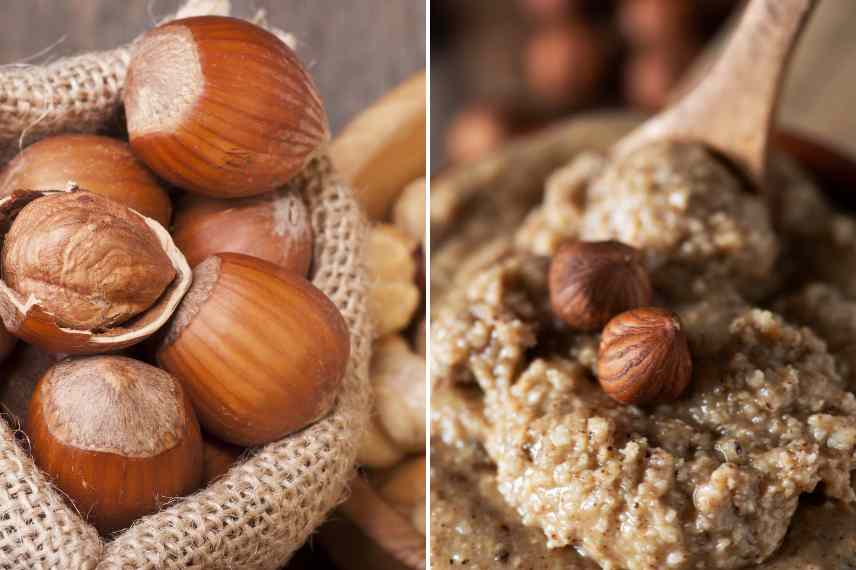
Hazelnuts, simply crushed, ready to eat or puréed, are a pleasure to enjoy in all their forms
What can you do with freshly harvested hazelnuts?
Fresh hazelnuts can be eaten directly after harvest, offering a crunchy texture and a mild, slightly milky flavour. Unlike dried hazelnuts, they are more tender and still contain some moisture, which gives them a less intense but very pleasant flavour. They can be eaten as they are, added to salads or used in cooking, particularly in pastries to provide a light crunch. They keep for less time than dried hazelnuts, about 3 weeks. It is therefore recommended to consume them quickly after harvest.
How do you dry fresh hazelnuts?
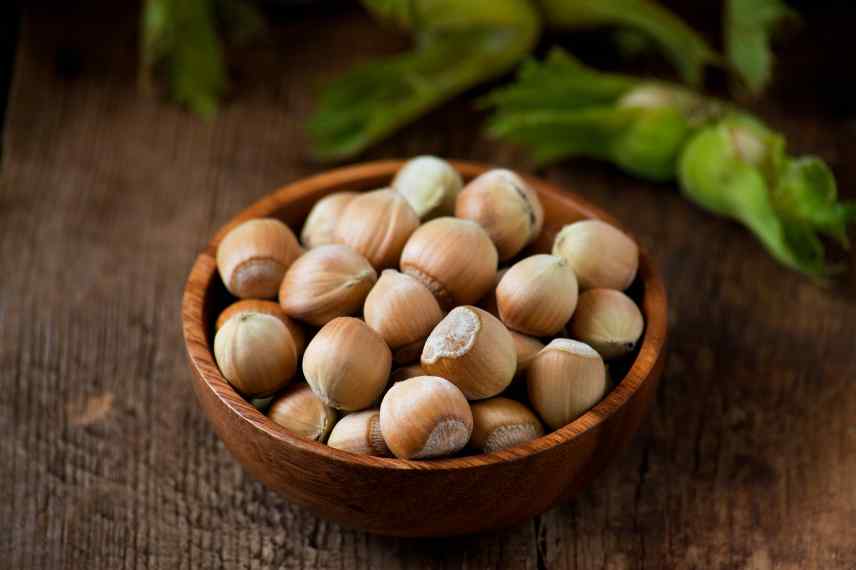
If the harvest is generous, you’ll be able to dry some of your hazelnuts to keep them for several months.
- Brush them off if necessary to remove dirt or debris.
- Remove hazelnuts from their husk (the green outer layer surrounding the shell) to facilitate drying.
- Spread the hazelnuts in a single layer in a dry, well-ventilated, moisture-free area. Use wooden trays, mesh crates or even racks to allow good air circulation.
- Turn the hazelnuts every day to ensure even drying. This also prevents moisture buildup.
- The drying process takes about two to three weeks. You’ll know they’re ready when the shell hardens and the interior is dry. They should also sound hollow when shaken.
- Once well dried, store hazelnuts in a cool, dry place, away from light, in a basket or crate.
What are the health benefits of hazelnuts?
Hazelnuts are rich in Vitamin E, a powerful antioxidant that protects cells against ageing and diseases related to oxidative stress. They also contain B vitamins, notably vitamin B6, which supports the nervous system and energy production. In terms of minerals, they are an excellent source of magnesium, beneficial for muscle relaxation and stress management. Hazelnuts contain unsaturated fatty acids, good for the heart, and help to reduce bad cholesterol. As a source of plant-based protein, they are ideal for vegetarian diets and support muscle development. Thanks to their fibre content, they improve bowel transit and provide a feeling of fullness.
Delicious hazelnut recipes!
Hazelnuts lend themselves to numerous culinary transformations, both sweet and savoury.
This shelled fruit brings crunch, sweetness and character to a multitude of recipes.
It can be used whole, chopped or ground in cakes, biscuits, brownies and other pastries.
Roasted, it reveals more intense aromas and can be incorporated into granola, crumbles or as a topping for salads.
When made into a hazelnut spread or praline, it becomes a staple of indulgent desserts.
In savoury dishes, it can enrich dishes such as crusted meats, pestos or velvety soups, adding a crunchy texture and a subtle flavour.
In cooking, hazelnut oil easily replaces olive oil to give a gourmet touch to vinaigrettes, or to drizzle over pasta and risottos, imparting delicately woody and refined notes.
Here are some indulgent ideas for incorporating them into both your sweet and savoury dishes, while highlighting their delicate flavour:
- Hazelnut cake: A delicious, moist cake made with ground hazelnuts for an authentic and intense flavour, ideal for dessert or a delicious afternoon treat.
- Hazelnut brownies: Soft, fudgy brownies studded with chopped hazelnuts to provide a delicious crunch and a subtly toasted flavour, perfect for a chocolate-rich dessert with texture.
- Caramelised hazelnuts: Heat sugar in a pan until a golden caramel forms, then add your roasted hazelnuts. Let them cool on a tray. These crunchy and sweet hazelnuts can be used as a topping for ice cream or yoghurt, or simply enjoyed as they are.
- Toasted hazelnuts: Hazelnuts are toasted in the oven at 150°C for about 15 minutes to intensify their aroma and bring out an even more pronounced flavour, ideal as an aperitif or in recipes.
- Hazelnut spread: A smooth homemade spread, made by blending roasted hazelnuts, melted chocolate and a little sugar, for an indulgent and natural result, perfect for toast or desserts.
- Creamy pumpkin velouté with hazelnuts: This comforting velouté pairs the sweetness of pumpkin with the crunch of toasted hazelnuts. The hazelnuts, added as a topping or blended directly into the soup, impart a touch of texture and a delicate aroma to this autumn dish.
- Mushroom and hazelnut risotto: A staple of Italian cuisine revisited with hazelnuts. Wild mushrooms and toasted hazelnuts are folded into a creamy risotto, delivering earthy flavours and a crunchy contrast to the rice’s creaminess.
- Cream of cauliflower with hazelnuts: This velouté pairs the sweetness of cauliflower with the richness of hazelnuts. The cauliflower is cooked and then blended with cream to achieve a smooth, velvety texture. Roasted and chopped hazelnuts are added at serving, providing a crunchy contrast and a subtle roasted note that enhances the cauliflower’s sweetness.
- Hazelnut mashed potatoes: A refined take on the classic mash, with roasted and chopped hazelnuts folded in to add a savoury crunch. The potatoes are mashed with butter and cream to achieve a smooth texture, then stirred with the hazelnuts to add a touch of character and a lightly roasted flavour. Ideal for accompanying roasted meats or seasonal vegetables.
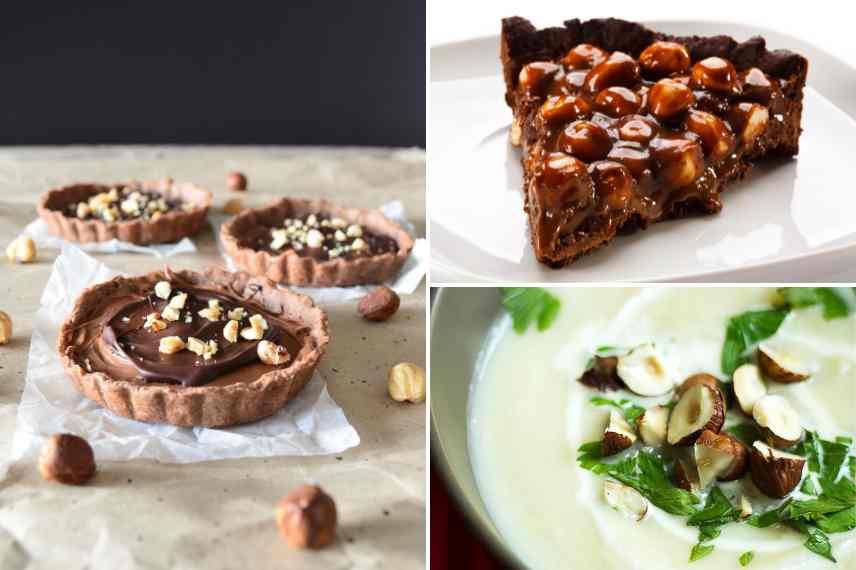
Sweet or savoury, hazelnuts feature from starter to dessert!
- Subscribe!
- Contents
Comments