





























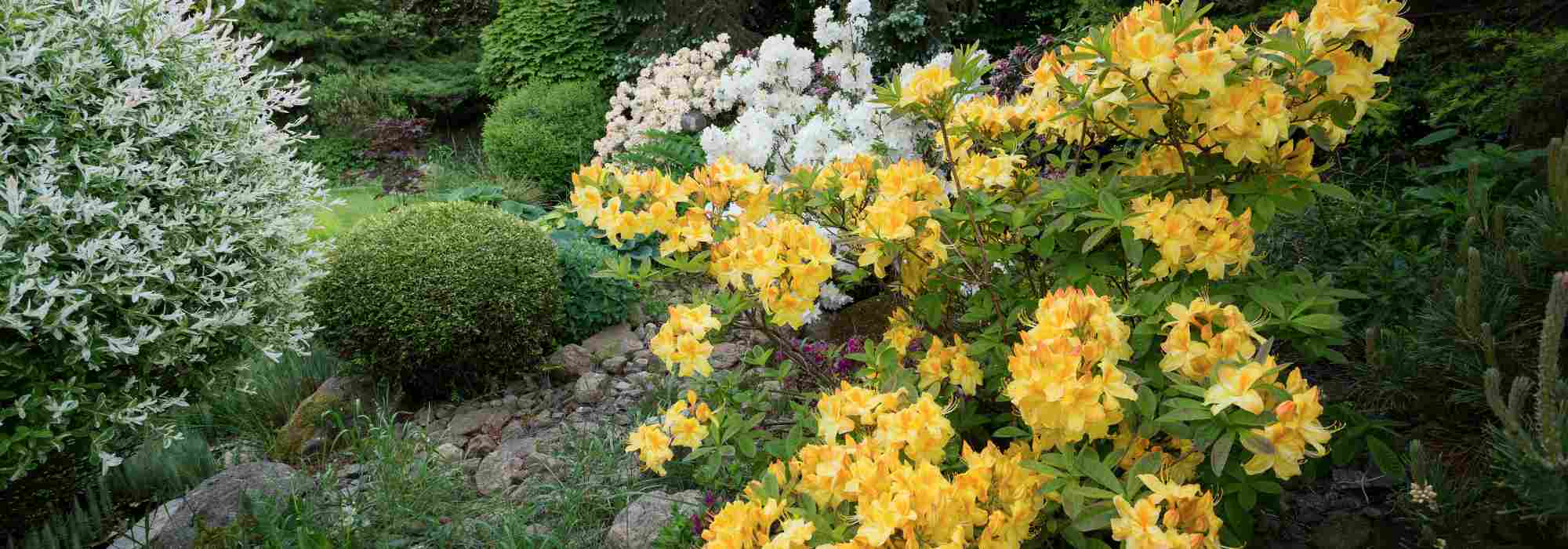
How to create a flowering and attractive garden by the end of spring?
Our tips and ideas
Contents
After the first spring flowering in March and April, the garden becomes a delight in May and June, filling with radiant colours, flowering displays ranging from the most delicate to the most sophisticated, thanks to many plants.
To elevate it during the year’s happiest months, we offer a detailed review of the loveliest plants of late spring, the small tasks not to miss to magnify it, and some very handy tips to savour its beauty every day and carry it through to the early days of summer… Follow me!

Invest in late-spring star plants
Spring brings a burst of colour to the garden, brought by the graceful flowering that begins as early as March. They continue into May and June with a wealth of spring shrubs, but also a plenty of perennial plants, climbers and bulbs:
- ericaceous shrubs : With soil sufficiently acidic and a reasonably wet climate, ericaceous shrubs, with their ephemeral flowering, create a delight worthy of the finest Japanese gardens between April and May. They often kick off the mid-spring bloom with Azaleas, Rhododendrons, Pieris, Kalmias, Enkianthus, etc.
- bulbs : Many bulbous plants are in full bloom between mid-May and June. They include Alliums, Caen anemones, Asian ranunculus, Camassia, late tulips, Dutch Iris and some late irises, Eremurus, summer snowflakes (which flower well in spring)
Further reading : 10 white azaleas to brighten up the garden, Choosing an Azalea, Pieris japonica: 5 ideas for successful combinations ; Rhododendrons: 9 ideas for successful combinations
- bulbs: Many bulbous plants are in full bloom between mid-May and June. They include Alliums, Caen anemones, Asian ranunculus, Camassia, late tulips, Dutch Iris and some late irises, Eremurus, summer snowflakes (which flower well in spring)
Further reading : 5 late-spring flowering bulbs ; 6 spring bulbs with red flowers, 8 spring bulbs with pink flowers, 9 spring bulbs with blue flowers.
- perennial plants: There are many towards the end of spring, such as arums, peonies, irises, Aquilegias, euphorbias, hostas, alchemillas, butterfly lavender, Lychnis (rose campion), Lychnis, Oriental poppies, hardy geraniums, Nepeta, Digitalis (foxgloves), Veronicas, Astrantias, campanulas…
- shrubs: The display begins with lilacs, then a concert of numerous shrubs that bring spring’s beauty to the garden, a magical spell when you plant plenty! Weigelia, Kolkwitzia, Philadelphus, spiraeas, ceanoths, Physocarpus, viburnums, Cistus, viburnums, Deutzias, cytisus, Phlomis, Pittosporum tobira, Laburnum (Cytisus)… My tip: choose a few varieties with variegated or purple foliage to add some depth once flowering has finished.
- Climbers: once more, an explosion of colour… and scent with honeysuckles, roses and jasmins, but also clematises, as well as Akebias.
Further reading : 6 precious spring-flowering flowers ; 6 shrubs for late-spring flowering ; 8 melliferous spring bulbs ; 10 perennial plants flowering in late spring.
And our tips on combinations : 6 ideas for pairing Eremurus ; Deutzia: 5 ideas for pairing ; How to pair Kolkwitzia ; How to pair peonies?
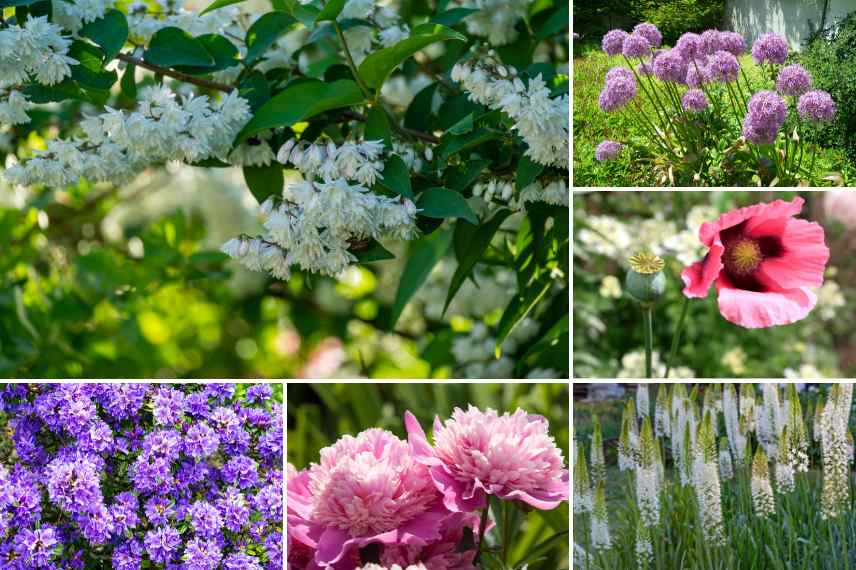 Deutzia scabra, alliums, Oriental poppies, azaleas, peonies and Eremurus: spring at its height!
Read also
Spring bulbs: 6 nice pairing ideasHighlight frost-hardy plants and exotic beauties
Phew… it’s finally here! By the end of May, in the vast majority of regions, after the famous ice saints, you can bring frost-tender potted plants back out that you had to overwinter to protect them from the cold. It’s therefore time to showcase them, removing their winter cover in the coldest regions, whilst taking care to gradually re-acclimatise them to the sun and to warmer temperatures. This is particularly true for succulent plants, all cacti, citrus trees and Australian or Mediterranean plants.
Read also: Can we still rely on seasonal phenological markers in the garden? Planting and growing southern plants ; The best agapanthus to grow in pots ; Designing a Madeira-inspired garden, the island of flowers.
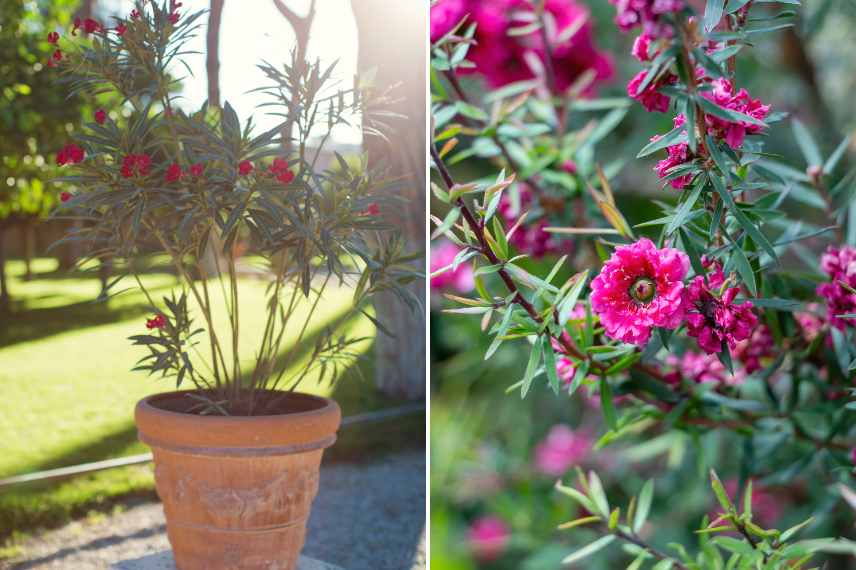
Oleander (Nerium oleander) and Leptospermum scoparium
Make the colour palette evolve
You can ensure a transition to summer in your garden with a colour palette that will gradually reflect the changing season, moving from spring colours, fresh and soft, to warmer and more intense hues typical of summer. This is obviously not mandatory, as one can of course keep soft colours all year round when designing a romantic or English-style garden, for example, based on pastel tones. If you wish to try, then opt for species whose colours will blend subtly with the early summer flowering: colours of spring (such as pink, pale yellow, and sky blue) to the more saturated colours of summer (deep red, bright orange, and golden yellow).
Note that the garden typically experiences a small gap in flowering between late spring and peak summer flowering. You can remedy this by paying particular attention to the timings of flowering in each bed. Some very mild winters, however, see flowering well advanced, and some associations can sometimes be offset. So observe year after year how your borders behave, even if you keep notes in a small gardening notebook, to potentially move some perennials or bulbs. Foliage that is coloured (greyed, golden or purple) or variegated is perfect for bringing in colour that would be missing for two or three weeks.
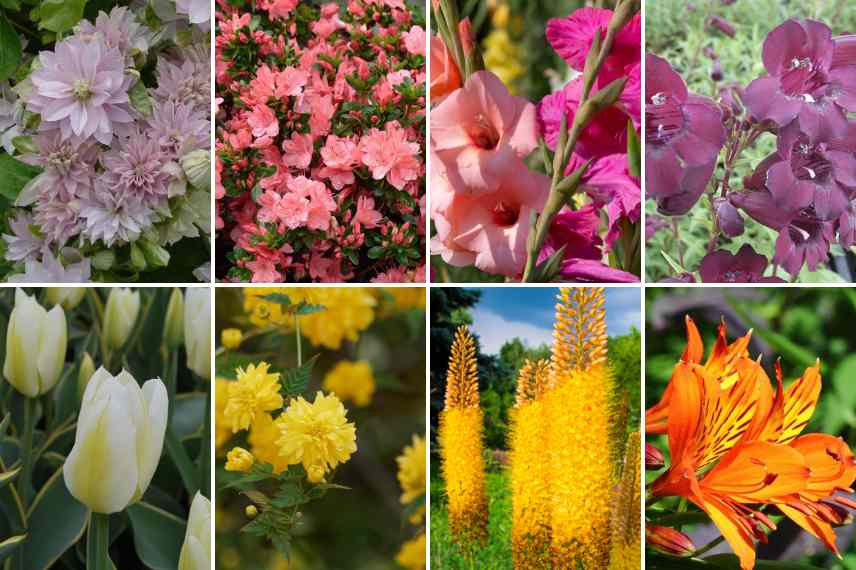
Stagger the flowering times as well as their colours
Read also
Designing a four-season gardenContinue garden maintenance
The garden is thriving, and the end of spring is a time when we’ll be busy sprucing it up even more! Among the actions and tasks to note:
- Water well if spring is dry
- Prune the flowers on roses, and deadhead perennials to ensure a second flowering. Pinch your perennials in the Chelsea chop style at the end of May to densify your future plants.
- Prune early-flowering spring shrubs now that they have finished flowering, and evergreen shrubs trained into ball shapes or topiary forms such as box, Lonicera nitida, etc.
- Plant the annuals purchased or from your sowing, to fill gaps that may appear in some areas, or to brighten terrace planters.
- Mow the lawn regularly, especially around the house, to obtain a neat green carpet that sets off the borders.
- Finally remove the yellowing leaves from your bulbous plants such as tulips to tidy up.
Also read : What to do in the garden in May? ; What to do in the garden in June? ; What to prune in spring?
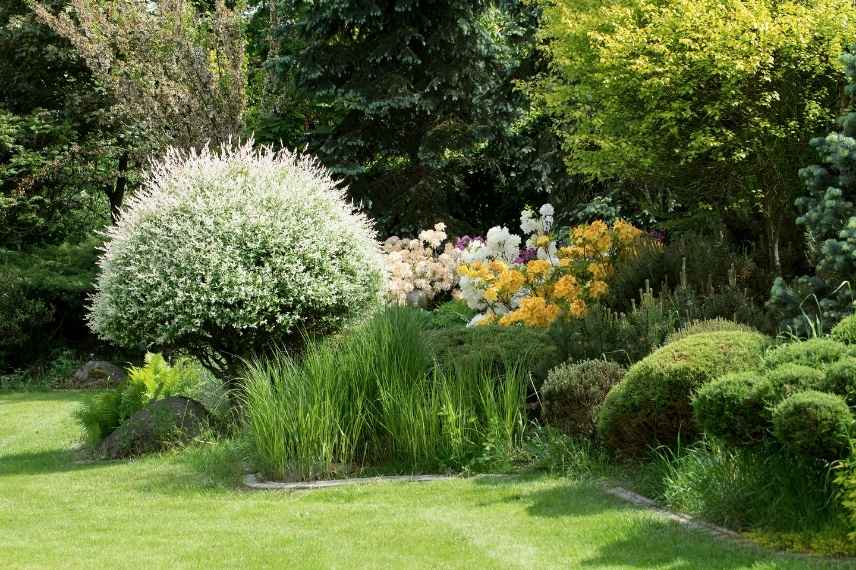
Nurture the garden that shines from every angle
Plan... in anticipation of the approaching summer
According to where you live, and this is increasingly confirmed by climate change, the end of spring can already be very sunny and warm. In May and June, it is then worth already thinking about the approaching summer, and those days when we’ll be seeking a bit of shade alongside pockets of relaxation. Among the pretty options are shade canopies, but also shade sails, made at home or bought from specialist retailers. For these, you need sturdy anchorage points, usually a wall (or a pergola for velum blinds and bateau blinds). Learn, in any case, to spot where shadows fall to install your summer living areas wisely!
We can also integrate vegetation into a design by taking advantage of structures where beautiful lianas and climbing plants will run: they will filter the sun while decorating the garden and may even perfume it depending on the plants chosen. Vegetated structures are found in arbours, pergolas, trellises and other awnings. They support growing plants, as well as new plantings that will develop throughout the summer.
As for relaxation corners, we plan them in the quietest areas of the garden, but also the most sheltered and shaded: they are genuine living spaces within the garden, where we will have planted vegetation of different strata to recreate a little cocoon, as in the secret garden.
Finally, there is still time in May to transform an existing flower bed, by moving some plants and installing new ones. Prepare the soil by incorporating amendments or compost, and plant the perennials that have been divided or purchased (the bushes will have been planted ideally in autumn). Take good care with watering at this time, which may prove dry depending on the region.
Read also : How to create a shady and cool corner in the garden? ; DIY a shade canopy ; 7 climbing plants for rapid growth; 10 climbing roses for pergola, Light in the garden: exposure, sunshine, shading and brightness ; Shade for terrace: which plants to choose? ; 7 climbing plants for rapid growth.

Think about creating a few shaded spots. Here in a large garden, but it can also be done on very small spaces!
- Subscribe!
- Contents

Comments