





























How to create an eco-friendly garden?
Design a pleasant space, but above all eco-friendly and sustainable
Contents
We are increasingly seeing the garden not only as a space for relaxation and aesthetic enjoyment, but as an ecosystem beneficial to all living beings. It isn’t difficult to create an environmentally friendly garden: it is, moreover, often less time-consuming, less tedious and more economical than a garden founded solely on aesthetics.
In this article, we share our practical tips for designing an eco-friendly garden, which contributes to the protection of ecosystems.

Understanding the cultivation constraints of your garden
These are the elements to consider first and foremost in order to create an ecological garden: the constraints of its environment.
These include:
- the climatic conditions in your region (winds, rainfall, sea spray, frosts, heat…);
- the orientation of your garden, its sun-exposure zones and its shaded or filtered areas;
- the soil type, from its texture (clayey, sandy, well-drained…), to its organic matter content and its pH (acid, neutral or calcareous).
Identifying these factors is essential for selecting plants that will establish more readily, will require less maintenance and enjoy a long lifespan. This comes down to a perfect pairing: the right plant in the right place.
It is often advised to observe your garden for a year before undertaking any planting, in order to make the best choices, taking into account seasonal constraints. This period of observation may seem long, but avoids many mistakes in choosing plants: a bush that thrived until the soil became waterlogged in winter; a perennial planted in a too windy site; a bulbous plant that receives too much sun in summer, etc.
Some simple tools can help you assess your garden’s climate more precisely: a thermometer for the air temperature, and also for the soil temperature (or a weather station for the better equipped), a rain gauge or a wind vane.
For more information:
Bet on diversity for a naturally rich garden
A sustainable, eco-friendly garden places biodiversity front and centre. Forget monospecific hedges (comprising a single plant species, such as Thuja hedges) planted in straight lines. Also forget lawns resembling golf greens, mown very close to the ground.
It is by varying species and varieties that the garden will be rich, lively, supportive of diversity and less susceptible to disease. So opt for a hedge made up of different species of trees and shrubs, which will perform multiple functions. There are options to suit all tastes and needs:
- evergreen, screening or windbreak hedge;
- fruit-bearing hedge;
- melliferous hedge;
- deciduous or marcescent (whose foliage dries on the plant) to let light through in winter;
- Mediterranean hedge resistant to drought and heat;
- shade hedge;
- defence hedge;
- season-long flowering hedge;
- cold-climate hedge;
- pollution-tolerant hedge for urban gardens;
- hedge for terraces and balconies
To replace the lawn, discover our groundcover perennial alternatives, such as the wooly thyme, the Roman chamomile, the scented yarrow or the Dichondra creeping. To learn more and choose them well according to your soil type, read our article: “10 ground covers to replace the lawn”
Think about pairing different types of plants: annuals, bulbous plants, perennials, shrubs, trees, grasses, etc. You can also combine them in companion planting and stagger their flowering to enjoy them throughout the year.
Finally, diversity also comes from having different habitats: informal hedges, vegetable plots, woodlands, rockeries, wetlands, etc.
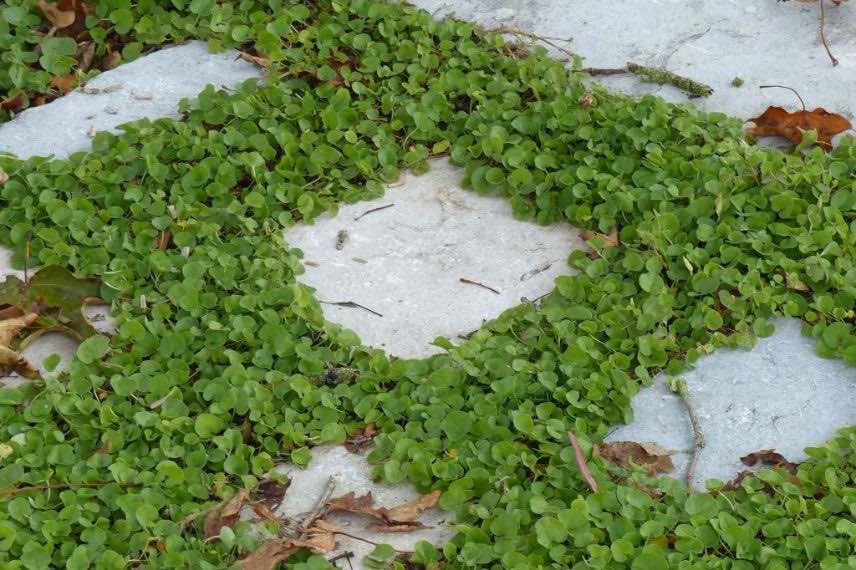
Consider lawn alternatives, very useful for addressing the ecological issues posed by lawns, here Dichondra repens
Grow native plants
Native plants are wild plants that grow naturally in a given territory. In France we enjoy a wonderful diversity of plants that are naturally adapted to our climate.
They have several advantages:
- Good vigour and robustness: resistance to diseases, weather extremes, etc.
- Low-maintenance cultivation: they are often plants that grow on their own, without any special care.
- They are adapted to our biodiversity: pollinating insects, small mammals, amphibians, etc.
- Their production is more environmentally friendly: plants do not come from the other side of the world, but are local rather than imported. They are not grown in over-heated greenhouses and do not have disproportionate water needs (unlike tropical plants, for example).
- Finally, they do not threaten ecosystems. Many exotic plants, initially introduced for their aesthetic qualities, are now considered invasive and threatening to ecosystems. This is the case, for example, of pampas grass (which we have chosen to remove from our catalogue) or American grapevine.
Among native plants, we find trees (beeches, goat willow), shrubs (black elder, dog rose), fruit trees, perennials (yarrow, creeping ajuga, purple foxglove, tansy), annuals (poppy, wild mallow), climbers (ivy)… a wonderful diversity of plants to suit all tastes!
Here again, we advise you to favour diversity: a few exotic species can indeed coexist with native species in an ecological garden. Similarly, mix both varieties of ornamental plants (selected by humans) and botanical (wild) ones.
Further reading:
- Plant native species to attract pollinating insects
- Choose a local heritage variety of fruit tree
- 9 essential wild perennials for a natural garden
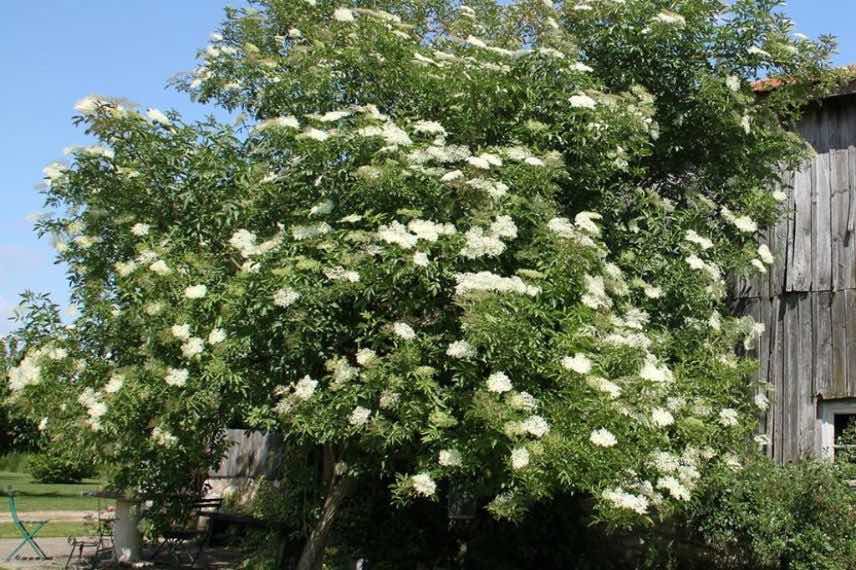
Black elder is a native plant with ecological interest
Promoting biodiversity in the garden
To encourage local wildlife (birds, insects, amphibians, mammals…), a few simple steps can be taken in the garden.
Ban chemical products
Welcoming biodiversity begins with banning all chemical products, notably insecticides, fungicides, etc. These products pollute the environment and are harmful to both humans and biodiversity. Neonicotinoids, for example, harm the fertility of our precious bees and contribute to their decline.
Prefer products suitable for organic farming or 100% natural alternatives, such as plant manures or black soap.
Proper pruning
The garden provides all the elements needed for local wildlife, offering shelter and food. But poorly managed pruning (too drastic, too frequent, in the wrong season) can prove detrimental to biodiversity.
To reduce these risks:
- follow the hedge-trimming periods advised by the LPO (avoid between mid-March and the end of August to encourage bird nesting) ;
- practice differentiated mowing, which is a more sustainable and considered technique;
- prefer the mowing of flower-rich meadows, rather than mowing;
- keep hedges unmanaged.
Provide installations for wildlife
An ecological garden naturally offers all that is needed for local wildlife. But a little helping hand to the garden’s wildlife is possible.
To do this, you can :
- create a natural pond;
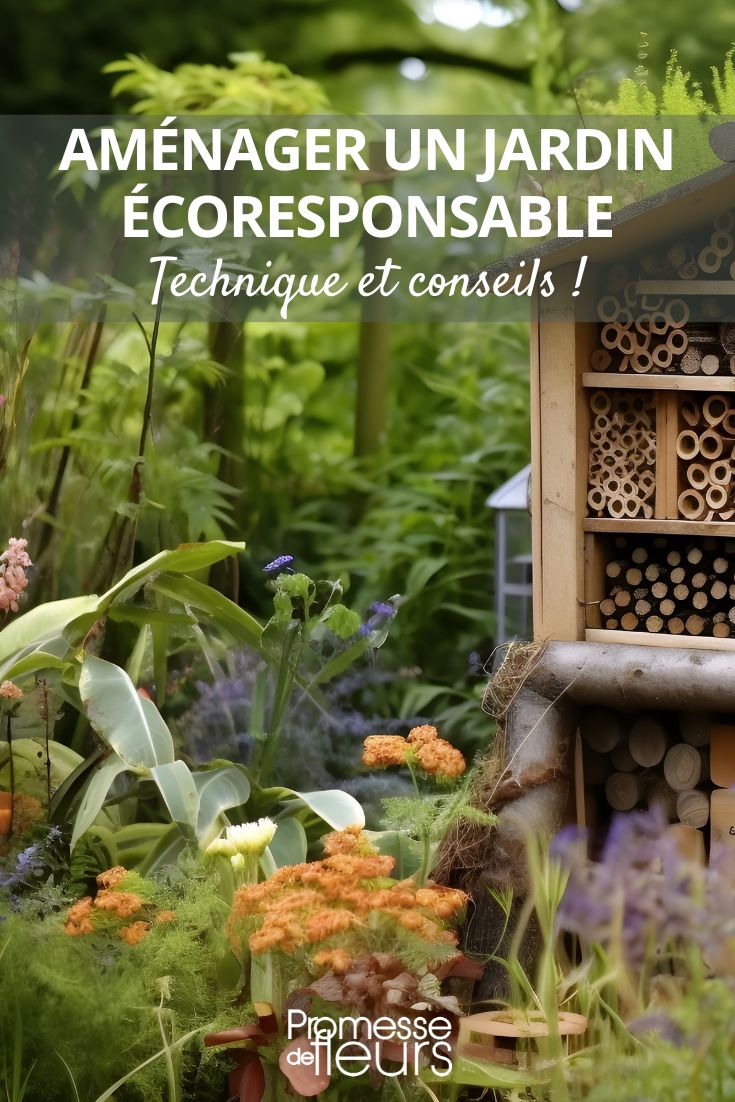
- build insect hotels;
- install bird boxes and bat boxes;
- provide bird feeders for feeding birds in winter and waterers (all year round) ;
- leave fallow areas and natural meadows:
- leave on site branches, piles of stones, and old stumps, which make perfect shelters ;
- grow melliferous and nectariferous plants.
Moderate your interventions
We often talk about the permaculture model when it comes to eco-friendly gardening. The concept may intimidate novice gardeners, but it is mainly about gardening in harmony with nature, letting ecosystems take care of themselves, which regulate themselves and show resilience. Indeed, nature does not need humans to develop and grow.
The eco-friendly garden therefore requires minimal intervention, in the gentlest possible way.
- The fertilisers used to nourish the soil naturally consist of compost, leaf mould, manure, green manures or plant manures.
- Treatments are used as a last resort, applied sparingly and targeted: in natural gardening, it is better to prioritise prevention over cure. Minor pest attacks on a plant, which have no real consequences other than cosmetic, are tolerated. They contribute to the garden’s balance. For example, having a few aphids is necessary to benefit from ladybirds.
- Soil work is limited and carried out with the least invasive tools possible, to preserve the life that is naturally present there. The rotavator is replaced, for example, by a digging fork. You can still use green manures here, some varieties being useful for aerating the soil.
- Overall, manual interventions are preferred to mechanical ones.
Manage all resources
Managing resources and waste is an ecological and economic challenge. To that end, you have several options.
- Install rainwater harvesting systems, whether in the garden, on the terrace or balcony.
- Optimise watering to save water: mulching, installation of ollas, installation of drip irrigation, watering at the right time, etc.
- Save energy by choosing low-energy lighting, installing motion detectors (instead of fixed lights) or by favouring solar energy in the garden.
- Think about upcycling, the repurposing of unused objects into new resources: a pallet to make a planter, cracked mugs to make cachepots, old cutlery to make tools, a plastic bottle to root cuttings in a humid environment, an old sheet to provide shade, etc.
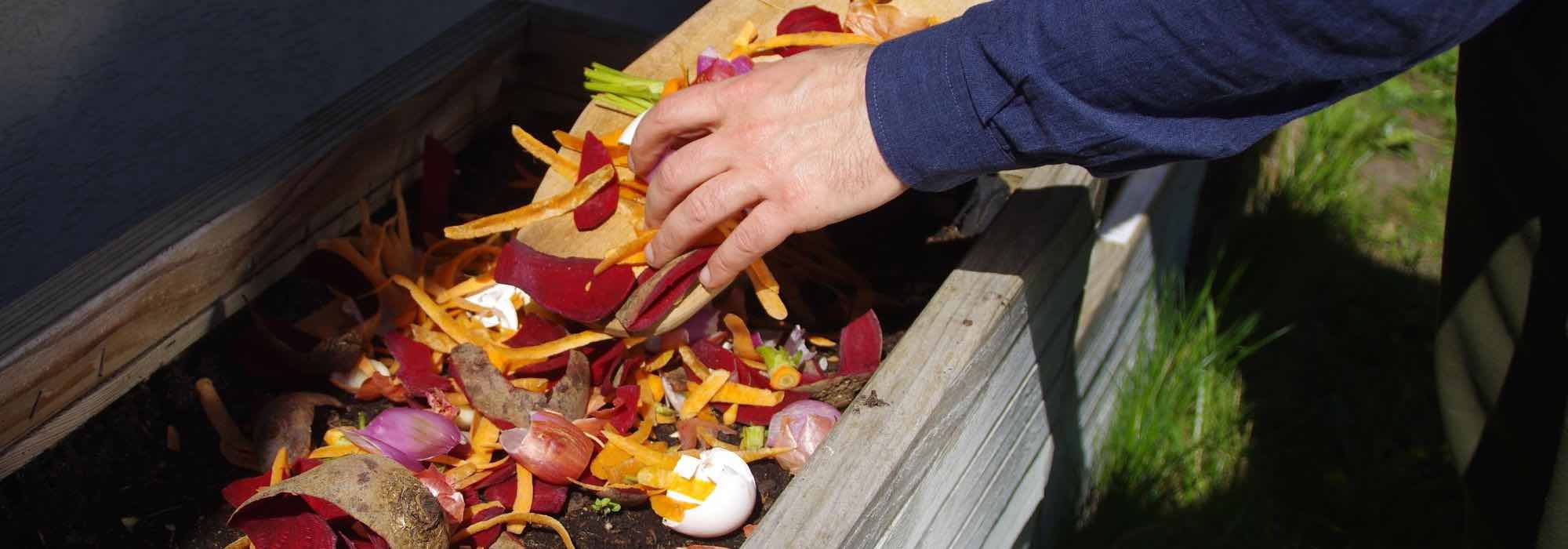
- Manage your waste: practice composting (which will be mandatory from 1 January 2024), try mulching (leaving mowing residues on site), re-use pruning leftovers to make RCW, use dead leaves to make leaf mould, etc.
- If possible, favour turf moor-free soils (the exploitation of turf moors affects ecosystems and the environment). Avoid using pozzolana, vermiculite and perlite (non-renewable resources with polluting extraction).
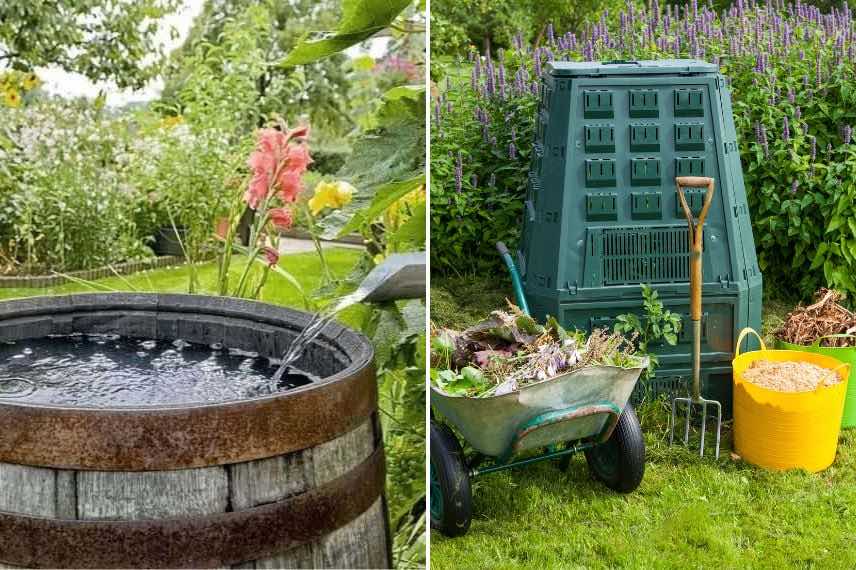
Rainwater harvesting and domestic waste recycling to make compost: two fundamental pillars of good gardening practices
Choosing the most eco-friendly materials
The design of an eco-friendly garden begins with reducing its carbon footprint. For this, the choice of materials, furnishings and products used (paints, varnishes…) comes into play. Choose durable and natural materials, produced with as little fossil energy as possible: certified wood, stone, etc.
When purchasing tools and garden equipment, don’t forget second-hand platforms. Renting is also an option. Finally, think about repair instead of replacement: the government has also introduced a repair bonus, which can be helpful for repairing electrical tools.
- Subscribe!
- Contents
Comments